Cranial Electrotherapy Stimulation for Anxiety
Explore how cranial electrotherapy stimulation (CES) offers a noninvasive, drug-free option for managing anxiety, depression, and insomnia symptoms.
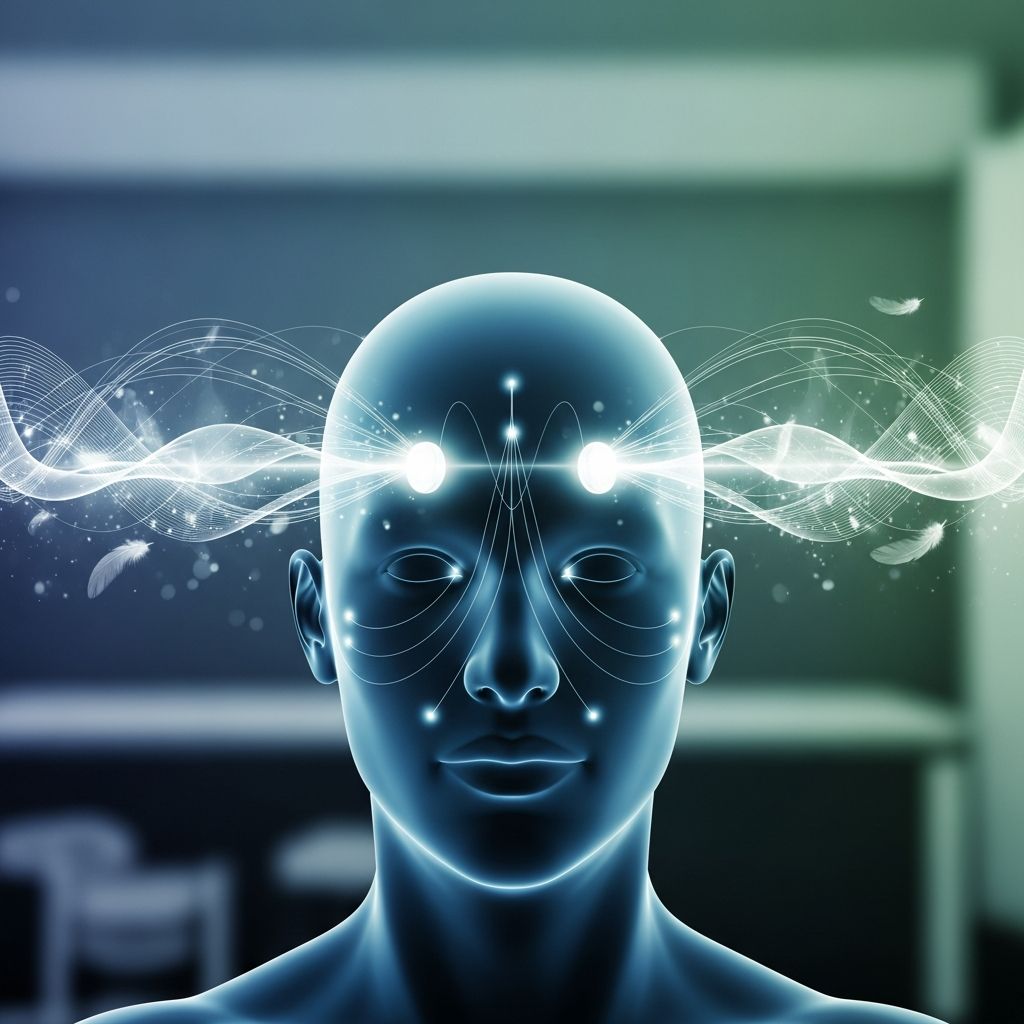
Cranial electrotherapy stimulation (CES) is a noninvasive treatment that applies low-intensity electrical currents to the brain via electrodes on the earlobes or scalp, primarily used to treat anxiety, depression, and insomnia.
What Is Cranial Electrotherapy Stimulation?
CES involves a portable device delivering microcurrents—typically less than 1 milliampere at frequencies between 0.5 and 100 Hz—to modulate brain activity. Unlike electroconvulsive therapy (ECT), CES uses subtle stimulation without inducing seizures, making it suitable for outpatient or home use. It normalizes irregular brainwave patterns associated with anxiety, promoting relaxation and improved mood.
The therapy targets brain regions involved in fear responses, such as the amygdala and prefrontal cortex, by altering neurotransmitter levels like serotonin, GABA, and endorphins. Sessions last 20-60 minutes, often daily for 2-6 weeks, with effects persisting up to six months post-treatment.
How Does Cranial Electrotherapy Stimulation Work?
CES works by sending pulsed electrical signals through ear clip electrodes, penetrating the skull to influence neural firing. This diffuse stimulation balances alpha and beta brainwaves, reducing hyperactivity linked to generalized anxiety disorder (GAD), panic disorder, and social anxiety.
- Neurochemical effects: Increases beta-endorphins and serotonin, mimicking antidepressant actions.
- Brainwave modulation: Enhances alpha waves for calm states and suppresses excessive beta activity during stress.
- Long-term neuroplasticity: Repeated use may rewire neural circuits, sustaining benefits beyond active treatment.
Research indicates CES outperforms sham stimulation, with effect sizes indicating large reductions in anxiety scores (SMD: -0.96).
Does Cranial Electrotherapy Stimulation Help Anxiety?
Clinical evidence supports CES efficacy for anxiety. A meta-analysis of eight RCTs (337 patients) found CES significantly superior to controls for anxiety symptom reduction (ES = -0.96, p < 0.00001), with similar benefits for comorbid depression (ES = -0.69) and insomnia (ES = -1.02).
ECRI’s review of five studies (over 630 patients) confirmed CES relieves anxiety more effectively than sham, with or without medications, and effects lasting 1-6 months. VA evidence synthesis notes moderate strength for anxiety with depression.
| Study Type | Key Finding | Effect Size | Patients |
|---|---|---|---|
| Meta-analysis (2023) | CES vs. sham for anxiety | SMD -0.96 | 337 |
| ECRI Review (2024) | CES superior to sham | Modest-large | >630 |
| VA ESP (2011, updated) | Possible benefit in anxiety+depression | Modest | Various |
CES shows equal efficacy as monotherapy or adjunct to drugs/therapy, regardless of comorbid depression.
Is Cranial Electrotherapy Stimulation Safe?
CES is well-tolerated, with adverse effects rare (<1%), mild, and transient: skin irritation or headaches resolve quickly. No serious risks reported in RCTs; safer than medications avoiding dependency or cognitive side effects.
- Not for use with pacemakers, epilepsy, or during pregnancy without physician approval.
- FDA-cleared as low-risk Class III device.
Unlike ECT, no anesthesia or memory loss; suitable for broad populations.
Cranial Electrotherapy Stimulation Devices
FDA-approved CES devices include Alpha-Stim (most studied), Fisher Wallace Stimulator, and others. These battery-powered units clip to earlobes, with apps for session tracking.
| Device | Key Features | FDA Clearance | Cost Range |
|---|---|---|---|
| Alpha-Stim | Microcurrent, 0.5 Hz waveform, home use | Anxiety, insomnia, depression, pain | $1,200+ |
| Fisher Wallace | 4,000 Hz pulsed, 20-min sessions | Depression, anxiety, insomnia | $700+ |
Devices require prescription; insurance rarely covers, though cost-effective long-term vs. therapy.
What the Experts Say
“CES provides a scalable, convenient option for anxiety, especially when meds or therapy fall short.” — Marcus Schabacker, MD, PhD, ECRI CEO.
Related Stories



Experts note CES’s 40+ years of research (100+ studies) support standalone or adjunct use, with rapid onset from first session. Psychologists highlight its role in integrative care for generalized anxiety.
Cost of Cranial Electrotherapy Stimulation Treatment
Upfront device cost: $500-$1,500. No ongoing fees beyond batteries. Cheaper than weekly therapy ($100+/session) or meds with copays. Studies suggest savings for non-responders to standard care.
How to Try Cranial Electrotherapy Stimulation
- Consult physician for prescription.
- Select FDA-cleared device.
- Follow 20-60 min daily sessions for 5-6 weeks.
- Track symptoms via validated scales like HAM-A.
- Combine with CBT or lifestyle changes for best results.
Administered by clinicians or at home; monitor for mild side effects.
Frequently Asked Questions (FAQs)
What is cranial electrotherapy stimulation used for?
CES treats anxiety disorders, depression, insomnia, and pain via mild ear-clip currents.
How many CES sessions are needed for anxiety?
Daily 20-60 min for 2-6 weeks; maintenance 2-3x/week. Effects start quickly, last months.
Is CES better than medication for anxiety?
CES matches or exceeds sham + meds in trials; drug-free with fewer side effects, but best as adjunct.
Can I use CES at home?
Yes, with prescription; devices are portable and user-friendly.
Does insurance cover CES?
Rarely; Medicare/Medicaid exclude, but cost-effective alternative.
Who should avoid CES?
Those with pacemakers, seizures, or implanted devices; consult doctor if pregnant.
References
- Cranial electrotherapy stimulation for treatment of anxiety, depression, and insomnia — PubMed/NCBI. 2013-04-01. https://pubmed.ncbi.nlm.nih.gov/23538086/
- Anxiety Can Be Treated With Cranial Electrical Stimulation Therapy, Evidence Review Finds — ECRI. 2024. https://home.ecri.org/blogs/ecri-news/anxiety-can-be-treated-with-cranial-electrical-stimulation-therapy-evidence-review-finds
- Efficacy of electrical cranial stimulation for treatment of psychiatric disorders — Frontiers in Psychiatry. 2023. https://www.frontiersin.org/journals/psychiatry/articles/10.3389/fpsyt.2023.1157473/full
- The Effectiveness and Risks of Cranial Electrical Stimulation for the Treatment of Pain, Depression, Anxiety, and Insomnia — VA HSR&D. 2011 (updated). https://www.hsrd.research.va.gov/publications/esp/CES.pdf
- The Effectiveness and Risks of Cranial Electrical Stimulation — NCBI Bookshelf. 2018. https://www.ncbi.nlm.nih.gov/books/NBK493129/
Similar Articles








Read full bio of Sneha Tete