Cranial Nerves: Function, Anatomy & Location
Understanding the 12 cranial nerves: their functions, anatomy, and role in your nervous system.
What Are Cranial Nerves?
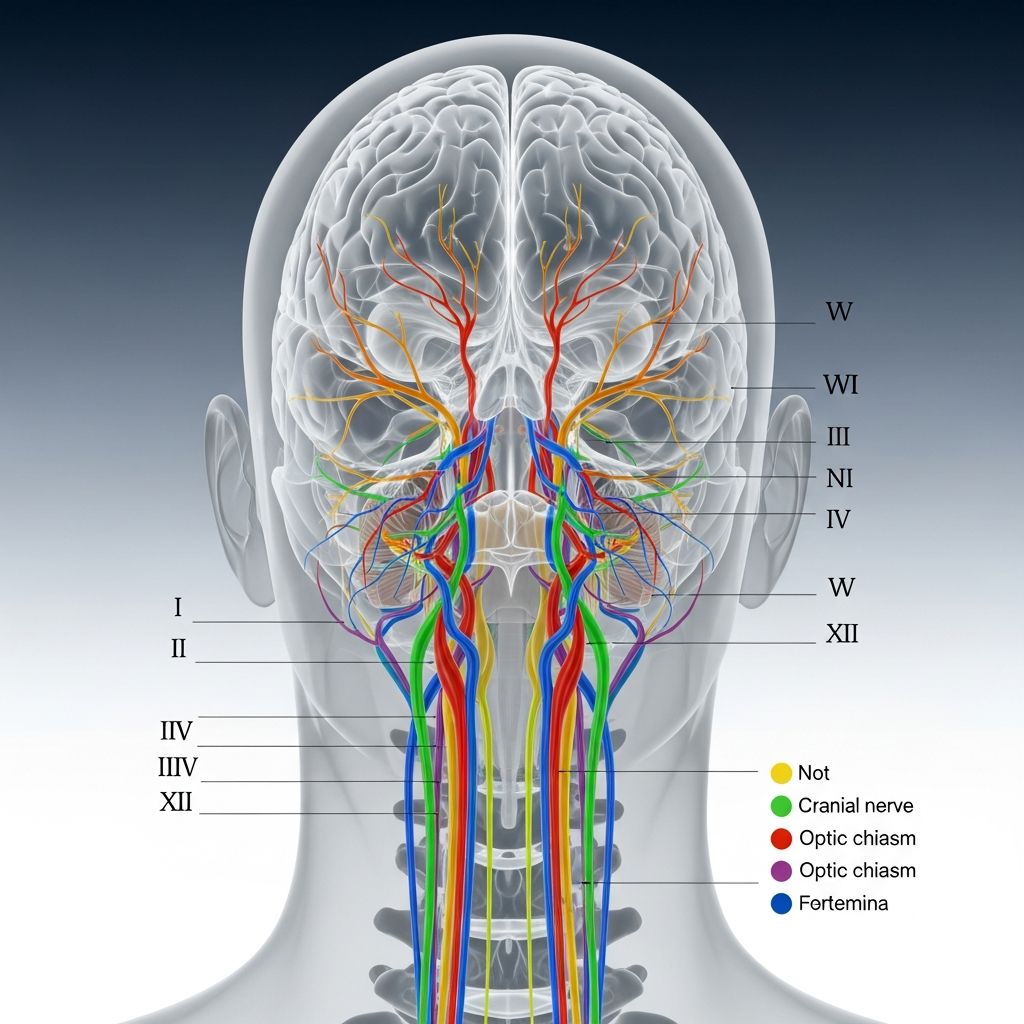
Your cranial nerves are a set of 12 pairs of nerves that send electrical signals between your brain and different parts of your head, face, neck and torso. These signals help you see, smell, taste, hear and move your facial muscles. Your cranial nerves begin toward the back of your brain and are a key part of your nervous system. You have 12 cranial nerve pairs, and each nerve pair splits to serve the two sides of your brain and body. For example, you have one pair of olfactory nerves—one olfactory nerve on the left side of your brain and one on the right side.
These specialized nerves differ from other peripheral nerves because they connect directly to your brain rather than branching from your spinal cord. This direct connection makes them essential for transmitting vital sensory and motor information that controls many of your body’s most important functions.
Anatomy and Location of Cranial Nerves
The anatomy of cranial nerves reflects their specialized roles in connecting your brain to various body parts. Understanding their location and structure is fundamental to comprehending how they function.
Origin Points
Two of your cranial nerve pairs—your olfactory and optic nerves—begin in your cerebrum and branch out to their target tissues. The cerebrum is the largest portion of your brain that sits above your brainstem. The other 10 pairs of cranial nerves start in your brainstem and then branch out. Your brainstem connects your brain and spinal cord, serving as a crucial junction point for nerve signal transmission.
The Vagus Nerve
The longest cranial nerve is your vagus nerve. It runs from your brain to your large intestine, innervating several tissues along the way. This extensive reach makes the vagus nerve one of the most important cranial nerves for maintaining overall body function and homeostasis.
Functions of Cranial Nerves
Your cranial nerves play a crucial role in relaying sensory and motor information throughout your body. Understanding these functions helps explain how your brain communicates with the rest of your body.
Sensory Functions
Sensory nerves help you:
– See and perceive visual information- Smell and detect odors- Taste food and beverages- Hear sounds and maintain balance- Feel touch, temperature and pain
Motor Functions
Motor nerves play a role in controlling specific muscles throughout your head, face and neck. Some cranial nerves have both sensory and motor functions, allowing for comprehensive control and feedback between your brain and body. This dual functionality enables complex actions such as chewing, swallowing, facial expressions and eye movements.
The 12 Cranial Nerves and Their Functions
Healthcare providers categorize the 12 cranial nerves based on number and function. Each nerve has a specific role in maintaining sensory perception and motor control:
| Cranial Nerve | Number | Primary Function | Type |
|---|---|---|---|
| Olfactory | CN I | Smell | Sensory |
| Optic | CN II | Vision | Sensory |
| Oculomotor | CN III | Eye movement | Motor |
| Trochlear | CN IV | Eye movement | Motor |
| Trigeminal | CN V | Facial sensation | Sensory & Motor |
| Abducens | CN VI | Eye movement | Motor |
| Facial | CN VII | Facial movement & taste | Sensory & Motor |
| Vestibulocochlear | CN VIII | Hearing & balance | Sensory |
| Glossopharyngeal | CN IX | Throat function & taste | Sensory & Motor |
| Vagus | CN X | Multiple organ functions | Sensory & Motor |
| Accessory | CN XI | Shoulder & neck movement | Motor |
| Hypoglossal | CN XII | Tongue movement | Motor |
Related Stories



Cranial Nerve Conditions and Injuries
When a cranial nerve experiences damage, it doesn’t function as it should. This may cause specific movement or sensory issues, depending on its underlying function. Several conditions and situations can affect the functioning of your cranial nerves.
Cranial Nerve Palsies
When there’s an issue with a specific cranial nerve that has a motor (movement) function, healthcare providers often call it a palsy. “Palsy” means “paralysis.” A palsy results in muscle weakness and movement issues. Examples of cranial nerve palsies include Bell’s palsy (affecting the facial nerve) and other conditions that impair muscular control in the head and neck regions.
Trigeminal Neuralgia
Another specific type of cranial nerve condition is trigeminal neuralgia. This condition causes episodes of intense facial pain that can disrupt your everyday activities. It typically happens when a blood vessel puts pressure on your trigeminal nerve. Trigeminal neuralgia can severely impact quality of life, as the sudden, shock-like pain episodes can be debilitating and unpredictable. Treatment options range from pharmaceutical interventions to surgical procedures, depending on the severity and frequency of symptoms.
Other Cranial Nerve Dysfunctions
Some cranial nerves, like your optic nerve and vagus nerve, can have several types of dysfunction. For example, conditions that affect your optic nerve include glaucoma and optic neuritis. Conditions that can arise from vagus nerve dysfunction include gastroparesis and vasovagal syncope (fainting). The facial nerve can develop conditions affecting both sensation and motor control, while the glossopharyngeal nerve may experience dysfunction affecting swallowing and throat sensation.
Causes of Cranial Nerve Damage
Cranial nerve damage can result from various causes, including:
– Trauma or head injury- Stroke or cerebrovascular events- Tumors or growths pressing on nerves- Infections or inflammation- Autoimmune disorders- Diabetes and metabolic conditions- Multiple sclerosis- Vascular compression or aneurysms
Prevention and Health Maintenance
Some cranial nerve conditions are unpreventable. But you can help keep your brain, cranial nerves and entire nervous system healthier with these steps:
– Maintain a healthy diet rich in nutrients and antioxidants- Exercise regularly to promote cardiovascular health- Manage stress through relaxation techniques- Avoid smoking and limit alcohol consumption- Protect your head from injury by using appropriate safety equipment- Control chronic conditions like diabetes and hypertension- Get adequate sleep and rest- Stay mentally active with cognitive exercises
Recognizing Cranial Nerve Symptoms
The symptoms of cranial nerve injuries or conditions vary depending on which nerve is affected. Contact your healthcare provider if you experience:
– Vision changes or loss- Hearing loss or balance problems- Facial weakness or drooping- Difficulty swallowing or speaking- Intense facial pain or numbness- Loss of taste or smell- Eye movement problems- Facial paralysis- Difficulty chewing or moving your tongue- Unexplained muscle weakness in your neck or shoulders
Cranial Nerve Mnemonics
Cranial nerve mnemonics are memory devices to help you remember the names of the nerves in order of one through 12. They can also help you remember whether the nerves are sensory, motor or both. Medical students and healthcare professionals often use mnemonics to quickly recall the 12 cranial nerves and their primary functions. These memory aids make it easier to assess and diagnose cranial nerve disorders during clinical examinations.
Frequently Asked Questions
Q: How many cranial nerves do humans have?
A: Humans have 12 pairs of cranial nerves (24 individual nerves total), with one pair on each side of the brain. Each pair serves corresponding areas on both sides of the head and body.
Q: What is the difference between sensory and motor cranial nerves?
A: Sensory cranial nerves transmit information from your body to your brain, allowing you to see, smell, taste and feel. Motor cranial nerves carry signals from your brain to control muscle movement. Some cranial nerves have both functions.
Q: What is trigeminal neuralgia?
A: Trigeminal neuralgia is a condition affecting the trigeminal nerve (cranial nerve 5) that causes sudden, intense, shock-like facial pain. It typically results from blood vessel compression on the nerve and can significantly impact daily activities and quality of life.
Q: How is cranial nerve damage diagnosed?
A: Cranial nerve damage is diagnosed through clinical examination, imaging tests like MRI or CT scans, and specialized neurological tests. Your healthcare provider will assess your symptoms and determine which tests are necessary for accurate diagnosis.
Q: Can cranial nerve damage be reversed?
A: The reversibility of cranial nerve damage depends on the underlying cause and severity. Some conditions improve with treatment, while others may cause permanent changes. Early diagnosis and treatment improve the chances of recovery.
Q: What should I do if I suspect cranial nerve problems?
A: If you experience symptoms like sudden facial weakness, vision loss, hearing problems or persistent facial pain, contact your healthcare provider immediately. Early evaluation and treatment can help prevent complications and improve outcomes.
References
- Cranial Nerves: Function, Anatomy & Location — Cleveland Clinic. 2024. https://my.clevelandclinic.org/health/body/21998-cranial-nerves
- Guidelines for the management of trigeminal neuralgia — Cleveland Clinic Journal of Medicine. 2023. https://www.ccjm.org/content/90/6/355
Similar Articles








Read full bio of Sneha Tete