Creatine And Caffeine: 6 Expert Tips For Safe Stacking
Can you take creatine and caffeine together? Experts break down the science, benefits, risks, and best practices for stacking these popular supplements.
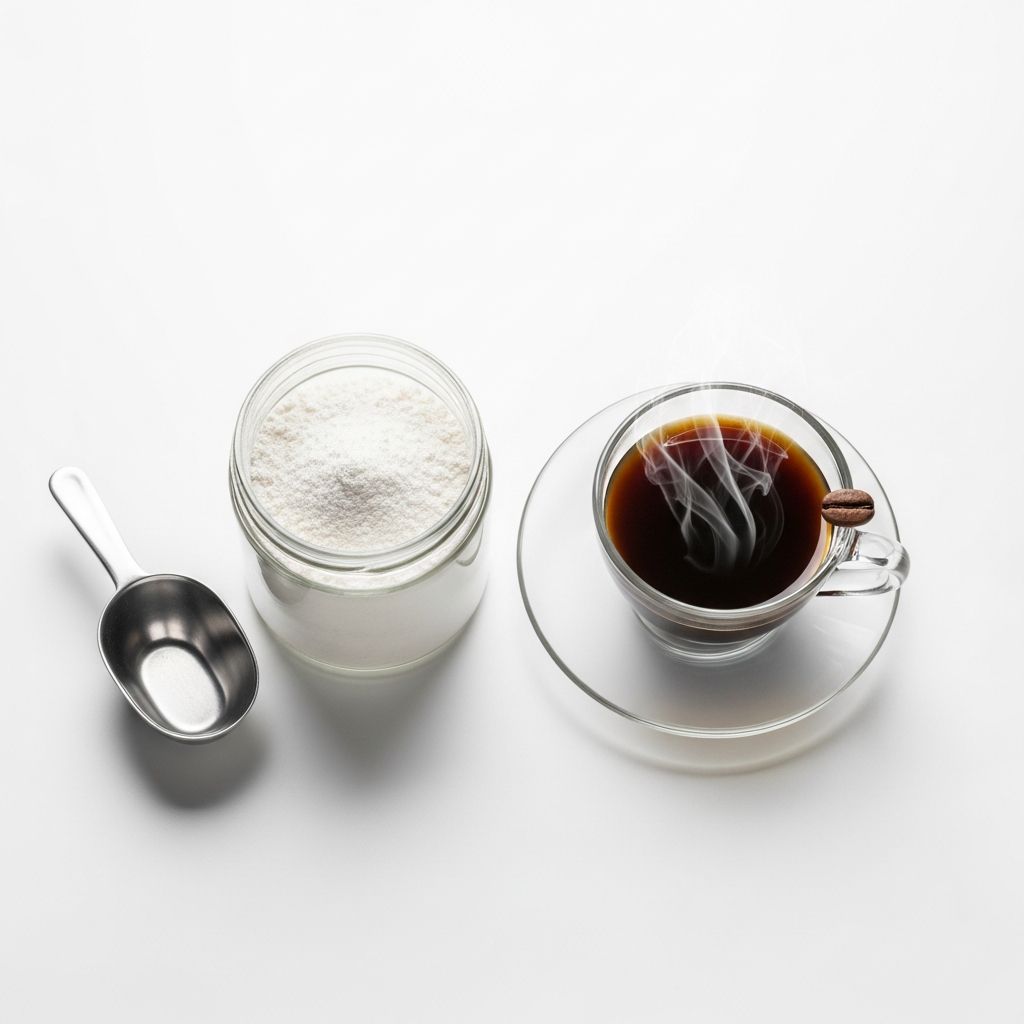
Creatine and Caffeine: Can You Take Them Together?
Creatine and caffeine rank among the most popular supplements for boosting athletic performance, with creatine enhancing muscle energy stores and caffeine sharpening focus and endurance. But a long-standing debate questions whether combining them diminishes benefits or causes issues like digestive upset. Recent research clarifies that, in most cases, they work well together without blunting effects, though individual responses vary.
What Is Creatine?
Creatine is a naturally occurring compound synthesized in the body from amino acids like glycine, arginine, and methionine, primarily in the liver, kidneys, and pancreas. It plays a crucial role in energy production during high-intensity exercise by replenishing adenosine triphosphate (ATP), the cell’s primary energy currency. About 95% of the body’s creatine is stored in skeletal muscles as phosphocreatine (PCr), which rapidly donates phosphate to ADP to form ATP during short bursts of activity like weightlifting or sprinting.
Food sources provide roughly 1-2 grams daily, mainly from red meat and fish, but supplementation saturates muscle stores more effectively. Standard protocols involve a loading phase of 20 grams per day for 5-7 days, followed by 3-5 grams maintenance. Benefits include increased strength, power output, muscle mass, and recovery, backed by decades of research on thousands of participants.
- Increased phosphocreatine stores: Boosts ATP availability for explosive efforts.
- Enhanced strength and hypertrophy: Supports heavier lifts and more reps.
- Improved high-intensity performance: Benefits sports like weightlifting, sprinting, and HIIT.
Creatine monohydrate is the most studied, cost-effective form, with a strong safety profile for healthy adults at recommended doses.
What Is Caffeine?
Caffeine is a central nervous system stimulant found naturally in coffee beans, tea leaves, cacao, and guarana. It blocks adenosine receptors in the brain, reducing perceived fatigue and promoting alertness. Doses of 3-6 mg per kg body weight (200-400 mg for most adults) 30-60 minutes pre-workout enhance endurance, power, and reaction time.
Average daily intake from sources like coffee (95 mg per 8 oz), energy drinks, or supplements totals 200-400 mg for many people. It mobilizes fatty acids for fuel, spares glycogen, and may reduce pain perception during exercise.
- Boosted alertness and focus: Counters mental fatigue.
- Improved endurance and power: Enhances time to exhaustion and peak force.
- Fat oxidation: Promotes use of fats as energy, aiding longer sessions.
Tolerance builds with habitual use, so cycling (e.g., 4 weeks on, 2 off) maintains efficacy. Over 400 mg daily risks jitters, insomnia, or dependency.
Can You Take Creatine and Caffeine Together?
Early 1990s research suggested caffeine might counteract creatine’s benefits by interfering with muscle relaxation or phosphocreatine resynthesis. A pivotal 1996 study found high-dose caffeine (5 mg/kg) blunted creatine’s torque improvements during cycling. However, methodological flaws like short washout periods and acute dosing fueled skepticism.
Modern evidence debunks this. A 2011 randomized trial (n=54 men) tested 5-day creatine loading (20 g/day) alone, with caffeine anhydrous (300 mg/day), instant coffee (303 mg caffeine equivalent), or placebo. All creatine groups improved bench press 1RM (8-11%), leg press 1RM (12-15%), and Wingate peak power (3-5%), with no significant inter-group differences (p>0.05). Serum creatinine rose similarly, confirming uptake. Only creatine+anhydrous caffeine caused mild GI discomfort in 4/13 participants.
A 2015 review confirmed no pharmacokinetic clashes—creatine absorption and muscle uptake remain intact with caffeine. Multi-ingredient pre-workouts blending both routinely boost strength/power without issues.
Key takeaway: Concurrent use supports performance comparably to creatine alone; source (coffee vs. anhydrous) matters little beyond tolerability.
Pros and Cons of Taking Creatine and Caffeine Together
Stacking offers synergistic perks but potential drawbacks. Here’s a balanced view:
| Pros | Cons |
|---|---|
| Enhanced power/strength: Creatine fuels ATP; caffeine amps CNS drive for better lifts/sprints. | GI discomfort: High-dose anhydrous caffeine+creatine raises stomach upset risk (e.g., bloating, nausea). |
| Muscle growth: Combo supports hypertrophy via progressive overload. | Dehydration risk: Caffeine’s mild diuretic effect vs. creatine’s water retention; hydrate extra. |
| Improved alertness: Caffeine counters workout drudgery. | Individual variability: Sensitive users may feel jitters or reduced efficacy. |
| Proven ergogenic combo: Safe in pre-workouts for power sports. | Muscle relaxation tension: Theoretical opposition unproven in practice. |
Net: Benefits outweigh risks for most, especially with proper dosing.
Creatine and Caffeine Side Effects
Individually safe, but combined:
- Gastrointestinal issues: Creatine+anhydrous caffeine linked to discomfort in ~30% of users; coffee less so.
- Hydration imbalance: Caffeine promotes urine output; creatine draws water intracellularly. No long-term total body water rise, but drink 3-4L daily.
- Sleep disruption: Post-2pm caffeine impairs recovery sleep.
- Kidney markers: Elevated serum creatinine from breakdown, not damage; monitor if predisposed.
Rare: Heart palpitations at high doses. Consult MD if pregnant, hypertensive, or on meds.
How to Take Creatine and Caffeine: Expert Tips
- Dose conservatively: Creatine 3-5g/day (post-load); caffeine 200-300mg pre-workout.
- Time smartly: Caffeine 45min prior; creatine anytime, mixed in shakes.
- Choose forms: Coffee/tea over pills to minimize GI woes.
- Hydrate aggressively: +500ml water per caffeine serving.
- Cycle: Creatine 8-12 weeks on/off; caffeine periodic breaks.
- Stack wisely: With beta-alanine or citrulline for full pre-workout synergy.
Test tolerance gradually.
Dietitian-Recommended Dosage
Board-certified dietitian example: “3-5g creatine daily with meals; 3mg/kg caffeine (e.g., 1-2 coffees). Track performance; adjust for tolerance.” Total: Safe up to 20g creatine load + 400mg caffeine initially.
Who Should Avoid This Combo?
- GI-sensitive individuals.
- Dehydration-prone (hot climates).
- Insomniacs or caffeine-naive.
- Kidney disease patients (monitor creatinine).
- Pregnant/nursing women.
Frequently Asked Questions (FAQs)
Does caffeine cancel creatine?
No—modern studies show no blunting of strength/power gains.
Is creatine with coffee okay?
Yes, better tolerated than anhydrous caffeine.
Will they dehydrate me?
Possible short-term; counteract with hydration.
Best time to take both?
Caffeine pre-workout; creatine anytime daily.
Safe long-term?
Yes, at moderate doses for healthy adults.
References
- Effects of coffee and caffeine anhydrous intake during creatine loading — Trexler ET et al. Journal of the International Society of Sports Nutrition. 2016-04-02. https://pmc.ncbi.nlm.nih.gov/articles/PMC4808512/
- Creatine and Caffeine: How They Interact, Pros, Cons, Best Practices — Healthline. 2023 (updated). https://www.healthline.com/health/creatine-and-caffeine
- International Society of Sports Nutrition position stand: creatine supplementation and exercise — Kreider RB et al. Journal of the International Society of Sports Nutrition. 2017-06-13. https://jissn.biomedcentral.com/articles/10.1186/s12970-017-0173-z
- Caffeine and sports performance: international society of sports nutrition position stand — Guest NS et al. Journal of the International Society of Sports Nutrition. 2021-01-21. https://jissn.biomedcentral.com/articles/10.1186/s12970-020-00383-4
Similar Articles




Read full bio of medha deb