Creatine Before Or After Your Workout: Evidence-Based Guide
Discover the optimal timing for creatine supplementation to maximize strength gains and muscle growth.
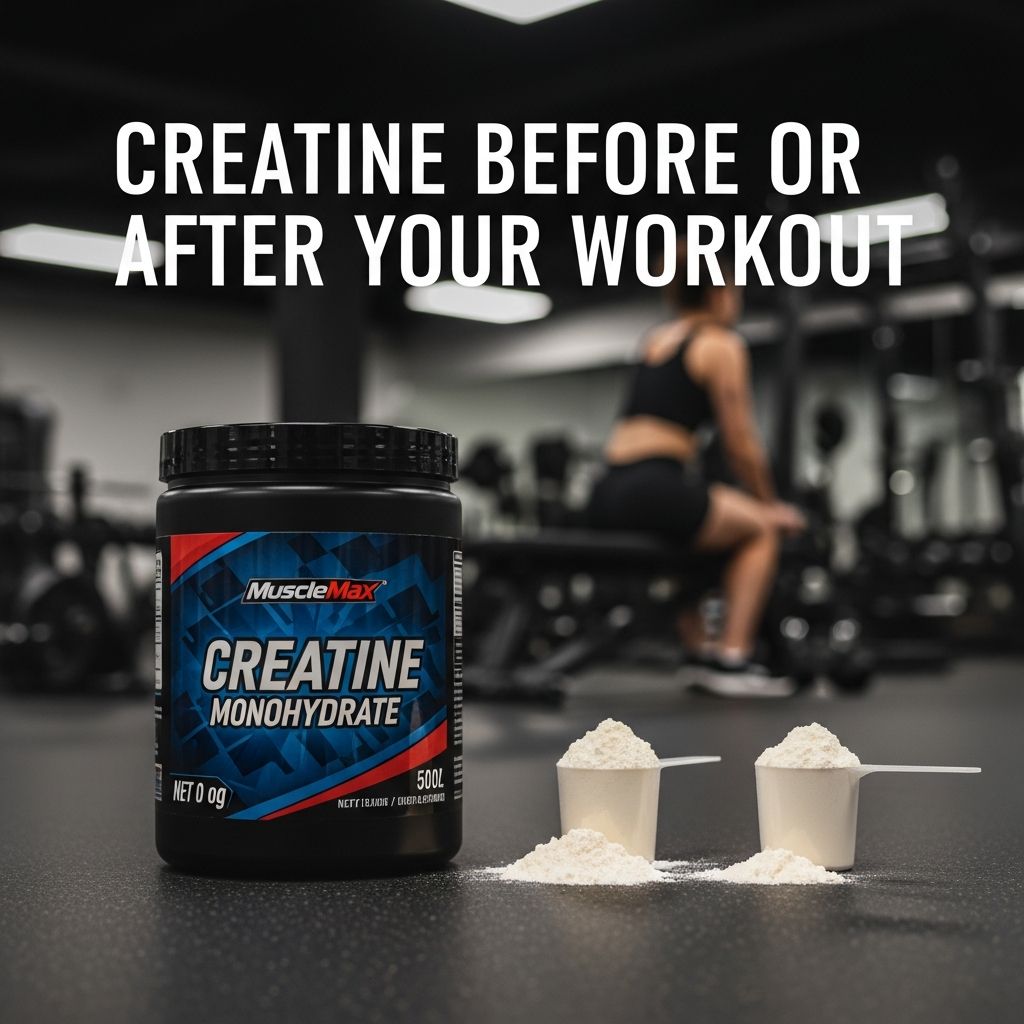
Creatine monohydrate is one of the most researched and effective supplements available for improving strength and muscle growth. Yet despite its popularity, many fitness enthusiasts remain uncertain about when to take it for maximum benefit. Should you consume creatine immediately before hitting the gym, or wait until after your workout ends? The answer, supported by scientific evidence, may surprise you.
Understanding How Creatine Works
Before determining optimal timing, it’s essential to understand what creatine does in your body. Creatine is a naturally occurring compound found in muscle cells that plays a crucial role in energy production during high-intensity exercise. When you supplement with creatine monohydrate, it increases intramuscular stores of phosphocreatine (PCr), a molecule your body uses to replenish ATP (adenosine triphosphate) — the primary energy currency of your cells.
With more phosphocreatine available, your muscles can sustain higher intensity during resistance training, allowing you to perform more repetitions, lift heavier weights, and recover more quickly between sets. This enhanced energy availability translates directly into improved training performance and, over time, greater muscle growth and strength gains.
The Pre-Workout vs. Post-Workout Debate
One of the most pressing questions in sports nutrition is whether timing matters for creatine supplementation. A comprehensive study published in peer-reviewed research compared pre-workout and post-workout creatine consumption in recreational male bodybuilders. The results were illuminating.
Researchers divided participants into two groups: one consuming 5 grams of creatine immediately before exercise (PRE-SUPP), and another consuming the same dose immediately after exercise (POST-SUPP). Both groups trained five days per week for four weeks on a periodized, split-routine bodybuilding program.
Key Research Findings on Timing
Post-workout creatine supplementation demonstrated superior benefits. According to the research, consuming creatine immediately post-workout appears more effective for improving body composition and strength compared to pre-workout consumption.
The data showed meaningful differences between groups:
- Fat-Free Mass: The post-workout group gained 2.02 kg of lean muscle compared to 0.88 kg in the pre-workout group.
- Body Fat: Post-workout supplementation resulted in 1.92% fat loss versus only 0.17% in the pre-workout group.
- Bench Press Strength: The post-workout group improved by 7.75 kg in one-repetition maximum, while the pre-workout group gained 6.57 kg.
These findings suggest that the post-exercise window may provide a metabolic advantage for creatine absorption and utilization, though individual variation occurs.
Should You Take Creatine on Rest Days?
An important consideration often overlooked is creatine supplementation on non-training days. Research indicates that consistent daily creatine consumption, regardless of whether you’re training, yields the best results for building intramuscular creatine stores. This means taking creatine on both rest days and training days supports optimal muscle recovery and adaptation to your training stimulus.
The consistency of daily supplementation matters more than perfectly timing each dose around workouts. Your muscles benefit from maintained elevated creatine levels, which support energy production and reduce post-exercise inflammatory response.
Related Stories



Additional Benefits Beyond Strength
While increased strength and muscle growth are the primary reasons athletes supplement with creatine, emerging research reveals additional advantages. Creatine supplementation may reduce post-exercise inflammatory response, thereby decreasing markers of muscle damage and soreness in the hours and days following intense training. This anti-inflammatory effect can contribute to faster recovery and improved training consistency.
The Role of Training Intensity
One critical factor determining creatine’s effectiveness is training stimulus. Research shows that higher training intensity and volume generate greater physiological adaptations, including increased strength and muscle hypertrophy (muscle growth). Creatine supplementation amplifies these adaptations, but only when combined with progressive resistance training that challenges your muscles adequately.
If you’re taking creatine but not training hard, you won’t experience the dramatic results possible through the combination of supplementation and rigorous resistance exercise. The supplement works synergistically with training; neither alone produces optimal outcomes.
Understanding Water Weight Gain
Many people beginning creatine supplementation notice immediate weight gain of 1-2 pounds. This doesn’t represent fat gain. Creatine draws water into muscle cells through osmosis, increasing intracellular water content. This water retention occurs intracellularly, meaning inside your muscle cells, so you won’t visually appear bloated or puffy.
This water weight gain is typically short-lived as your body adjusts to elevated creatine stores. Long-term weight gain from creatine supplementation primarily reflects increased muscle tissue, not fat or fluid retention. Studies confirm that sustained weight gain in individuals supplementing with creatine comes from legitimate muscle growth, making it one of the best side effects possible.
Dosing Recommendations
Standard creatine monohydrate dosing involves consuming 5 grams daily, either in a single dose or divided into multiple smaller doses throughout the day. Some protocols recommend a loading phase of 20 grams per day (divided into four 5-gram doses) for 5-7 days, followed by 5 grams daily maintenance. However, loading is optional; consistent daily supplementation at 5 grams produces equivalent results over time, just more gradually.
Real-World Results: A 30-Day Case Study
Individual case studies provide practical perspective on creatine’s effects. One documented 30-day case involved a female trainee who supplemented with creatine while maintaining consistent resistance training. Over one month, she increased her total lifting capacity across three major lifts by 57.5 kilograms:
- Squat 1-RM: Improved from 62.5 kg to 80 kg (17.5 kg increase)
- Bench Press 1-RM: Improved from 40 kg to 50 kg (10 kg increase)
- Deadlift 1-RM: Improved from 80 kg to 110 kg (30 kg increase)
While individual results vary based on training experience, genetics, training quality, and nutrition, this case demonstrates the dramatic potential of combining creatine supplementation with intense resistance training.
Timing Flexibility and Consistency
An encouraging finding from research is that creatine doesn’t require perfect timing around workouts to be effective. While post-workout consumption shows a slight statistical advantage, the difference is relatively modest. You can take creatine whenever convenient — morning, evening, with meals, or around training — and still experience substantial benefits.
The most important factor is consistency. Daily supplementation builds up intramuscular creatine stores, which produce cumulative benefits over weeks and months. Missing occasional doses or failing to maintain daily supplementation reduces effectiveness far more than suboptimal timing.
Selecting a Quality Creatine Product
Not all creatine supplements are created equal. When selecting a product, verify that it has undergone third-party testing and quality assurance. Reputable testing organizations can confirm that products contain the labeled amount of creatine monohydrate and are free from contaminants or undeclared ingredients.
Creatine monohydrate remains the gold standard form based on decades of research demonstrating safety and efficacy. While other forms exist (creatine ethyl ester, buffered creatine, etc.), evidence supporting their superiority over monohydrate is limited, and they often cost significantly more.
Frequently Asked Questions
Q: How long does it take to see results from creatine supplementation?
A: You may notice increased training performance and strength within 5-7 days, though noticeable changes in muscle size typically require 2-4 weeks of consistent supplementation combined with resistance training.
Q: Can women take creatine safely?
A: Yes, creatine is safe for women. Research confirms that women experience similar strength and muscle-building benefits as men without hormonal disruption or adverse effects.
Q: Does creatine cause kidney or liver damage?
A: Extensive research in healthy individuals shows no adverse effects on kidney or liver function from creatine supplementation at standard doses. Individuals with pre-existing kidney disease should consult healthcare providers before supplementing.
Q: Should I cycle on and off creatine?
A: Cycling isn’t necessary. You can safely supplement with creatine continuously without losing effectiveness or experiencing adverse effects. However, some athletes prefer cycling for personal reasons, which is acceptable.
Q: Does creatine work better with certain foods or supplements?
A: Creatine absorption may be enhanced when consumed with carbohydrates and protein, which elevate insulin and improve muscle uptake. Taking it with a meal is beneficial but not essential for effectiveness.
Q: What if I forget to take creatine on some days?
A: Occasional missed doses won’t eliminate benefits, though consistency matters for building and maintaining elevated intramuscular stores. Simply resume your regular supplementation routine.
Key Takeaways
- Research indicates that post-workout creatine consumption shows slightly superior benefits for strength and muscle growth compared to pre-workout timing.
- The difference between pre and post-workout timing is relatively modest; consistency matters more than perfect timing.
- Take creatine daily on both training and rest days to maintain optimal intramuscular stores.
- Standard dosing is 5 grams daily, with or without a loading phase.
- Combine creatine supplementation with progressive resistance training and adequate nutrition for maximum results.
- Water weight gain from creatine is intracellular and temporary; long-term weight gain reflects muscle growth.
- Creatine monohydrate remains the most researched, effective, and cost-efficient form available.
Creatine supplementation represents one of the most evidence-based, safe, and effective ways to enhance strength training results. While post-workout timing offers a slight advantage, the paramount consideration is maintaining consistent daily supplementation while training hard and eating appropriately. Whether you choose to supplement before or after your workout, prioritize consistency above all else for optimal results.
References
- The effects of pre versus post workout supplementation of creatine monohydrate on body composition and strength — Victoria Ciccone et al., National Center for Biotechnology Information (NCBI/PMC). 2013. https://pmc.ncbi.nlm.nih.gov/articles/PMC4042900/
- My Wife Took Creatine For 30 Days, Here’s Her Before + After — Women’s Health Magazine. https://www.womenshealthmag.com/fitness/a63494437/creatine-before-and-after/
Similar Articles








Read full bio of Sneha Tete