Creatine Pills Vs. Powder: Complete Guide To Choosing
Discover the key differences between creatine pills and powder to choose the best supplement form for your fitness goals and lifestyle.
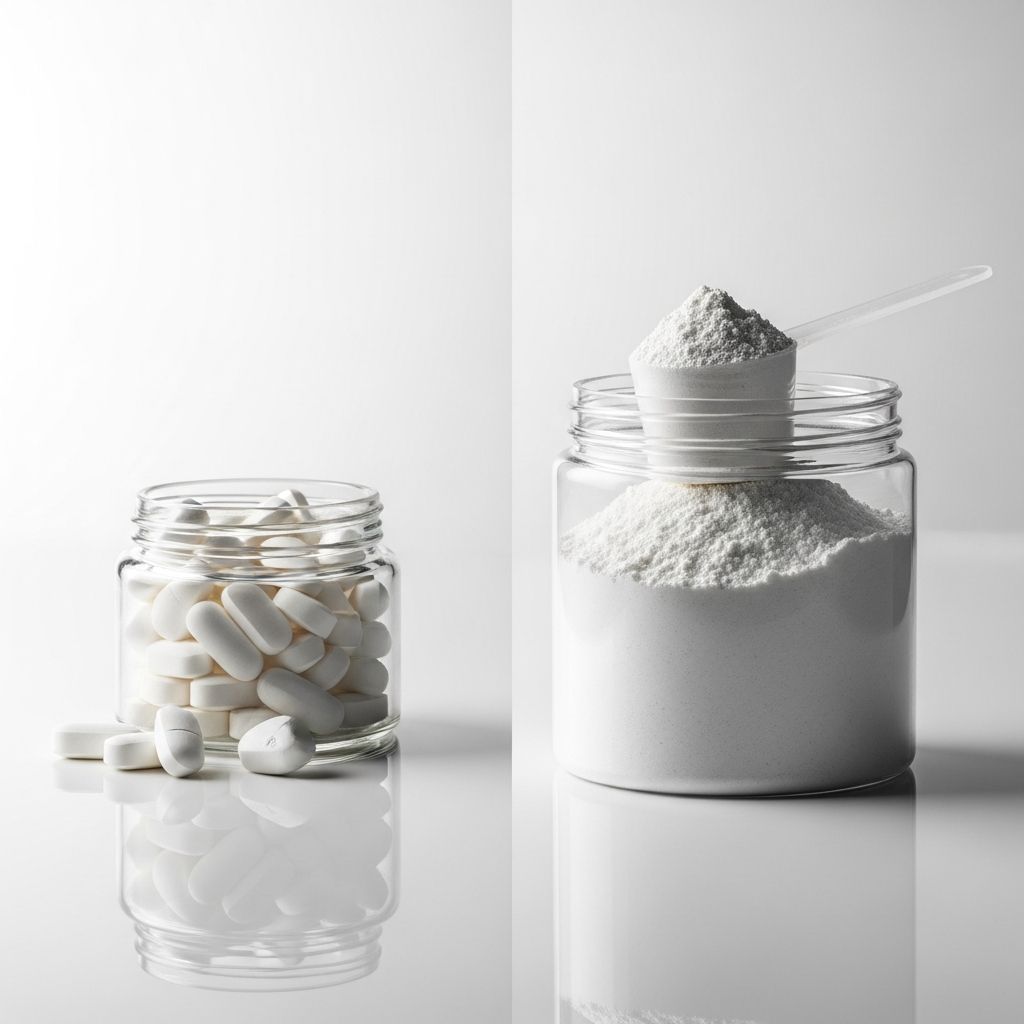
Creatine is one of the most researched and effective supplements for enhancing athletic performance, muscle growth, and strength. Available in forms like pills (capsules) and powder, choosing between them depends on factors such as convenience, cost, absorption, and personal preference. Creatine monohydrate, the most studied type, increases phosphocreatine stores in muscles, boosting ATP production for high-intensity exercises. This article breaks down the differences to help you decide.
What Is Creatine and How Does It Work?
Creatine is a naturally occurring compound found in meat and fish, synthesized by the body from amino acids. It plays a crucial role in energy production during short, explosive activities like weightlifting and sprinting. Supplementation saturates muscle creatine levels, leading to improved performance, increased muscle mass, and faster recovery.
Standard dosing involves a loading phase of 20 grams daily for 5-7 days, followed by a maintenance dose of 3-5 grams per day. Both pills and powder deliver this effectively, but their formats influence usability. The International Society of Sports Nutrition deems creatine safe for healthy adults at recommended doses, with rare side effects like mild bloating.
Creatine Pills: Pros and Cons
Creatine pills offer a portable, no-fuss option, ideal for busy lifestyles. Each capsule typically contains 750mg to 1g of creatine, requiring 3-6 pills for a 3-5g dose.
Pros of Creatine Pills
- Convenience: No mixing required; swallow with water anytime, anywhere. Perfect for travel or gym bags.
- No Taste Issues: Eliminates the gritty texture or neutral flavor of powder, appealing to those sensitive to supplements.
- Consistent Dosing: Pre-measured capsules ensure accuracy without scoops or scales.
- Potentially Fewer Digestive Upsets: Compact form may reduce bloating compared to undissolved powder.
Cons of Creatine Pills
- Higher Cost: Encapsulation adds manufacturing expenses; often 20-50% more per serving than powder.
- Multiple Pills Needed: Swallowing 4-6 capsules daily can be inconvenient for some.
- Slower Absorption: Capsules dissolve in the stomach first, potentially delaying uptake by 20-30 minutes versus powder.
- Less Flexible Dosing: Harder to adjust for loading phases or custom amounts.
Creatine Powder: Pros and Cons
Powder, usually micronized creatine monohydrate, comes in bulk tubs for easy mixing into shakes, water, or smoothies. A standard scoop provides 5g precisely.
Pros of Creatine Powder
- Cost-Effective: Significantly cheaper per gram; a 1kg tub lasts months at maintenance doses.
- Flexible Dosing: Easily measure exact amounts for loading (20g/day) or personalized needs.
- Faster Absorption: Dissolves quickly in liquids, entering the bloodstream sooner, especially post-workout.
- Versatile: Mix into protein shakes, juices, or recipes for better palatability.
Cons of Creatine Powder
- Preparation Required: Needs measuring and mixing, which can be messy on the go.
- Taste and Texture: Slightly gritty or chalky if not fully dissolved; some dislike the flavor.
- Portability Issues: Bulkier to carry; risk of spills.
- Potential Digestive Discomfort: Bloating if not mixed well or taken on an empty stomach.
Related Stories



Key Differences: Creatine Pills vs. Powder
Here’s a side-by-side comparison to highlight the trade-offs:
| Factor | Pills | Powder |
|---|---|---|
| Convenience | High (no prep) | Medium (mixing needed) |
| Dosing Flexibility | Low (fixed per pill) | High (precise scoops) |
| Absorption Speed | Slower (capsule breakdown) | Faster (dissolves instantly) |
| Cost per Serving | Higher ($0.20-0.40) | Lower ($0.05-0.15) |
| Taste/Texture | None | Neutral/gritty |
| Digestive Tolerance | Better for some | May cause bloating |
Data synthesized from expert analyses; costs approximate based on market averages. Research shows no significant difference in overall effectiveness, as muscle saturation occurs over days regardless of form.
Absorption and Bioavailability
Both forms use creatine monohydrate, with ~99% bioavailability. Powder absorbs slightly faster due to immediate solubility, but pills catch up as capsules dissolve. Studies indicate absorption differences don’t impact long-term results, as creatine builds up gradually. A 2023 review confirms monohydrate’s superiority over other forms, regardless of delivery. Take powder with carbs/insulin spike for optimal uptake.
Cost Comparison
Powder wins on budget: A 500g tub (~100 servings) costs $20-30, versus $40+ for equivalent pills. Over a year, powder saves $100-200. Bulk buying amplifies savings.
Safety and Side Effects
Creatine is safe; common issues include water retention (3-5lbs initial gain) and GI upset. Powder may exacerbate bloating if clumped; pills minimize this. Hydrate well (3-4L/day) and consult a doctor if kidney concerns exist. No evidence links creatine to hair loss or organ damage in healthy users.
How to Choose: Pills or Powder?
- Choose Pills If: You prioritize convenience, travel often, hate mixing, or have taste sensitivities.
- Choose Powder If: Budget matters, you need loading doses, prefer post-workout shakes, or want value.
- Hybrid Approach: Use powder at home, pills for travel.
Purity matters most: Opt for third-party tested products (NSF, Informed-Sport) to ensure no contaminants.
Frequently Asked Questions (FAQs)
Which is better for beginners: creatine pills or powder?
Pills for simplicity; powder for cost if committed long-term.
Do creatine pills work as well as powder?
Yes, both saturate muscles equally over time.
Can I switch between pills and powder?
Absolutely; consistency in daily intake is key.
Is creatine safe for women?
Yes, benefits strength and performance without masculinizing effects.
When is the best time to take creatine?
Post-workout with carbs, or anytime consistently.
Final Thoughts
Pills suit on-the-go users; powder excels in affordability and versatility. Both drive gains when dosed properly. Start with your lifestyle and scale up.
References
- Creatine Pills vs. Powder: Which is the Best Option for You? — NDL Pro Health. 2024. https://ndlprohealth.com/en-us/blogs/tips/creatine-pills-vs-powder
- Creatine Pills Vs Powder | Absorption Rates Don’t Affect Effectivity — MyProtein. 2024. https://us.myprotein.com/thezone/supplements/creatine-pills-vs-powder/
- Gummies vs Capsules vs Powders: What’s the Best Kind of Creatine? — Men’s Health. 2024-10-15. https://www.menshealth.com/health/a69191989/best-kind-of-creatine/
- Creatine Pills vs. Powder: Your Performance Choice — BUBS Naturals. 2024. https://www.bubsnaturals.com/blogs/creatine-and-fitness/creatine-pills-vs-powder-your-performance-choice
Similar Articles








Read full bio of Sneha Tete