Creeping Eruption: Causes, Symptoms & Treatment
Understanding creeping eruption: parasitic infection causes, symptoms, diagnosis, and effective treatment options.
Understanding Creeping Eruption
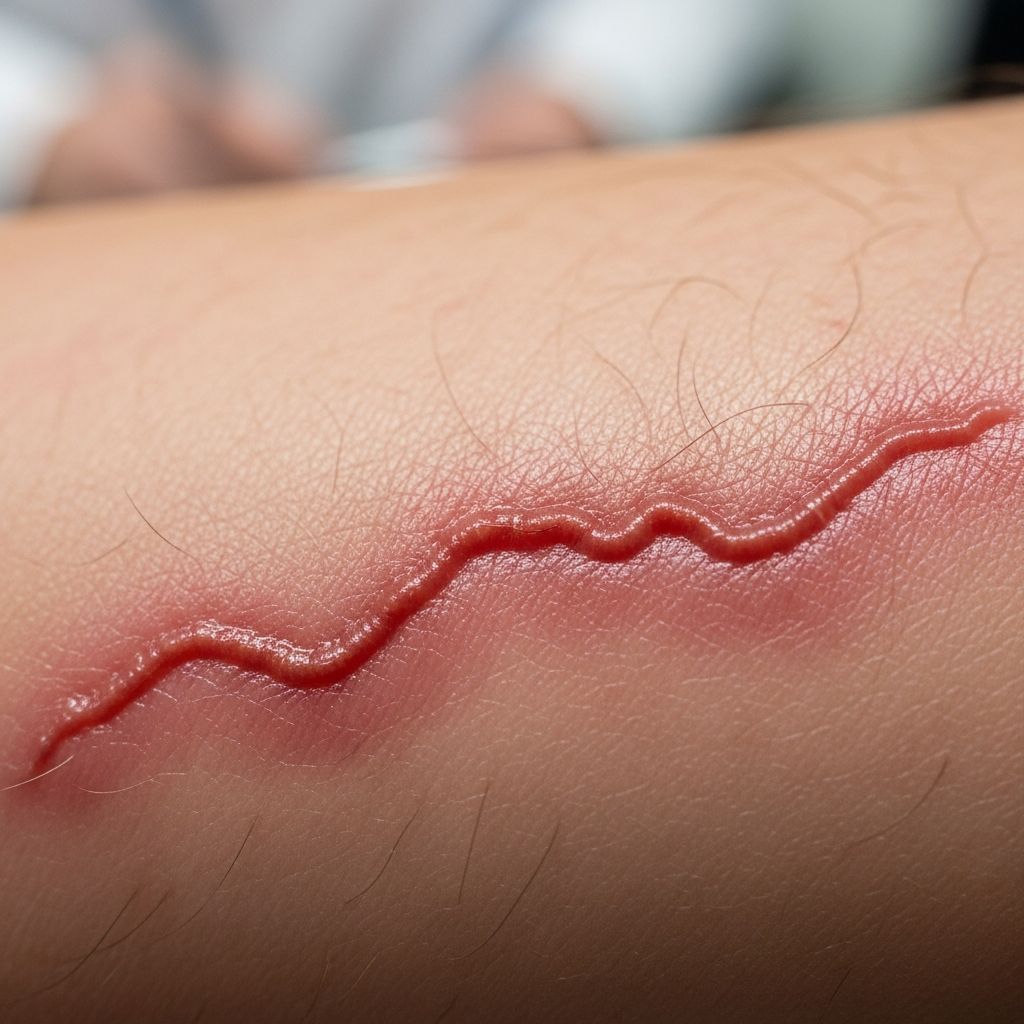
Creeping eruption, medically known as cutaneous larva migrans (CLM), is a parasitic skin infection caused by exposure to dog or cat hookworm larvae. This condition occurs when hookworm larvae, which are immature worms found in contaminated soil, penetrate the human skin and create distinctive winding tracks across the surface. The infection is characterized by intense itching, visible rashes, and blisters that follow a snakelike pattern as the larvae migrate beneath the skin.
The condition represents a significant health concern in tropical and subtropical regions, with particularly high prevalence rates in warm, humid climates. In the United States, the Southeast region reports the highest infection rates, reflecting the environmental conditions favorable for hookworm survival. While creeping eruption can affect individuals of any age, children are more commonly infected than adults, likely due to increased outdoor activity and barefoot contact with contaminated soil.
What Causes Creeping Eruption?
Creeping eruption develops through a specific cycle involving animal hookworms and environmental contamination. Hookworm eggs are present in the stool (feces) of infected dogs and cats. When these eggs are deposited in soil and vegetation, they hatch and develop into infectious larvae. These larvae can survive in moist, sandy soil and remain viable for extended periods, especially in warm climates.
The primary transmission route to humans involves direct contact with infested soil. When exposed skin comes into contact with contaminated earth containing hookworm larvae, the parasites can burrow directly into the skin. This penetration triggers an intense inflammatory response in the body, causing tissue damage and leading to the characteristic rash and severe itching associated with the condition.
The main risk factors for developing creeping eruption include:
- Contact with damp, sandy soil contaminated by infected pet feces
- Walking barefoot in warm, tropical environments
- Exposure to beaches, sandboxes, and other sandy areas in endemic regions
- Travel to tropical and subtropical countries with poor sanitation
- Close proximity to infected animals
Geographic prevalence is another crucial factor. The infection is significantly more common in tropical and subtropical countries, including parts of the Caribbean, Africa, Asia, and South America, where environmental conditions favor both animal hookworms and human exposure.
Recognizing Symptoms of Creeping Eruption
The symptoms of creeping eruption are distinctive and typically appear within days of initial exposure to contaminated soil. However, symptom onset can be variable, sometimes occurring more than a month after exposure. The infection manifests through several characteristic signs:
- Snakelike or winding rash: The most distinctive feature is a raised, red rash that follows the path of the burrowing larvae, typically measuring less than 1 centimeter (approximately one-half inch) per day in progression
- Intense itching: Often severe and may worsen at night, significantly affecting sleep quality and comfort
- Blisters: Fluid-filled bumps may develop along the rash pathway
- Multiple tracks: In severe infections, several serpentine tracks may be visible simultaneously
The rash typically appears on areas of the body exposed to contaminated soil, most commonly the feet and legs, though it can develop on the buttocks, back, or other contact areas. The characteristic winding pattern reflects the larva’s migration path under the skin, creating the distinctive appearance that gives the condition its common name.
Related Stories



How Is Creeping Eruption Diagnosed?
Diagnosis of creeping eruption primarily relies on clinical evaluation rather than laboratory testing. Healthcare providers can typically identify the condition by examining the patient’s skin in combination with a thorough history of exposure.
The diagnostic approach includes:
- Clinical examination: Visual inspection of the characteristic serpiginous (winding) rash is usually sufficient for diagnosis
- Patient history: Information about recent travel to endemic areas, barefoot exposure to sandy soil, and timeline of symptom development
- Skin biopsy: Performed in rare cases when the diagnosis is uncertain or other conditions need to be ruled out
- Blood tests: Very rarely used to detect elevated eosinophil levels (specific white blood cells), only when diagnosis remains uncertain
In most cases, the distinctive appearance of the rash combined with the patient’s exposure history provides sufficient evidence for diagnosis without additional testing. The winding, snakelike pattern progressing at a characteristic rate (typically less than 1 cm per day) is pathognomonic—meaning it is characteristic and essentially diagnostic of the condition.
Treatment Options for Creeping Eruption
While creeping eruption often resolves spontaneously as the hookworm larvae cannot survive long-term in human skin, medical treatment can significantly accelerate recovery and reduce symptoms.
Antiparasitic Medications
Several antiparasitic medications are effective in treating creeping eruption and can be administered through different routes:
- Albendazole: An oral medication commonly prescribed for parasitic infections
- Ivermectin: An antiparasitic agent available in oral form
- Thiabendazole: Can be administered orally or as a topical cream directly applied to the rash
Topical antiparasitic creams are particularly useful for localized infections, while oral medications may be preferred for more extensive involvement. The choice of medication and administration route depends on the extent of the infection, patient tolerance, and clinical judgment.
Supportive Care
Beyond antiparasitic treatment, supportive measures help manage symptoms and prevent complications:
- Avoiding scratching to prevent secondary bacterial infection
- Keeping the affected area clean and dry
- Using topical corticosteroids to reduce inflammation and itching
- Taking oral antihistamines to manage pruritus
- Wearing loose clothing that does not irritate the rash
Prognosis and Natural Course
Creeping eruption has a favorable prognosis. Without treatment, the infection typically resolves spontaneously within weeks to months as the hookworm larvae cannot sustain themselves in human tissue and eventually die. However, treatment with antiparasitic medications accelerates resolution, typically clearing the infection more rapidly and reducing the duration of symptoms.
Most patients experience complete recovery with appropriate management. The spontaneous resolution occurs because, unlike hookworms in their natural animal hosts, the larvae cannot complete their life cycle in human skin.
Potential Complications
Although rare, creeping eruption can lead to serious complications if left untreated or if scratching damages the skin barrier:
- Bacterial skin infections: The most common complication, resulting from scratching the rash and introducing bacteria into open wounds
- Systemic dissemination: Rarely, the infection can spread through the bloodstream to the lungs or small intestine, though this is exceptional
Most complications result from secondary bacterial infection rather than the hookworm itself. Maintaining good hygiene and resisting the urge to scratch significantly reduces complication risk.
Prevention Strategies
Preventing creeping eruption is considerably more effective than treating it. Protective measures include:
- Wear protective footwear: Shoes, sandals, or other protective covering when walking in sandy areas, particularly in tropical regions
- Avoid direct skin contact: Use towels or mats when sitting on sand or ground in endemic areas
- Practice pet hygiene: Regular deworming of household pets, particularly dogs and cats, reduces the parasite reservoir
- Avoid contaminated areas: Be cautious around beaches and sandy areas in countries with poor sanitation
- Maintain personal hygiene: Wash exposed skin thoroughly after outdoor activities
Who Is at Risk?
Certain populations face elevated risk for creeping eruption. Children are more frequently affected than adults, likely due to greater outdoor barefoot exposure. Travelers to endemic regions, particularly those visiting beaches or rural areas in tropical countries, represent another high-risk group. Individuals with occupational exposure to contaminated soil, such as agricultural workers or construction workers in endemic areas, also face increased risk.
The condition’s geographic distribution means that residents of and travelers to the Caribbean, Central America, South America, Africa, and Southeast Asia experience higher prevalence rates. Within the United States, inhabitants of and visitors to the Southeast have the highest risk due to the region’s warm, humid climate suitable for hookworm survival.
Frequently Asked Questions
Q: How quickly does creeping eruption progress?
A: The rash typically advances at a rate of approximately 1 centimeter (one-half inch) or less per day, creating the characteristic winding tracks. The progression rate helps distinguish creeping eruption from other skin conditions.
Q: Can creeping eruption be transmitted from person to person?
A: No, creeping eruption cannot spread between people. Transmission occurs only through direct contact with contaminated soil containing hookworm larvae, not through human-to-human contact.
Q: How long does untreated creeping eruption last?
A: Without treatment, creeping eruption typically resolves within weeks to months as the hookworm larvae cannot survive in human skin long-term. However, treatment with antiparasitic medications significantly reduces this timeline.
Q: Is creeping eruption common in the United States?
A: While not common nationwide, creeping eruption occurs with higher frequency in the Southeast United States. Most cases in the U.S. involve travelers returning from endemic tropical regions.
Q: What should I do if I suspect I have creeping eruption?
A: Seek medical evaluation promptly. Healthcare providers can diagnose the condition through clinical examination and recommend appropriate treatment. Early treatment prevents complications and accelerates recovery.
Q: Are there any serious long-term effects of creeping eruption?
A: No permanent long-term effects typically result from creeping eruption. Complete recovery occurs with appropriate treatment or even with spontaneous resolution.
References
- Creeping eruption — Mount Sinai Health System. 2024. https://www.mountsinai.org/health-library/diseases-conditions/creeping-eruption
- Cutaneous Larva Migrans — National Center for Biotechnology Information (NCBI), StatPearls, National Library of Medicine. 2024. https://www.ncbi.nlm.nih.gov/books/NBK507706/
- Hookworm Infection: Creeping Eruption — University of Rochester Medical Center. 2024. https://www.urmc.rochester.edu/encyclopedia/content?contenttypeid=85&contentid=P00272
- Skin conditions in the returned traveler — Johns Hopkins ABX Guide, Johns Hopkins Medicine. 2024. https://www.hopkinsguides.com/hopkins/view/Johns_Hopkins_ABX_Guide/540506/all/Skin_conditions_in_the_returned_traveler
- Creeping eruption — UF Health, University of Florida. 2024. https://ufhealth.org/conditions-and-treatments/creeping-eruption
- Creeping eruption — Florida HealthFinder Quality Health Information. 2024. https://quality.healthfinder.fl.gov/health-encyclopedia/HIE/1/001454
Similar Articles








Read full bio of medha deb