Crohn’s Disease Causes: 5 Major Triggers & Risk Factors
Unraveling the complex causes of Crohn’s disease: genetics, immunity, environment, and key risk factors explained.
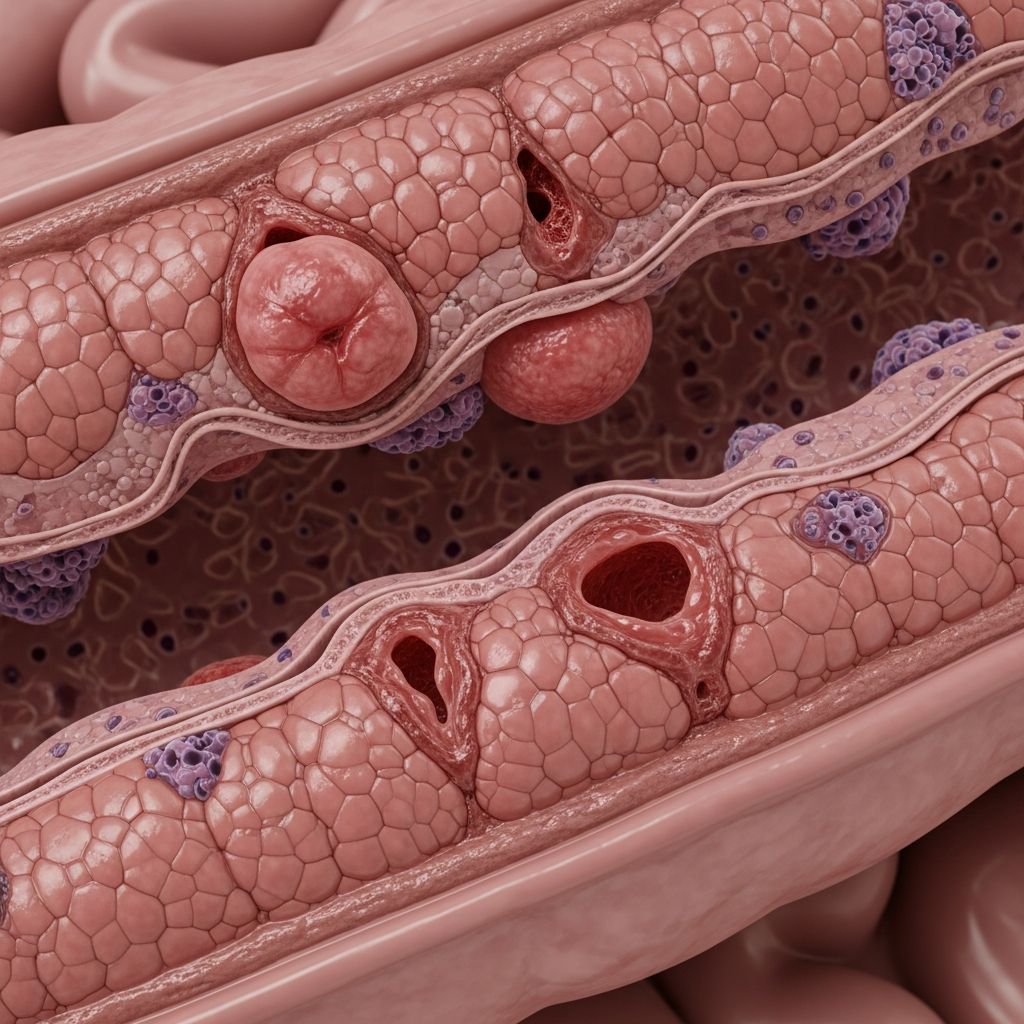
Crohn’s disease is a chronic inflammatory bowel disease (IBD) affecting any part of the gastrointestinal tract, most commonly the terminal ileum and colon. While the exact cause remains unknown, it results from a complex interplay of genetic, immunological, environmental, and microbial factors leading to persistent inflammation.
What Is Crohn’s Disease?
Crohn’s disease causes transmural inflammation, meaning it penetrates all layers of the intestinal wall, distinguishing it from ulcerative colitis, which is limited to the mucosa. This leads to symptoms like abdominal pain, diarrhea, weight loss, and fatigue. The condition arises from dysregulated immune responses to gut microbes in genetically susceptible individuals, resulting in noncaseating granulomas and progressive tissue damage.
Unlike infections, Crohn’s is not contagious, but it can flare and remit over time. It affects millions worldwide, with higher incidence in developed countries.
Genetic Factors
Genetics play a crucial role in Crohn’s disease susceptibility. Large-scale genome-wide association studies have identified over 200 IBD-associated genes and more than 71 specific loci for Crohn’s, influencing disease phenotypes like location and severity.
If a first-degree relative (parent, sibling, or child) has Crohn’s or another IBD, your risk increases significantly—up to 1 in 5 people with Crohn’s have a family history. Certain ethnic groups, such as those of Ashkenazi Jewish descent, show higher prevalence, particularly in Caucasian populations.
Mutations in genes like NOD2/CARD15 disrupt innate immunity, impairing the recognition of bacterial components and leading to excessive inflammation. These genetic variants do not guarantee disease but heighten vulnerability when combined with other triggers.
Immune System Dysfunction
A hallmark of Crohn’s disease is an abnormal immune response where the body attacks its own digestive tract cells. Normally, the immune system fights invading microbes, but in Crohn’s, it overreacts to normal gut bacteria or environmental antigens, causing chronic inflammation.
This involves dysregulated T-helper cells, macrophages, and neutrophils producing proinflammatory cytokines like TNF-α. The result is persistent activation of innate and adaptive immunity, leading to granuloma formation—a cluster of immune cells unique to Crohn’s.
Research suggests gut microbiome alterations (dysbiosis) trigger this response, where certain bacteria may provoke the immune overdrive, though it’s unclear if they initiate or exacerbate the disease.
Environmental Triggers
Environmental factors interact with genetics and immunity to precipitate Crohn’s. Smoking is the most significant modifiable risk, doubling the chance of developing the disease and worsening outcomes, including the need for surgery.
- Smoking: Nicotine and toxins disrupt gut barrier function and amplify inflammation.
- NSAIDs: Drugs like ibuprofen cause bowel inflammation, aggravating Crohn’s without causing it.
- Diet: High-fat diets may slightly elevate risk; certain foods trigger symptoms but do not cause the disease.
- Infections: Past gut infections or antibiotics altering microbiome may contribute.
Related Stories



Urban living, northern climates, and high-income countries correlate with higher rates, possibly due to hygiene hypothesis—reduced microbial exposure in childhood impairs immune tolerance.
Microbiome Imbalance
The gut microbiome is pivotal. In Crohn’s, there’s reduced diversity with overgrowth of harmful bacteria and depletion of protective ones. This dysbiosis likely triggers immune dysregulation, but whether it causes or results from inflammation is debated.
Studies show specific microbial patterns in Crohn’s patients, supporting the idea of an inappropriate response to commensal bacteria. Dietary changes or probiotics aim to restore balance, though evidence varies.
Risk Factors
Several factors increase Crohn’s likelihood:
| Risk Factor | Description | Impact |
|---|---|---|
| Family History | First-degree relative with IBD | 5-20x higher risk |
| Age | Diagnosis typically before 30 | Peak onset in young adults |
| Smoking | Current or past smoker | Most controllable; doubles risk |
| NSAIDs | Regular use of ibuprofen, etc. | Worsens inflammation |
| Ethnicity | Caucasian, Ashkenazi Jewish | Higher incidence |
| Diet | High-fat Western diet | Slight increase |
These factors do not act in isolation; their combination heightens susceptibility.
Other Potential Causes
Stress and diet do not cause Crohn’s but can exacerbate flares via the gut-brain axis. Antibiotics and birth control pills show minor associations by altering gut flora. No single pathogen is responsible, ruling out infectious origins alone.
Complications from Causes
Unchecked inflammation leads to fistulas, strictures, obstructions, ulcers, malnutrition, anemia, osteoporosis, blood clots, and increased colorectal cancer risk. Early management mitigates these.
Frequently Asked Questions (FAQs)
What causes Crohn’s disease?
The exact cause is unknown, but it involves genetic susceptibility, immune overreaction to gut bacteria, and environmental triggers like smoking.
Does diet cause Crohn’s?
No, but certain foods like high-fiber, fatty, or dairy products can worsen symptoms in some people.
Is Crohn’s hereditary?
It runs in families; having a first-degree relative increases risk, with over 70 genetic loci identified.
Does smoking cause Crohn’s?
Smoking is the strongest controllable risk factor, doubling development risk and severity.
Can stress trigger Crohn’s?
Stress doesn’t cause it but can aggravate flares through gut-brain connections.
Is Crohn’s an autoimmune disease?
Yes, characterized by immune system attacking digestive tract cells.
This comprehensive overview empowers understanding of Crohn’s causes. Consult healthcare providers for personalized advice.
References
- Crohn Disease – StatPearls — NCBI Bookshelf. 2023. https://www.ncbi.nlm.nih.gov/books/NBK436021/
- Crohn’s disease – Symptoms and causes — Mayo Clinic. 2023-10-29. https://www.mayoclinic.org/diseases-conditions/crohns-disease/symptoms-causes/syc-20353304
- Crohn’s Disease Causes, Symptoms & Treatment — Oshi Health. 2024. https://oshihealth.com/conditions/crohns-disease/
- Crohn’s Disease — MedlinePlus. 2024. https://medlineplus.gov/crohnsdisease.html
- Crohn’s Disease: What It Is, Symptoms, Causes & Treatment — Cleveland Clinic. 2023-12-17. https://my.clevelandclinic.org/health/diseases/9357-crohns-disease
Similar Articles








Read full bio of Sneha Tete