Crohn’s Skin Disease: Manifestations and Management
Understanding cutaneous manifestations of Crohn's disease and evidence-based treatment approaches.
Crohn’s Skin Disease: Overview and Prevalence
Crohn disease is a chronic inflammatory condition that primarily affects the gastrointestinal tract; however, its manifestations extend beyond the digestive system to involve multiple organ systems, including the skin. Skin involvement or cutaneous Crohn disease occurs in approximately 40% of patients with Crohn disease, making it a significant clinical concern for both gastroenterologists and dermatologists. When granulomatous lesions characteristic of Crohn disease involve sites other than the gastrointestinal tract, the disease is termed metastatic Crohn disease. Understanding these cutaneous manifestations is essential for comprehensive patient care and early recognition of systemic disease activity.
Classification of Cutaneous Crohn Disease
Cutaneous manifestations of Crohn disease can be classified into two primary categories based on their histopathological characteristics and clinical presentation:
- Specific lesions: Lesions with histopathological findings consistent with Crohn disease on biopsy, demonstrating non-caseating granulomatous inflammation
- Non-specific lesions: Skin conditions that occur as a reaction to the intestinal disease but lack diagnostic Crohn disease pathology on biopsy
Within the specific lesions category, two distinct subtypes are recognized: direct extension lesions and metastatic Crohn disease, each requiring different clinical approaches and treatment strategies.
Direct Extension Cutaneous Lesions
Direct extension cutaneous lesions occur when bowel disease extends directly to the skin surface, typically in proximity to the primary site of intestinal involvement. These lesions are most commonly observed in the perianal and perineal regions, as well as the orofacial areas. Clinically, patients may present with a range of findings that reflect the chronic inflammatory nature of the underlying bowel disease.
Perianal and Perineal Manifestations
The perianal region is the most frequently affected area in direct extension disease. Skin tags, swelling (oedema), fissures and abscesses around the perineal and perianal region are common in patients with Crohn disease. These manifestations often cause significant morbidity and discomfort for affected patients.
Specific clinical presentations include:
- Skin tags of varying sizes
- Edematous swelling that may fluctuate with disease activity
- Painful fissures that can severely limit function and quality of life
- Draining abscesses that may recur despite treatment
- Fistulous tracts that may develop between the skin and bowel
Patients may also develop painful vulval or scrotal fissures and ulceration. In rare cases, these cracks may tunnel through the skin to the bowel, creating a fistula, which represents a pathological channel between the skin surface and the intestinal tract. The presence of fistulas significantly complicates management and often necessitates surgical intervention.
Orofacial Involvement
Direct extension lesions can also affect the oral cavity and perioral region. These manifestations may include ulceration and inflammation of the lips, oral mucosa, and surrounding facial skin, reflecting the transmural nature of Crohn disease affecting multiple levels of the gastrointestinal tract.
Histological Features
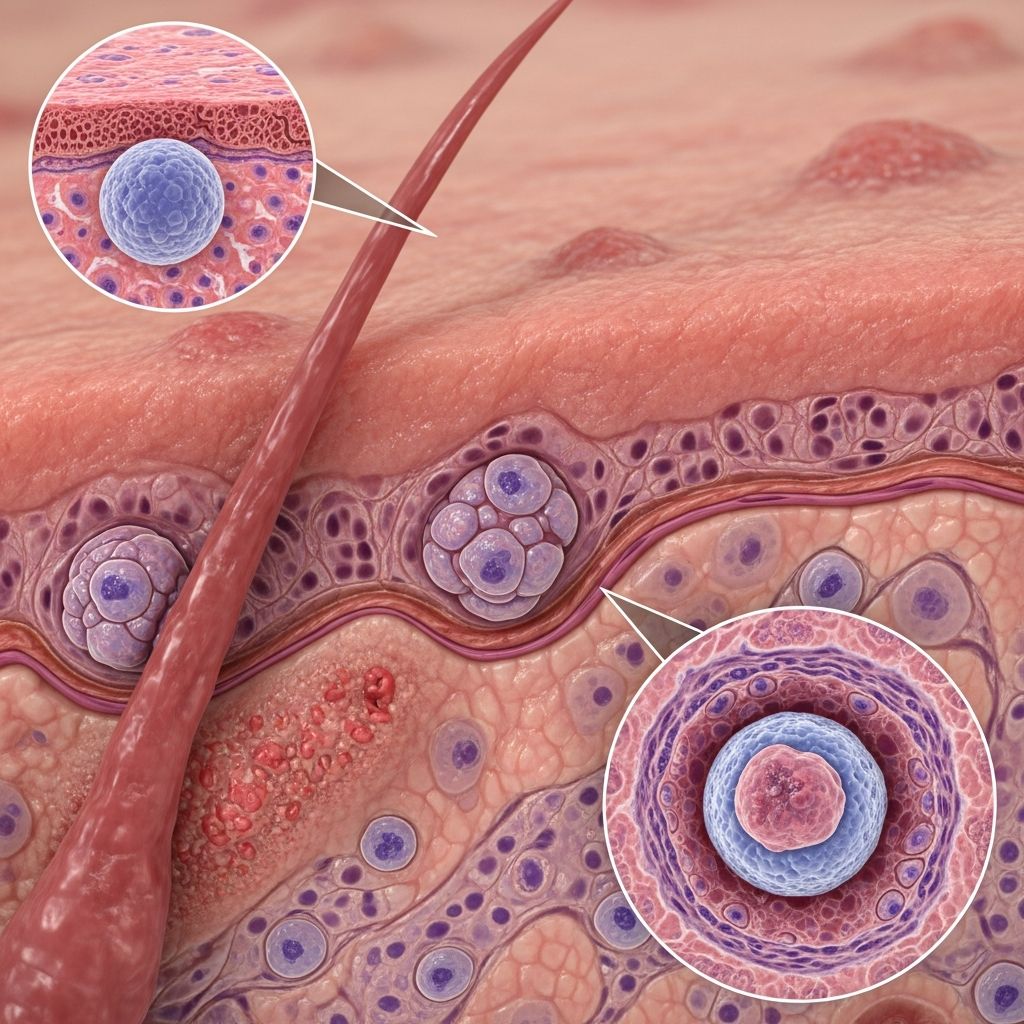
On histopathological examination, direct extension lesions demonstrate non-caseating granulomatous inflammation, which is characteristic of Crohn disease. This finding confirms the diagnosis and distinguishes these lesions from other inflammatory skin conditions. The granulomas are identical to those observed in bowel specimens, supporting the concept of direct disease extension.
Metastatic Crohn Disease (Cutaneous Crohn Disease)
Metastatic Crohn disease is a rare manifestation of cutaneous Crohn disease characterized by skin lesions with findings of Crohn disease on biopsy, but at sites distant and noncontiguous with the gastrointestinal tract. By definition, these lesions must be separated from the GI tract by normal tissue, distinguishing them from direct extension disease. Metastatic Crohn disease represents a more challenging clinical scenario, as the pathogenic mechanisms underlying disease dissemination remain poorly understood.
Related Stories



Clinical Presentation and Distribution
Metastatic granulomatous cutaneous Crohn disease may present as spots or plaques found on the trunk, arms and legs. Lesions tend to be asymmetrical and involve the dermis and/or subcutaneous tissue, sometimes presenting as panniculitis. They may be mildly itchy, though pruritus is not typically a prominent feature.
The most common sites of involvement include:
- Intertriginous areas (skin folds)
- Extremities
- Face
- Genitalia
Generally, the lesions are plaques or nodules with a red to purple hue that may even have an ulcerative component. In some presentations, metastatic Crohn disease may appear similar to direct extension disease, presenting as nodules, plaques, ulcers, lichenoid lesions, or violaceous perifollicular papules.
Histopathological Features
The defining characteristic of metastatic Crohn disease is the presence of non-caseating granulomatous inflammation on histological examination, identical to that found in bowel lesions and direct extension skin disease. This granulomatous response occurs in skin sites distant from the gastrointestinal tract, supporting the classification as a true extraintestinal manifestation rather than direct disease extension.
Non-Specific Cutaneous Manifestations
In addition to specific granulomatous lesions, patients with Crohn disease may develop various non-specific skin disorders that occur as a reaction to the intestinal disease. These conditions do not demonstrate granulomatous inflammation on biopsy but are associated with Crohn disease activity and may serve as indicators of systemic disease status.
Common non-specific cutaneous manifestations include:
- Erythema nodosum
- Pyoderma gangrenosum
- Aphthous stomatitis
- Psoriasis
- Eczema
These conditions often correlate with disease activity in the gastrointestinal tract and may improve with effective treatment of the underlying bowel inflammation.
Diagnostic Considerations
The diagnosis of cutaneous Crohn disease requires clinical correlation with gastrointestinal manifestations and histopathological confirmation when appropriate. Serological markers may provide supportive diagnostic evidence. The presence of anti-Saccharomyces cerevisiae (ASCA) antibodies in the blood are very suggestive of Crohn disease, with 60% sensitivity and 90% specificity. However, serology alone is insufficient for diagnosis and should be interpreted in the clinical context.
Skin biopsy demonstrating non-caseating granulomas in a patient with known or suspected Crohn disease confirms the diagnosis of cutaneous involvement. The distribution of lesions (direct extension versus metastatic) influences both diagnostic certainty and treatment planning.
Treatment Approach and Management
Treatment for Crohn skin disease is palliative not curative. The primary goal is symptom management and improvement of quality of life. Management strategies vary depending on the type of cutaneous involvement and the extent of systemic disease.
Treatment of Underlying Bowel Disease
Treatment of the intestinal manifestations usually improves the skin lesions. This fundamental principle underscores the close relationship between gastrointestinal and cutaneous disease activity. Effective control of bowel inflammation through systemic therapy often results in concurrent improvement or resolution of cutaneous manifestations, particularly non-specific lesions and some metastatic lesions.
Direct Extension Lesions
Direct extension disease, particularly fistulous involvement, often requires surgical intervention. The cutaneous lesion occurs due to a direct extension of bowel disease to the skin. In general, surgical intervention is required. Surgical approaches may include drainage of abscesses, treatment of fistulas, and in some cases, resection of affected bowel segments. Medical management with topical therapies and systemic anti-inflammatory agents provides supportive care but is typically insufficient as sole therapy for extensive direct extension disease.
Metastatic Crohn Disease
Treatment of metastatic Crohn disease often proves to be significantly difficult. Few therapeutic options are available, and there is very limited information regarding their efficacy. Management approaches include:
- Immunomodulators: Case reports have suggested using anti-TNF biologics or other immunosuppressive agents
- Corticosteroids: Topical or systemic corticosteroids may provide symptom relief and inflammation reduction
- Supportive care: Emollients and gentle skincare to minimize secondary infection and promote comfort
The therapeutic response to these interventions is variable and often suboptimal, necessitating individualized treatment planning and close monitoring.
Treatment-Induced Cutaneous Manifestations
A novel category of cutaneous findings has emerged in association with Crohn disease treatment using anti-TNF biologics. These medications, while highly effective for controlling bowel inflammation, can paradoxically trigger or exacerbate skin conditions including psoriasiform and eczematous dermatoses. Anti-TNF-associated skin lesions may be managed with various topical treatments, including topical corticosteroids, emollients, vitamin D analogs, and phototherapy. Withdrawal of the anti-TNF agent should resolve the lesions; however, this may not be necessary if the skin manifestations can be managed effectively with adjunctive therapies, allowing patients to continue benefiting from the anti-TNF agent’s GI benefits.
Impact on Quality of Life
Cutaneous manifestations of Crohn disease significantly impact patient quality of life beyond the inherent morbidity of the gastrointestinal disease itself. Perianal and genital involvement causes pain, drainage, and psychological distress. Visible skin lesions may result in social withdrawal and emotional burden. The chronic nature of these manifestations and the frequent inadequacy of treatment underscore the importance of comprehensive, multidisciplinary care involving gastroenterologists, dermatologists, and mental health professionals.
Frequently Asked Questions
Q: What percentage of Crohn disease patients develop skin manifestations?
A: Approximately 40% of patients with Crohn disease will develop at least one cutaneous manifestation during the course of their illness.
Q: What is the difference between direct extension and metastatic Crohn disease?
A: Direct extension disease occurs when bowel inflammation extends directly to adjacent skin in the perianal or orofacial regions. Metastatic Crohn disease refers to granulomatous skin lesions occurring at distant sites separated from the GI tract by normal tissue.
Q: Can skin manifestations of Crohn disease be cured?
A: Treatment for Crohn skin disease is palliative, not curative. However, controlling the underlying intestinal disease usually improves skin manifestations. Management focuses on symptom relief and improving quality of life.
Q: When is surgery necessary for cutaneous Crohn disease?
A: Surgical intervention is generally required for direct extension lesions, particularly when abscesses or fistulas develop. Surgical approaches may include drainage, fistula treatment, or bowel resection depending on the extent of disease.
Q: Can Crohn disease treatments cause skin problems?
A: Yes, anti-TNF biologic medications used to treat Crohn disease can trigger or exacerbate skin conditions such as psoriasis and eczema. These treatment-induced manifestations can often be managed with topical treatments while continuing the biologic therapy.
Q: What role do serological markers play in diagnosis?
A: Anti-Saccharomyces cerevisiae (ASCA) antibodies have 60% sensitivity and 90% specificity for Crohn disease and can provide supportive diagnostic evidence when cutaneous manifestations are present.
References
- Cutaneous Crohn Disease — StatPearls, National Center for Biotechnology Information (NCBI). 2025. https://www.ncbi.nlm.nih.gov/books/NBK470311/
- Crohn Skin Disease — DermNet New Zealand. https://dermnetnz.org/topics/crohn-skin-disease
- Metastatic Crohn Disease Pathology — DermNet New Zealand. https://dermnetnz.org/topics/metastatic-crohn-disease-pathology
- How Crohn’s Disease Affects Your Skin — Healthgrades Health Library. 2024. https://resources.healthgrades.com/right-care/crohns-disease/how-crohns-disease-affects-your-skin
- Crohn’s Disease Rash: Pictures, Symptoms, Treatment — HealthCentral. 2024. https://www.healthcentral.com/condition/crohns-disease/crohns-disease-rash
Similar Articles








Read full bio of Sneha Tete