Crusted Scabies: Causes, Symptoms, and Treatment
Understanding crusted scabies: A severe parasitic infection affecting immunocompromised patients.
Crusted Scabies: Overview and Definition
Crusted scabies, formerly known as Norwegian scabies, is a severe and highly contagious hyperinfestation caused by the parasitic mite Sarcoptes scabiei var hominis. Unlike conventional scabies, which typically involves 10–20 mites, crusted scabies is characterized by an enormous mite burden, with individuals infected carrying up to 4,000 mites per gram of skin, often totaling more than 1 million mites across the body. This uncommon condition primarily affects patients with weakened or compromised immune systems, making it a significant concern in specific populations and healthcare settings.
The condition was historically named after its initial description in 19th-century Norway[10]. The dramatically increased mite population in crusted scabies distinguishes it from classic scabies, presenting unique diagnostic and treatment challenges that require specialized medical intervention.
Demographics and Risk Factors
Crusted scabies occurs predominantly in individuals with compromised immune systems. The following groups face significantly elevated risk:
- Patients with uncontrolled HIV infection
- Individuals with hematologic malignancies, including leukaemia or lymphoma
- Immunosuppressed transplant recipients
- Elderly patients with multiple comorbidities
- People receiving immunosuppressive medications
- Residents of remote Aboriginal communities in Northern Australia
- Individuals living in low socioeconomic areas with crowded living conditions
Additionally, crusted scabies may develop following misdiagnosis and inappropriate treatment of similar dermatological conditions such as psoriasis or seborrhoeic dermatitis.
Pathophysiology and Causes
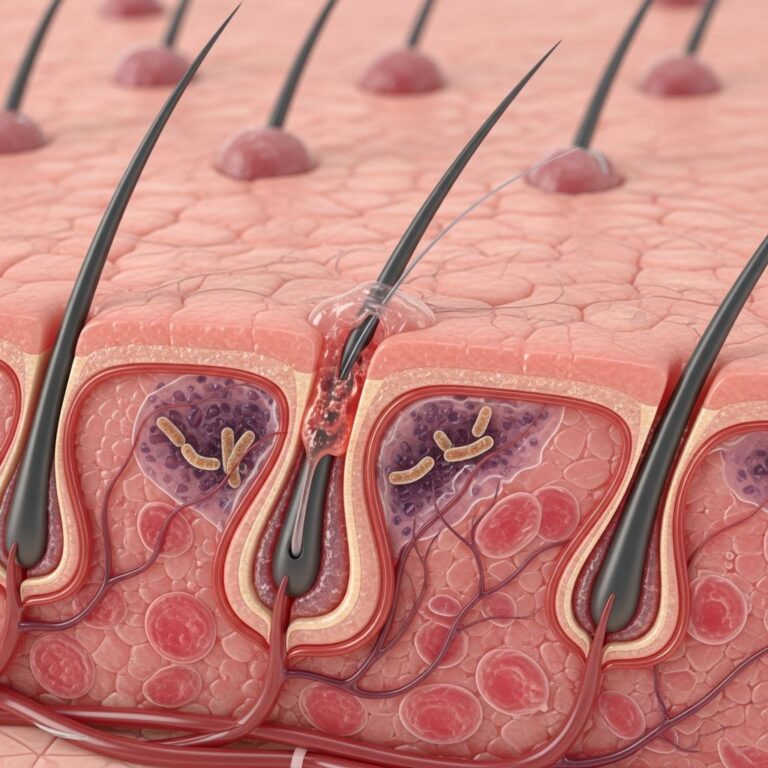
The exact mechanisms underlying crusted scabies development remain incompletely understood. However, current research demonstrates that the condition arises when individuals fail to mount an adequate immune response to scabies mites. The pathophysiology involves specific immunological abnormalities, including elevated levels of eosinophils, immunoglobulin E (IgE), and immunoglobulin G (IgG). Histological examination reveals marked infiltration of the dermis with lymphocytes and eosinophils, accompanied by an increased ratio of CD8+ lymphocytes compared to normal skin.
Histopathologically, crusted scabies presents with a markedly thickened stratum corneum and epidermal acanthosis. The numerous mites within the stratum corneum are associated with pronounced hyperkeratosis, far exceeding the mite burden observed in conventional scabies. These immunological and histological features explain both the massive mite proliferation and the unique clinical presentation of the disease.
Clinical Features and Presentation
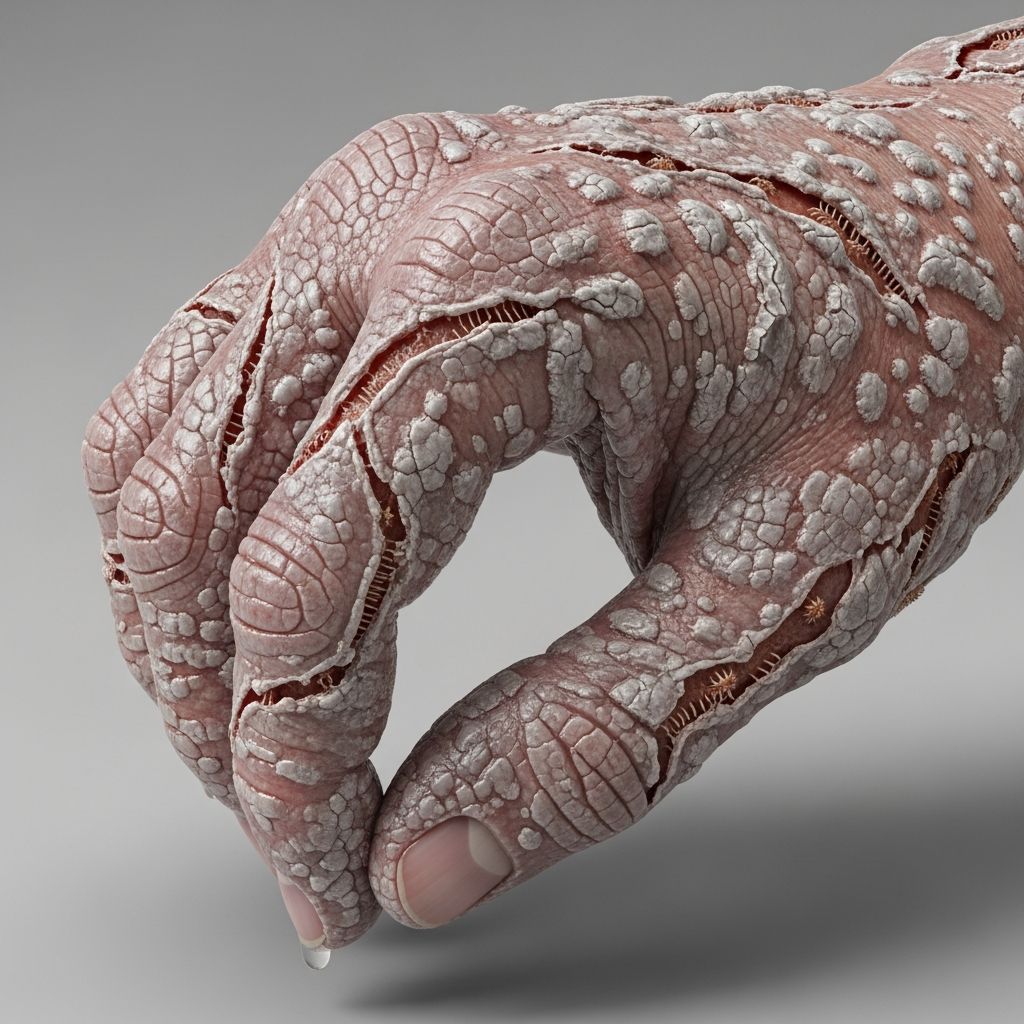
Crusted scabies presents with distinctive clinical characteristics that differ markedly from conventional scabies. The condition typically begins with poorly defined red patches that gradually develop into thick, scaly plaques. The crusts are typically yellowish in color and hyperkeratotic in nature.
Distribution and Affected Areas
Common sites of involvement include:
- Between the fingers and in finger webbing
- Underneath and within nail beds, often causing nail plate splitting
- Palms and soles of feet, often with diffuse involvement
- Elbows and knees
- Limbs and trunk
- Ears and eyebrows
- Buttocks
Symptomatology
A notable characteristic of crusted scabies is the absence or minimal presence of itching. This unusual feature likely results from the immunocompromised status of affected individuals, whose weakened immune response produces reduced inflammatory reactions compared to immunocompetent patients with conventional scabies. The reduced sensation of itching may delay diagnosis and treatment, as patients often present late in the disease course. When present, pruritus tends to be mild or localized rather than the severe, generalized itching characteristic of conventional scabies.
Related Stories



Complications
Crusted scabies carries significant risks for serious complications, particularly in vulnerable populations:
- Secondary bacterial infections due to extensive skin involvement and breached skin barriers
- Sepsis from bacterial superinfection
- Systemic complications in elderly patients
- Disease-related mortality, particularly in older patients, with mortality attributed to sepsis
- Nail dystrophy and permanent nail damage
- Increased risk of reinfestation due to immunocompromised status
The mortality risk associated with crusted scabies is significantly higher in older patients compared to those with conventional scabies, highlighting the serious nature of this condition and the importance of prompt treatment.
Diagnosis
Crusted scabies can be readily diagnosed clinically based on characteristic presentation. Diagnosis is confirmed through identification of mites or eggs using various examination methods:
- Dermoscopic examination: Direct visualization of burrows containing mites and eggs
- Microscopic examination: Identification of mites, eggs, and fecal material from skin scrapings of burrows
- Reflectance confocal microscopy: Advanced imaging technique allowing visualization of burrows, mites, eggs, and mite feces without invasive sampling
The abundance of mites in crusted scabies makes diagnosis more straightforward than in conventional scabies, where mites may be sparse. Multiple skin scrapings from different body areas increase diagnostic yield.
Treatment Protocols
Effective treatment of crusted scabies requires combination therapy incorporating both oral and topical medications, along with supportive measures. Treatment complexity necessitates careful clinical judgment regarding duration and endpoint determination.
Severity Grading System
The Royal Darwin Hospital grading system guides treatment intensity and duration:
| Grade | Total Score | Severity Level |
|---|---|---|
| Grade 1 | 4–6 points | Mild |
| Grade 2 | 7–9 points | Moderate |
| Grade 3 | 10–12 points | Severe |
The grading system evaluates distribution, crusting/shedding, past episodes, and current skin condition.
Oral Medication
Ivermectin forms the cornerstone of systemic therapy. The standard dose is 200 μg/kg for adults and children weighing over 14 kg, rounded up to the nearest 3 mg dose. Administration should occur after a fatty meal to optimize absorption. Multiple doses are typically required, with treatment duration determined by clinical response.
Topical Therapy
Topical scabicides are applied according to the following schedule:
- Every second day during the first week of treatment
- Twice weekly thereafter until cure is achieved
Before topical scabicide application, crusts should be softened in warm water. Keratolytic creams are applied on alternate days to scabicides to facilitate removal of hyperkeratotic plaques. Recommended keratolytic and scabicidal agents include:
- Permethrin
- Benzyl benzoate
- Crotamiton
CDC-Recommended Regimen
The United States Centers for Disease Control (CDC) provides an alternative combination regimen that clinicians may employ based on individual patient circumstances and treatment tolerability.
Treatment Monitoring and Duration
The treating dermatologist or infectious disease physician must carefully re-examine the patient to determine the appropriate time to discontinue treatment. Treatment typically extends several weeks or longer, and patients may require further treatment if signs of infestation persist after one month of therapy.
Environmental and Contact Management
Given the extreme contagiousness of crusted scabies and the ability of mites to survive up to 72 hours away from the human host, comprehensive environmental management is essential. Living areas should be thoroughly cleaned, as crusted plaques are commonly shed and contaminate the environment. Specific measures include:
- Thorough cleaning of all living spaces
- Laundering of all linen and bedding
- Cleaning or replacement of mattresses
- Disinfection of furniture that may harbor mites
All family members and close contacts must be screened for crusted scabies and treated accordingly, regardless of examination findings. Close contacts should receive topical scabicide treatment and repeat the application after one week.
Prognosis and Outcomes
With appropriate treatment, crusted scabies can be cured. However, patients require careful long-term follow-up due to significant risk of reinfestation, particularly those with ongoing immunosuppression or living in crowded conditions. Education regarding prevention measures and regular clinical reassessment are essential components of long-term management.
Despite cure potential, mortality risk remains elevated in older patients with crusted scabies compared to those with conventional scabies, with deaths primarily attributable to sepsis from secondary bacterial infection. This underscores the importance of prompt diagnosis, aggressive treatment, and vigilant monitoring for complications.
Transmission and Contagiousness
Crusted scabies is exceptionally contagious compared to conventional scabies. Transmission occurs through multiple routes:
- Direct skin-to-skin contact with affected individuals
- Contact with contaminated clothing and bedding
- Contact with infested furniture
- Indirect contact with shed crusts containing viable mites
The enhanced transmissibility results from the massive mite burden present in crusted plaques that regularly shed and contaminate the environment, allowing mites to survive and remain infectious for extended periods.
Frequently Asked Questions
Q: What is the difference between crusted scabies and conventional scabies?
A: The primary difference lies in mite burden. Conventional scabies involves 10–20 mites, while crusted scabies involves thousands to millions of mites, producing thick hyperkeratotic crusts. Crusted scabies predominantly affects immunocompromised patients and presents with minimal or absent itching.
Q: Why do patients with crusted scabies not experience itching?
A: The minimal or absent itching in crusted scabies likely results from the immunocompromised status of affected individuals, whose weakened immune response produces reduced inflammatory reactions compared to immunocompetent patients.
Q: How long does treatment for crusted scabies typically last?
A: Treatment typically extends several weeks or longer until cure is achieved. The exact duration depends on disease severity, patient response, and immune status. Careful clinical re-examination determines when treatment should be discontinued.
Q: Can crusted scabies be cured?
A: Yes, crusted scabies can be cured with appropriate combination therapy including oral ivermectin and topical scabicides. However, patients remain at risk of reinfestation due to immune status and living conditions.
Q: How is crusted scabies transmitted?
A: Crusted scabies spreads through direct skin-to-skin contact, contaminated clothing and bedding, infested furniture, and shed crusts containing viable mites. The condition is highly contagious compared to conventional scabies.
Q: Who is at highest risk for developing crusted scabies?
A: Individuals with compromised immune systems are at highest risk, including those with HIV infection, hematologic malignancies, immunosuppression from medications, elderly patients, and residents of low socioeconomic areas with crowded living conditions.
References
- Crusted scabies pathology — DermNet, Assoc Prof Patrick Emanuel, Dermatopathologist. 2015-01. https://dermnetnz.org/topics/crusted-scabies-pathology
- Crusted scabies — DermNet. https://dermnetnz.org/topics/crusted-scabies
- Crusted scabies: What is it, symptoms, treatment, and more — Medical News Today. https://www.medicalnewstoday.com/articles/crusted-scabies
- Scabies: diagnosis and management — BPAC (Best Practice Advocacy Centre). 2022-04. https://bpac.org.nz/2022/docs/scabies.pdf
- Scabies: Causes, Symptoms, and Treatment — Patient.info. https://patient.info/doctor/dermatology/scabies-pro
Similar Articles








Read full bio of Sneha Tete