CT vs MRI vs X-ray: Medical Imaging Comparison
Understand the differences between CT scans, MRI, and X-rays for informed medical decisions.
CT vs MRI vs X-ray: Understanding Medical Imaging Technologies
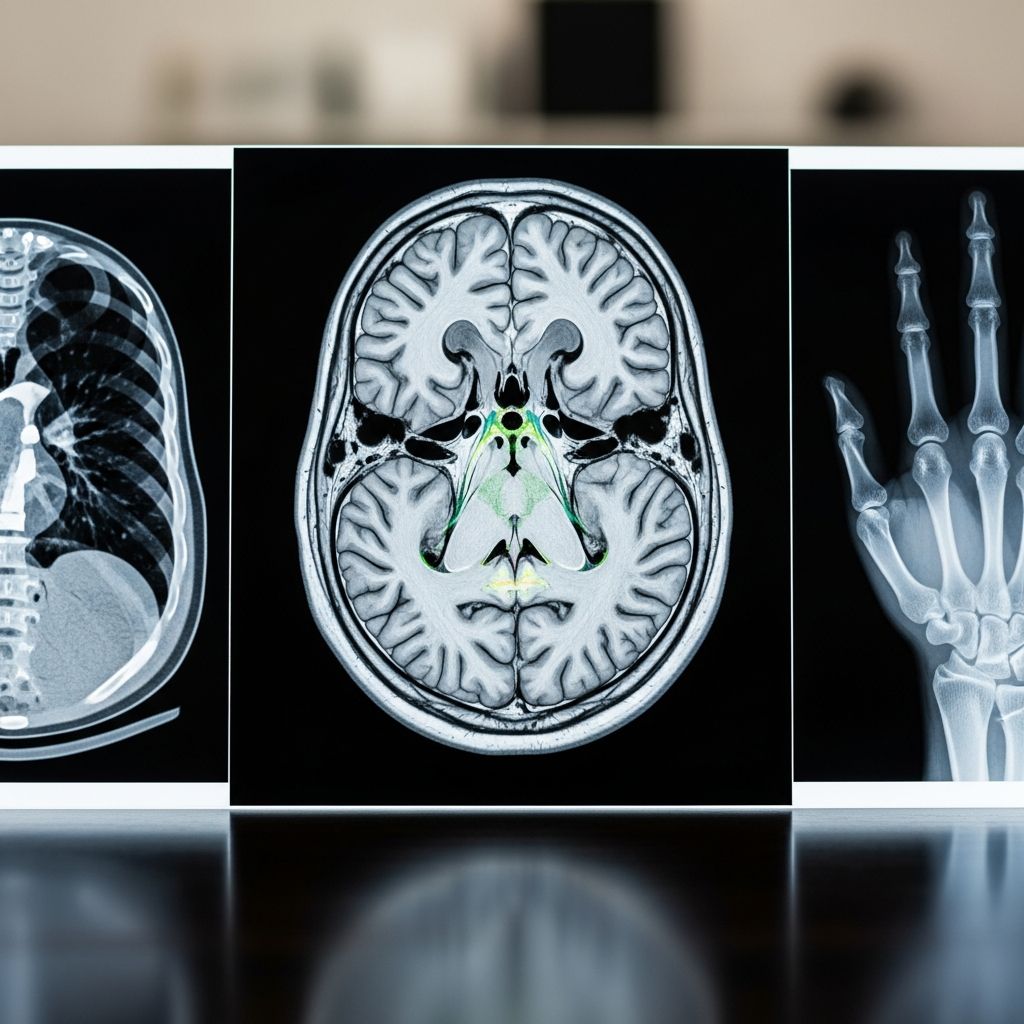
When your healthcare provider orders diagnostic imaging, you may wonder which technology they’re recommending and why. The three most common medical imaging techniques are X-rays, CT (Computed Tomography) scans, and MRI (Magnetic Resonance Imaging). Each has distinct advantages, limitations, and specific applications. Understanding the differences between these imaging methods can help you better comprehend your diagnosis and treatment plan.
X-Rays: The Foundation of Medical Imaging
X-rays represent the oldest and most widely available diagnostic imaging technique in medicine. They have been used for over a century to visualize internal structures of the body. Despite their age, X-rays remain one of the most frequently ordered imaging studies in clinical practice.
How X-Rays Work
X-rays use a small dose of ionizing radiation to capture images of bones and certain dense structures in the body. When electromagnetic waves pass through the body, dense materials like bone absorb the radiation and appear white on the film, while softer tissues appear in shades of gray. This fundamental principle has remained unchanged since X-rays were first discovered.
Best Uses for X-Rays
X-rays are particularly effective for detecting:
– Bone fractures and dislocations- Bone degeneration or arthritis- Infections in bones- Bone tumors- Lung conditions and abnormalities- Foreign objects in the body
Advantages of X-Rays
X-rays offer several significant advantages that make them the most commonly ordered imaging study. They are quick, typically taking only minutes to complete. They are also the least expensive imaging option, making them accessible to most patients. X-rays use minimal radiation exposure, and the equipment is widely available even in small clinics and rural hospitals. Additionally, X-rays require no special preparation and can be performed on virtually all patients, including those with metal implants or pacemakers.
Limitations of X-Rays
Despite their benefits, X-rays have notable limitations. They provide only two-dimensional images, which can limit diagnostic accuracy. X-rays do not provide detailed images of soft tissues such as the brain, spinal cord, muscles, organs, or blood vessels. This limitation means that X-rays are not suitable for evaluating many neurological conditions or internal organ diseases. Additionally, repeated X-ray exposure carries a cumulative radiation risk.
CT Scans: Enhanced Cross-Sectional Imaging
A CT (Computed Tomography) scan, also called a CAT scan, represents a significant advancement over standard X-rays. CT scans combine multiple X-ray images taken from different angles to create detailed cross-sectional pictures of the body, providing far more detail than a standard X-ray.
How CT Scans Work
A rotating X-ray machine and sophisticated computer generate layered images that can be reconstructed into three-dimensional views of the body. As the patient lies on a table that slides through a tunnel-shaped scanner, the machine rotates around the patient, taking hundreds of thin cross-sectional images. These images are then processed by a computer to create detailed three-dimensional reconstructions of internal structures.
Related Stories



Best Uses for CT Scans
CT scans are excellent for detecting:
– Brain bleeding and hemorrhage- Tumors and cancers- Skull fractures and traumatic brain injuries- Strokes and cerebrovascular accidents- Structural abnormalities in the brain and spine- Kidney stones- Appendicitis and abdominal emergencies- Heart disease and coronary artery disease- Infections and inflammatory conditions
Advantages of CT Scans
CT scans provide superior detail compared to X-rays, making them invaluable for complex diagnoses. They are quick and noninvasive, making them ideal in emergency situations such as suspected strokes or traumatic brain injuries. CT scans can visualize bone, soft tissue, and blood vessels simultaneously. They are also useful for guiding interventional procedures and can detect diseases before symptoms appear. Most patients can tolerate CT scans easily without discomfort or claustrophobia concerns.
Limitations of CT Scans
CT scans use higher radiation than standard X-rays, which increases cumulative radiation exposure risk with repeated scans. While better than X-rays for soft tissue imaging, CT images of soft tissue are not as detailed as those from an MRI. The contrast dyes used in some CT scans can cause allergic reactions in sensitive individuals. CT scans are also more expensive than X-rays and may not be available at all healthcare facilities, particularly in small or rural hospitals.
MRI: Detailed Soft Tissue Imaging Without Radiation
MRI (Magnetic Resonance Imaging) represents a fundamentally different approach to medical imaging. Rather than using radiation, MRI uses strong magnets and radio waves to create highly detailed images of the body’s soft tissues.
How MRI Works
MRI machines detect signals from hydrogen atoms in the body, creating detailed images of organs, nerves, and tissues. The MRI applies a powerful magnetic field, which aligns the protons in your body. Radio waves are then applied in short bursts to these protons, producing signals that the MRI scanner detects. A sophisticated computer processes these signals and creates detailed three-dimensional images of the examined body areas.
Best Uses for MRI
MRI excels at evaluating:
– Neurological conditions such as multiple sclerosis- Brain tumors and spinal cord injuries- Strokes and cerebrovascular diseases- Nerve disorders and peripheral neuropathy- Soft tissue injuries, including torn ligaments and cartilage- Herniated discs and spinal disorders- Bone and joint problems- Organ diseases, particularly in the heart, liver, and prostate- Breast abnormalities and cancers
Advantages of MRI
MRI offers unmatched clarity for soft tissue structures, making it the gold standard in many neurological diagnoses. MRI does not involve radiation exposure, eliminating cumulative radiation risk. The images produced are exceptionally detailed and can detect certain cancers, such as those of the prostate, breast, or liver, that may be harder to see on CT scans. MRI can also provide functional information about tissues and organs, not just anatomical details.
Limitations of MRI
MRI scans take significantly longer than other imaging methods, typically requiring 30 to 60 minutes to complete. The MRI machine is very noisy during operation, which some patients find uncomfortable. The enclosed tunnel-like design can trigger claustrophobia in sensitive individuals. Metal implants can sometimes prevent patients from undergoing an MRI safely, including certain types of pacemakers, cochlear implants, and metallic foreign bodies. MRI is also more expensive than both X-rays and CT scans, and the extended scanning time increases patient discomfort and the possibility of motion artifacts that degrade image quality.
Comparing the Three Imaging Technologies
| Feature | X-Ray | CT Scan | MRI |
|---|---|---|---|
| Imaging Technology | Ionizing radiation | Ionizing radiation (multiple angles) | Magnetic fields and radio waves |
| Image Dimensions | 2D images | 3D cross-sectional images | 3D cross-sectional images |
| Radiation Exposure | Low dose | Higher dose | None |
| Scanning Time | Minutes | Minutes | 30-60 minutes |
| Cost | Most affordable | Moderate to expensive | Most expensive |
| Best for Bones | Yes | Excellent | Limited detail |
| Best for Soft Tissue | Limited | Good | Excellent |
| Availability | Widely available | Widely available | More limited availability |
| Metal Implants Compatible | Yes | Yes | Often restricted |
How Doctors Choose the Right Imaging Method
Your healthcare provider selects imaging based on several factors. The clinical question being asked determines which imaging modality best answers that question. The location of the suspected problem guides selection—bone imaging favors X-rays or CT, while soft tissue evaluation favors MRI. The urgency of diagnosis matters significantly; emergency departments typically use X-rays and CT scans because they are fast. Patient factors including pregnancy status, metal implants, claustrophobia, and ability to remain still influence imaging choice. Cost considerations and insurance coverage may also affect the decision, as do the capabilities available at your healthcare facility.
Typically, imaging follows a progression. Patients often receive an X-ray first because it is quick, inexpensive, and widely available. If X-rays don’t provide sufficient diagnostic information, CT or MRI may be ordered for more detailed imaging. In emergency situations, CT scans are often preferred because they provide comprehensive detail rapidly. For neurological and soft tissue conditions, MRI is generally preferred when time permits and patient factors allow.
Safety Considerations
Both CT and MRI are considered safe, noninvasive imaging techniques that are generally well tolerated. However, each carries specific safety considerations. X-rays and CT scans involve ionizing radiation exposure, though the amount used is carefully controlled and considered safe for diagnostic purposes. Repeated imaging increases cumulative radiation exposure, so doctors weigh benefits against risks for multiple studies.
MRI poses no radiation risk but requires careful screening for metal implants and devices that could malfunction or move in the powerful magnetic field. Patients should always inform their healthcare provider of any metal implants, pacemakers, or metallic foreign bodies before undergoing MRI. Some patients experience temporary heating sensations or mild discomfort from the magnetic field, but serious adverse effects are rare.
Frequently Asked Questions
Q: Is one imaging method better than the others?
A: No single method is universally better. Each has specific strengths. X-rays are best for quick bone imaging, CT scans excel at providing rapid detailed cross-sectional views, and MRI offers unmatched soft tissue detail without radiation. The best choice depends on your specific medical situation.
Q: Are these imaging tests painful?
A: X-rays and CT scans are completely painless. MRI is also painless but can cause discomfort due to noise, length of the procedure, and claustrophobia concerns in confined spaces.
Q: Can I have these imaging tests while pregnant?
A: X-rays and CT scans involve radiation and are generally avoided during pregnancy unless medically necessary and carefully justified. MRI is often considered safer during pregnancy since it does not use radiation, though gadolinium contrast agents are typically avoided in the first trimester unless essential.
Q: How long do imaging tests take?
A: X-rays typically take just minutes. CT scans usually take 5 to 10 minutes. MRI scans take 30 to 60 minutes depending on the area being scanned and the number of sequences needed.
Q: What is the cost difference between these imaging methods?
A: X-rays are the least expensive. CT scans cost more but less than MRI. MRI scans are typically the most expensive of the three options, though costs vary by location and facility.
Q: Do I need special preparation for these imaging tests?
A: X-rays require minimal preparation. CT scans may require fasting or contrast dye depending on the study. MRI requires removal of all metal objects and extensive screening for metal implants before the procedure.
Conclusion
Understanding the differences between X-rays, CT scans, and MRI helps you appreciate why your healthcare provider selected a specific imaging method for your diagnosis. X-rays remain the workhorse of medical imaging for bone-related concerns due to their speed and accessibility. CT scans provide rapid, detailed cross-sectional imaging ideal for emergency situations and complex diagnoses. MRI offers exceptional soft tissue detail without radiation exposure, making it invaluable for neurological and soft tissue evaluations. Each imaging modality plays a crucial role in modern medicine, and the selection of the appropriate technique depends on clinical circumstances, patient factors, and the specific diagnostic question being asked.
References
- Difference Between an X-Ray, CT Scan, PET Scan, and MRI — FC Neurology. 2024. https://www.fcneurology.net/what-is-the-difference-between-an-x-ray-ct-scan-pet-scan-and-mri/
- Differences Between X-Rays, CT Scans & MRI’s — Envision Radiology. 2024. https://www.envrad.com/difference-between-x-ray-ct-scan-and-mri/
- CT Scans, MRIs, and X-rays, Oh My! Making Sense of Imaging — Westchester Health. 2024. https://www.wth.org/blog/ct-scans-mris-and-x-rays-oh-my-making-sense-of-imaging/
- What’s the Difference Between an X-ray, CT Scan and MRI? — North Central Surgical. 2024. https://northcentralsurgical.com/whats-the-difference-between-an-x-ray-ct-scan-and-mri/
- X-Ray vs. CT vs. MRI: What Type of Imaging Do I Need? — Excel Spine. 2024. https://excelspine.com/x-ray-vs-ct-vs-mri-what-type-of-imaging-do-i-need/
- CT Scan vs. MRI: What’s the Difference? — Memorial Sloan Kettering Cancer Center. 2024. https://www.mskcc.org/news/ct-vs-mri-what-s-difference-and-how-do-doctors-choose-which-imaging-method-use
- X-rays CT Scans and MRI Scans — OrthoInfo, American Academy of Orthopaedic Surgeons. 2024. https://orthoinfo.aaos.org/en/treatment/x-rays-ct-scans-and-mris/
Similar Articles








Read full bio of medha deb