Chest CT Scan: Benefits, Risks, And What To Expect
Comprehensive overview of chest CT scans, their uses, benefits, risks, and what to expect.
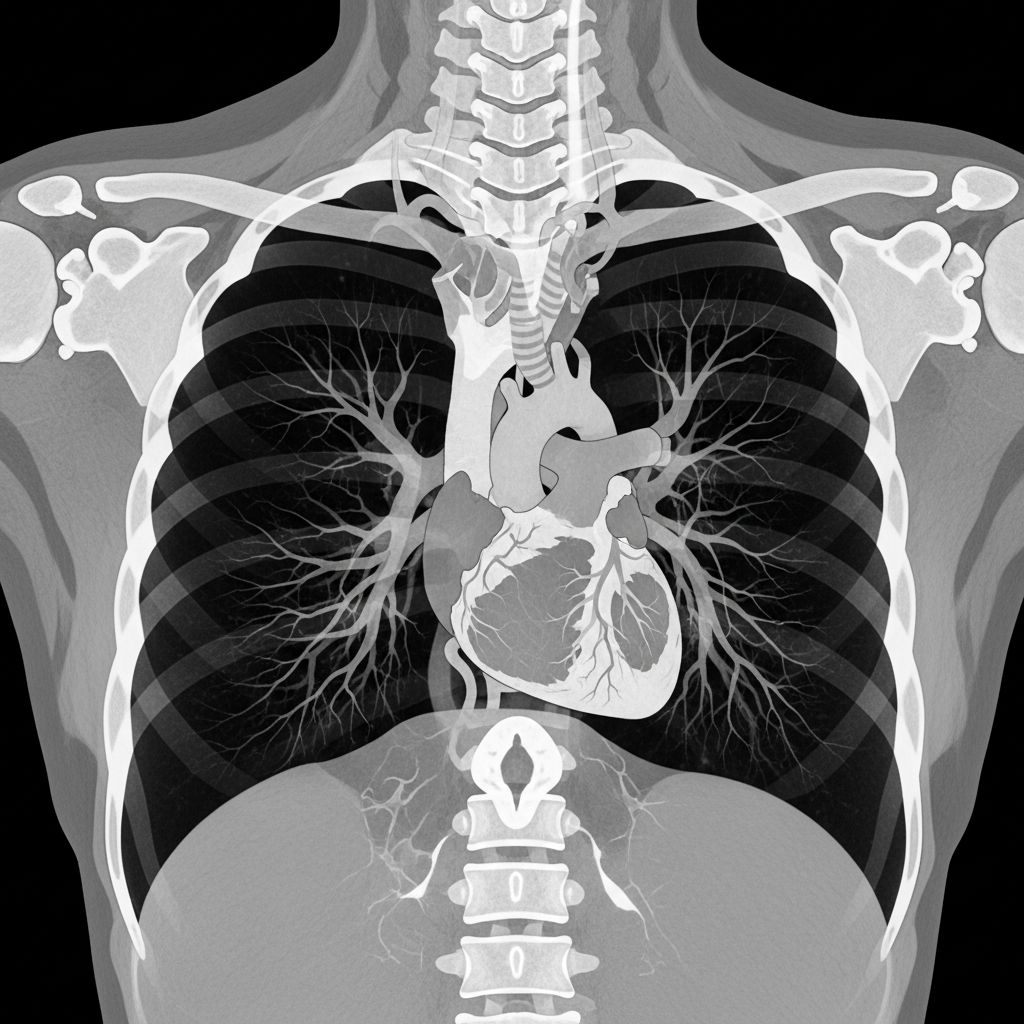
Understanding CT Scans of the Chest
A computed tomography (CT) scan of the chest is a specialized imaging procedure that uses advanced X-ray technology to create detailed cross-sectional images of the thoracic cavity, including the lungs, heart, blood vessels, esophagus, and ribs. Unlike conventional chest X-rays that produce a single two-dimensional image, CT scanning generates multiple images from different angles, which are then processed by a computer to create detailed three-dimensional representations of chest structures. This enhanced imaging capability makes chest CT scans invaluable in modern diagnostic medicine for detecting, evaluating, and monitoring various conditions affecting the chest and its organs.
Common Uses of Chest CT Scans
Physicians utilize chest CT scans for a wide variety of diagnostic and therapeutic purposes. Understanding these applications helps patients appreciate why their doctor may recommend this imaging procedure.
Diagnostic Applications
Chest CT scans are commonly used to examine abnormalities detected on conventional chest X-rays, providing more detailed information about suspicious findings. Doctors employ this imaging modality to help diagnose the underlying causes of various chest symptoms and signs, such as persistent cough, shortness of breath, chest pain, or fever. When patients present with respiratory symptoms that remain unexplained after initial evaluation, a chest CT scan can often identify the specific pathology responsible for their symptoms.
Cancer Detection and Evaluation
One of the most significant applications of chest CT imaging involves detecting and evaluating the extent of tumors that originate in the chest or have spread there from other locations in the body. CT scans provide precise measurements of tumor size, location, and relationship to surrounding structures, which is essential for treatment planning. Additionally, radiologists use chest CT scans to assess whether tumors are responding to ongoing treatment, helping oncologists adjust therapeutic approaches as needed.
Treatment Planning and Trauma Assessment
Chest CT scans play a crucial role in planning radiation therapy for chest malignancies by providing detailed anatomical information that radiation oncologists use to target tumors precisely while minimizing damage to healthy tissue. The procedure also evaluates injury to various chest structures following trauma, including the heart, blood vessels, lungs, ribs, and spine. This comprehensive assessment capability makes CT scanning essential in emergency medicine for trauma patients.
Technical Advantages of CT Imaging
CT scanning offers several significant technological advantages over conventional imaging methods. The procedure is notably fast, which proves particularly beneficial for patients who have difficulty holding their breath, a requirement sometimes necessary during other imaging procedures. This speed is especially valuable in emergency situations and for patients with severe respiratory compromise.
A major advantage of chest CT imaging is its unique ability to simultaneously visualize bone, soft tissue, and blood vessels in exquisite detail. Unlike conventional X-rays, CT scanning provides exceptionally detailed images of numerous tissue types, as well as the lungs, bones, and blood vessels. This comprehensive visualization capability often eliminates the need for multiple imaging studies or exploratory procedures.
CT imaging also provides real-time imaging capabilities, making it an excellent tool for guiding minimally invasive procedures such as needle biopsies and needle aspirations, particularly for procedures involving the lungs, abdomen, pelvis, and bones. This guidance capability has revolutionized interventional radiology, allowing physicians to obtain tissue samples with precision while minimizing patient risk and recovery time.
Related Stories



Benefits of Chest CT Scanning
Chest CT scans offer numerous clinical benefits that have made them an indispensable component of modern medical practice:
- CT scanning is painless, noninvasive, and highly accurate, making it well-tolerated by patients across all age groups.
- The procedure is widely available at most medical centers and imaging facilities.
- A diagnosis obtained via CT scan may eliminate the need for exploratory surgery and surgical biopsy, reducing patient morbidity and healthcare costs.
- No radiation remains in a patient’s body after a CT examination concludes.
- The X-rays used for CT scanning produce no immediate side effects.
- Low-dose CT scans of the chest utilize a reduced radiation dose compared to conventional chest CT protocols, lowering radiation exposure while maintaining diagnostic accuracy.
Understanding Radiation Risks
While chest CT scans offer substantial diagnostic benefits, it is important for patients to understand the potential risks associated with radiation exposure. During a CT scan, patients receive brief exposure to ionizing radiation, with the total radiation dose being greater than that from a plain chest X-ray because the CT scan gathers considerably more detailed information.
Radiation Exposure and Cancer Risk
The low doses of radiation used in standard CT scans have not been shown to cause long-term harm in individual patients. However, there is always a slight chance of cancer from radiation exposure, though the benefit of an accurate diagnosis generally far outweighs the risk involved with CT scanning. For the average person, a CT scan may be associated with a very small potential theoretical cancer risk.
Research has demonstrated that if an individual combines their natural lifetime risk of fatal cancer (approximately 400 chances in 2,000) with the estimated risk from a 10 mSv CT scan, the total risk may increase only slightly to 401 chances in 2,000. This small increase in radiation-associated cancer risk for an individual can become a public health concern if large numbers of people undergo increased numbers of CT screening procedures of uncertain benefit.
Special Considerations for Children
Children may be more susceptible to radiation effects than adults, and repeated CT scans in pediatric patients may result in a small increase in the lifetime risk of cancer. In a large multinational study, individuals who had at least one CT scan before age 22 were found to have an increased risk of developing hematological cancers, particularly lymphoid and myeloid cancers and acute leukemia. In the 12 years following a single CT scan, the risk of cancer was approximately 1 to 2 cases for every 10,000 scans performed on children and young people.
Risks and Potential Complications
Beyond radiation exposure, chest CT scans can result in other risks and complications that patients should understand:
Incidental Findings
One of the primary risks associated with chest CT scans involves incidental results—benign or unexpected findings unrelated to the patient’s chief complaint that can lead to unnecessary and possibly invasive follow-up tests. While most incidental findings prove benign, they may necessitate additional imaging studies or, in some cases, invasive procedures to rule out serious pathology. This cascade of investigations can subject patients to increased radiation exposure and potential procedural complications.
False-Positive Results
In screening contexts, particularly with low-dose chest CT for lung cancer detection, people may have false-positive results—findings that appear abnormal even though no cancer is present. These abnormalities require monitoring and may necessitate invasive procedures to exclude malignancy. Research from the National Lung Screening Trial found that approximately 20% of individuals in each screening round had positive results requiring some degree of follow-up, while only about 1% actually had lung cancer. This high false-positive rate can lead to patient anxiety and unnecessary procedures.
Complications from Follow-up Procedures
When follow-up diagnostic procedures are required to evaluate findings detected on CT imaging, complications may occasionally occur. In the National Lung Screening Trial, the frequency of death occurring within 2 months of a diagnostic evaluation of a detected finding was 8 per 10,000 individuals screened by low-dose CT. Major complications occurring during diagnostic evaluation of a detected finding occurred in 33 per 10,000 individuals screened by low-dose CT, though the rate of complications following imaging alone was low at 1.1 per 10,000 screened.
When CT Screening May Be Beneficial
Low-dose CT (LDCT) screening may benefit individuals at elevated risk for lung cancer, particularly those with significant smoking histories. The National Lung Screening Trial demonstrated that annual low-dose CT screening reduced the relative risk of death from lung cancer by 20%, and the absolute risk by 0.33% in a population with substantially elevated risk for lung cancer. However, uncertainty exists about potential harms and the generalizability of screening results to diverse populations.
Preliminary modeling studies suggest that potential risks may vastly outweigh benefits in non-smokers or those age 42 and younger, highlighting the importance of individualized risk-benefit discussions between patients and their physicians.
Special Considerations Before Your Scan
Certain factors and conditions require communication with your medical team before undergoing a chest CT scan:
- Women should always inform their doctor and CT technologist if there is any possibility they are pregnant.
- Recent barium studies from the esophagus may interfere with imaging quality.
- Body piercings on the chest may need to be removed.
- Metal objects within the chest or on the body may affect image quality or safety.
What to Expect During the Procedure
Understanding the procedural aspects of chest CT scanning can help alleviate patient anxiety and ensure optimal cooperation during imaging. The CT scanner consists of a large, circular machine with an opening in the center through which a motorized table passes. Patients lie on this table, which moves gradually through the scanner opening while the machine takes multiple X-ray images from different angles.
The procedure is painless and typically takes only a few minutes to complete. The open design of most modern CT scanners makes the experience less claustrophobic than older imaging equipment, though some patients may still experience mild anxiety. During the scan, patients must remain very still to ensure image clarity, and the technologist will provide specific breathing instructions to follow.
Frequently Asked Questions
Q: How long does a chest CT scan take?
A: A chest CT scan typically takes only a few minutes to complete, making it a quick outpatient procedure that can be performed in most imaging centers.
Q: Is a chest CT scan painful?
A: No, chest CT scanning is completely painless and noninvasive. Patients may feel mild anxiety about being in the scanner, but the procedure itself causes no discomfort.
Q: What is the radiation dose from a chest CT scan?
A: The radiation dose varies depending on the specific protocol used, but healthcare professionals typically use the lowest dose of radiation necessary to obtain the needed medical information, and many centers now offer low-dose CT options.
Q: Can I have a chest CT scan if I’m pregnant?
A: Women should always inform their doctor and CT technologist if they are pregnant or believe they might be, so that your physician can determine whether the scan is essential and can weigh the benefits against potential risks.
Q: What are the advantages of CT over standard X-rays?
A: CT scanning provides far more detailed images than standard X-rays, can simultaneously image bone, soft tissue, and blood vessels, and allows for three-dimensional visualization of structures, often eliminating the need for more invasive procedures.
Q: Are there any permanent side effects from CT scanning?
A: The X-rays used for CT scanning have no immediate side effects, and no radiation remains in the patient’s body after the examination is complete.
Conclusion
Chest CT scans represent a powerful diagnostic tool that has significantly advanced the ability of physicians to detect, evaluate, and monitor various conditions affecting the thorax. With benefits including rapid image acquisition, detailed anatomic visualization, and minimal patient discomfort, CT scanning has become an essential component of modern medical practice. While radiation exposure and the potential for incidental findings represent legitimate considerations, the diagnostic benefits of chest CT scanning for patients with signs or symptoms of disease substantially outweigh these modest risks. As technology continues to advance with lower-dose protocols becoming standard, chest CT imaging will likely remain a cornerstone of thoracic imaging for years to come.
References
- What are the Radiation Risks from CT? — U.S. Food and Drug Administration (FDA). 2024. https://www.fda.gov/radiation-emitting-products/medical-x-ray-imaging/what-are-radiation-risks-ct
- Chest CT Scan — Radiology Info. 2024. https://www.radiologyinfo.org/en/info/chestct
- Benefits and Harms of CT Screening for Lung Cancer — National Institutes of Health, PubMed Central. 2013. https://pmc.ncbi.nlm.nih.gov/articles/PMC3709596/
- Computed Tomography (CT) Scans and Cancer Fact Sheet — National Cancer Institute (NCI). 2024. https://www.cancer.gov/about-cancer/diagnosis-staging/ct-scans-fact-sheet
- CT scan — Mayo Clinic. 2024. https://www.mayoclinic.org/tests-procedures/ct-scan/about/pac-20393675
- CT Scan Safety: A Radiation Reality Check — Memorial Sloan Kettering Cancer Center. 2024. https://www.mskcc.org/news/scan-safety-radiation-reality-check
Similar Articles








Read full bio of Sneha Tete