CT Scan of the Spine: Comprehensive Guide
Learn about spine CT scans: purpose, procedure, preparation, risks, and results explained.
CT Scan of the Spine: A Comprehensive Guide
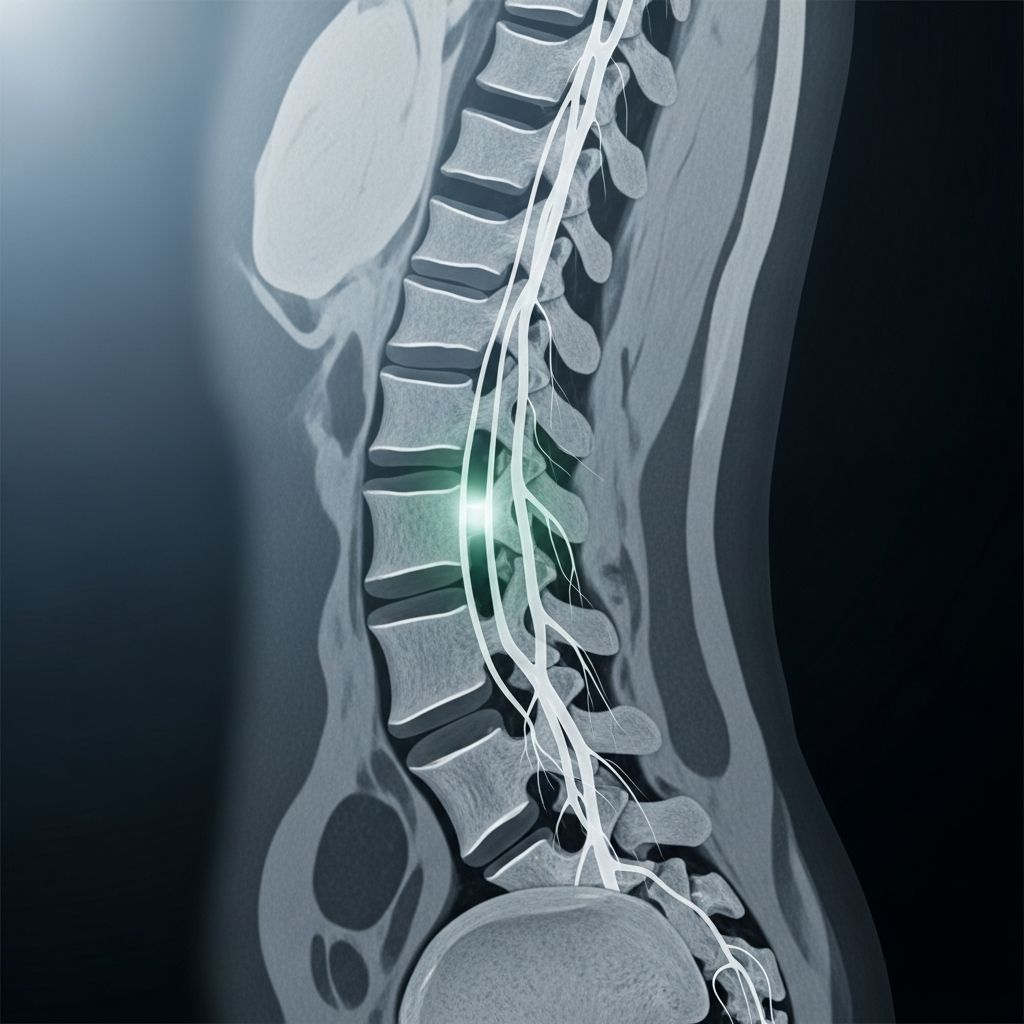
A CT scan of the spine, also known as computed tomography, is a sophisticated diagnostic imaging procedure that creates detailed cross-sectional images of the vertebral column and surrounding structures. This advanced imaging technique plays a crucial role in diagnosing various spinal conditions, guiding surgical interventions, and monitoring treatment progress. Unlike traditional X-rays that provide limited two-dimensional views, CT scans produce high-resolution three-dimensional images that allow physicians to visualize bone, soft tissues, and neural structures with exceptional clarity.
What Is a CT Scan of the Spine?
A CT scan combines multiple X-ray images taken from different angles to create detailed cross-sectional pictures of your spine. The procedure uses a rotating X-ray tube and sensitive detectors to capture information that a computer then processes and reconstructs into precise images. This imaging modality is particularly valuable for examining the vertebrae, intervertebral discs, spinal cord, and surrounding muscles and ligaments. CT technology represents a significant advancement over conventional radiography, offering enhanced visualization capabilities that enable more accurate diagnosis and treatment planning.
When Is a CT Scan of the Spine Recommended?
Your physician may recommend a spine CT scan for various clinical indications. These include:
- Evaluating acute spinal trauma or fractures following accidents or injuries
- Assessing degenerative disc disease and age-related spinal changes
- Detecting spinal tumors or abnormal growths
- Identifying infections such as osteomyelitis or discitis
- Evaluating stenosis or narrowing of the spinal canal
- Assessing spondylolisthesis or vertebral slippage
- Planning surgical procedures and confirming implant placement
- Monitoring the success of spinal fusion or other surgical interventions
- Investigating chronic back or neck pain of unclear etiology
CT imaging has become particularly valuable in surgical planning, as it provides surgeons with three-dimensional anatomical understanding essential for precise intervention. Recent technological advances at medical centers like Johns Hopkins have enhanced surgical precision even further through real-time image-guided procedures that integrate CT imaging data directly into the operating room environment.
How Does a Spine CT Scan Work?
During a CT scan, you lie on a motorized table that moves through a large, donut-shaped scanner. The X-ray tube rotates around your body, taking images from multiple angles as you slowly advance through the scanner opening. Modern CT scanners can complete a full spinal examination in seconds to a few minutes, depending on the extent of the study. The radiation dose is carefully calculated to minimize exposure while maintaining diagnostic image quality. Advanced metal artifact reduction techniques and iterative reconstruction methods are employed to enhance image clarity, particularly important when assessing patients with existing spinal implants or hardware.
The procedure is completely painless and non-invasive. The only sensation you may experience is the slight movement of the table and the sound of the scanner. Some examinations require the injection of contrast material to enhance visualization of specific structures or to assess blood flow and identify abnormalities more clearly.
Preparation for Your Spine CT Scan
Proper preparation ensures optimal image quality and a smooth examination experience:
- Remove all metal objects including jewelry, watches, eyeglasses, and hair clips before the procedure
- Inform your technologist about any metallic implants, pacemakers, or medical devices
- Wear loose, comfortable clothing without metal fasteners or zippers
- Avoid eating or drinking for several hours if contrast injection is planned
- Notify your healthcare provider about allergies, particularly to iodine or contrast materials
- Inform medical staff if you are pregnant or may be pregnant
- Bring a list of current medications, especially if you have diabetes or kidney disease
- Arrive early to complete necessary paperwork and check-in procedures
Related Stories



Your physician will provide specific instructions based on the type of CT scan being performed. If contrast material is required, you may receive detailed guidelines regarding fasting and medication adjustments.
What to Expect During the Procedure
Upon arrival at the imaging facility, you will check in and may be asked to change into a hospital gown if necessary. A technologist will position you on the CT table, typically lying on your back with your legs supported on a padded platform for comfort. The technologist will adjust your position to ensure proper alignment of the spine within the scanner’s field of view. Clear communication is maintained throughout the procedure, and many facilities provide a call button allowing you to alert staff if needed.
As the table moves through the scanner, you will be instructed to remain still and may be asked to hold your breath for brief moments to minimize motion artifacts. The entire procedure typically takes 10 to 30 minutes, including preparation time. Intraoperative CT scanning, an advanced technique pioneered at facilities like Johns Hopkins Bayview Medical Center, allows real-time imaging during surgery, enabling surgeons to verify instrument placement and assess procedural success before the patient awakens from anesthesia.
Understanding the Results
After your CT scan, a radiologist carefully reviews the images, looking for abnormalities in bone structure, alignment, and surrounding soft tissues. The radiologist generates a comprehensive report detailing findings and any identified pathology. Your physician will receive this official report and will discuss results with you, explaining any abnormalities and recommending appropriate follow-up or treatment.
CT is particularly accurate for identifying implant location and integrity, assessing the success of decompression and fusion procedures, and detecting postoperative complications including collections, infections, and cerebrospinal fluid leaks. The detailed nature of CT imaging allows for precise assessment of surgical outcomes and identification of any issues requiring intervention.
Advantages of Spine CT Imaging
CT scanning offers numerous advantages over conventional radiography. The technique provides exceptional bone detail, making it ideal for evaluating fractures and bony anatomy. CT imaging is faster than MRI, making it particularly valuable for patients unable to tolerate prolonged immobility or those with contraindications to magnetic resonance imaging. The three-dimensional reconstruction capabilities allow physicians to assess complex anatomical relationships and plan surgical approaches with greater precision.
For patients with metallic implants, CT may be preferable to MRI due to safety considerations. Recent technological advances in metal artifact reduction substantially improve image quality in patients with existing spinal hardware. The availability of advanced imaging techniques, including intraoperative CT and real-time image-guided surgery systems, has revolutionized surgical planning and execution, improving patient safety and decreasing procedure time.
Risks and Safety Considerations
CT scanning involves exposure to ionizing radiation, though the dose used in spine imaging is generally considered acceptable given the diagnostic benefit. Women who are or may be pregnant should inform their healthcare provider before undergoing CT imaging. The risk of radiation-induced effects is typically outweighed by the diagnostic value of the examination.
If contrast material is used, there is a small risk of allergic reaction, though serious reactions are uncommon. Patients with kidney disease or diabetes should notify their physician before contrast injection, as contrast material is eliminated through the kidneys. Rarely, contrast administration may cause temporary discomfort or nausea. Modern CT scanners are designed with safety features and use optimized protocols to minimize radiation exposure while maintaining diagnostic image quality.
Advanced Imaging Technology in Spine Surgery
Recent innovations have dramatically enhanced the role of CT imaging in spinal surgery. Real-time, image-guided robotic systems now enable surgeons to achieve unprecedented accuracy in screw placement and other surgical interventions. These systems marry preoperative CT scans with real-time imaging during surgery, allowing the surgeon to point to a target on the CT image and have the robotic system guide instruments to that precise location with millimeter accuracy.
One significant advantage of real-time image guidance is the ability to compensate for patient movement. Advanced systems can detect subtle position changes and adjust accordingly, addressing a primary challenge in minimally invasive spine surgery. These technologies have the potential to substantially improve patient safety and decrease complication rates by ensuring optimal implant placement during complex procedures.
Frequently Asked Questions
Q: How long does a spine CT scan take?
A: The actual scanning time is typically 10 to 30 minutes, including preparation. The scan itself may take only seconds to a few minutes depending on the area of interest and whether contrast is used.
Q: Is a spine CT scan painful?
A: No, the CT scan procedure is completely painless and non-invasive. You may experience mild discomfort from positioning on the table, but the imaging process itself causes no pain.
Q: Can I have a spine CT scan if I have metal implants?
A: In most cases, yes. CT imaging is generally safe with metallic implants, and modern metal artifact reduction techniques can substantially improve image quality. Always inform your technologist about any implants before the procedure.
Q: How is a spine CT scan different from an MRI?
A: CT uses X-rays to create images, while MRI uses magnetic fields. CT is faster and better for evaluating bone detail, while MRI provides excellent soft tissue contrast and does not use radiation. Your physician will recommend the most appropriate imaging modality for your condition.
Q: Will I receive results immediately after my scan?
A: No, a radiologist must review and interpret your images before results are available. Your physician will receive the official report and discuss findings with you during a follow-up appointment or consultation.
Q: How much radiation exposure does a spine CT involve?
A: Spine CT uses a carefully calculated radiation dose. Modern scanners employ optimization techniques to minimize exposure while maintaining diagnostic quality. The benefits of accurate diagnosis typically outweigh radiation risks.
Q: What should I do to prepare for my spine CT scan?
A: Remove all metal objects, wear comfortable clothing without metal fasteners, and follow any fasting instructions provided. Inform your healthcare provider about allergies, medications, pregnancy, or implants before your appointment.
Q: Can contrast material cause allergic reactions?
A: Allergic reactions to contrast material are uncommon, though mild reactions occasionally occur. Serious reactions are rare. Inform your physician about any allergies, especially to iodine, before undergoing contrast-enhanced imaging.
References
- Johns Hopkins Surgeons Perform First Real-Time Image Guided Spine Surgery — Johns Hopkins Medicine. October 20, 2017. https://www.itnonline.com/content/johns-hopkins-surgeons-perform-first-real-time-image-guided-spine-surgery
- Intraoperative CT at Johns Hopkins Bayview — Johns Hopkins Medicine. January 6, 2010. https://www.youtube.com/watch?v=Jz31Li9MM_E
- Postoperative Spinal CT: What the Radiologist Needs to Know — Ghodasara N, Yi PH, Clark K, et al. Radiographics. 2019;39(6):1840-1861. https://pubmed.ncbi.nlm.nih.gov/31589573/
Similar Articles








Read full bio of medha deb