CT Scan vs. MRI: Which One Is Right for You?
Discover the key differences between CT scans and MRIs to understand which imaging test your doctor might recommend for accurate diagnosis.
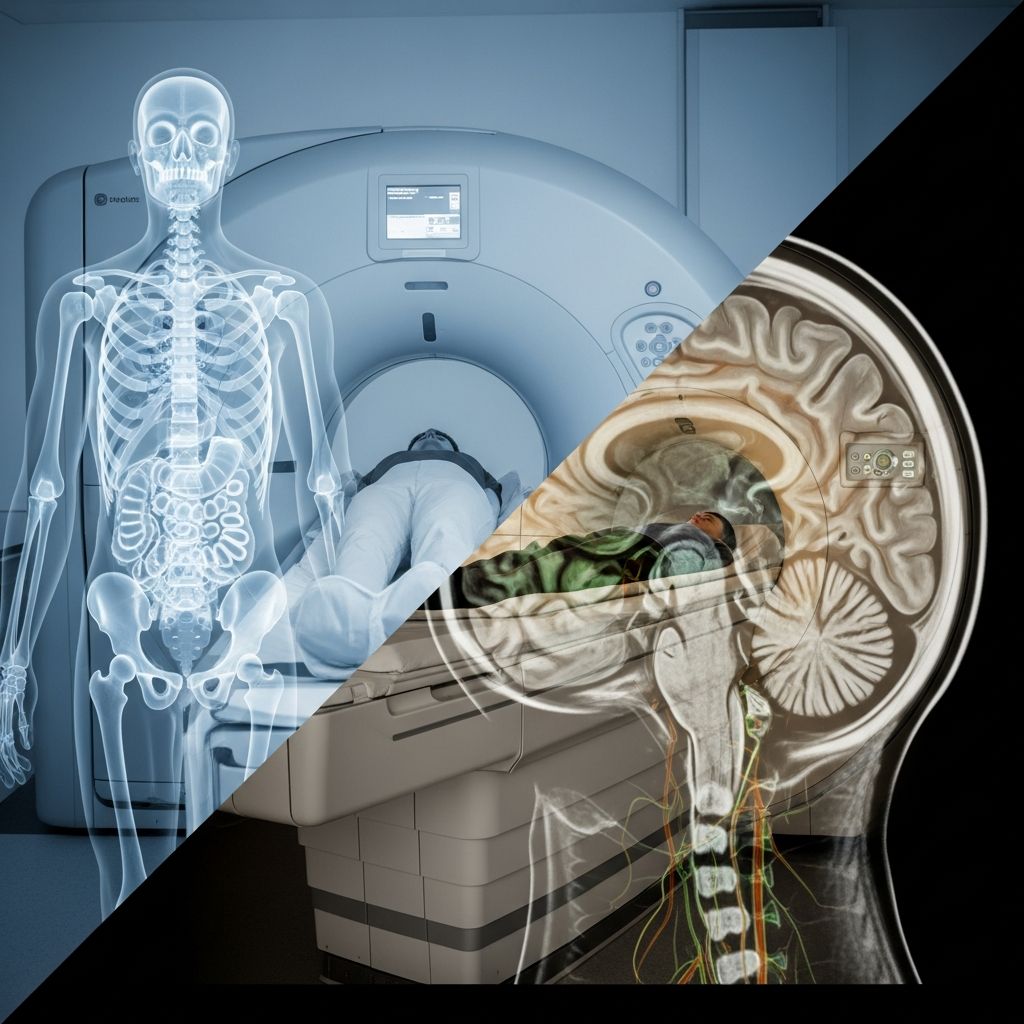
CT scans and MRIs are two of the most common medical imaging tests used to diagnose a wide range of conditions, from bone fractures to brain tumors. While both provide detailed views inside the body, they differ significantly in technology, speed, image quality, and applications. Understanding these differences helps patients know what to expect and why a doctor might choose one over the other.
What Is a CT Scan?
A
CT scan
, or computed tomography scan, uses X-rays to create detailed cross-sectional images of the body’s internal structures, such as bones, organs, blood vessels, and tissues. The machine rotates around the patient, taking multiple X-ray images from different angles, which a computer then reconstructs into 3D images. This process is quick, typically lasting 5 to 10 minutes, making it ideal for emergencies.CT scans excel at visualizing dense structures like bones and detecting issues such as fractures, internal bleeding, tumors, infections, and blood clots. They are often the first choice in trauma cases, like car accidents or strokes, where rapid assessment is critical.
- Key strengths: Fast imaging, excellent for bones and lungs, widely available.
- Common uses: Head injuries, chest pain, abdominal pain, cancer staging.
What Is an MRI?
An
MRI
, or magnetic resonance imaging, employs powerful magnets and radio waves to generate highly detailed images of soft tissues, organs, and the brain without using ionizing radiation. Patients lie in a tube-like machine for 20 to 90 minutes while the scanner aligns hydrogen atoms in the body using magnetic fields and radio frequencies to produce signals converted into images.MRIs provide superior contrast for soft tissues, making them invaluable for diagnosing ligament tears, spinal cord injuries, brain abnormalities, multiple sclerosis, and certain cancers like those in the prostate or liver. They can differentiate between normal and abnormal tissues more precisely than CT scans.
- Key strengths: No radiation, exceptional soft tissue detail, multi-plane imaging.
- Common uses: Joint injuries, neurological disorders, soft tissue tumors.
Key Differences Between CT Scans and MRIs
The primary distinctions lie in their technology, procedure duration, image focus, and patient experience. Here’s a breakdown:
| Aspect | CT Scan | MRI |
|---|---|---|
| Technology | X-rays (ionizing radiation) | Magnets and radio waves (no radiation) |
| Scan Time | 5-10 minutes | 20-90 minutes |
| Best For | Bones, lungs, bleeding, emergencies | Soft tissues, brain, spine, joints |
| Image Detail | High spatial resolution for dense structures | High contrast resolution for soft tissues |
| Cost | Less expensive ($300-$6,750) | More expensive ($400-$12,000+) |
| Claustrophobia Risk | Open design, less confining | Enclosed tube, can trigger anxiety |
CT scans are faster and better for broad overviews, while MRIs offer finer details but require more time and stillness.
Benefits of CT Scans
CT scans provide rapid, comprehensive views, essential in time-sensitive situations. Their ability to image large areas quickly aids in detecting pulmonary embolisms, appendicitis, kidney stones, and aortic aneurysms. Contrast dye enhances visibility of blood vessels and organs. They are accessible to patients with metal implants, unlike MRIs.
- Speed: Critical for ER settings like trauma or stroke.
- Versatility: Excellent 3D reconstructions for surgical planning.
- Bone imaging: Superior for fractures and joint assessments.
Benefits of MRIs
MRIs shine in non-emergency diagnostics requiring precision. They avoid radiation, making them safer for repeated scans, pregnant patients (after first trimester), and children. Advanced sequences detect subtle changes in brain tissue, cartilage damage, or ligament tears that CT misses.
Related Stories



- Soft tissue clarity: Ideal for musculoskeletal and neurological issues.
- Safety: No radiation exposure.
- Functional imaging: Assesses blood flow and tissue viability.
Risks and Limitations of CT Scans
The main risk is exposure to ionizing radiation, equivalent to 100-800 chest X-rays per scan, which cumulatively increases cancer risk slightly (about 1 in 2,000 for a single abdominal CT). Iodinated contrast can cause allergic reactions or kidney issues in vulnerable patients. Not ideal for soft tissue detail.
- Avoid repeated scans if possible, especially in young patients.
- Screen for contrast allergies and kidney function.
Risks and Limitations of MRIs
MRIs are radiation-free but involve loud noises, claustrophobia (affecting 4-37% of patients), and longer durations. Contraindicated for those with certain implants (pacemakers, cochlear), metal fragments, or severe obesity. Gadolinium contrast risks nephrogenic systemic fibrosis in kidney patients.
- Not for emergencies due to time.
- May require sedation for anxious patients.
Cost Comparison: CT Scan vs. MRI
Costs vary by location, facility, and insurance. CT scans average $1,000-$5,000; MRIs $1,200-$8,000 (out-of-pocket $300-$3,000 with insurance). MRIs are pricier due to equipment and time. Medicare/Medicaid often covers both if medically necessary.
| Factor | CT Scan Average | MRI Average |
|---|---|---|
| Without Insurance | $1,000-$5,000 | $1,200-$8,000 |
| With Insurance | $300-$2,000 | $400-$3,000 |
Discuss with your provider; some facilities offer open MRIs or faster CTs to balance cost and comfort.
Preparation for CT Scan vs. MRI
CT Prep: Fasting 4-6 hours if contrast used; disclose allergies/kidney issues; wear metal-free clothing; 30-60 min total visit.
MRI Prep: Remove all metal; screen for implants; may fast for abdominal; earplugs provided; 1-2 hours total.
Both are outpatient, painless procedures. Arrive early for screening forms.
What Do CT and MRI Results Mean?
Radiologists interpret images for abnormalities like masses, inflammation, or fractures. CT shows density differences (e.g., bleeding as hyperdense); MRI highlights tissue types via signal intensity. Follow-up tests or biopsies may be needed. Results typically available in hours (CT) to days (MRI).
When Is a CT Scan Used?
- Emergencies: Trauma, stroke, pulmonary embolism.
- Cancer: Staging, detecting metastases.
- Internal issues: Appendicitis, diverticulitis, kidney stones.
When Is an MRI Used?
- Musculoskeletal: ACL tears, rotator cuff injuries.
- Neurological: Tumors, MS, dementia.
- Other: Breast cancer screening, pelvic exams.
CT Scan vs. MRI for Specific Conditions
| Condition | Preferred Imaging | Why? |
|---|---|---|
| Brain bleed/stroke | CT | Fast detection of blood. |
| Spinal cord injury | MRI | Soft tissue and nerve detail. |
| Bone fracture | CT | High bone resolution. |
| Ligament tear | MRI | Superior soft tissue contrast. |
| Lung cancer | CT | Quick lung imaging. |
| Brain tumor | MRI | Detailed tumor margins. |
Frequently Asked Questions (FAQs)
Which is safer: CT scan or MRI?
MRIs are safer long-term due to no radiation, but CTs are safe in moderation with low risks.
Can I have an MRI if I have tattoos or piercings?
Some inks contain metal; consult your doctor. Piercings must be removed.
Do CT or MRI scans hurt?
No, both are painless, though IV contrast may cause a warm sensation.
How long do results take?
CT: Same day; MRI: 1-3 days.
Are CT scans better than MRIs for kids?
MRIs preferred to minimize radiation, but CT used in emergencies.
Can pregnant women get these scans?
CT avoided (radiation risk to fetus); MRI safe after first trimester without contrast.
References
- The Key Differences Between a CT Scan and MRI — Milwaukee Hospital. 2023. https://milwaukeehospital.com/the-key-differences-between-a-ct-scan-and-mri/
- CT Scans vs. MRIs: Differences, Benefits, and Risks — Healthline. 2023-05-13. https://www.healthline.com/health/ct-scan-vs-mri
- What’s the Difference Between a CT Scan and MRI? — SDMI. 2024. https://www.sdmi-lv.com/blog/whats-the-difference-between-a-ct-scan-and-mri
- CT Scan vs. MRI: What’s the Difference? — The Urgency Room. 2023. https://www.urgencyroom.com/blog/ct-scan-vs-mri-whats-the-difference/
- CT Scan vs MRI Scan: When to Choose One Over the Other — Medical Center Radiologists. 2024. https://mcrrads.com/ct-scan-vs-mri-scan-when-to-choose-one-over-the-other/
- CT vs. MRI: What’s the Difference? — Memorial Sloan Kettering Cancer Center. 2023-06-27. https://www.mskcc.org/news/ct-vs-mri-what-s-difference-and-how-do-doctors-choose-which-imaging-method-use
Similar Articles








Read full bio of medha deb