CT Scan: What It Is, How It Works, Uses, And Risks
Everything you need to know about CT scans: procedure, uses, risks, preparation, and what to expect for accurate diagnosis.
A
CT scan
, or computed tomography scan, is an advanced imaging technique that uses X-rays and computer processing to create detailed cross-sectional images of the body, revealing bones, organs, blood vessels, and soft tissues with greater clarity than standard X-rays.Unlike traditional X-rays, which provide flat images, CT scans produce multidimensional views by slicing the body into thin layers, similar to cutting a loaf of bread to examine its interior. This makes them invaluable for diagnosing a wide range of conditions quickly and accurately.
What Does CT Stand For?
**CT** stands for
computed tomography
. The term “computed” refers to the computer algorithms that process multiple X-ray images taken from different angles to generate precise, three-dimensional representations of internal structures.This technology combines rotating X-ray beams and detectors around the patient, capturing data that software reconstructs into high-resolution images displayed on a monitor.
What Is a CT Scan Used For?
CT scans serve numerous diagnostic purposes across the body. Healthcare providers recommend them to:
- Assess head injuries, severe headaches, dizziness, aneurysms, bleeding, strokes, and brain tumors.
- Evaluate facial trauma, sinus inflammation, temporal bone diseases affecting hearing, and skull abnormalities.
- Detect cardiovascular issues like blockages, plaque buildup, and vascular diseases that could lead to heart attacks.
- Identify tumors, including their size, shape, location, and spread to lymph nodes or other areas, aiding cancer diagnosis and treatment planning.
- Diagnose bone fractures, muscle conditions, infections, blood clots, lung nodules, liver masses, and monitor cancer treatment progress.
- Guide procedures like biopsies, surgeries, and radiation therapy.
In emergencies, CT scans reveal internal bleeding and injuries rapidly, potentially saving lives, and are less affected by patient movement than MRI.
How Does a CT Scan Work?
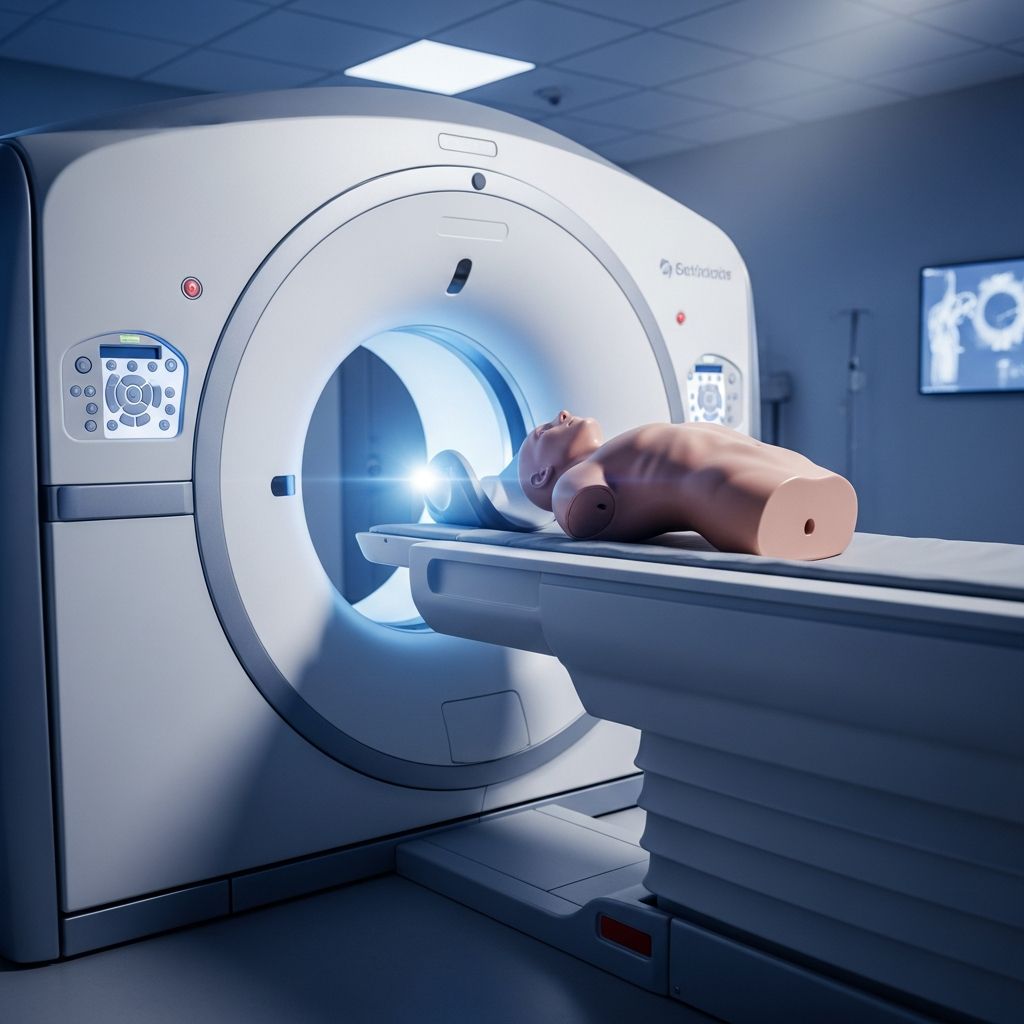
During a CT scan, the patient lies on a motorized table that slides into a doughnut-shaped scanner. X-ray beams rotate around the body, with detectors measuring radiation absorption to create cross-sectional “slices.” A computer then assembles these into detailed 2D or 3D images.
Scans typically last 5-30 minutes, depending on the body area. Contrast dye may be injected, swallowed, or administered rectally to enhance visibility of blood vessels, organs, or tumors.
Types of CT Scans
CT scans are tailored to specific body regions and needs:
- Head CT: Evaluates brain injuries, strokes, tumors, and sinus issues.
- Chest CT (e.g., low-dose lung screening): Detects lung cancer, nodules, emphysema, and coronary artery calcium for heart risk assessment.
- Abdominal/Pelvic CT: Identifies kidney stones, tumors, infections, and aneurysms.
- Cardiac CT: Assesses heart vessels, plaque, and blockages.
- Spine CT: Examines fractures, disc issues, and stenosis.
Low-dose variants reduce radiation for screening, like lung cancer detection.
What Are the Risks of a CT Scan?
CT scans are safe for most but involve low-level ionizing radiation, which carries a small cancer risk, especially with repeated scans. A 2023 study projected lifetime cancer risks from U.S. CT exams, noting higher doses for certain indications like abdominal cancer imaging.
Related Stories



- Radiation Exposure: Equivalent to 100-500 chest X-rays per scan; no radiation remains post-exam, but cumulative exposure matters.
- Contrast Reactions: Rare allergies or kidney strain from iodine dye.
- Other: Claustrophobia in the scanner or pregnancy risks (avoid unless essential).
Benefits often outweigh risks, as CT avoids invasive surgeries and provides cost-effective diagnostics.
Alternatives to CT Scans
Other imaging options include:
| Modality | Strengths | Limitations |
|---|---|---|
| X-ray | Quick, low radiation for bones | Limited soft tissue detail |
| MRI | Excellent soft tissue, no radiation; detects brain degeneration, joint issues | Slower, costly, not for implants or claustrophobics |
| Ultrasound | No radiation, real-time | Poor for bones/lungs |
| PET-CT | Functional cancer imaging | Higher radiation |
CT Scan Preparation
Preparation varies:
- Fast 4-6 hours if contrast used.
- Disclose allergies, kidney issues, pregnancy, diabetes, or implants.
- Wear comfortable, metal-free clothing; remove jewelry.
- Hydrate post-contrast to flush dye.
- May need blood tests for kidney function.
During the CT Scan: What to Expect
The painless, noninvasive procedure:
- Change into gown, secure IV if contrast needed.
- Lie still on table; technologist positions you.
- Table moves through scanner; hear whirring.
- Hold breath briefly for clear images.
- Communicate via intercom.
Duration: 10-30 minutes; children may need sedation.
After the CT Scan
Resume activities immediately unless sedated. Drink fluids if contrast used; watch for rare reactions like rash or hives. Results discussed by your doctor within hours/days; reports detail findings like masses or fractures.
Understanding Your CT Scan Results
Reports use terms like “normal,” “lesion,” or “density.” Images show grayscale: bone white, air black, soft tissues gray. Radiologists note abnormalities; follow-up clarifies.
For example, high coronary calcium scores indicate heart risk; lung nodules may need monitoring.
Frequently Asked Questions (FAQs)
What is a CT scan used to detect?
CT scans detect head injuries, cancers, heart disease, fractures, infections, blood clots, and more, providing detailed internal views.
Is a CT scan painful?
No, it’s painless and noninvasive, though contrast may cause mild warmth or metallic taste.
How much radiation is in a CT scan?
Varies by type; low-dose chest CTs minimize exposure, but discuss cumulative risks with your doctor.
Can I eat before a CT scan?
If no contrast, yes; otherwise, fast 4-6 hours. Follow provider instructions.
Who should avoid CT scans?
Pregnant individuals unless urgent; those with contrast allergies or poor kidney function need precautions.
How long do CT results take?
Preliminary in hours; full report in 1-2 days.
References
- Head CT (Computed Tomography, CAT scan) — RadiologyInfo.org. 2023. https://www.radiologyinfo.org/en/info/headct
- 5 Major Health Problems a CT Scan Can Find — Craft Body Scan. 2023. https://craftbodyscan.com/blog/5-health-problems-a-ct-scan-can-find/
- How do low-dose CT scans work? — Function Health. 2024. https://www.functionhealth.com/faqs/how-do-low-dose-ct-scans-work
- CT scan — Mayo Clinic. 2024-10-01. https://www.mayoclinic.org/tests-procedures/ct-scan/about/pac-20393675
- Projected Lifetime Cancer Risks From Current Computed Tomography — JAMA Internal Medicine. 2023-11-27. https://jamanetwork.com/journals/jamainternalmedicine/fullarticle/2832778
- Computed Tomography (CT) — National Institute of Biomedical Imaging and Bioengineering (NIBIB). 2023. https://www.nibib.nih.gov/science-education/science-topics/computed-tomography-ct
- How to Read a CT Scan Report — PocketHealth. 2024. https://www.pockethealth.com/patient-resources/how-read-a-ct-scan-report/
Similar Articles








Read full bio of medha deb