Cubital Tunnel Syndrome: Causes, Symptoms & Treatment
Complete guide to cubital tunnel syndrome: understanding symptoms, diagnosis, and treatment options.
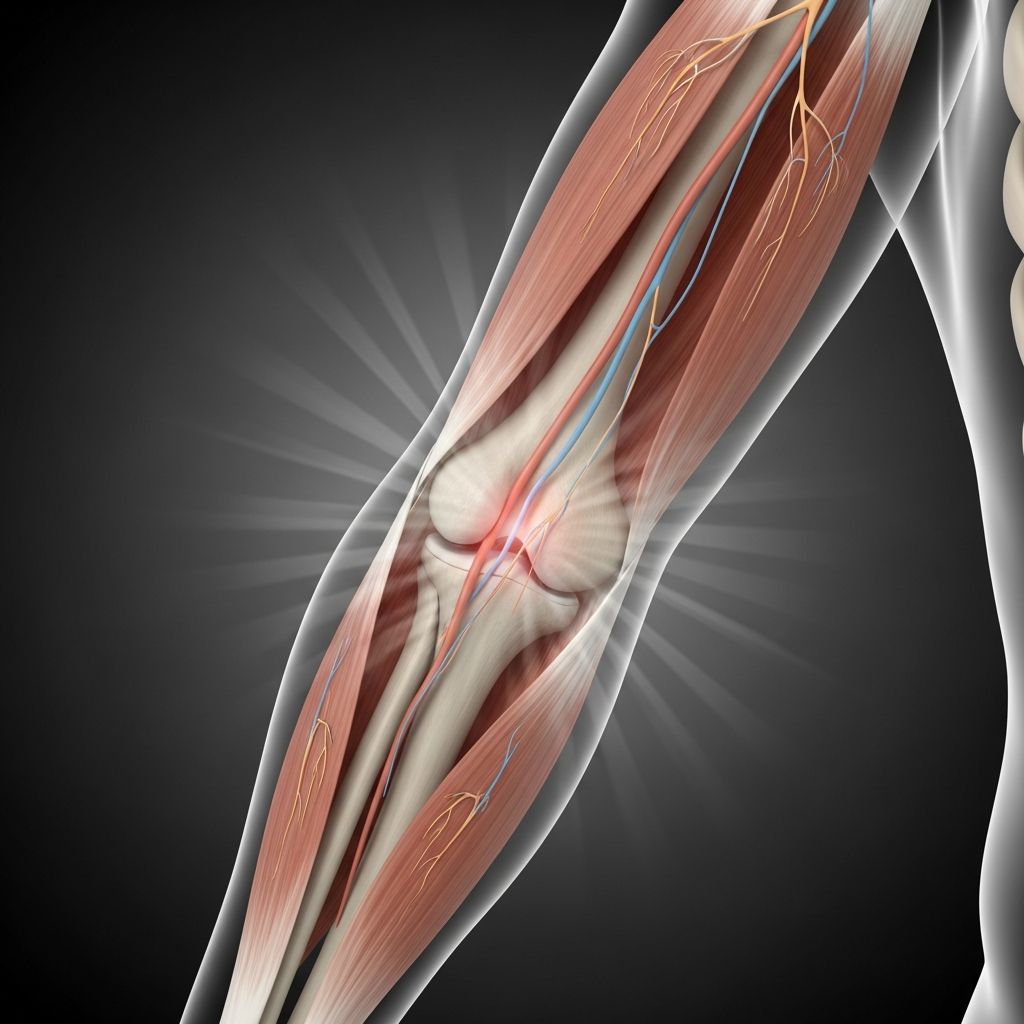
Cubital tunnel syndrome is a common condition that occurs when the ulnar nerve, which runs from your neck down to your hand, becomes compressed or irritated as it passes through the cubital tunnel, a narrow space on the inside of the elbow. This compression can lead to uncomfortable symptoms including numbness, tingling, and pain in the forearm and hand. Understanding this condition, its causes, and available treatment options is essential for anyone experiencing elbow discomfort or hand symptoms.
What is Cubital Tunnel Syndrome?
Cubital tunnel syndrome, also known as ulnar nerve entrapment at the elbow, is a type of neuropathy where the ulnar nerve becomes compressed or irritated as it travels through the cubital tunnel near the elbow. The ulnar nerve is responsible for controlling muscles and providing sensation to the forearm, hand, and fingers. When this nerve is compressed, it can cause various uncomfortable and potentially severe symptoms that, if left untreated, can lead to muscle weakness and atrophy.
The condition gets its name from the cubital tunnel, which is located on the medial (inner) side of the elbow. This is the most common location for ulnar nerve compression in the arm. Many people describe the sensation of cubital tunnel syndrome as similar to hitting the “funny bone” in the elbow, but with more persistent and troubling symptoms.
Understanding the Anatomy
The ulnar nerve originates from the neck and travels down the arm to reach your hand. At the elbow, this nerve passes through a tunnel-like space called the cubital tunnel, which is located behind the inner part of the elbow bone. The nerve then continues down the forearm and hand, providing motor function to various muscles and sensory function to the pinky finger, ring finger, and the inner portion of the hand.
The cubital tunnel is a tight space, and any swelling, inflammation, or anatomical changes in this area can put pressure on the ulnar nerve, leading to the symptoms associated with cubital tunnel syndrome.
Causes of Cubital Tunnel Syndrome
Cubital tunnel syndrome can develop from multiple different causes. In many cases, the exact cause cannot be pinpointed, making it an idiopathic condition. However, several factors have been identified as potential contributors:
Repetitive Activities and Posture: Keeping the elbow bent for extended periods, repeatedly bending the elbow, or activities that involve constant elbow movement can gradually irritate the ulnar nerve. Common work-related causes include leaning on the desk with weight on the elbows or using a computer mouse extensively.
Direct Trauma: A direct blow to the elbow or previous elbow injury can cause nerve compression, inflammation, or bony malalignment that affects the ulnar nerve. Post-traumatic lesions account for approximately 3.3% of cubital tunnel syndrome cases.
Sleeping Position: Sleeping with a bent elbow or putting pressure on the inside of the elbow while sleeping can contribute to nerve compression over time.
Anatomical Variations: Some people have anatomical variations in muscles or ligaments that naturally compress the ulnar nerve. Bone spurs (osteophytes) are found in almost 7% of patients with cubital tunnel syndrome, while luxation (dislocation) of the ulnar nerve occurs in nearly 10% of cases.
Related Stories



Swelling and Inflammation: Any condition causing swelling around the elbow, including arthritis, can increase pressure on the nerve within the cubital tunnel.
Other Risk Factors: Research has identified associations between smoking and cubital tunnel syndrome. Additionally, males are more frequently affected than females, and the left side is more commonly affected than the right.
Symptoms of Cubital Tunnel Syndrome
The symptoms of cubital tunnel syndrome typically develop gradually and may vary in severity. Common symptoms include:
Numbness and Tingling: The most characteristic symptoms are numbness, “pins and needles” sensations, and tingling in the hand, particularly affecting the pinky and ring fingers. This occurs because these fingers are supplied by the ulnar nerve.
Pain: Patients often experience pain over the ulnar nerve on the inside of the elbow, which can radiate down the forearm and into the hand. The pain may be described as burning or feeling like an ice pick. This pain is often worse when the elbow is bent.
Weakness: As the condition progresses, weakness in hand grip strength may develop, making it difficult to perform everyday tasks like holding objects or typing.
Muscle Wasting: In severe cases, if the condition is left untreated, muscles in the hand (particularly the interossei muscles) may atrophy or waste away, resulting in visible changes to the hand’s appearance.
Symptoms may be more noticeable at night or upon waking, particularly if sleeping posture contributes to nerve compression. When to seek medical attention is important: consulting a healthcare provider is recommended if symptoms persist for more than six weeks or if they are severe.
Diagnosis of Cubital Tunnel Syndrome
Diagnosing cubital tunnel syndrome typically begins with a comprehensive medical history and physical examination. Your healthcare provider will ask detailed questions about your symptoms, when they started, what activities worsen them, and any previous injuries to the arm or elbow.
During the physical examination, your doctor may perform specific tests to assess nerve function and identify the location of compression. These tests help confirm the diagnosis and rule out other conditions that might cause similar symptoms.
Additional diagnostic tests may include:
Nerve Conduction Studies: These tests measure how well electrical signals travel along the ulnar nerve, helping to identify the location and severity of nerve compression.
Electromyography (EMG): This test measures the electrical activity of muscles and can help determine if nerve compression has caused muscle damage.
Imaging Studies: X-rays, ultrasound, or MRI may be ordered to visualize the elbow structure and identify anatomical causes of compression, such as bone spurs or soft tissue abnormalities.
Non-Surgical Treatment Options
For most patients with cubital tunnel syndrome, non-surgical treatment is attempted first. Healthcare providers generally prefer non-invasive approaches, and many patients experience significant improvement without requiring surgery. Studies show that approximately 85% of cubital tunnel syndrome patients find relief with treatment.
Activity Modification: The most effective treatment for cubital tunnel syndrome is stopping or reducing activities that aggravate the condition. If symptoms are purely mechanical, resulting from behaviors like leaning on the desk with weight on the elbows or sleeping with bent elbows, correcting these postures is the primary treatment approach. A study of 24 patients who declined surgery found that approximately half reported improvement in symptoms during follow-up, with nerve conduction studies also showing improvement.
Nighttime Splinting: Wearing a splint or foam elbow brace at night helps keep the elbow straight while sleeping, limiting movement and reducing nerve irritation. This simple intervention is recommended as an initial management option for patients with mild symptoms. An elbow pad can also be worn to protect against chronic irritation from hard surfaces.
Anti-Inflammatory Medications: Nonsteroidal anti-inflammatory drugs (NSAIDs) such as ibuprofen or naproxen can help reduce swelling around the nerve and alleviate pain, particularly when symptoms have just begun. For optimal effectiveness and safety, NSAIDs should be taken with or after food, and patients should discuss gastric protection options, such as proton pump inhibitors (PPIs), with their healthcare provider.
Steroid Injections: While steroids are effective anti-inflammatory medications, steroid injections are generally not recommended for cubital tunnel syndrome due to the risk of nerve damage. However, doctors may sometimes prescribe a short course of oral steroids to help reduce inflammation.
Physical Therapy and Nerve Gliding Exercises: Specific exercises and stretches can help improve nerve mobility and reduce compression. Working with an occupational or hand therapist can provide personalized exercises and ergonomic advice to prevent symptom progression.
Surgical Treatment Options
If non-surgical treatments fail after approximately six months, or if symptoms are severe with evidence of muscle weakness or atrophy, surgical intervention may be necessary. Surgery aims to decompress the nerve throughout the entire cubital tunnel, relieving pressure and allowing the nerve to function normally.
Several surgical approaches are available, and your surgeon will recommend the most appropriate option based on the severity of your condition, previous elbow injuries or surgery, and your specific elbow anatomy:
In-Situ Decompression (Cubital Tunnel Release): This procedure involves cutting and releasing the tissue that forms the roof of the cubital tunnel, providing more space for the nerve without moving it. This is one of the most common approaches.
Ulnar Nerve Transposition: In this procedure, the surgeon moves the ulnar nerve from its original location to reduce compression. There are several variations:
– Subcutaneous Transposition: The nerve is moved to lie under the skin but over the muscle.- Intramuscular Transposition: The nerve is placed within the muscle tissue.- Submuscular Transposition: The nerve is moved beneath the muscle layer.
Endoscopic Decompression: Using small cameras and instruments, surgeons can perform decompression through minimal incisions, potentially reducing recovery time.
Medial Epicondylectomy: In some cases, the surgeon removes the medial epicondyle (a bony prominence on the inside of the elbow) along with in-situ decompression to provide additional space for the nerve.
Research has shown that different surgical procedures have comparable clinical outcomes. Your surgeon will discuss the advantages and disadvantages of each option to determine the best approach for your specific situation.
Recovery and Prognosis
Recovery from cubital tunnel syndrome varies depending on whether you pursue conservative or surgical treatment. With non-surgical management, symptoms often improve gradually over time. Patient education about the condition’s etiology and pathophysiology is important, as slow improvement might discourage some patients from continuing conservative management.
If surgery is performed, recovery typically takes several weeks to months. Your surgeon will provide specific instructions for activity modification, exercises, and follow-up care. Early treatment is essential: seeking treatment promptly can prevent complications like muscle wasting in the hand and lead to better overall outcomes.
Prevention and Self-Care
While not all cases of cubital tunnel syndrome can be prevented, several measures can reduce your risk or prevent symptom progression:
– Avoid prolonged elbow bending during work or daily activities- Take regular breaks if your job involves repetitive elbow movements- Use proper ergonomics at your workspace- Avoid sleeping with bent elbows- Protect your elbow from direct trauma- Maintain a healthy posture throughout the day- If experiencing early symptoms, seek prompt medical evaluation
Frequently Asked Questions
Q: How long does it take for cubital tunnel syndrome symptoms to improve with conservative treatment?
A: Improvement varies by individual. Some patients experience gradual improvement over weeks to months with conservative treatment. Patient education about the condition is important, as slow improvement should not discourage continuation of conservative management. Studies show that about half of patients managed conservatively report improvement over time.
Q: Can cubital tunnel syndrome go away on its own?
A: In some cases, particularly with mild symptoms caused by behavioral factors like poor sleeping posture or work habits, symptoms may improve with activity modification and conservative treatment. However, without intervention, symptoms typically worsen over time.
Q: What happens if cubital tunnel syndrome is left untreated?
A: If left untreated, cubital tunnel syndrome can lead to progressive muscle weakness, permanent nerve damage, and muscle atrophy in the hand, resulting in loss of hand function and grip strength. This is why early treatment is important.
Q: Is surgery always necessary for cubital tunnel syndrome?
A: No. Surgery is typically recommended only after conservative treatments have failed for approximately six months or if symptoms are severe with significant muscle weakness or atrophy. Most patients respond well to non-surgical management.
Q: Can cubital tunnel syndrome recur after surgery?
A: While recurrence is possible, it is relatively uncommon when surgical treatment is performed correctly. Following post-operative instructions and avoiding activities that previously caused compression can help minimize recurrence risk.
References
- Cubital Tunnel Syndrome — University of Rochester Medical Center. 2024. https://www.urmc.rochester.edu/encyclopedia/content?ContentTypeID=85&ContentID=P00908
- Cubital Tunnel Syndrome — StatPearls, National Center for Biotechnology Information (NCBI), National Institutes of Health. 2024. https://www.ncbi.nlm.nih.gov/books/NBK538259/
- Cubital Tunnel Syndrome: Causes, Symptoms & Treatment — Cleveland Clinic. 2024. https://my.clevelandclinic.org/health/diseases/21997-cubital-tunnel-syndrome
- Cubital Tunnel Syndrome — Peripheral Nerve Center, University of North Carolina School of Medicine. 2024. https://www.med.unc.edu/peripheralnervecenter/conditions-we-treat/peripheral-nerve-compression/cubital-tunnel-syndrome/
- Cubital Tunnel Syndrome Symptoms, Treatment & Recovery — Hospital for Special Surgery (HSS). 2024. https://www.hss.edu/health-library/conditions-and-treatments/cubital-tunnel-syndrome
- Ulnar Nerve Entrapment at the Elbow (Cubital Tunnel Syndrome) — American Academy of Orthopaedic Surgeons (AAOS). 2024. https://orthoinfo.aaos.org/en/diseases–conditions/ulnar-nerve-entrapment-at-the-elbow/
- Cubital Tunnel Syndrome — Oregon Health & Science University Brain Institute. 2024. https://www.ohsu.edu/brain-institute/cubital-tunnel-syndrome
Similar Articles








Read full bio of medha deb