Curettage and Cautery: Effective Skin Lesion Removal
Learn about curettage and cautery, a minimally invasive electrosurgical procedure for treating skin lesions and skin cancer.
Curettage and Cautery: An Overview of Electrosurgical Treatment
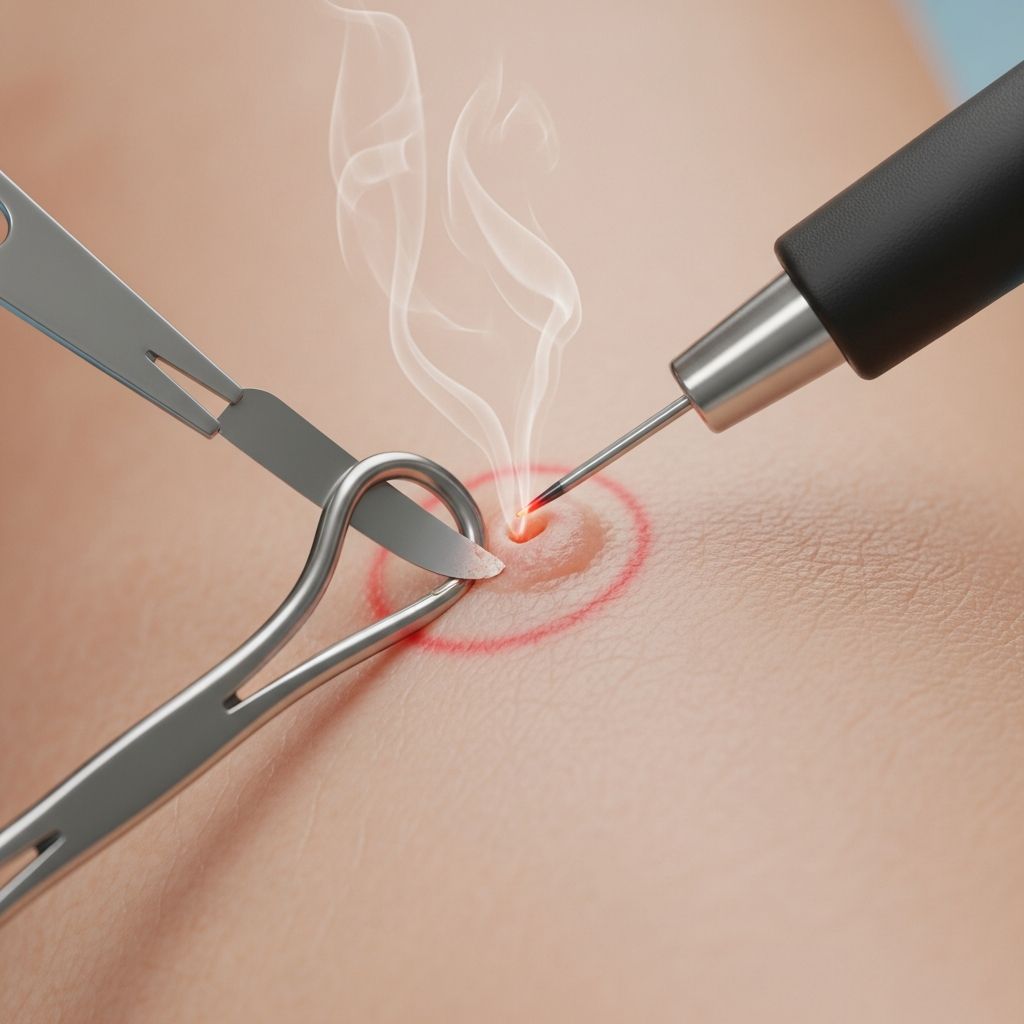
Curettage and cautery is a type of electrosurgery in which a skin lesion is scraped off and heat is applied to the skin surface to destroy remaining abnormal cells. This procedure combines two complementary techniques: mechanical removal of the lesion through scraping and thermal destruction of residual tissue using electrical current. The combination approach makes curettage and cautery an effective treatment option for various skin conditions, particularly superficial skin cancers and benign growths.
The procedure is performed in a clinical or hospital environment designed specifically for sterile operating procedures. As a minor surgical intervention, curettage and cautery offers patients a straightforward treatment pathway with minimal downtime and generally favorable cosmetic outcomes when performed on appropriate lesions.
What Is Curettage and Cautery?
Curettage and cautery represents a traditional and widely used dermatological procedure that combines mechanical and thermal tissue removal. The technique involves using a curette, a spoon-shaped instrument with a sharp edge, to scrape away the skin lesion, followed by electrocautery to cauterize the wound bed.
The procedure operates on a straightforward principle: first, abnormal tissue is removed mechanically through careful scraping, and second, any remaining lesion cells are destroyed by applying controlled heat to the treatment area. This dual approach helps minimize the risk of recurrence and provides comprehensive treatment of the target lesion.
In clinical practice, curettage and cautery often is repeated in cycles, particularly for malignant lesions. This serial approach—performing the procedure two to three times—increases the likelihood of complete lesion removal and treatment success.
The Procedure: Step-by-Step Process
Before undergoing curettage and cautery, your doctor will explain why your skin lesion needs treatment and describe the procedure involved. You may need to sign a consent form indicating your agreement to the surgical procedure. It is essential to inform your doctor if you are taking any medications, have allergies, use anticoagulants such as warfarin or aspirin, have a pacemaker, or have other relevant medical conditions.
Pre-Procedure Preparation
The affected area is first treated with a local anesthetic to block pain and numb the lesion area, ensuring patient comfort throughout the procedure. This anesthesia allows the dermatologist to work without causing significant discomfort while maintaining the patient’s ability to communicate any concerns.
Lesion Removal
A curette surgical tool with a sharp spoon-shaped end is then used to remove the lesion through careful scraping. The dermatologist gently scrapes away the abnormal tissue, paying close attention to complete removal of the target lesion while preserving surrounding healthy skin.
Cauterization
After the lesion is removed, the wound area is cauterized with a hot wire beaded tip or electrosurgical unit (diathermy). This electrocautery step stops bleeding, helps destroy any remaining skin tumor cells, and cleanses the surgical site. The thermal energy seals the wound and prevents excessive bleeding during recovery.
Pathology Analysis and Dressing
Once the operation is complete, the wound is dressed and the removed skin lesion is sent for laboratory analysis if necessary. The pathology report provides confirmation of the diagnosis and ensures that appropriate tissue was removed.
Related Stories



What Conditions Can Curettage and Cautery Treat?
Curettage and cautery are usually performed when lesions are soft compared to surrounding skin or if the lesion has formed with a natural line of cleavage separating it from surrounding tissue. The procedure works best on well-defined lesions that are easily distinguished from adjacent healthy skin.
Suitable Lesions
The procedure is generally suitable for the treatment of low-risk lesions. Skin lesions that are successfully treated by curettage and cautery include:
- Small basal cell carcinomas with well-defined borders
- Squamous cell carcinomas in appropriate locations
- Actinic keratosis (solar keratosis)
- Seborrheic keratosis
- Warts and other benign growths
- Cysts and other skin lesions
Unsuitable Lesions
Skin lesions that are ill-defined, have blurred edges, or are not easily detached are treated with alternative surgical methods. Additionally, basal cell carcinomas that are large, deep, or recurrent are usually not suitable for curettage. Lesions with poorly defined edges are also generally unsuitable for this procedure.
Furthermore, curettage and cautery of high-risk facial lesions is associated with a high risk of tumor recurrence and is generally contraindicated. The procedure’s success depends on clear visualization and demarcation of the lesion boundaries.
Clinical Effectiveness and Prevalence
In a survey of 166 United Kingdom consultant dermatologists in 1995, 24% of 1,597 lesions presenting for the first time were treated by curettage and cautery, making it the second most common form of treatment after surgical excision at 58%. This demonstrates the established role of curettage and cautery in dermatological practice.
The procedure’s effectiveness is particularly notable for superficial, uncomplicated skin cancers. When applied to appropriate lesions—those with well-defined borders and suitable depth—curettage and cautery demonstrates excellent treatment success rates.
Scarring Outcomes
Curettage often results in some sort of scar, especially if accompanied by cautery. However, the scars from curettage are usually flat and round, typically similar in size to that of the original skin lesion.
Most lesions are relatively shallow, so the treated area will probably resemble a graze that naturally heals during the next couple of weeks. As with any graze, a scab will form then drop off after some time, revealing healthy skin that usually turns close to natural skin color when fully restored.
Some people have an abnormal response to skin healing and may develop larger scars than usual, including keloids and hypertrophic scarring. The procedure often is used on the trunk and other areas of the body where the scars introduced by this treatment will not be objectionable.
Aftercare and Wound Care Instructions
Proper wound care following curettage and cautery is essential for optimal healing and cosmetic outcomes. The wound site will feel tender for several hours, especially once the anesthesia wears off, although painkillers can be prescribed to assist with comfortable recovery.
First 24 Hours
The dressing should stay on during the first day of recovery. During this time, it is best to relax and resist the temptation to stretch the skin. Avoid exercise during the first 24 hours of recovery as it will increase blood flow, potentially affecting the healing process.
If there is bleeding from the wound site, apply pressure with a clean, soft towel for twenty minutes, resisting the urge to peek. If bleeding continues unabated, contact your dermatologist or other medical professional, or an emergency department if it is after office hours for advice and instructions.
The wound area should remain dry for the first 24-48 hours of recovery to assist with healing.
After 24 Hours
After 24 hours, you should change the dressing. First, thoroughly wash your hands with soap and water. Then, remove the old dressing and gently wash the site with soap and warm water, taking care not to scrub or scratch the site. Next, pat the area dry, cover it with a thick ointment, and apply a bandage.
After the dressing is removed and the wound has been cleaned, the wound should be kept clean and dry, with dressing changes as directed by your healthcare provider. Continue to avoid strenuous exercise and activities that might disturb the healing site.
Complete Healing Timeline
The wound should fully heal within two to three weeks with only a flat, round scar remaining which will slowly fade to closely match the surrounding skin. Variations in individual healing rates and skin types mean some patients may experience slightly longer healing times.
Pre-Procedure Considerations
Before undergoing curettage and cautery, patients should be aware of several important factors that can affect the procedure and its outcomes:
- Your dermatologist will provide a thorough understanding of the procedure prior to surgery
- Alternative options exist, and your dermatologist will indicate why curettage and cautery are recommended for your specific skin condition
- You must inform your dermatologist if you take medications, suffer from allergies, or have other pre-existing medical conditions
- Report use of anticoagulants such as warfarin, clopidogrel, rivaroxaban, apixaban, or edoxaban, as these may affect bleeding during the procedure
- Inform your doctor if you have a pacemaker or are allergic to local anesthetic or plasters
Benefits of Curettage and Cautery
This procedure offers several significant advantages for appropriate candidates:
- Benign Lesion Removal: Effectively removes benign skin issues like warts and cysts for cosmetic improvement
- Diagnostic Tool: Provides a tissue sample for accurate diagnosis, aiding in identifying skin conditions through pathology analysis
- Skin Cancer Treatment: Minimally invasive option for superficial skin cancers, offering simplicity and effectiveness resulting in minimal scarring
- Outpatient Convenience: Typically performed on an outpatient basis, curettage allows for swift return home with minimal downtime
- Quick Recovery: Most patients experience rapid healing with minimal disruption to daily activities
- Cost-Effective: Generally less expensive than more extensive surgical procedures
Frequently Asked Questions
Q: What exactly is a curette?
A: A curette is a small surgical instrument with a sharp, spoon-shaped end used to scrape away skin lesions. The curved design allows dermatologists to remove tissue while minimizing damage to surrounding healthy skin.
Q: How long does the curettage and cautery procedure take?
A: The procedure typically takes 15-30 minutes, depending on the size and complexity of the lesion. Most patients are able to return home the same day.
Q: Is the procedure painful?
A: Local anesthetic is applied before the procedure to numb the area, so you should not feel pain during the treatment. Some mild discomfort or pressure sensations may be experienced, but significant pain should not occur.
Q: Can curettage and cautery be repeated?
A: Yes, the procedure is often repeated two to three times, particularly for malignant lesions. This serial approach increases the likelihood of complete lesion removal and treatment success.
Q: Will there be a noticeable scar?
A: Curettage typically results in a flat, round scar similar in size to the original lesion. Scars usually fade significantly over time to closely match surrounding skin color, though some visibility may persist depending on skin type and healing response.
Q: How long is the recovery period?
A: Most wounds heal completely within two to three weeks. During this time, you should avoid strenuous exercise and keep the area clean and dry as directed by your healthcare provider.
Q: What if the lesion returns after treatment?
A: While curettage and cautery has good success rates for appropriate lesions, recurrence is possible, especially with high-risk lesions. Your dermatologist will monitor the treated area and discuss alternative treatment options if needed.
Q: Are there any contraindications to this procedure?
A: Patients taking anticoagulants, those with pacemakers, or those with allergies to local anesthetics should inform their dermatologist before the procedure. Additionally, certain lesion types—such as large, deep, or poorly defined lesions—may not be suitable for curettage and cautery.
Conclusion
Curettage and cautery remains a valuable and widely used procedure in dermatological practice for treating a variety of skin lesions, from benign growths to superficial skin cancers. The procedure’s combination of mechanical removal and thermal destruction provides effective treatment with minimal downtime and generally favorable cosmetic outcomes. By understanding the procedure, its appropriate applications, and proper aftercare, patients can make informed decisions about their dermatological treatment options and achieve optimal healing results. While not suitable for all lesion types, curettage and cautery continues to serve as an important tool in the dermatologist’s arsenal for promoting good skin health and providing patients with greater self-esteem and quality of life.
References
- Curettage and Cautery (Electrosurgery) — DermNet NZ. Accessed January 2026. https://dermnetnz.org/topics/curettage-and-cautery
- Serial Curettage and Cautery — Medscape/YouTube. Accessed January 2026. https://www.youtube.com/watch?v=VPRtjHt8HQg
- Curettage and Desiccation for Skin Cancer — American Society of Dermatologic Surgeons (ASDS). Accessed January 2026. https://www.asds.net/skin-experts/skin-treatments/curettage-and-desiccation
- Curettage Procedure: Care After Treatment — Alberta Health Services. Accessed January 2026. https://myhealth.alberta.ca/Health/aftercareinformation/pages/conditions.aspx?hwid=abp7908
Similar Articles








Read full bio of Sneha Tete