Cushing Syndrome: Causes, Symptoms & Treatment
Comprehensive guide to understanding Cushing syndrome, its symptoms, causes, and effective treatment options.
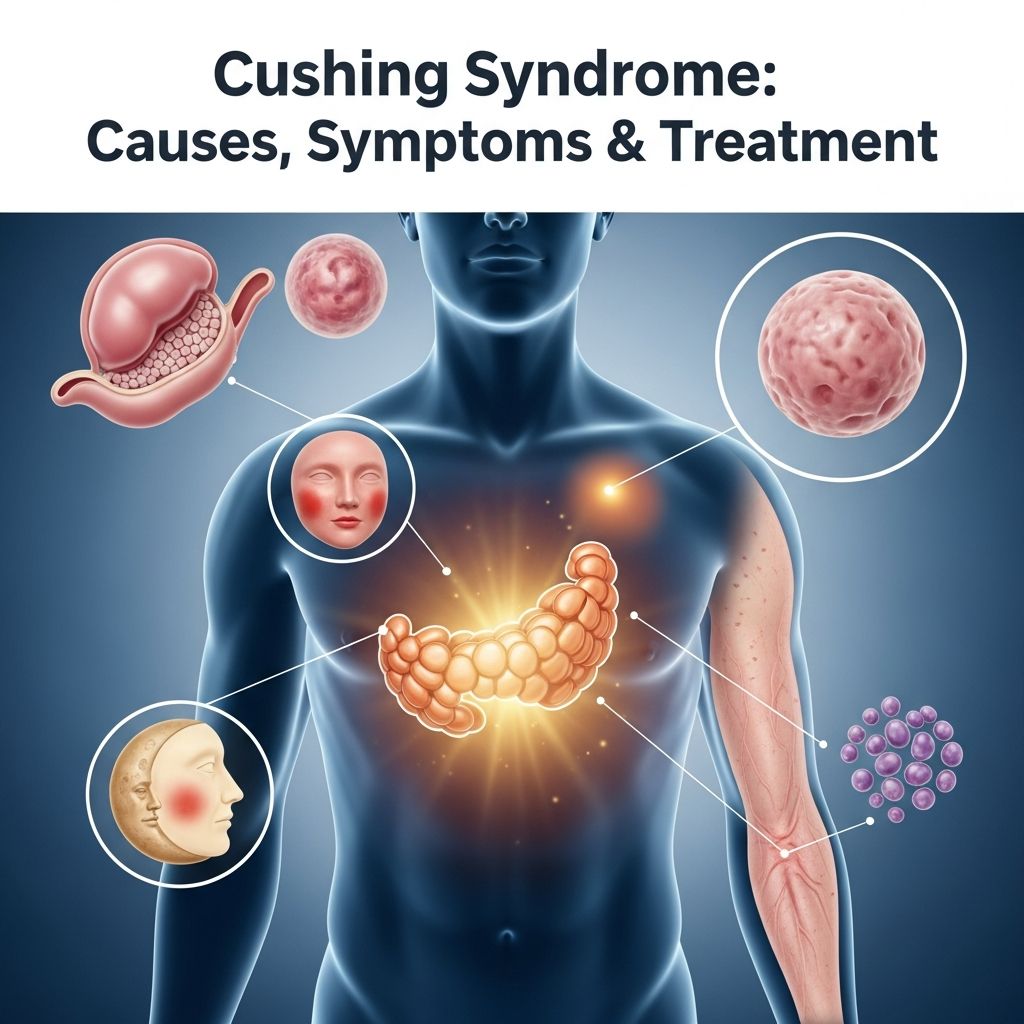
Cushing syndrome is a medical condition characterized by excessive levels of the hormone cortisol in the body. This hormonal imbalance can significantly impact your overall health and quality of life, affecting everything from your weight and blood pressure to your mood and bone strength. Understanding this condition is crucial for early detection and effective management.
What Is Cushing Syndrome?
Cushing syndrome occurs when your body produces too much cortisol, often called the “stress hormone.” Cortisol is a naturally occurring hormone that your adrenal glands produce to regulate blood sugar, manage stress responses, and control how your body converts food into energy. However, when cortisol levels become abnormally elevated, it can lead to a cascade of health problems.
The excess cortisol may develop due to various reasons, including medication use (particularly corticosteroids), tumors, or dysfunction within the endocrine system itself. The condition can range from mild subclinical cases with minimal symptoms to severe presentations that significantly impair daily functioning.
Causes of Cushing Syndrome
Cushing syndrome can develop through multiple pathways, each requiring different diagnostic approaches and treatment strategies. The causes fall into several main categories:
Medication-Related Causes
One of the most common causes of Cushing syndrome is prolonged use of corticosteroid medications. These medications, such as prednisone or dexamethasone, are prescribed to treat various inflammatory and autoimmune conditions. When taken in high doses for extended periods, they can lead to iatrogenic Cushing syndrome (caused by medical treatment). This type typically resolves when the medication is gradually discontinued under medical supervision.
Pituitary Adenoma (Cushing’s Disease)
Cushing’s disease, technically a subset of Cushing syndrome, occurs when a benign tumor (adenoma) develops in the pituitary gland. This tumor produces excessive amounts of adrenocorticotropic hormone (ACTH), which stimulates the adrenal glands to produce abnormally high levels of cortisol. Microadenomas, which are tumors smaller than one centimeter, represent the majority of pituitary adenomas associated with Cushing’s disease.
Adrenal Gland Tumors
Tumors of the adrenal glands themselves can produce excess cortisol directly. These may be benign adenomas or, more rarely, adrenal carcinomas. In this scenario, cortisol levels are elevated independent of ACTH production.
Ectopic ACTH Secretion
Sometimes, non-pituitary tumors (particularly small cell lung cancers or neuroendocrine tumors) produce ACTH, causing cortisol elevation. This condition, known as ectopic ACTH syndrome, represents a more challenging diagnostic scenario.
Symptoms of Cushing Syndrome
Cushing syndrome manifests through diverse symptoms that can affect nearly every body system. Recognizing these signs is essential for early diagnosis and treatment initiation.
Physical Appearance Changes
One of the most distinctive features of Cushing syndrome is characteristic changes in physical appearance. These include:
- Significant weight gain concentrated in the face and upper back region
- A round, puffy face sometimes described as “moon face”
- Development of a fatty hump between the shoulders, known as a “buffalo hump”
- Disproportionate thinning of the arms and legs compared to the torso
- Purple or pink stretch marks, particularly on the abdomen, thighs, breasts, and arms
Related Stories



Symptoms Affecting Everyone
- Muscle weakness and fatigue, even with adequate rest
- Hypertension (high blood pressure)
- Mood disturbances including depression and anxiety
- Cognitive difficulties and memory problems
- Easy bruising without apparent injury
- Thinning skin that becomes fragile and easily damaged
Symptoms Specific to Women
- Excessive hair growth in areas typically associated with male pattern hair growth (facial hair, chest, back)
- Irregular or absent menstrual periods
- Decreased fertility or difficulty conceiving
- Acne development or worsening
Diagnosis of Cushing Syndrome
Diagnosing Cushing syndrome requires a systematic approach involving multiple tests because symptoms can overlap with other conditions, and some presentations may be subtle.
Initial Screening Tests
The diagnostic process begins with establishing whether a patient is producing excess cortisol. Several screening tests are available:
- 24-hour urinary cortisol test: This measures cortisol levels collected over a full 24-hour period, providing an accurate assessment of daily cortisol production
- Late-night salivary cortisol test: This evaluates the loss of normal circadian cortisol variation, as cortisol typically decreases significantly in the evening
- Dexamethasone suppression test: A patient receives one milligram of dexamethasone at midnight; normally this suppresses cortisol levels, but in Cushing syndrome, cortisol remains elevated
Diagnostic Confirmation
A diagnosis of Cushing syndrome requires that at least two of the three screening tests demonstrate abnormal results. If results are inconclusive or show only one abnormality, additional testing and close monitoring are warranted.
Determining the Cause
Once excess cortisol is confirmed, the next step involves measuring ACTH levels. Elevated ACTH levels indicate ACTH-dependent hypercortisolism, typically resulting from either a pituitary adenoma or ectopic ACTH production.
Imaging Studies
If ACTH-dependent Cushing syndrome is suspected, an MRI of the pituitary gland is typically performed to identify a potential adenoma. However, in approximately 50 percent of cases, no adenoma is initially detected on MRI.
Inferior Petrosal Sinus Sampling
In cases where an adenoma isn’t visible on imaging, an interventional radiologist may perform inferior petrosal sinus sampling. This specialized procedure compares ACTH levels in blood draining directly from the pituitary with peripheral blood levels, helping identify the source of ACTH production. In experienced hands, this procedure has approximately 95 percent accuracy in diagnosing ACTH-dependent Cushing disease.
Treatment Options for Cushing Syndrome
Treatment approaches vary depending on the underlying cause of the condition. The primary goal is to restore cortisol levels to normal physiological ranges.
Surgical Treatment
Trans-sphenoidal surgery to remove a pituitary adenoma represents the preferred intervention for Cushing’s disease when a tumor is identified. This minimally invasive procedure accesses the pituitary gland through the nasal passages and sphenoid bone, allowing surgeons to remove the tumor while minimizing trauma to surrounding structures.
When performed by skilled pituitary surgeons, particularly for microadenomas, this procedure achieves remission rates exceeding 80 percent, with Cleveland Clinic reporting an 89 percent success rate in patients with microadenomas in a series of 101 patients. Success rates are notably higher for smaller tumors compared to larger macroadenomas.
Medical Management
When surgery is not possible or unsuccessful, medications that inhibit cortisol production become necessary. These may include mitotane, ketoconazole, or metyrapone. Additionally, newer medications that block cortisol receptors at target tissue sites may be employed. Each medication carries distinct benefits and potential side effects that must be carefully considered.
Radiation Therapy
Radiation therapy may be considered in cases where surgical resection is incomplete or recurrence occurs. This approach requires careful planning to effectively target tumor cells while minimizing exposure to surrounding brain tissue.
Treatment of Medication-Induced Cushing Syndrome
When Cushing syndrome results from corticosteroid medications, gradual dose reduction or discontinuation under medical supervision typically allows recovery. The tapering process must be carefully managed to avoid adrenal insufficiency.
Prognosis and Long-Term Outlook
The prognosis for Cushing syndrome has improved dramatically with modern diagnostic and treatment approaches. Historically, patients with untreated Cushing disease had average survival of only three to five years, comparable to survival rates for many cancers. Today, with appropriate treatment, Cushing syndrome can often be managed effectively.
However, long-term follow-up is essential. After successful surgery, there is a 15 to 25 percent likelihood of recurrence within five to ten years. Consequently, patients typically require ongoing monitoring with salivary cortisol testing every six months throughout their lives. Rather than discussing “cure,” healthcare providers often emphasize that successful treatment achieves remission, and patients remain “once a pituitary patient, always a pituitary patient, even in long-term remission.”
Complications of Untreated Cushing Syndrome
Left undiagnosed and untreated, Cushing syndrome can result in serious health consequences:
- Severe hypertension and increased cardiovascular disease risk
- Diabetes and metabolic dysfunction
- Osteoporosis with increased fracture risk
- Severe immunosuppression and increased infection susceptibility
- Cognitive decline and psychiatric disorders
- Early death from cardiovascular or infectious complications
The Importance of Team-Based Care
Optimal management of Cushing syndrome requires a multidisciplinary team approach. This team typically includes endocrinologists specializing in hormonal disorders, neuroradiologists experienced in pituitary imaging, interventional radiologists capable of performing specialized diagnostic procedures, and skilled pituitary surgeons. This coordinated approach ensures accurate diagnosis and optimal treatment outcomes.
Living with Cushing Syndrome
Managing Cushing syndrome extends beyond initial treatment. Patients benefit from:
- Regular contact with healthcare providers throughout all treatment stages
- Adherence to prescribed treatment plans
- Open communication with medical teams about concerns and side effects
- Long-term monitoring to detect recurrence early
- Management of comorbidities such as hypertension and diabetes
- Psychological support to address mood disturbances and body image concerns
Frequently Asked Questions
Q: Can Cushing syndrome be cured?
A: Yes, Cushing syndrome can often be cured with appropriate treatment, particularly when caused by pituitary adenomas successfully removed through surgery. However, long-term follow-up is necessary to monitor for recurrence, which can occur in 15 to 25 percent of cases within five to ten years.
Q: How long does treatment typically take?
A: Treatment duration varies depending on the cause and type of intervention. Surgical recovery may take several weeks, while medication adjustments may require months of optimization. Long-term follow-up monitoring typically continues throughout a patient’s lifetime.
Q: Is Cushing syndrome hereditary?
A: Most cases of Cushing syndrome are not hereditary. However, some pituitary tumors may be associated with hereditary syndromes. Genetic counseling may be appropriate in certain cases.
Q: What happens if Cushing syndrome is not treated?
A: Untreated Cushing syndrome can lead to serious complications including severe hypertension, diabetes, osteoporosis, infections, psychiatric disorders, and potentially early death. Historically, average survival without treatment was three to five years.
Q: Are there lifestyle changes that help manage Cushing syndrome?
A: Yes. Weight management is particularly important, and treatment plans should incorporate weight management strategies when weight gain is a presenting feature. Additionally, managing comorbidities such as hypertension and diabetes through lifestyle modifications supports overall treatment success.
Q: What is the difference between Cushing syndrome and Cushing’s disease?
A: Cushing syndrome is the broader term for any condition causing excess cortisol. Cushing’s disease specifically refers to ACTH-dependent hypercortisolism caused by a pituitary adenoma producing excess ACTH.
References
- Cushing Syndrome: Causes, Symptoms & Treatment — Cleveland Clinic. 2022-12-27. https://my.clevelandclinic.org/health/diseases/5497-cushing-syndrome
- Cleveland Clinic Excels at Team Approach to Cushing Disease — Cleveland Clinic Consult QD. https://consultqd.clevelandclinic.org/cleveland-clinic-excels-at-team-approach-to-cushing-disease
- Subclinical Cushing’s Syndrome: Navigating a Gray Area — Cleveland Clinic Consult QD. https://consultqd.clevelandclinic.org/subclinical-cushings-syndrome-navigating-a-gray-area
- What is Cushing’s Syndrome and Do You Have It? — Speaking of Women’s Health. https://speakingofwomenshealth.com/column/cushings-syndrome
- Cushing’s Syndrome: Symptoms, Treatments and Causes — Healthdirect Australia. https://www.healthdirect.gov.au/cushings-syndrome
- Cushing Syndrome: Symptoms and Causes — Mayo Clinic. https://www.mayoclinic.org/diseases-conditions/cushing-syndrome/symptoms-causes/syc-20351310
Similar Articles








Read full bio of medha deb