Cushing Syndrome: 3 Causes, Key Symptoms, Diagnosis
Comprehensive guide to Cushing syndrome: causes, symptoms, skin changes, diagnosis, and effective treatments for this cortisol excess disorder.
Authoritative facts about Cushing syndrome (hypercortisolism): what it is, signs and symptoms, causes, investigations, differential diagnosis, disease course, complications, and management options.
What is Cushing syndrome?
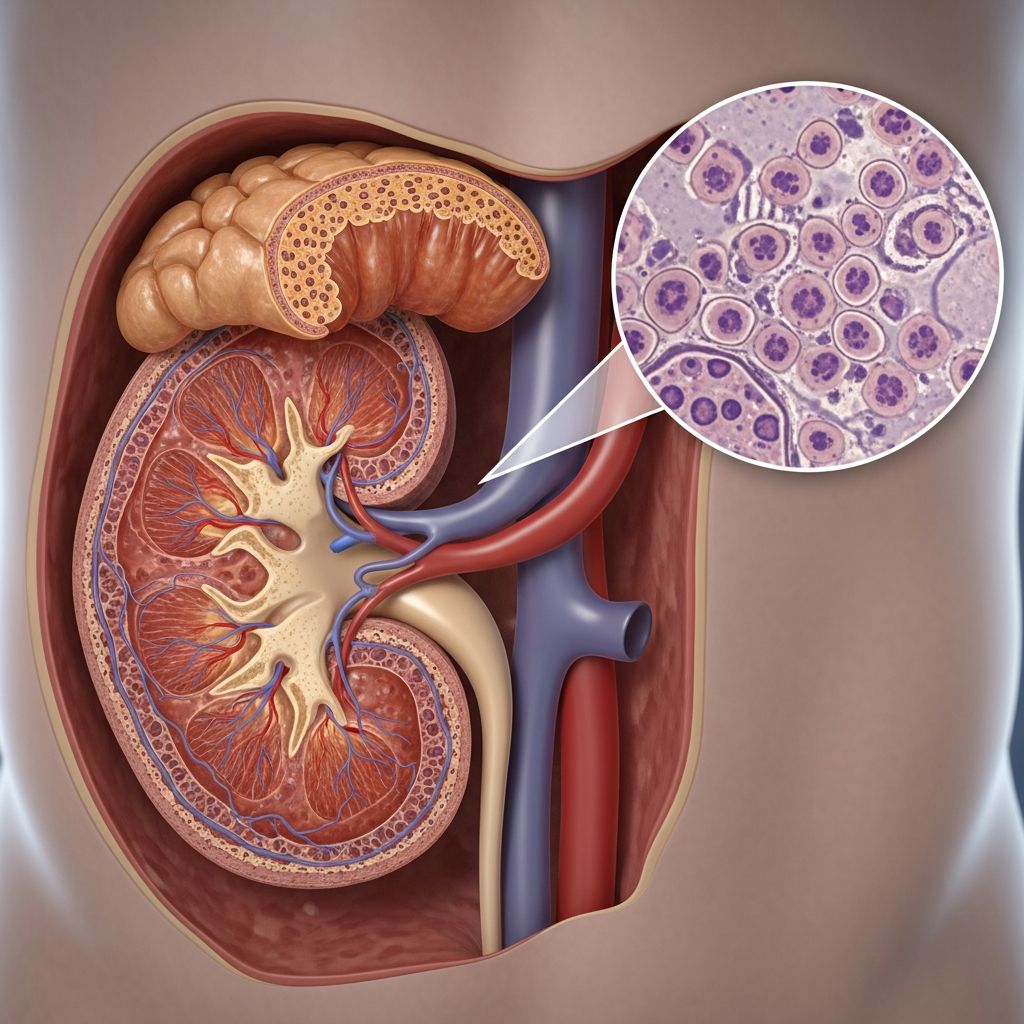
Cushing syndrome is a hormonal disorder caused by prolonged exposure to high levels of the glucocorticoid hormone cortisol. Cortisol, produced by the adrenal glands, is essential for regulating metabolism, immune response, and stress. However, chronic elevation disrupts normal bodily functions, leading to characteristic physical changes, metabolic disturbances, and increased health risks.
The condition arises from either exogenous sources, such as long-term glucocorticoid medications (e.g., prednisone for autoimmune diseases), or endogenous overproduction due to tumors in the pituitary, adrenal glands, or ectopic sites. Endogenous cases account for the majority of clinical presentations, with pituitary-dependent Cushing disease being the most common form, representing over 70% of adult cases.
In dermatological contexts, Cushing syndrome manifests prominently in the skin, with features like thinning, easy bruising, and wide purple striae, often prompting initial medical consultation. Loss of the normal circadian rhythm of cortisol secretion and impaired feedback in the hypothalamo-pituitary-adrenal (HPA) axis are hallmark pathophysiological mechanisms.
Who gets Cushing syndrome (epidemiology)?
Cushing syndrome is rare, with an estimated incidence of 2-3 cases per million population annually. It predominantly affects adults aged 20-50 years, with a female-to-male ratio of approximately 3:1, likely due to estrogen influences on cortisol-binding globulin. Children and adolescents represent 10-15% of cases, often from adrenal origins.
Exogenous Cushing syndrome is far more common, linked to widespread glucocorticoid use for conditions like rheumatoid arthritis, asthma, and organ transplants. Endogenous forms are harder to quantify but show regional variations; for instance, higher ectopic ACTH rates in certain populations. Early recognition is crucial, as untreated cases lead to severe morbidity.
What causes Cushing syndrome?
The primary cause is hypercortisolism from excess cortisol. Causes are classified as ACTH-dependent or independent:
- ACTH-dependent (70-80%): Pituitary adenoma (Cushing disease, 70% of endogenous cases), ectopic ACTH from lung carcinoids or other tumors.
- ACTH-independent (20-30%): Adrenal adenoma/carcinoma, macronodular hyperplasia.
- Exogenous (iatrogenic): Prolonged systemic glucocorticoids, most common overall.
Rarely, familial syndromes like multiple endocrine neoplasia type 1 contribute. Ectopic sources often present more acutely with severe myopathy and hypokalemia.
What are the clinical features of Cushing syndrome?
Clinical features vary by duration and severity but cluster around metabolic, cutaneous, musculoskeletal, neuropsychiatric, and gonadal effects. Prevalence data from large cohorts highlight common presentations:
| Feature | Prevalence (%) |
|---|---|
| Weight gain/obesity (truncal) | 81-97 |
| Moon face | 88-92 |
| Skin thinning | 84 |
| Hypertension | 68-90 |
| Muscle weakness | 46-67 |
| Purple striae | 35-84 |
| Hirsutism (women) | 56-81 |
| Diabetes/glucose intolerance | 43-50 |
Physical signs
- Moon face: Rounded facial appearance from fat redistribution.
- Buffalo hump: Dorsocervical fat pad.
- Truncal obesity: Central weight gain with thin limbs.
- Purple striae: Wide (>1 cm), violaceous abdominal/axillary marks from dermal atrophy.
- Skin changes: Thinning, bruising, acne, hirsutism.
- Other: Proximal myopathy, plethora, supraclavicular pads.
Symptoms
- Muscle weakness, fatigue.
- Mood disorders: depression, anxiety, irritability (26-62%).
- Menstrual irregularities, reduced libido.
- Hypertension, hyperglycemia.
- Recurrent infections from immunosuppression.
Related Stories



Ophthalmic issues like glaucoma and cataracts occur more in iatrogenic cases.
Diagnosis of Cushing syndrome
Diagnosis requires stepwise confirmation of hypercortisolism followed by etiology determination. Initial screening uses high-sensitivity tests:
- 1 mg overnight dexamethasone suppression test (failure to suppress cortisol <1.8 μg/dL).
- Late-night salivary cortisol (≥2 samples, loss of circadian nadir).
- 24-hour urinary free cortisol (≥2 collections).
Positive screens prompt localization tests:
- Plasma ACTH to distinguish ACTH-dependent vs. independent.
- High-dose dexamethasone suppression or CRH stimulation.
- Inferior petrosal sinus sampling (IPSS) for pituitary vs. ectopic (gold standard, >95% accuracy).
- Imaging: MRI pituitary, CT adrenals/chest.
Challenges include pseudo-Cushing states (e.g., alcoholism, depression); repeat testing ensures accuracy.
Differential diagnosis
Conditions mimicking Cushing include:
- Obesity-related: Polycystic ovary syndrome (PCOS), metabolic syndrome (lack purple striae, myopathy).
- Pseudo-Cushing: Alcoholism, severe depression (normalizes with resolution).
- Other: Hypothyroidism, lipodystrophies.
Skin-focused differentials for striae/bruising: Ehlers-Danlos, anorexia nervosa.
Investigations for Cushing syndrome
Beyond screening:
- Biochemical: Serum cortisol/ACTH, electrolytes (hypokalemia in ectopic).
- Imaging: Pituitary MRI (detects 50-70% microadenomas), adrenal CT, octreotide scan for ectopic.
- Functional: IPSS, CRH/dexamethasone tests.
Baseline assessments: glucose tolerance, bone density (osteoporosis risk), electrolytes.
Complications of Cushing syndrome
Untreated hypercortisolism causes:
- Cardiovascular: Hypertension (68-90%), heart failure, thromboembolism.
- Metabolic: Diabetes (30-47%), dyslipidemia.
- Musculoskeletal: Osteoporosis/fractures (21-56%), aseptic necrosis.
- Infectious: Opportunistic due to immunosuppression (14-25%).
- Psychiatric: Depression, psychosis; cognitive deficits may persist post-treatment.
Mortality is 4-fold elevated without intervention, mainly from cardiovascular events.
Management of Cushing syndrome
Treatment targets cortisol normalization, prioritizing tumor resection:
- Surgery (first-line): Transsphenoidal adenomectomy (70-90% remission for microadenomas), adrenalectomy.
- Radiation: For persistent pituitary disease.
- Medical: Steroidogenesis inhibitors (ketoconazole, metyrapone), ACTH antagonists (pasireotide), receptor blockers (mifepristone).
- Bilateral adrenalectomy: Refractory cases, risks Nelson syndrome.
Exogenous: Taper glucocorticoids gradually. Multidisciplinary care involves endocrinologists, surgeons. Post-op: Lifelong monitoring for adrenal insufficiency, recurrence.
Prognosis and follow-up for Cushing syndrome
With curative surgery, 5-year recurrence-free survival is 50-85%; quality of life improves but some deficits (psychiatric, skeletal) persist. Annual screening: cortisol, ACTH, imaging. Skin changes reverse slowly; persistent striae common.
Frequently Asked Questions (FAQs)
Q: Is Cushing syndrome curable?
A: Yes, many cases are cured by surgery removing the cortisol source, though recurrence monitoring is lifelong.
Q: Can Cushing syndrome be reversed without surgery?
A: Medical therapies control symptoms effectively in inoperable cases, but surgery offers best remission rates.
Q: Do skin changes from Cushing syndrome go away?
A: Thinning and bruising improve post-treatment; purple striae often persist.
Q: How is Cushing syndrome diagnosed accurately?
A: Via screening tests (dexamethasone suppression, salivary cortisol) confirmed by IPSS and imaging.
References
- Guide to Cushing’s Syndrome — Columbia Surgery. 2023. https://columbiasurgery.org/conditions-and-treatments/cushings-syndrome
- Cushing’s Syndrome – Endotext — NCBI Bookshelf, NIH. 2023-07-27. https://www.ncbi.nlm.nih.gov/books/NBK279088/
- Cushing Syndrome: Causes, Symptoms & Treatment — Cleveland Clinic. 2023. https://my.clevelandclinic.org/health/diseases/5497-cushing-syndrome
- Cushing syndrome – Diagnosis and treatment — Mayo Clinic. 2023. https://www.mayoclinic.org/diseases-conditions/cushing-syndrome/diagnosis-treatment/drc-20351314
- Treatment of Cushing’s Syndrome Guideline Resources — Endocrine Society. 2024. https://www.endocrine.org/clinical-practice-guidelines/treatment-of-cushing-syndrome
Similar Articles








Read full bio of medha deb