Cutaneous Amyloidosis: Symptoms, Diagnosis, Treatment
Understanding primary localised cutaneous amyloidosis: causes, symptoms, diagnosis, and management strategies for this rare skin condition.
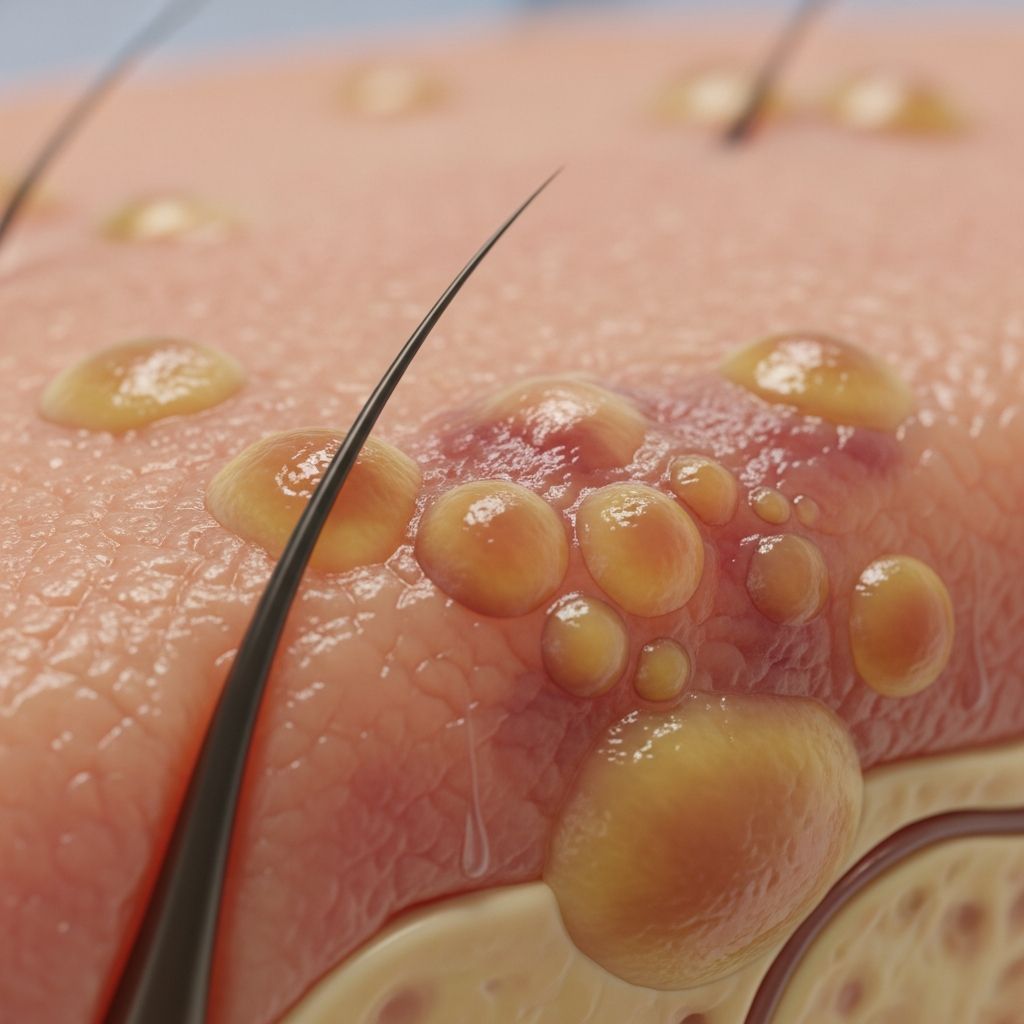
Cutaneous amyloidosis refers to the deposition of amyloid proteins in the skin, leading to various clinical presentations without systemic involvement in its primary localised form. This condition, known as primary cutaneous amyloidosis (PCA) or primary localised cutaneous amyloidosis (PLCA), is characterised by extracellular amyloid deposits in normal skin, distinct from systemic amyloidosis that affects internal organs. PCA is relatively rare and primarily manifests as three subtypes: macular amyloidosis, lichen amyloidosis, and nodular amyloidosis. These forms arise from amyloid produced locally by skin cells (in macular and lichen types) or plasma cells (in nodular type), often triggered by chronic skin trauma like rubbing or scratching.
Understanding cutaneous amyloidosis is crucial for dermatologists and patients, as it can mimic other pruritic disorders but requires specific diagnostic confirmation. Globally, it shows higher prevalence in individuals from Asia, South America, and the Middle East, typically onset in adulthood and persisting chronically. This article delves into its subtypes, clinical features, histopathology, differential diagnoses, management options, and frequently asked questions, providing a comprehensive overview for informed care.
What is cutaneous amyloidosis?
Amyloidosis encompasses disorders where misfolded proteins aggregate into amyloid fibrils, depositing in tissues and disrupting function. Cutaneous amyloidosis specifically involves skin deposition, classified as primary (localised to skin) or secondary (associated with systemic disease or skin tumours). Primary cutaneous amyloidosis (PCA) features amyloid derived from keratinocyte degeneration products in macular and lichen forms, or immunoglobulin light chains from plasma cells in nodular form.
In PLCA, deposits are confined to the dermis without monoclonal gammopathy or systemic spread in most cases, though nodular variants may rarely associate with myeloma. The condition’s benign nature in macular and lichen subtypes contrasts with potential systemic links in nodular cases, necessitating thorough evaluation. Amyloid appears as amorphous eosinophilic material on histology, staining apple-green birefringent under Congo red with polarised light—a hallmark diagnostic feature.
Who gets cutaneous amyloidosis?
Primary cutaneous amyloidosis predominantly affects adults aged 30–60, with a female predominance in some series, though data varies. It is more prevalent among people of Asian, South American, and Middle Eastern descent, possibly due to genetic predispositions like mutations in oncostatin M receptor (OSMR) or IL-31 receptor A genes linked to pruritus and amyloidogenesis.
Family history may play a role in familial forms, but most cases are sporadic. Chronic pruritic conditions like atopic dermatitis or friction from tight clothing exacerbate risk, particularly on extensor surfaces. Unlike systemic AL amyloidosis, which impacts older adults with plasma cell dyscrasias, PCA remains skin-limited. Incidence is estimated at 0.05–0.1 per 1000 in endemic areas, underscoring its rarity in Western populations.
What causes cutaneous amyloidosis?
The precise aetiology remains unclear, but chronic mechanical trauma—such as repeated scratching, rubbing, or friction—is implicated as the primary trigger. This damages keratinocytes, leading to cytolysis and release of cytokeratins that polymerise into amyloid fibrils via proteolytic cleavage. Genetic factors, including OSMR mutations, heighten susceptibility to pruritus-driven cycles.
- Macular and lichen amyloidosis: Amyloid from degenerated epidermal cells (keratin-derived).
- Nodular amyloidosis: AL-type amyloid from clonal plasma cells in dermis.
Environmental factors like UV exposure or irritants may contribute, but no infectious or autoimmune triggers are confirmed. In rare cases, nodular PCA links to underlying haematologic malignancy, prompting systemic workup.
Related Stories



Clinical features of cutaneous amyloidosis
Features vary by subtype, with pruritus prominent in macular and lichen forms but absent in nodular.
Macular amyloidosis
Presents as symmetric, reticulated hyperpigmented macules on upper back, shoulders, or arms. Lesions are flat, brown-grey, with a rippled or ‘crocodile skin’ appearance, intensely pruritic. Rippling results from papillary dermal deposits compressing rete ridges.
Lichen amyloidosis
Characterised by pruritic, hyperkeratotic papules coalescing into plaques, favouring shins, thighs, and extensor forearms. Lesions are reddish-brown, scaly, and domed, often multiple and bilateral. Chronic rubbing perpetuates the cycle.
Nodular amyloidosis
Rare waxy, firm nodules or plaques (0.5–10 cm) on legs, trunk, face, or genitals. Colours range from pink to red-brown; usually non-pruritic but may ulcerate. Plasma cell infiltrates underlie amyloid.
| Subtype | Location | Appearance | Itch |
|---|---|---|---|
| Macular | Upper back | Flat, rippled brown macules | Severe |
| Lichen | Shins, arms | Papules/plaques, scaly | Severe |
| Nodular | Legs, trunk | Firm nodules/plaques | Mild/None |
Diagnosis of cutaneous amyloidosis
Diagnosis relies on clinical suspicion corroborated by biopsy. Typical sites (itchy shin papules or back macules) guide sampling.
- Histology: Acellular eosinophilic dermal deposits, Congo red positivity with apple-green birefringence, thioflavin T fluorescence.
- Immunohistochemistry: Keratin-positive in macular/lichen; lambda/kappa light chains in nodular.
- Systemic evaluation: Serum/urine electrophoresis, free light chains, bone marrow if nodular or atypical.
Dermoscopy shows pigment networks or globules; confocal microscopy aids non-invasively.
Differential diagnosis
Lichen amyloidosis mimics:
- Notalgia paraesthetica, prurigo nodularis, hypertrophic lichen planus, post-inflammatory hyperpigmentation.
Macular: Erythema dyschromicum perstans, lichen simplex chronicus. Nodular: Lipoma, basal cell carcinoma, cutaneous plasmacytoma. Biopsy distinguishes via amyloid stains.
Management of cutaneous amyloidosis
No cure exists; therapy targets symptoms (pruritus, aesthetics). Resistant and relapsing post-treatment.
General measures
- Emollients, avoid irritants/scratching.
- Cool compresses, occlusion with hydrocolloids post-topicals.
Topical therapies (macular/lichen)
- High-potency corticosteroids ± calcineurin inhibitors.
- Calcipotriol, tazarotene, doxepin cream.
Phototherapy
- Narrowband UVB (NB-UVB), PUVA effective for extensive disease.
Systemic (recalcitrant)
- Acitretin, ciclosporin, colchicine, low-dose amitriptyline.
Nodular
- Excision, laser ablation, cryotherapy, intralesional steroids.
Emerging: Fractional CO2 laser, etanercept (off-label).
Frequently Asked Questions
Q: Is cutaneous amyloidosis cancerous?
A: No, macular/lichen forms are benign. Nodular may rarely associate with myeloma; screen accordingly.
Q: Does it spread to organs?
A: PCA is skin-limited; unlike systemic amyloidosis.
Q: Can it be cured?
A: No cure; management controls symptoms, but recurrence common.
Q: How itchy is it?
A: Severely in macular/lichen; minimal in nodular.
Q: Who is at risk?
A: Adults from Asia/Middle East with chronic pruritus history.
(Word count: 1678, excluding metadata/HTML tags)
References
- Primary localised cutaneous amyloidosis (PLCA) — British Association of Dermatologists Patient Hub. 2023. https://www.skinhealthinfo.org.uk/condition/curtaneous-amyloidosis/
- Cutaneous amyloidosis — DermNet NZ. 2024-01-15. https://dermnetnz.org/topics/cutaneous-amyloidosis
- Amyloidosis – Diagnosis and treatment — Mayo Clinic. 2025-08-20. https://www.mayoclinic.org/diseases-conditions/amyloidosis/diagnosis-treatment/drc-20353183
- Primary cutaneous amyloidosis — Genetic and Rare Diseases Information Center (GARD), NIH. 2024. https://rarediseases.info.nih.gov
- Amyloidosis — Cleveland Clinic. 2025-03-10. https://my.clevelandclinic.org/health/diseases/23398-amyloidosis
Similar Articles








Read full bio of Sneha Tete