Cutaneous Cysts And Pseudocysts: What You Need To Know
Comprehensive guide to skin cysts and pseudocysts: types, causes, diagnosis, and effective treatments.
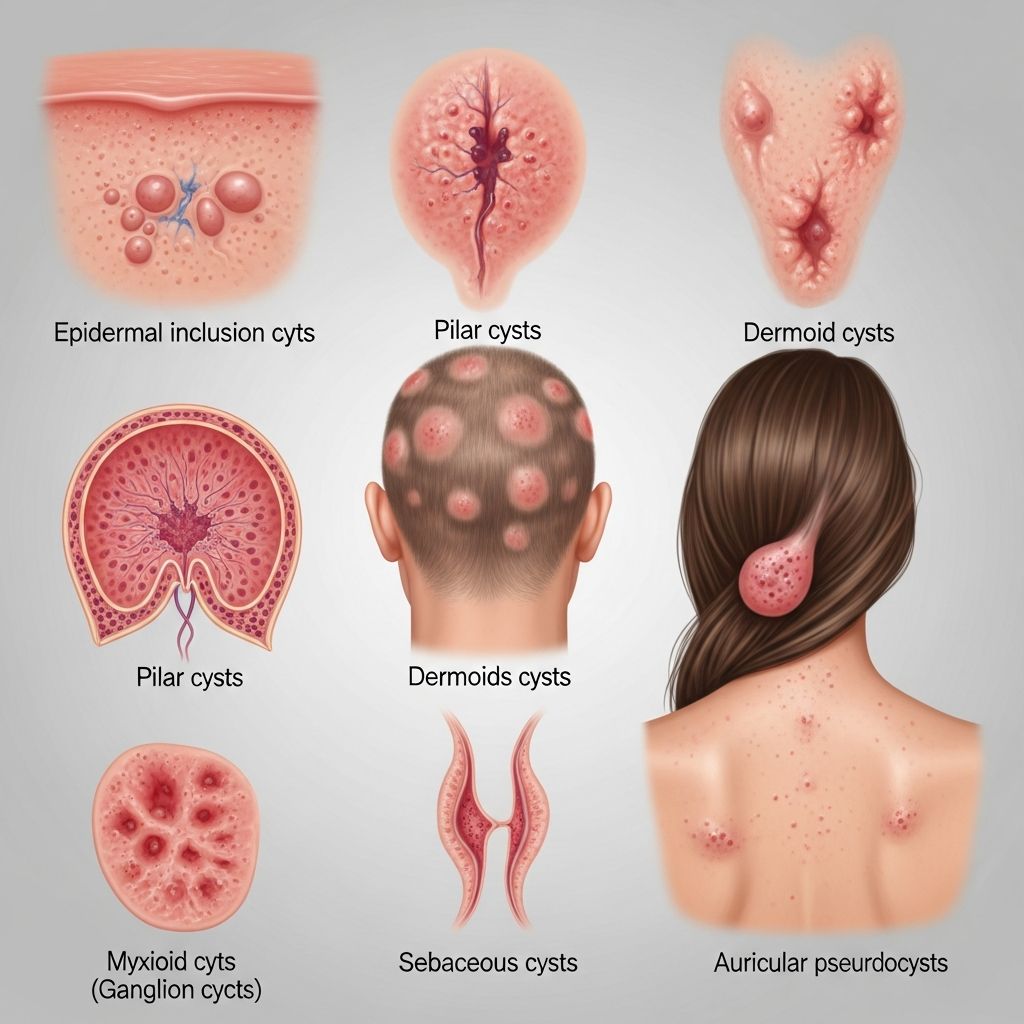
A cyst is a benign, round, dome-shaped encapsulated lesion containing fluid or semi-fluid material, often firm or fluctuant and distending the overlying skin. Pseudocysts lack a true epithelial capsule and commonly arise in conditions like acne. This article details various types, their demographics, causes, features, diagnosis, and management.
Introduction – Cysts
True cutaneous cysts are enclosed sacs lined by epithelium, filled with keratin, sebum, or other semi-solid material. They develop from blocked ducts or follicles and can occur anywhere on the body. Common examples include epidermoid cysts (from hair follicle infundibula) and trichilemmal cysts (from outer root sheath). These lesions are prevalent, affecting at least 20% of adults, more often males, and can be congenital or acquired.
Introduction – Pseudocysts
Pseudocysts mimic cysts clinically but lack an epithelial lining, instead having a fibrous wall containing mucin, semisolid, or viscous material. They often stem from degeneration or leakage, such as digital myxoid pseudocysts from joint mucin or comedo-like pseudocysts in acne. Unlike true cysts, they recur more readily after incomplete removal.
Demographics
Cysts and pseudocysts affect all races and ages but are very common, impacting over 20% of adults. Most types predominate in males. Epidermoid cysts appear across life stages, while vellus hair cysts are congenital. Digital myxoid pseudocysts favor middle-aged to elderly adults, especially women, often linked to osteoarthritis.
Causes
Many cyst causes remain unknown, but known triggers include:
- Blockage of pilosebaceous units or ducts, leading to epidermoid or sebaceous cysts.
- Traumatic implantation of epidermal cells, common on palms, soles, or genitals.
- Genetic factors, e.g., multiple cysts in Gardner syndrome or pachyonychia congenita.
- Developmental anomalies for dermoid or bronchogenic cysts.
- For pseudocysts: mucin deposition in digital myxoid types or acne-related comedo extraction.
Osteoarthritis underlies some digital pseudocysts as ganglionic extensions.
Clinical Features
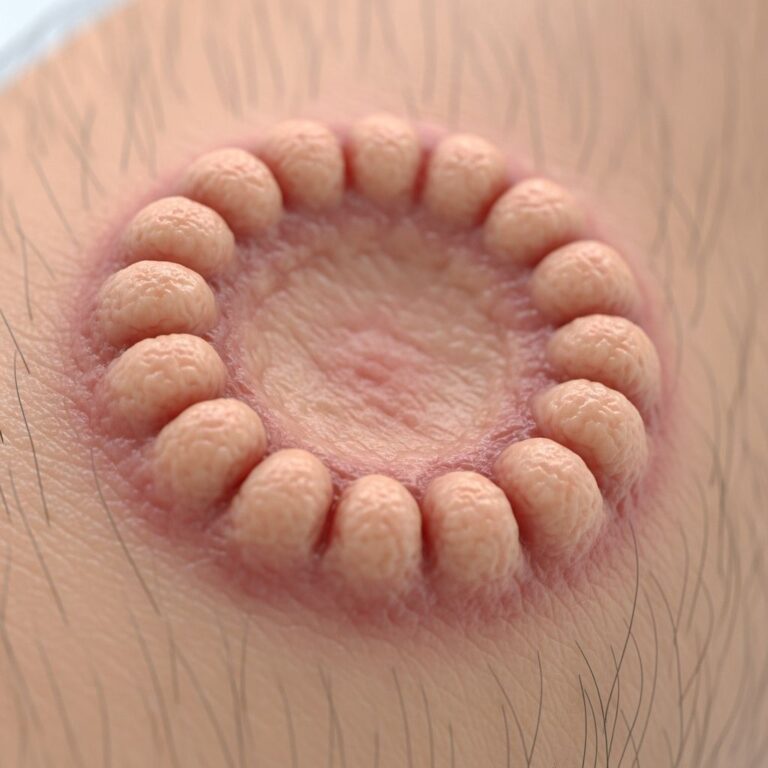
Cysts present as smooth, round, flesh-colored to yellowish dome-shaped nodules, 0.5–5 cm, firm or fluctuant. Common sites: face, trunk, scalp (trichilemmal), genitals. Pseudocysts like digital myxoid appear as shiny, translucent papules near nails, often causing nail grooves.
| Type | Key Features | Common Location |
|---|---|---|
| Epidermoid cyst | Smooth, central punctum, cheesy contents | Face, trunk, scrotum |
| Trichilemmal (pilar) cyst | Firm, scalp, layered keratin | Scalp |
| Digital myxoid pseudocyst | Shiny, translucent, nail groove | Fingers/toes near nail |
| Hidrocystoma | Small, blue/translucent vesicles | Eyelids, face |
| Dermoid cyst | Congenital, may contain hair | Face, neck |
Epidermoid cysts feature a visible punctum; rupture yields foul-smelling keratin. Trichilemmal cysts are smoother, less punctate. Pseudocysts express jelly-like mucin.
Complications
Most are asymptomatic, but complications include:
- Inflammation/infection: Rupture releases contents, causing red, tender swelling (Staphylococcus aureus common).
- Recurrence: High if capsule remnants persist.
- Scarring: Post-surgical or inflammatory.
- Rare malignancy: Squamous cell carcinoma in longstanding epidermoid cysts.
- Nail dystrophy from digital pseudocysts.
Related Stories



Diagnosis
Diagnosis is clinical based on appearance, site, and history. Ultrasound aids deep lesions; biopsy confirms histology: epithelial lining and contents distinguish true cysts. Digital myxoid pseudocysts show mucin (Alcian blue positive) without epithelium. Differential: lipoma, basal cell carcinoma, hidradenoma.
Treatment
Asymptomatic cysts need no treatment. Options include:
- Incision and curettage: For inflamed cysts; antibiotics if infected.
- Surgical excision: Gold standard for cure, removing entire capsule.
- Intradermal steroids: For small inflamed lesions.
- For pseudocysts: Aspiration, sclerotherapy, or excision; digital types may need CO2 laser or joint decompression.
Recurrence risks: 10–40% post-excision. Avoid squeezing to prevent inflammation.
Prevention
No sure prevention, but minimize trauma, maintain hygiene, exfoliate to avoid blockages. Genetic cysts unavoidable.
Outlook
Cysts persist unless excised; benign prognosis, low malignancy risk. Pseudocysts recur frequently despite treatment. Regular follow-up for multiples or syndromic cases.
Frequently Asked Questions (FAQs)
Q: Are skin cysts cancerous?
A: Rarely; most are benign, but longstanding inflamed epidermoid cysts warrant excision and histology.
Q: Can cysts disappear without treatment?
A: Occasionally, small ones resolve spontaneously, but most persist.
Q: Why do cysts form on the scalp?
A: Trichilemmal cysts arise from hair follicles; trauma or genetics contribute.
Q: How to treat an infected cyst at home?
A: Do not; seek medical care for antibiotics and drainage to avoid scarring.
Q: Do digital mucous cysts affect nails permanently?
A: They can cause grooves, but removal often resolves this.
Q: What’s the difference between a cyst and pseudocyst?
A: Cysts have epithelial lining; pseudocysts have fibrous walls without true epithelium.
References
- Digital myxoid pseudocyst pathology — DermNet NZ. 2023. https://dermnetnz.org/topics/digital-myxoid-pseudocyst-pathology
- Cutaneous cysts and pseudocysts — DermNet NZ. 2016-02. https://dermnetnz.org/topics/cutaneous-cysts-and-pseudocysts
- Digital mucous (myxoid) cyst — DermNet NZ. 2023. https://dermnetnz.org/topics/digital-myxoid-pseudocyst
- Epidermoid cyst — DermNet NZ. 2023. https://dermnetnz.org/topics/epidermoid-cyst
- Epidermal Inclusion Cyst — StatPearls, NCBI Bookshelf. 2025. https://www.ncbi.nlm.nih.gov/books/NBK532310/
Similar Articles








Read full bio of Sneha Tete