Cutaneous Diphtheria: Diagnosis, Treatment, And Prevention
Understanding the skin manifestations, causes, diagnosis, and treatment of cutaneous diphtheria caused by Corynebacterium species.
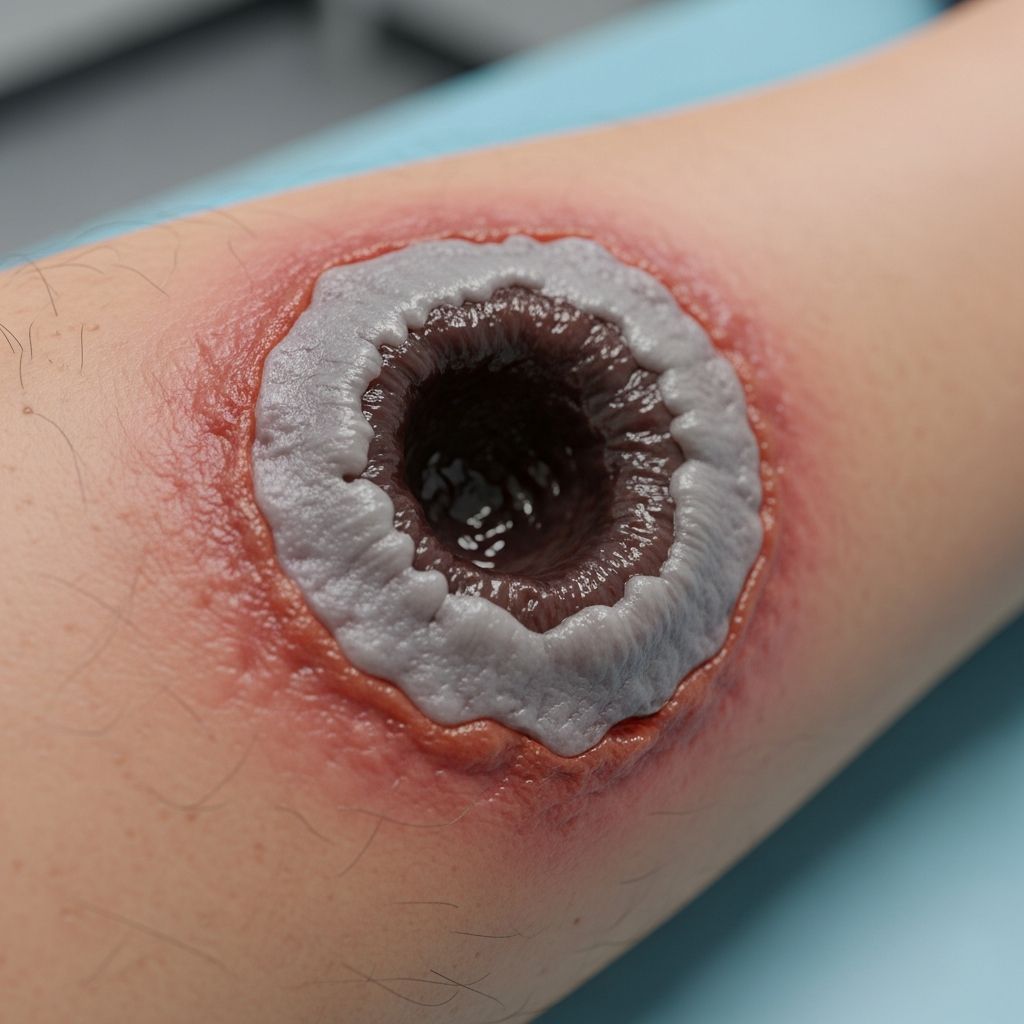
Cutaneous diphtheria is a bacterial skin infection primarily caused by toxigenic or non-toxigenic strains of Corynebacterium diphtheriae or the zoonotic Corynebacterium ulcerans, presenting as ulcerative lesions that can lead to systemic complications if untreated.
Introduction
Diphtheria is an acute infectious disease caused by gram-positive bacilli from the Corynebacterium diphtheriae complex, including C. diphtheriae and C. ulcerans. While classically associated with respiratory tract infections forming a characteristic pseudomembrane, cutaneous diphtheria represents a skin-restricted form, often milder but highly contagious through direct contact with lesions. This form is ulcerative, starting as vesicles or pustules that evolve into well-defined superficial ulcers with overhanging edges, described as ‘punched-out’.
In vaccinated populations, cutaneous diphtheria is rare but emerging, particularly due to C. ulcerans, which is not prevented by standard diphtheria vaccines and is linked to zoonotic transmission from companion animals like cats and dogs. Globally, it remains a concern in tropical regions and among travelers or immunocompromised individuals. Unlike respiratory diphtheria, skin infections trigger a robust immune response, conferring partial protection against pharyngeal involvement.
Demographics
Cutaneous diphtheria disproportionately affects individuals in low-resource settings with poor hygiene, crowded living conditions, or skin trauma. In developed countries like the UK, Europe, and the US, cases are sporadic, often imported via travel to endemic areas such as parts of Africa, Asia, and the Pacific Islands. Vulnerable groups include:
- Unvaccinated or under-vaccinated children and adults.
- Homeless populations or those with chronic skin conditions like scabies or dermatitis.
- Individuals with recent animal contact, given C. ulcerans‘ zoonotic nature.
- Travelers returning from high-prevalence regions.
Recent data from metropolitan France (2018–2022) highlight an uptick in adult cases, underscoring the need for heightened awareness among healthcare providers. In the US, it is reportable and rare, with humans as the primary reservoir for C. diphtheriae.
Causes
The causative agents are non-motile, gram-positive, club-shaped bacilli:
- Corynebacterium diphtheriae: Transmitted person-to-person via respiratory droplets or skin lesions; toxigenic strains produce diphtheria toxin leading to systemic effects.
- Corynebacterium ulcerans: Zoonotic, from infected animals (e.g., dairy cattle, pets); predominant in Europe, not covered by routine vaccination.
Infection often follows skin barrier breaches like abrasions, insect bites, or preexisting dermatoses (e.g., eczema, scabies). Transmission occurs through direct contact with infected skin or fomites in unsanitary environments. Non-toxigenic strains cause milder pyoderma-like infections. The infectious period lasts up to 2 weeks untreated, or until negative cultures post-antibiotics.
Clinical Features
Cutaneous diphtheria manifests as:
- Initial lesion: Vesicle or pustule that ruptures rapidly.
- Ulcer characteristics: Superficial, well-demarcated with rolled, overhanging edges; millimeters to centimeters in size; grayish-brown pseudomembrane at base; punched-out appearance.
- Common sites: Extremities (hands, feet, legs); occasionally trunk or face.
- Surrounding skin: Erythematous to violaceous, swollen, with possible bullae; initially painful, then asymptomatic.
- Lymphadenopathy: Regional nodes enlarged, tender.
Lesions heal slowly (2–3 months) with atrophic scars; secondary bacterial superinfection is common. Systemic symptoms like fever or malaise are mild unless toxigenic.
| Feature | Description |
|---|---|
| Appearance | Ulcer with membrane, demarcated edges |
| Healing Time | 2–3 months, scarred |
| Pain | Initial, then none |
| Sites | Hands, feet, lower legs |
Related Stories



Complications
While localized, untreated cutaneous diphtheria risks:
- Bacterial dissemination: Bacteremia, endocarditis, or osteomyelitis.
- Toxin-mediated effects: Myocarditis, neuritis, nephropathy if toxigenic (mortality 5–10%).
- Secondary infections: Cellulitis, abscess from co-pathogens.
- Carrier state: Chronic shedding up to 6 months.
- Transmission: To respiratory tract or contacts, especially in unvaccinated.
Cases become non-contagious 48 hours post-antibiotics.
Diagnosis
Suspect in non-healing ulcers post-travel or in at-risk groups. Confirm via:
- Clinical suspicion: History of trauma, slow-healing punched-out ulcer.
- Microbiology: Wound swab for culture (alert lab for diphtheria); Gram stain shows gram-positive rods.
- Toxin testing: Elek test or PCR for toxigenicity.
- Serology: Rapid antibody response post-infection.
Provide full clinical details to labs, as routine processing may miss it.
Differential Diagnoses
Key mimics include:
- Tropical ulcer (Fusobacterium ulcerans).
- Buruli ulcer (Mycobacterium ulcerans).
- Pyoderma (Staphylococcus/Streptococcus).
- Leishmaniasis, ecthyma, anthrax.
Histology shows bacilli in pseudomembrane; biopsy if needed.
Treatment
Prompt intervention prevents spread:
- Antibiotics: Erythromycin (preferred) or penicillin; 7–14 days. Toxin-positive: Add diphtheria antitoxin if systemic.
- Wound care: Cleansing, debridement, dressings.
- Isolation: Contact precautions for 14 days; cover lesions.
- Public health: Notify authorities; screen contacts with swabs, prophylaxis (erythromycin 500mg QDS 7–10 days), vaccinate.
Monitor for complications; hospitalized cases require droplet/contact precautions.
Outcome
Uncomplicated cases resolve with antibiotics and wound care; good prognosis. Scarring common; mortality low unless toxigenic/systemic (5–10%). Reinforce vaccination (DTaP/Td) for prevention.
Frequently Asked Questions
What causes cutaneous diphtheria?
It is caused by Corynebacterium diphtheriae or C. ulcerans infecting skin breaks.
How is it diagnosed?
By clinical features and culture of wound swabs, with lab alert for diphtheria.
Is it contagious?
Yes, via skin contact; non-infectious after 48 hours of antibiotics.
What is the treatment?
Antibiotics like erythromycin, wound care, and contact prophylaxis.
Does vaccination prevent it?
Protects against C. diphtheriae but not fully C. ulcerans; update boosters.
Submit your photo of cutaneous diphtheria for educational purposes.
References
- Cutaneous diphtheria – DermNet — DermNet NZ. 2023. https://dermnetnz.org/topics/cutaneous-diphtheria
- Diphtheria Investigation Overview — NC DPH Epidemiology. 2022. https://epi.dph.ncdhhs.gov/cd/lhds/manuals/cd/invest/DiphtheriaInvestigationOverview.pdf
- Clinical Features of Diphtheria — CDC. 2024-10-10. https://www.cdc.gov/diphtheria/hcp/clinical-signs/index.html
- Diphtheria Fact Sheet — Iowa HHS. 2023-07-15. https://hhs.iowa.gov/media/10741/download?inline
- Cutaneous diphtheria from 2018 to 2022 — PubMed/NCBI. 2024-09-05. https://pubmed.ncbi.nlm.nih.gov/39324172/
- Cutaneous Diphtheria — MalaCards. 2024. https://www.malacards.org/card/cutaneous_diphtheria
Similar Articles








Read full bio of Sneha Tete