Cutaneous Dysaesthesia: Symptoms, Causes & Treatment
Understanding cutaneous dysaesthesia: abnormal skin sensations, diagnosis, and management strategies.
Cutaneous Dysaesthesia: Understanding Abnormal Skin Sensations
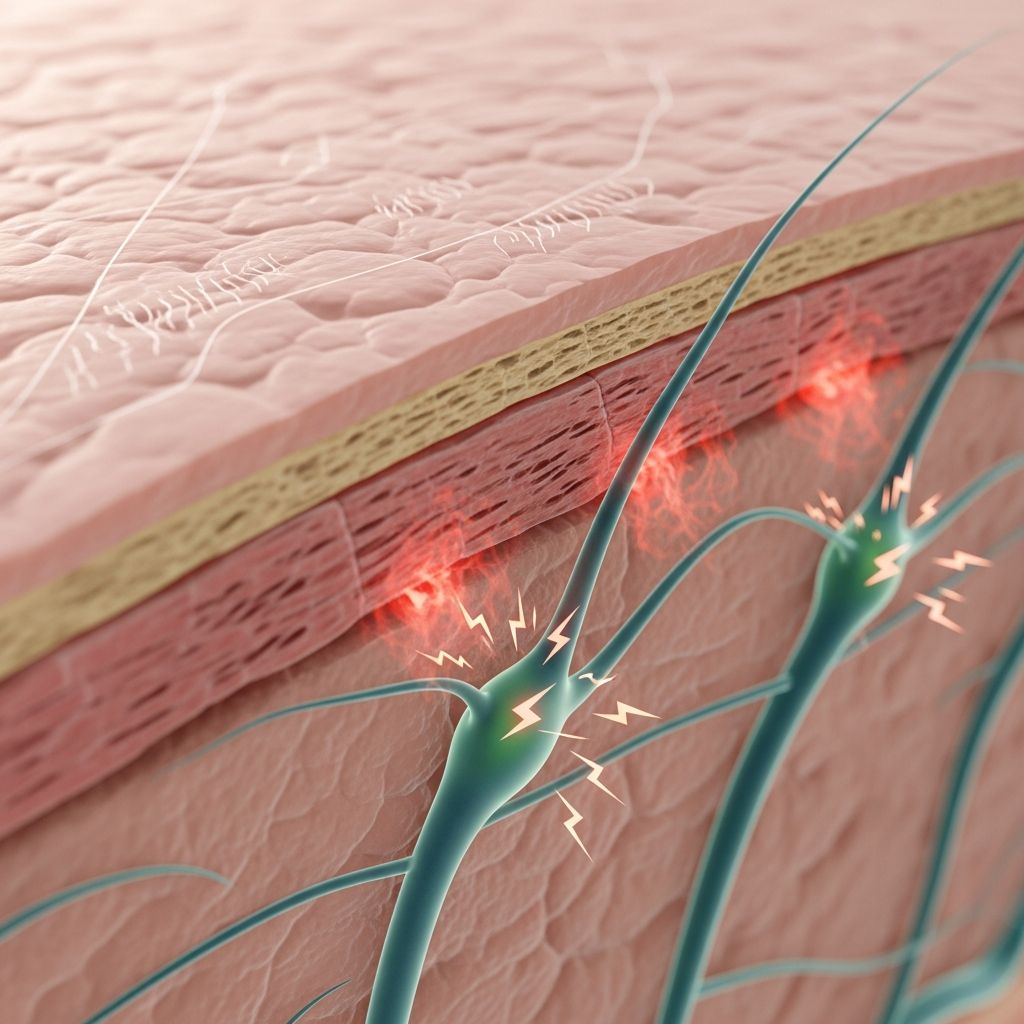
Cutaneous dysaesthesia describes abnormal sensations affecting the skin in the absence of typical cutaneous findings or external stimuli. This condition manifests as various uncomfortable sensations including burning, itching, tingling, stinging, or pain, representing a significant clinical challenge for dermatologists and patients alike. Understanding this condition requires recognition that while primary skin pathology may be absent, the underlying neurological dysfunction is genuine and warrants comprehensive evaluation and management.
Definition and Clinical Presentation
Dysaesthesia or paraesthesia encompasses both positive and negative cutaneous symptoms. Positive symptoms include sensations such as pruritus, burning, crawling sensations, stinging, hyperaesthesia (heightened sensitivity), allodynia (pain from normally non-painful stimuli), and various forms of pain. Negative symptoms involve anaesthesia (loss of sensation) or abnormal cold sensations. The condition is characterized by one or more of these symptoms occurring simultaneously in affected individuals.
The hallmark feature of cutaneous dysaesthesia is that patients experience these unpleasant sensations despite the absence of visible skin disease or external triggering factors. Affected individuals may report that even minor contact, such as loose-fitting clothing or a passing breeze, triggers sensations of burning, pain, or intense irritation. This disconnect between subjective symptoms and objective clinical findings creates diagnostic and therapeutic challenges that require careful assessment and patient education.
Classification of Cutaneous Dysaesthesia
Cutaneous dysaesthesia can be classified based on anatomical distribution and underlying etiology. The main distinctions include:
- Generalized cutaneous dysaesthesia: Affects most or all of the skin surface, with symptoms potentially exacerbated by temperature changes, heat exposure, or contact with clothing.
- Localized forms: Include scalp dysesthesia, occlusal dysesthesia, brachioradial pruritus, meralgia paresthetica, notalgia paresthetica, and trigeminal trophic syndrome.
From an etiological perspective, cutaneous dysaesthesia is classified into three primary categories: central nervous system (CNS)-related, peripheral nervous system (PNS)-related, and idiopathic forms. Approximately 40% of dysaesthesia cases are classified as idiopathic cutaneous dysesthesia (ICD), wherein no identifiable underlying cause can be determined despite thorough investigation.
Causes and Etiological Factors
Central Nervous System-Related Causes
CNS pathologies producing generalized dysaesthesia include inflammatory, infectious, autoimmune, vascular, structural, and vitamin deficiency disorders. Patients with CNS-related dysaesthesia often present with additional neurological manifestations such as headache, spinal pain, motor weakness, and focal neurological deficits. These systemic manifestations help distinguish CNS-related dysaesthesia from purely cutaneous disorders and guide appropriate diagnostic investigation.
Peripheral Nervous System-Related Causes
PNS pathologies causing cutaneous dysaesthesia encompass degenerative, diabetic, infectious, inflammatory, autoimmune, dysproteinaemic, toxin-mediated, and nutritional deficiency etiologies. These conditions typically present with neuropathies in a characteristic “stocking and glove” pattern, with dysaesthesia occurring first in the distal regions of the hands and feet. Additional motor and autonomic dysfunction often accompanies the dysaesthesia in PNS disorders.
Diabetic neuropathy represents a particularly common cause of cutaneous dysaesthesia, and dysaesthesia symptoms may be effectively managed in these patients using topical treatments containing capsaicin. Chemotherapy-induced peripheral neuropathy presents as a progressive and often irreversible condition characterized by tingling, numbness, intense pain, and hypersensitivity to cold, typically beginning in the hands and feet.
Related Stories



Idiopathic Cutaneous Dysaesthesia
When cutaneous dysaesthesia cannot be attributed to identifiable CNS or PNS pathology, the condition is classified as idiopathic. ICD represents a significant proportion of dysaesthesia cases and presents particular diagnostic and therapeutic challenges. While the precise mechanisms remain incompletely understood, current evidence suggests abnormal firing of cutaneous nerve fibers contributes to symptom generation. The relationship between psychiatric comorbidities and ICD suggests a complex interaction between neurological dysfunction and psychological factors.
Clinical Examination and Diagnostic Approach
The physical examination of affected skin areas may appear completely normal, or secondary changes from rubbing and scratching may be visible depending on symptom duration and severity. The absence of primary cutaneous findings is a defining feature of dysaesthesia and requires careful correlation with patient-reported symptoms.
Diagnosis of ICD is fundamentally a diagnosis of exclusion, established only after potential CNS and PNS etiologies have been thoroughly investigated and ruled out. This diagnostic approach necessitates systematic evaluation including detailed neurological assessment, targeted laboratory studies, and imaging as indicated by clinical presentation. Conditions such as occult neoplasia, demyelinating diseases, metabolic disorders, and structural abnormalities must be excluded before confirming an idiopathic diagnosis.
Symptom Severity and Triggering Factors
Symptoms of cutaneous dysaesthesia may be exacerbated by various environmental and psychological factors. Temperature changes, heat exposure, and contact with clothing frequently trigger or worsen symptoms in affected individuals. Psychological stress and emotional distress commonly exacerbate dysaesthesia, particularly in scalp dysesthesia presentations.
Psychiatric comorbidities including depression, anxiety disorders, somatization, and personality disorders frequently accompany cutaneous dysaesthesia, particularly in idiopathic presentations. Recognition of this psychiatric burden is essential for appropriate patient management and underscores the importance of multidisciplinary approaches incorporating both dermatological and psychiatric expertise.
Treatment Approaches and Management Strategies
Topical Treatments
Cutaneous dysaesthesia is difficult to treat effectively, with management success depending on the underlying cause, affected body site, and symptom severity. Topical agents commonly employed include capsaicin, lidocaine, and compounded formulations containing combinations such as lidocaine, ketamine, gabapentin, and amitriptyline. While topical treatments offer safer adverse reaction profiles compared to systemic medications, they are generally less effective for ICD than systemic therapies.
Additional topical and symptomatic management strategies include:
- Applying warm or cool compresses to affected areas
- Using skin-calming lotions and creams containing calamine or aloe vera
- Selecting loose-fitting, cool cotton clothing and bedding
- Wearing pressurized garments such as socks, stockings, pants, or gloves when tolerated
- Taking lukewarm baths with Epsom salts and colloidal oats
Systemic Pharmacological Treatment
Systemic medications demonstrate superior efficacy to topical agents for treating cutaneous dysaesthesia due to their ability to directly mediate affected nerve fibers associated with cutaneous sensation. Drugs highly efficacious for neuropathic pain, including gabapentin, pregabalin, tricyclic antidepressants (TCAs), and serotonin-norepinephrine reuptake inhibitors (SNRIs), show variable effectiveness in treating ICD.
Antidepressant medications have demonstrated particular promise in managing cutaneous dysaesthesia. Tricyclic antidepressants such as low-dose amitriptyline and doxepin hydrochloride have resulted in improvement or complete symptom resolution in multiple case reports. Selective serotonin reuptake inhibitors (SSRIs) and SNRIs, including sertraline, have also shown efficacy in certain patients. Treatment with pimozide, an antipsychotic medication, has been reported to achieve near-complete resolution of dysaesthesia in some cases, particularly when combined with TCAs.
In one documented case series of scalp dysesthesia, nine of eleven patients experienced improvement or complete resolution of symptoms with low-dose antidepressant treatment. However, treatment responses can be variable, with some patients experiencing relapses upon medication discontinuation or loss of treatment response over time.
Multidisciplinary Management Approach
Due to the interplay between psychiatric comorbidities and ICD, multidisciplinary management incorporating both psychiatric and pharmacological approaches is essential. Dermatologists must recognize ICD as a legitimate medical condition despite the absence of primary cutaneous findings and should foster strong therapeutic alliances with patients through empathetic communication. Psychiatric referral is recommended for most patients with ICD, particularly when anxiety, depression, somatization, or personality disorders are identified.
Treatment requires setting realistic expectations and goals, as complete cure remains difficult to achieve. A trial-and-error approach with multiple therapeutic modalities over months may be necessary to identify the optimal treatment regimen for individual patients.
Prognosis and Long-Term Outcomes
The prognosis of cutaneous dysaesthesia depends on the underlying aetiology, symptom severity, and individual treatment response. While the condition itself does not affect life expectancy, its chronic nature and variable treatment responsiveness can significantly impact quality of life and psychological well-being. Some patients achieve sustained improvement or complete resolution with appropriate treatment, while others experience chronic symptoms requiring ongoing management and adjustment of therapeutic strategies.
Key Clinical Pearls
- Cutaneous dysaesthesia involves abnormal sensations in the absence of visible skin disease, representing a genuine neurological condition warranting appropriate investigation and treatment.
- Diagnosis of idiopathic cutaneous dysaesthesia requires exclusion of underlying CNS and PNS pathology through systematic clinical and investigative approaches.
- Psychiatric comorbidities frequently accompany dysaesthesia and should be identified and managed as part of comprehensive treatment planning.
- Systemic medications demonstrate superior efficacy compared to topical treatments but require careful selection and monitoring for adverse effects.
- Multidisciplinary management incorporating dermatological, neurological, and psychiatric expertise optimizes outcomes in dysaesthesia management.
- Treatment requires patient education, realistic goal-setting, and often trial of multiple therapeutic approaches to identify optimal regimens.
Frequently Asked Questions
Q: What is the difference between dysaesthesia and normal skin sensitivity?
A: Dysaesthesia involves abnormal sensations that occur spontaneously or with minor stimuli, in the absence of identifiable skin disease. Normal skin sensitivity involves appropriate responses to environmental stimuli. Dysaesthesia is characterized by disproportionate responses to touch and sensations that significantly impact daily function.
Q: Can cutaneous dysaesthesia be cured?
A: Complete cure remains difficult to achieve. However, many patients experience significant improvement or symptom resolution with appropriate treatment. Success depends on underlying etiology, treatment selection, and individual response. Some patients require ongoing management with adjusted therapeutic strategies.
Q: How is idiopathic cutaneous dysaesthesia diagnosed?
A: Idiopathic dysaesthesia is diagnosed through exclusion of underlying causes. This requires systematic investigation for CNS and PNS pathology, including neurological assessment, appropriate laboratory studies, and imaging as clinically indicated. Only when identifiable causes are ruled out is an idiopathic diagnosis confirmed.
Q: What role does psychological stress play in cutaneous dysaesthesia?
A: Psychological stress frequently exacerbates dysaesthesia symptoms. Psychiatric comorbidities including depression and anxiety are common in patients with dysaesthesia. Recognition and treatment of these psychological factors through psychiatric referral and appropriate medications are important components of comprehensive management.
Q: Are topical treatments effective for cutaneous dysaesthesia?
A: While topical treatments offer safer adverse effect profiles, they are generally less effective than systemic medications for treating dysaesthesia. Topical capsaicin, lidocaine, and compounded creams may provide symptomatic relief for some patients, but systemic medications typically demonstrate superior efficacy.
Q: Which medications are most effective for treating dysaesthesia?
A: Systemic medications including tricyclic antidepressants (amitriptyline, doxepin), gabapentin, pregabalin, and serotonin-norepinephrine reuptake inhibitors have demonstrated variable effectiveness. Individual treatment response varies, and selection requires careful consideration of patient factors and comorbidities. Multiple medications may require trial to identify optimal regimens.
References
- Idiopathic Cutaneous Dysesthesia: Clinical Manifestations, Diagnosis, and Management — Journal of Integrative Dermatology. 2024. https://jintegrativederm.org/doi/10.64550/joid.bc0sck24
- Dysesthesia: Causes, Symptoms, Types, and Treatment — Medical News Today. https://www.medicalnewstoday.com/articles/319700
- Neurocutaneous Dysesthesias — PubMed/National Center for Biotechnology Information. https://pubmed.ncbi.nlm.nih.gov/26775772/
- Cutaneous Dysaesthesia — DermNet. https://dermnetnz.org/topics/cutaneous-dysaesthesia
- Scalp Dysesthesia — JAMA Dermatology/JAMA Network. https://jamanetwork.com/journals/jamadermatology/fullarticle/188885
- Dysesthesia — Wikipedia. https://en.wikipedia.org/wiki/Dysesthesia
Similar Articles








Read full bio of Sneha Tete