Cutaneous Medicine: Key Skin Signs And Management Guide
Exploring cutaneous signs as vital clues to systemic diseases and their management in dermatology practice.
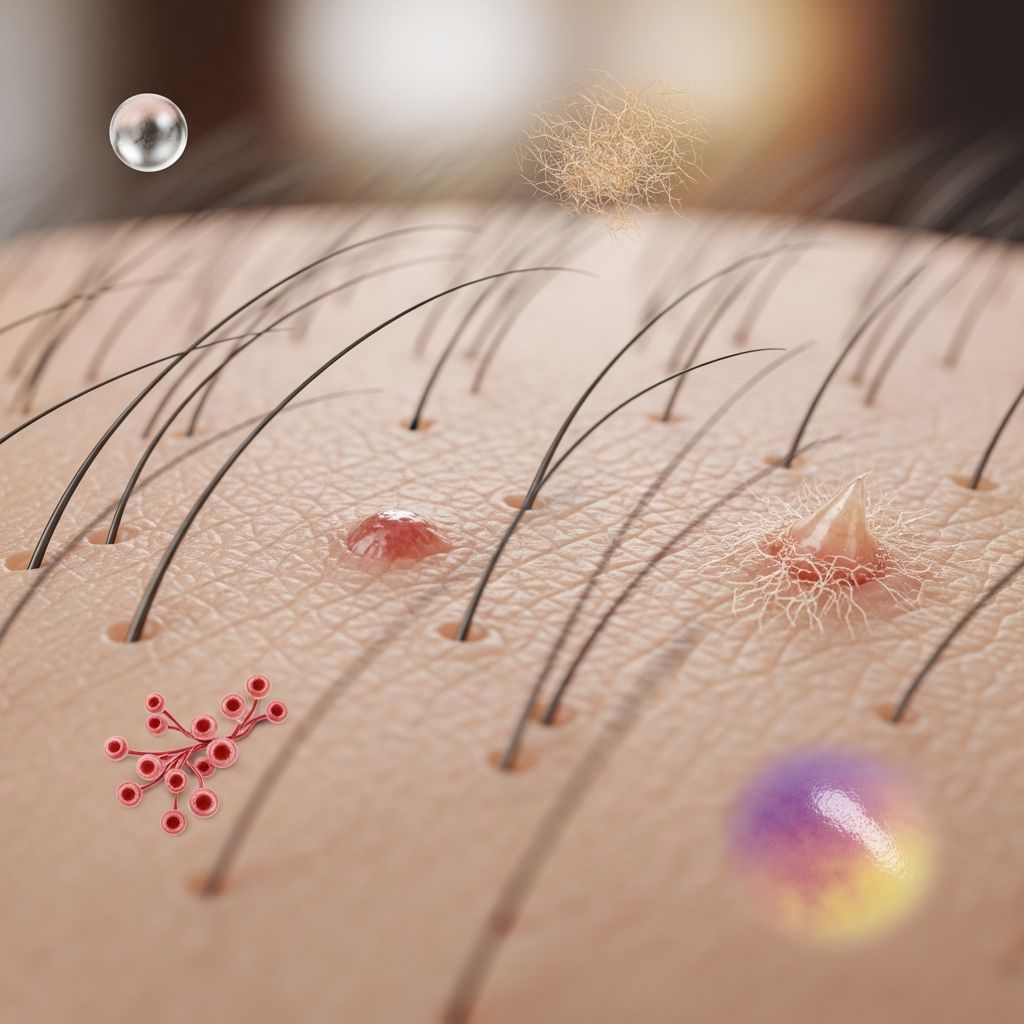
Cutaneous signs can be a clue to the diagnosis of systemic diseases or may be a complication of them requiring specific attention. Skin manifestations often provide the first visible indicators of internal pathology, making dermatological evaluation crucial in systemic medicine. This article explores key cutaneous features associated with various systemic conditions, emphasizing their clinical significance, diagnostic approaches, and management strategies.
Endocrine Disorders
Endocrine imbalances frequently present with distinctive skin changes that aid in diagnosis. Recognizing these signs allows for early intervention in conditions like hypercorticism, growth hormone excess, and cortisol deficiency.
Hypercorticism
Hypercorticism, often due to Cushing syndrome, leads to characteristic skin alterations.
Acne
develops as a result of increased sebaceous gland activity.Striae
, wide purple or red stretch marks, appear on the abdomen, thighs, and breasts due to dermal atrophy and collagen breakdown.Cutaneous atrophy
manifests as thin, fragile skin prone to easy bruising and poor wound healing. These features arise from excess glucocorticoids disrupting normal skin architecture.- Acne: Inflammatory papules and pustules, often resistant to standard treatments.
- Striae: Violaceous, >1 cm wide, in non-sun-exposed areas.
- Atrophy: Cigarette paper-like skin with telangiectasias.
Management involves addressing the underlying cause, such as adrenalectomy or medication taper, alongside topical emollients for symptomatic relief.
Growth Hormone Excess
Acromegaly from growth hormone excess causes
soft tissue hypertrophy
, enlarging hands, feet, and facial features.Skin tags
proliferate, particularly in intertriginous areas.Seborrhoea
results in greasy, scaly scalp and face. These changes stem from insulin-like growth factor-1 (IGF-1) overstimulation of fibroblasts.| Feature | Description | Clinical Relevance |
|---|---|---|
| Soft tissue hypertrophy | Coarse facies, enlarged nose/ears | Diagnostic hallmark |
| Skin tags | Multiple pedunculated lesions | Increased skin cancer risk |
| Seborrhoea | Oily skin, dandruff | Secondary infections |
Treatment targets pituitary adenoma resection or somatostatin analogs, with dermatological care focusing on tag excision if symptomatic.
Lack of Cortisol
Addison disease from cortisol deficiency elevates ACTH, causing
generalised hyperpigmentation
. Bronze discoloration affects sun-exposed and mucosal areas, including palmar creases and gingivae. This pigmentation results from melanocyte stimulation by high ACTH/MSH levels.- Primary sites: Face, neck, dorsum of hands.
- Mucosal: Buccal mucosa, lips.
- Associated: Hypotension, fatigue.
Replacement therapy with hydrocortisone and fludrocortisone resolves pigmentation over months.
Renal Disease
Chronic renal failure profoundly impacts skin health through uraemia and metabolic disturbances.
Chronic renal failure
associates with xerosis (dry skin in 80-90% of patients), pruritus, pallor from anaemia, hyperpigmentation, and nail changes like half-and-half nails. Uraemic frost (urea crystals) appears in severe cases.- Xerosis: Intense dryness leading to excoriations.
- Pruritus: Often intractable, linked to hyperparathyroidism.
- Half-and-half nails: Proximal white, distal brown.
**Renal transplantation** under immunosuppression heightens risks of
viral infections
(warts, herpes zoster) andskin cancers
, especially aggressive squamous cell carcinomas (SCC). SCC incidence can exceed 250 times that of the general population due to azathioprine and cyclosporine effects.Dialysis patients benefit from emollients, UVB phototherapy for pruritus, and rigorous skin cancer screening post-transplant. Kaposi sarcoma may emerge from HHV-8 reactivation.
Related Stories



Nutritional Deficiencies
Nutritional lacks produce specific dermatoses, underscoring skin’s role as a nutritional marker.
Nicotinic Acid Deficiency
Pellagra features the “3 Ds”: dermatitis, diarrhoea, dementia.
Photosensitive eruption
on neck (Casal necklace) and feet (Gaucher boots) shows well-demarcated erythema scaling to hyperpigmentation. Sun-exposed areas darken sharply against normal skin.- Neck: Symmetric collar-like rash.
- Feet: Boot-shaped distribution.
- Mouth: Glossitis, angular cheilitis.
Niacin supplementation reverses acute changes rapidly.
Protein Deficiency
Kwashiorkor yields
dry red skin
(crazy paving dermatosis), brittle hair (flag sign), oedema, and ascites. Dependent areas show flaky paint desquamation.Fatty Acid Deficiency
Common in infants or total parenteral nutrition, it causes
dry red skin
and delayed healing. Periorificial and flexural erythema predominates.Repletion with essential fatty acids corrects manifestations within weeks.
Sarcoidosis
**Sarcoidosis** involves noncaseating granulomas in skin, lungs, and viscera. Cutaneous involvement occurs in 25-30% of cases, classified as specific (granulomas) or nonspecific (erythema nodosum).
Specific lesions: Lupus pernio (chronic violaceous plaques on nose/ears), plaques, nodules, ichthyosiform sarcoid.
- Lupus pernio: Persistent, disfiguring.
- Plaques: Annular or discoid on trunk.
- Subcutaneous: Darier-Roussy nodules.
Nonspecific: EN (painful pretibial nodules), erythema, maculopapular.
Diagnosis requires biopsy showing naked granulomas.
Systemic corticosteroids
form the mainstay, with methotrexate or anti-TNF agents for refractory disease. Topical steroids suffice for mild cutaneous forms.Acquired Immunodeficiency Syndrome (AIDS)
AIDS from HIV depletes CD4+ T cells, unleashing opportunistic conditions. Cutaneous features are exaggerated and diverse.
- Inflammatory: Seborrhoeic dermatitis (severe, extensive), eosinophilic folliculitis, psoriasis (pustular variants).
- Infections: Herpes zoster (multidermatomal), candidiasis, molluscum contagiosum (giant forms), bacterial (staphylococcal furunculosis).
- Malignancies: Kaposi sarcoma (purple plaques/nodules), NHL, SCC.
Antiretroviral therapy (ART) dramatically improves skin health by restoring immunity. Prophylaxis against opportunists is essential.
Frequently Asked Questions (FAQs)
Q: How does hypercorticism cause skin striae?
A: Excess glucocorticoids weaken dermal collagen, leading to atrophic purple striae in stretch-prone areas.
Q: What skin changes signal renal transplant complications?
A: Warts, herpes zoster, and aggressive SCC due to immunosuppression.
Q: How is pellagra dermatitis distinguished?
A: Photosensitive, well-demarcated hyperpigmentation on neck (Casal necklace) and dorsa of feet.
Q: What biopsy finding confirms sarcoidosis?
A: Noncaseating granulomas without necrosis or foreign material.
Q: Why are skin infections severe in AIDS?
A: CD4 depletion impairs immunity, allowing aggressive dissemination.
Diagnostic Approach
A systematic skin exam is pivotal. History (systemic symptoms, medications) and biopsy often clinch diagnosis. Multidisciplinary input from endocrinology, nephrology, etc., optimizes care.
For xanthelasma removal (mentioned in context): Options include laser ablation, excision, or trichloroacetic acid peels, but address underlying hyperlipidemia first.
References
- Skin Disease in Developing Countries — World Health Organization. 2005. https://www.who.int/publications/i/item/9241590936
- Cutaneous Manifestations of HIV — Centers for Disease Control and Prevention (CDC). 2024-06-15. https://www.cdc.gov/hiv/clinicians/treatment/skin.html
- Sarcoidosis Guidelines — American Thoracic Society. 2020-05-01. https://www.atsjournals.org/doi/full/10.1164/rccm.202004-0771ST
- Endocrine Dermatology — New England Journal of Medicine. 2023-11-20. https://www.nejm.org/doi/full/10.1056/NEJMra2301640
- Post-Transplant Skin Cancer Risk — National Kidney Foundation. 2025-01-10. https://www.kidney.org/atoz/content/skin-cancer-transplant
- Pellagra: Nicotinic Acid Deficiency — PubMed Central (PMC). 2022-08-15. https://www.ncbi.nlm.nih.gov/pmc/articles/PMC9477496/
Similar Articles








Read full bio of medha deb