Cutaneous Myeloid Sarcoma: Diagnosis, Treatment & Prognosis
Rare skin manifestation of myeloid neoplasms presenting as papules, nodules, or plaques with variable clinical features.
First published: 2026 | Last updated: 2026
Cutaneous myeloid sarcoma (CMS), also known as cutaneous granulocytic sarcoma or chloroma, is a rare extramedullary tumour composed of immature myeloid cells infiltrating the skin. It represents skin involvement in approximately 17–28% of myeloid sarcoma cases, often associated with acute myeloid leukaemia (AML), chronic myeloid leukaemia (CML), or other myelodysplastic/myeloproliferative neoplasms. CMS can manifest as the initial presentation of systemic disease or isolated skin lesions, posing diagnostic challenges due to its morphological mimicry of other cutaneous malignancies.
What is cutaneous myeloid sarcoma?
Myeloid sarcoma (MS) is a tumour mass of myeloblasts or immature myeloid cells occurring at any extramedullary site. CMS specifically denotes skin involvement, where myeloid blasts migrate via chemokine receptors and adhesion molecules expressed on skin cells. It shares histopathological features with MS elsewhere but exhibits highly variable clinical presentations.
CMS occurs in 15–28% of MS cases, with skin being one of the most common sites alongside lymph nodes and bones. Chromosomal abnormalities, such as t(8;21) or inv(16), are frequently observed, particularly in monocytic subtypes. Isolated CMS without bone marrow involvement at presentation occurs in up to 28% of cases but often progresses to AML within months.
Who gets cutaneous myeloid sarcoma?
CMS predominantly affects adults, with a median age of 45–55 years, though paediatric cases occur. There is a slight male predominance. It arises in the context of:
- Acute myeloid leukaemia (AML): Most common, especially monocytic (FAB M4/M5) subtypes
- Chronic myeloid leukaemia (CML): During blast crisis
- Myelodysplastic syndromes (MDS) or myeloproliferative neoplasms transforming to acute leukaemia
- Isolated CMS: Without initial bone marrow disease (progresses in >90% of cases)
Risk factors include prior AML therapy, specific cytogenetic abnormalities (e.g., t(8;21)), and monoblastic morphology. Paediatric CMS often links to Down syndrome or therapy-related AML.
What causes cutaneous myeloid sarcoma?
The pathogenesis involves homing of myeloid blasts to skin via:
- Chemokine receptors (CXCR4/CXCL12 axis)
- Adhesion molecules (integrins)
- Cytokine milieu favouring extramedullary growth
Cytogenetic abnormalities drive blast proliferation:
| Cytogenetic Abnormality | Association |
|---|---|
| t(8;21)(q22;q22) | AML M2, favourable prognosis |
| inv(16)(p13;q22) | AML M4Eo, monocytic involvement |
| t(15;17) | APL (rare skin involvement) |
| Normal karyotype or complex | Poor prognosis |
Blasts express CD34, CD117, and homing molecules facilitating dermal infiltration.
What are the clinical features of cutaneous myeloid sarcoma?
CMS lesions exhibit remarkable morphological diversity:
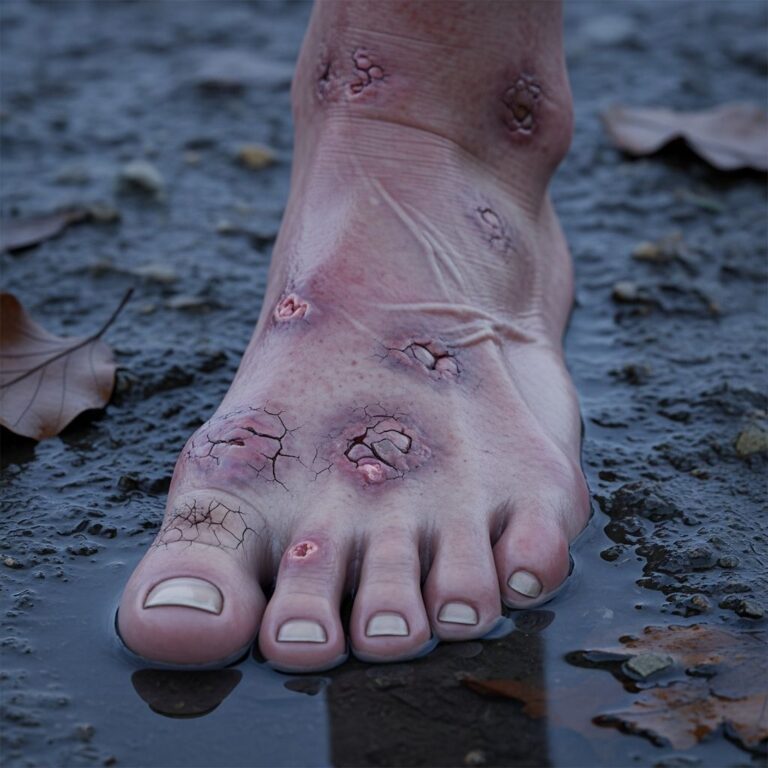
- Papules/nodules: Most common (60–70%), firm, red–purple, 0.5–5 cm
- Plaques: Indurated, bruise-like
- Ulcerated masses: Tender, necrotic (10–15%)
- Diffuse infiltration: Leukaemia cutis-like erythema
- Bullous/vesicular: Rare, mimic bullous disorders
Distribution: Trunk (40%), extremities (30%), head/neck (20%), generalised (10%). Lesions may tender, pruritic, or asymptomatic. Systemic symptoms (fatigue, fever, weight loss) accompany 70% of cases due to underlying leukaemia.
Skin findings may precede bone marrow involvement by weeks–months, termed “aleukaemic” or isolated CMS.
How is the diagnosis of cutaneous myeloid sarcoma made?
Diagnosis requires histopathology, immunohistochemistry (IHC), and correlation with haematological status. Challenges include small biopsy size, marker negativity, and lymphoma overlap.
Related Stories



Histopathology
Typically shows:
- Spared epidermis
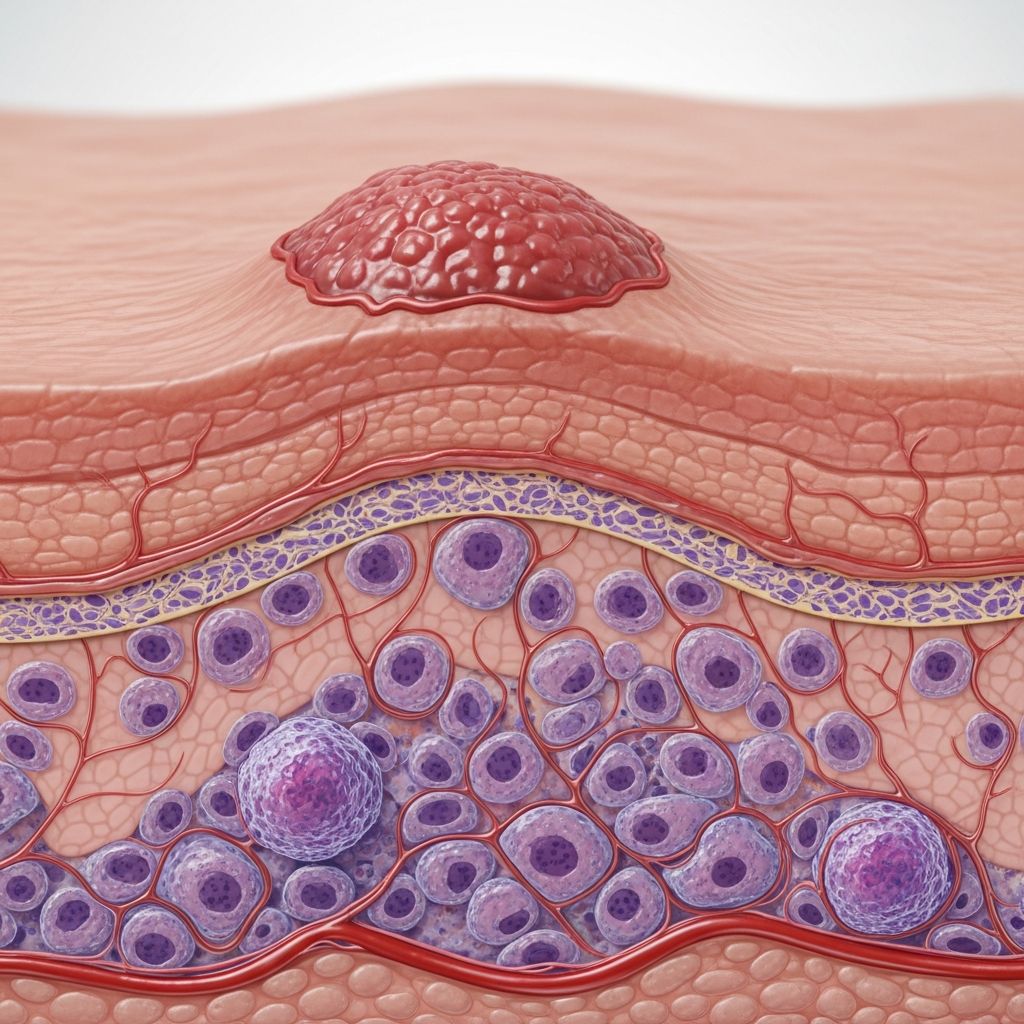
- Dense dermal/subcutaneous infiltrate of medium–large blastic cells
- Perivascular/periadnexal distribution
- Medium-sized nuclei, fine chromatin, scant cytoplasm
- High mitoses, apoptosis, starry-sky pattern
Grossly: firm, green-tinged (myeloperoxidase) before fixation.
Immunohistochemistry
Key markers:
| Marker | Sensitivity/Specificity |
|---|---|
| CD68 | 91–100% (most sensitive) |
| CD43 | High sensitivity |
| MPO (myeloperoxidase) | 70–90%, myeloid-specific |
| Lysozyme | Monocytic differentiation |
| CD34/CD117 | Stem cell markers (variable) |
| CD33, CD13, CD99 | Supportive |
Negative: CD45 variable, TdT rare. Aberrant lymphoid markers (CD4, CD56) in 20%.
Ancillary tests
- Cytogenetics/FISH on skin biopsy
- Flow cytometry (if viable cells)
- Bone marrow biopsy (mandatory)
- Peripheral blood smear
Differential includes lymphoma, melanoma, blastic plasmacytoid dendritic cell neoplasm.
What is the differential diagnosis for cutaneous myeloid sarcoma?
- Lymphomas: B/T-cell (CD20/CD3+), distinguish by myeloid markers
- Leukaemia cutis: More diffuse, lower blast density
- Blastic plasmacytoid dendritic cell neoplasm: CD4/CD56/TCF4+
- Melanoma: S100/Melan-A+, junctional activity
- Metastatic carcinoma: Cytokeratin+
- Infectious (histoplasmosis): GMS stain
CD43+ without CD3 prompts myeloid consideration.
AML subtypes associated with cutaneous myeloid sarcoma
Monocytic lineage predominates:
- M4/M5 (myelomonocytic/monoblastic): 60–70%
- M2 (with t(8;21)): 20%
- M0/M1 (minimally differentiated): Rare
Prognosis of cutaneous myeloid sarcoma
CMS portends poor prognosis:
- Median survival: 7–15 months
- Inferior to non-cutaneous MS
- AML with CMS: 20–30% lower overall survival
Favourable factors: t(8;21), allogeneic transplant. Isolated CMS progresses to AML in >90%.
Investigations for cutaneous myeloid sarcoma
- Mandatory: Skin biopsy (punch/excisional), bone marrow biopsy/aspirate, CBC, LDH
- Imaging: PET-CT for systemic staging
- Cytogenetics: Skin + marrow karyotype/FISH
- Flow cytometry: Blood/marrow/skin
What is the treatment for cutaneous myeloid sarcoma?
Treatment mirrors underlying myeloid neoplasm:
- Systemic AML therapy: 7+3 (cytarabine/anthracycline), then HiDAC
- AML-specific: Gemtuzumab (CD33+), targeted (FLT3/IDH)
- Local: Radiation for symptomatic/palliative lesions
- Transplant: Allogeneic HSCT improves survival
Isolated CMS: AML-like induction ± local RT, monitor marrow.
Complications of cutaneous myeloid sarcoma
- AML transformation
- Systemic dissemination
- Secondary infections (ulcerated lesions)
- Cosmesis/psychosocial impact
Prevention of cutaneous myeloid sarcoma
No specific prevention. Early AML treatment reduces extramedullary risk. Monitor high-risk AML subtypes (monocytic).
Personal hygiene advice
- Avoid lesion trauma
- Moisturise dry skin
- Mild cleansers
- Sun protection
Frequently Asked Questions (FAQs)
What does cutaneous myeloid sarcoma look like?
Red–purple papules, nodules, plaques or ulcerated masses, often multiple on trunk/extremities.
Is cutaneous myeloid sarcoma itchy?
Usually not, but may be tender.
How is cutaneous myeloid sarcoma diagnosed?
Skin biopsy with IHC (CD68, MPO, CD43).
What is the prognosis of cutaneous myeloid sarcoma?
Poor; median survival 7–15 months, inferior to non-cutaneous MS.
Does cutaneous myeloid sarcoma always mean leukaemia?
No, but >90% isolated cases develop AML.
References
- Cutaneous myeloid sarcoma — DermNet NZ. 2026. https://dermnetnz.org/topics/cutaneous-myeloid-sarcoma
- Final Diagnosis — Myeloid Sarcoma — UPMC Pathology Case Reports. 2026. https://path.upmc.edu/cases/case379/dx.html
- Signs and Symptoms of Acute Myeloid Leukemia (AML) — American Cancer Society. 2025-10-01. https://www.cancer.org/cancer/types/acute-myeloid-leukemia/detection-diagnosis-staging/signs-symptoms.html
- Myeloid sarcoma — SEER Cancer.gov (National Cancer Institute). 2026. https://seer.cancer.gov/seertools/hemelymph/51f6cf57e3e27c3994bd53a2/
- What is Myeloid Sarcoma? — Moffitt Cancer Center. 2026. https://www.moffitt.org/cancers/sarcoma/diagnosis-treatment/types/myeloid-sarcoma/
Similar Articles








Read full bio of medha deb