Cutaneous Polyarteritis Nodosa: Symptoms, Causes and Treatment
Understanding cutaneous polyarteritis nodosa: skin-limited vasculitis with nodules, ulcers, and leg pain – diagnosis and management.
What is cutaneous polyarteritis nodosa?
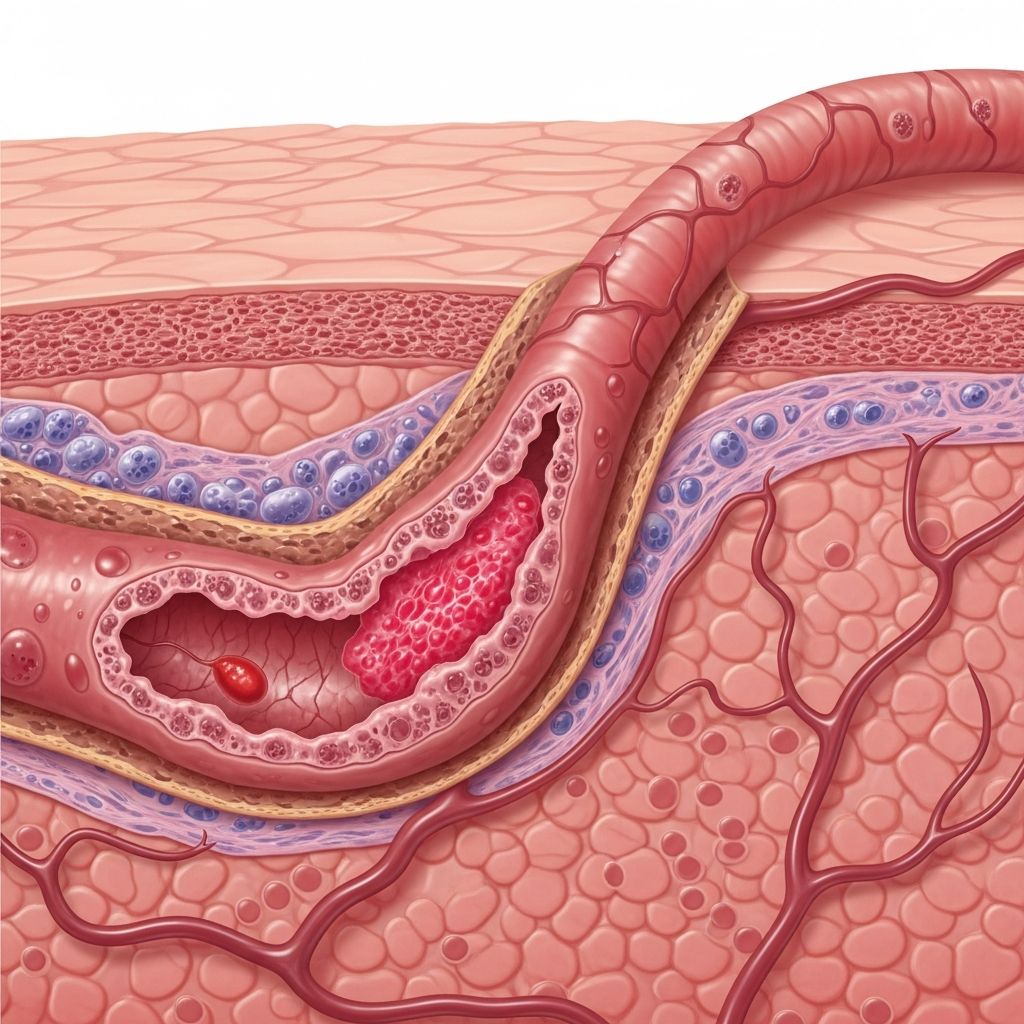
Cutaneous polyarteritis nodosa (CPAN) is a rare form of vasculitis characterised by inflammation of medium-sized arteries limited to the skin. Unlike the systemic form of polyarteritis nodosa (PAN), CPAN does not involve internal organs such as the kidneys, nerves, or gastrointestinal tract. It primarily affects the lower legs, presenting with painful subcutaneous nodules, livedo reticularis, and sometimes ulcers or oedema. CPAN is considered a benign condition with a relapsing-remitting course, though it can cause significant morbidity due to chronic pain and skin damage. The disease spares small vessels and does not lead to the aneurysms or organ infarcts seen in classic PAN.
Who gets cutaneous polyarteritis nodosa?
CPAN typically affects adults aged 30–60 years, with a slight female predominance. It is uncommon in children and rare before age 20. There is no strong racial or ethnic predisposition, though cases have been reported worldwide. Associations include hepatitis B infection in a minority (less than 10% of cases), unlike systemic PAN where hepatitis B is more common. Other triggers may include medications, infections, or autoimmune diseases, but most cases are idiopathic. Genetic forms linked to ADA2 mutations are rare and usually present with systemic features.
- Peak incidence: 40–50 years
- Female:male ratio ≈ 1.5:1
- Prevalence: <1 per 100,000
What causes cutaneous polyarteritis nodosa?
The exact cause of CPAN remains unknown, but it involves an immune-mediated attack on arterial walls, leading to fibrinoid necrosis and inflammation. In some cases, it follows hepatitis B or C infection, where viral antigens may trigger vasculitis, though vaccination has reduced this association. Other implicated factors include streptococcal infections, drugs (e.g., minocycline, contraceptives), and inflammatory conditions like rheumatoid arthritis. Endothelial dysfunction and immune complex deposition are thought to perpetuate vessel wall damage, resulting in ischaemia without systemic spread. Unlike systemic PAN, CPAN lacks ANCA antibodies and granulomatous inflammation.
What are the clinical features of cutaneous polyarteritis nodosa?
Skin lesions develop over weeks to months, often starting with tender erythematous nodules along the course of superficial arteries on the calves or lower legs. Common features include:
- Painful subcutaneous nodules: Firm, red-to-purple, 5–15 mm, along tibial arteries; may ulcerate
- Livedo reticularis: Net-like purplish mottling, especially in cold
- Leg ulcers: Painful, punched-out, due to ischaemia; heal with scarring
- Oedema and pigmentation: Chronic haemosiderin deposition, lipodermatosclerosis
- Purpura or bullae: Less common, on dependent areas
Systemic symptoms are absent, distinguishing CPAN from classic PAN, which includes fever, weight loss, neuropathy, and renal involvement. Pain is disproportionate to visible changes, often burning or throbbing, worse at night. Rare extracutaneous features include myalgia or mild arthralgia, but neuropathy or hypertension excludes CPAN diagnosis.
Complications
- Chronic leg pain and disability
- Recurrent ulcers leading to infection
- Post-inflammatory hyperpigmentation
- Rare progression to systemic PAN (<5%)
Diagnosis of cutaneous polyarteritis nodosa
Diagnosis relies on clinical features and histopathology, as imaging may be normal. Key steps include:
- Clinical assessment: Nodular vasculitis on legs without systemic signs
- Skin biopsy: Essential; shows medium-vessel vasculitis with fibrinoid necrosis, mixed infiltrate (neutrophils, lymphocytes, eosinophils). Direct immunofluorescence may reveal immune complexes
- Laboratory tests: Normal or elevated ESR/CRP; negative ANCA, ANA. Screen for hepatitis B/C
- Exclude systemic PAN: Normal renal function, no neuropathy, angiography if needed (microaneurysms absent in CPAN)
| Feature | CPAN | Systemic PAN |
|---|---|---|
| Skin only | Yes | No (multiorgan) |
| Nodules/ulcers | Legs | Widespread |
| Neuropathy | Rare | Common (50–70%) |
| Renal involvement | No | Hypertension, aneurysms |
| Histology | Medium arteries | Medium arteries + aneurysms |
Related Stories



Differential diagnosis
- Erythema nodosum: Tender nodules on shins, septal panniculitis, self-limited
- Nodular vasculitis: Smaller nodules, often post-infectious
- Livedo vasculopathy: Ulcers without nodules, antiphospholipid negative
- Systemic vasculitides: ANCA vasculitis, lupus, rheumatoid nodules
- Infection: Syphilis, TB, fungal
Management of cutaneous polyarteritis nodosa
Treatment focuses on symptom relief and preventing complications, as spontaneous remission occurs in 20–60%.
Conservative measures
- Leg elevation, compression stockings
- Wound care for ulcers
- Avoid cold, trauma, smoking
Medical therapy
- First-line: Colchicine 0.6–1.2 mg/day; reduces nodules and pain in 60–80%
- NSAIDs: Ibuprofen for pain/inflammation
- Dapsone 50–100 mg/day if ulcers persist
- Immunosuppressants: Methotrexate, azathioprine for refractory cases
- Corticosteroids: Topical/intralesional for localised; systemic low-dose if severe
Antiviral therapy if hepatitis-associated. Monitor for progression to systemic disease with annual blood pressure and urinalysis.
Prognosis for cutaneous polyarteritis nodosa
CPAN follows a chronic relapsing course over years, with good prognosis and near-normal life expectancy. Mortality is low (<5%), mainly from secondary infection or rare systemic evolution. Quality of life is impacted by pain and leg disability, but most respond to therapy.
Frequently asked questions about cutaneous polyarteritis nodosa
What is the difference between cutaneous and classic polyarteritis nodosa?
Cutaneous PAN is confined to skin with nodules and livedo on legs, no internal organ damage. Classic PAN is multisystem with renal, nerve, and GI involvement, aneurysms, and higher mortality.
Is cutaneous polyarteritis nodosa contagious?
No, it is an autoimmune vasculitis, not infectious.
Can cutaneous polyarteritis nodosa be cured?
Not curative, but manageable; many achieve long-term remission with colchicine.
Does cutaneous polyarteritis nodosa affect children?
Rare; paediatric cases often genetic or systemic.
Is biopsy always needed for diagnosis?
Yes, to confirm medium-vessel vasculitis and exclude mimics.
References
- Polyarteritis Nodosa — Johns Hopkins Vasculitis Center. Accessed 2026. https://www.hopkinsvasculitis.org/types-vasculitis/polyarteritis-nodosa/
- Polyarteritis Nodosa (PAN) — Vasculitis UK. Accessed 2026. https://www.vasculitis.org.uk/about-vasculitis/polyarteritis-nodosa
- Polyarteritis Nodosa — StatPearls, NCBI Bookshelf. 2023-10-01. https://www.ncbi.nlm.nih.gov/books/NBK482157/
- Polyarteritis Nodosa — Vasculitis Foundation. Accessed 2026. https://vasculitisfoundation.org/education/vasculitis-types/polyarteritis-nodosa/
- Polyarteritis Nodosa (PAN) — Merck Manual Professional Edition. Accessed 2026. https://www.merckmanuals.com/home/bone-joint-and-muscle-disorders/vasculitic-disorders/polyarteritis-nodosa-pan
Similar Articles








Read full bio of medha deb