Cystic Kidney Disease: Causes, Symptoms & Treatment
Understanding cystic kidney disease: Learn about causes, symptoms, diagnosis, and comprehensive treatment options.
Understanding Cystic Kidney Disease
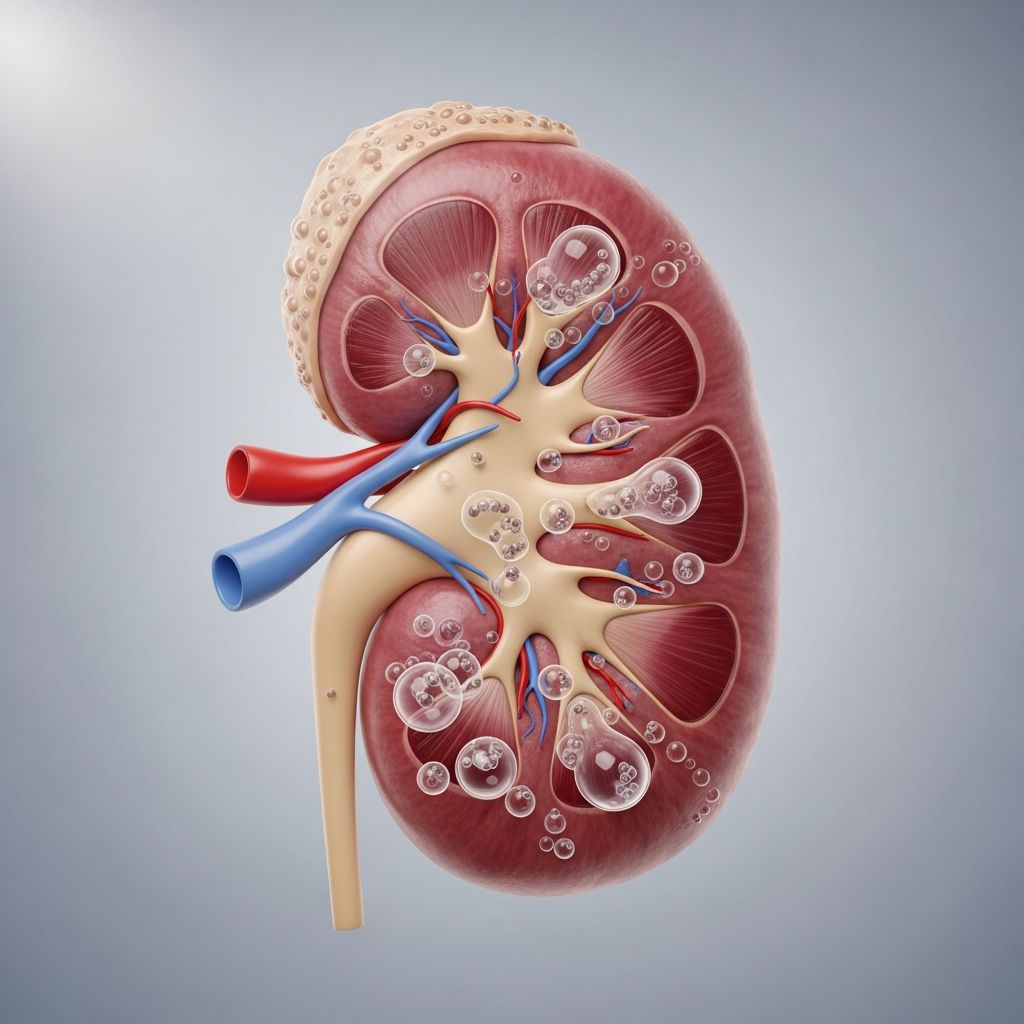
Cystic kidney disease is a condition characterized by the development of fluid-filled sacs, known as cysts, on the kidneys. These cysts can vary in size and number, potentially affecting kidney function and leading to kidney failure if left untreated. The condition encompasses several different types of cystic disorders affecting the kidneys, each with distinct characteristics and inheritance patterns. Understanding this disease is crucial for patients and their families, as early detection and proper management can significantly slow disease progression and improve quality of life.
The presence of cysts on the kidneys can disrupt normal kidney function, affecting the organ’s ability to filter waste and excess water from the blood. As cysts enlarge, they may impair kidney function progressively, potentially necessitating dialysis or kidney transplantation in advanced stages. While some kidney cysts are benign and cause no symptoms, others can lead to serious complications and require active management.
Types of Cystic Kidney Disease
There are several distinct types of cystic kidney disease, each with different causes and clinical presentations. The most common forms include autosomal dominant polycystic kidney disease (ADPKD), autosomal recessive polycystic kidney disease (ARPKD), and medullary sponge kidney (MSK).
Autosomal Dominant Polycystic Kidney Disease (ADPKD)
ADPKD is the most prevalent form of inherited cystic kidney disease, accounting for approximately 10% of all kidney failure cases. This type follows an autosomal dominant inheritance pattern, meaning an individual needs only one mutated gene from either parent to develop the disease. Symptoms typically appear in adulthood, though cysts may develop earlier. People with ADPKD frequently experience high blood pressure, kidney pain, and recurrent urinary tract infections.
Autosomal Recessive Polycystic Kidney Disease (ARPKD)
ARPKD is a more severe form of the disease, typically presenting in infancy or early childhood. This type requires inheriting two mutated genes, one from each parent. The disease manifests with more extensive kidney involvement and can cause liver complications. Infants with ARPKD may experience respiratory difficulties and kidney dysfunction shortly after birth.
Medullary Sponge Kidney (MSK)
Medullary sponge kidney is a cystic kidney disease characterized by a sponge-like appearance of the inner kidney tissue. Often, individuals with MSK experience no symptoms, although recurrent urinary tract infections and kidney stones can occur. This condition is generally less severe than polycystic kidney disease.
Causes and Risk Factors
Cystic kidney disease has various causes depending on the specific type. The primary cause of most forms is genetic mutations that affect kidney cell growth and organization.
Genetic Factors
Most cystic kidney diseases are inherited through specific genetic patterns. ADPKD involves mutations in the PKD1 or PKD2 genes, which code for proteins that regulate cell growth in kidney tubules. ARPKD results from mutations in the PKHD1 gene. These genetic abnormalities cause cells within the kidney tubules to grow abnormally, leading to cyst formation.
Risk Factors for Cystic Kidney Disease
Risk factors for cystic kidney disease vary widely across different types. Generally, you’re more likely to develop cystic kidney disease if you:
Related Stories



– Have a family history of cystic kidney disease or polycystic kidney disease- Have inherited two mutated genes from both parents (for recessive forms)- Have inherited one mutated gene from either parent (for dominant forms)- Have other genetic syndromes associated with kidney cysts
Symptoms and Complications
Symptoms of cystic kidney disease vary depending on the type, severity, and disease progression. Many individuals may not experience symptoms in early stages, with cysts discovered incidentally during imaging for other conditions.
Common Symptoms
– High blood pressure (hypertension)- Back or flank pain caused by enlarged kidneys- Blood in urine (hematuria)- Frequent urinary tract infections- Kidney stones- Headaches- Swelling in legs and ankles
Potential Complications
Several serious complications can develop from cystic kidney disease:
– Chronic kidney disease and kidney failure: Progressive deterioration of kidney function may eventually require dialysis or transplantation- High blood pressure: Cyst growth can obstruct blood vessels, elevating blood pressure- Urinary tract infections: Cysts create stagnant urine pockets where bacteria proliferate- Kidney stones: Cysts can trap minerals, forming painful stones- Liver cysts: Particularly in ADPKD, cysts may develop in the liver- Brain aneurysms: Rare but serious complications in some ADPKD patients- Heart valve problems: Some individuals develop mitral valve abnormalities
Diagnosis and Evaluation
Proper diagnosis of cystic kidney disease involves a comprehensive evaluation combining medical history review, physical examination, laboratory testing, and imaging studies.
Initial Assessment
A healthcare provider will ask about your symptoms and review your complete medical and family history. This helps establish whether cystic kidney disease runs in your family and identifies potential inherited patterns. The provider will also perform a physical examination to check for kidney enlargement or other abnormalities.
Imaging Tests
Several imaging techniques can detect kidney cysts and assess disease severity:
– Ultrasound: The primary imaging method, using sound waves to visualize kidney structure and cysts without radiation- CT scan: Provides detailed cross-sectional images for precise cyst assessment- MRI: Offers excellent soft tissue imaging without radiation exposure- X-ray: May be used to identify kidney stones associated with cystic disease
Laboratory Tests
A provider will order blood tests and urinalysis to assess kidney function. Key tests include:
– Creatinine levels: Measures kidney’s ability to filter waste- Blood urea nitrogen (BUN): Indicates kidney function efficiency- Glomerular filtration rate (GFR): Estimates overall kidney function percentage- Urinalysis: Detects protein, blood, or white blood cells indicating kidney problems
Genetic Testing
Genetic counseling and testing may be recommended to confirm the specific type of cystic kidney disease and identify the responsible genetic mutation. This information is valuable for family members and guides treatment decisions.
Treatment Approaches
While there is no cure for cystic kidney disease, various treatment options can slow disease progression, manage symptoms, and prevent complications.
Lifestyle and Dietary Management
Implementing specific lifestyle modifications can help manage the condition effectively:
– Low-sodium diet: Reducing salt intake helps control blood pressure and slows cyst growth- Adequate hydration: Drinking sufficient water maintains kidney function and prevents kidney stones- Regular exercise: Physical activity helps manage blood pressure and overall health- Avoid NSAIDs: Pain relievers like ibuprofen can worsen kidney function- Stress management: Reducing stress supports overall health and blood pressure control
Medication Management
Several medications help manage cystic kidney disease symptoms and slow progression:
– Blood pressure medications: ACE inhibitors or angiotensin II receptor blockers reduce blood pressure and protect kidneys- Pain management: Acetaminophen can help with pain when NSAIDs must be avoided- Antibiotics: Treat urinary tract infections promptly- Diuretics: Help manage fluid retention and blood pressure- Tolvaptan: A vasopressin antagonist that slows cyst growth in ADPKD patients
Surgical Interventions
For specific situations, surgical procedures may be necessary:
– Fine-needle aspiration: Drains painful cysts under imaging guidance- Laparoscopic surgery: Minimally invasive procedure to remove or ablate cyst tissue- Nephrectomy: Surgical removal of severely affected kidneys when necessary
Advanced Treatments
As kidney disease progresses, additional interventions become necessary:
– Dialysis: Artificial filtration of blood when kidneys fail- Kidney transplantation: Surgical placement of a healthy donor kidney
Management at Specialized Centers
Comprehensive care at specialized kidney disease centers provides significant advantages. These centers employ experienced nephrologists and multidisciplinary teams that develop personalized treatment plans. The Polycystic Kidney Disease Clinic at Cleveland Clinic, for example, offers comprehensive medical evaluations including genetic testing and counseling, advanced imaging of the kidneys and associated organs, and specialized surgical management of complications. Patients benefit from expanded clinical services including diet and fluid management, monitoring by trained nurses, access to pediatric nephrologists when appropriate, and participation in important national research studies.
Living with Cystic Kidney Disease
Managing cystic kidney disease requires ongoing collaboration between patients and their healthcare providers. Regular follow-up appointments, adherence to medication regimens, and lifestyle modifications are essential for optimal outcomes. Patients should maintain open communication with their healthcare team about any new symptoms, concerns, or changes in their condition.
Family members of individuals with cystic kidney disease should consider genetic screening and counseling. Early detection in family members allows for preventive measures and appropriate monitoring, potentially delaying disease progression.
Frequently Asked Questions
Q: Is cystic kidney disease hereditary?
A: Yes, most forms of cystic kidney disease are inherited. ADPKD requires inheriting one mutated gene from either parent, while ARPKD requires inheriting two mutated genes from both parents. Genetic counseling can help families understand inheritance patterns and risks.
Q: Can cystic kidney disease be prevented?
A: Since cystic kidney disease is genetic, it cannot be prevented. However, individuals with a family history can undergo genetic testing for early detection. Lifestyle modifications and proper medical management can slow disease progression and prevent complications.
Q: What is the life expectancy for someone with cystic kidney disease?
A: Life expectancy varies depending on the type and severity of the disease. ADPKD typically allows individuals to live into their 60s or 70s, while ARPKD is more severe. Modern treatments and dialysis/transplantation options have significantly improved outcomes.
Q: Can kidney cysts be removed?
A: Simple cysts that don’t cause symptoms typically don’t require treatment and are monitored with regular ultrasounds. Painful cysts can be drained using fine-needle aspiration or removed through laparoscopic surgery.
Q: Should family members be screened for cystic kidney disease?
A: Yes, family members of individuals with inherited cystic kidney disease should be screened. Early detection allows for preventive care and appropriate monitoring to slow disease progression.
Q: What dietary changes help manage cystic kidney disease?
A: A low-sodium diet helps control blood pressure and slow cyst growth. Adequate hydration is important unless advised otherwise by your healthcare provider. Limiting certain minerals and proteins may be recommended based on individual kidney function.
Q: Can pregnancy affect cystic kidney disease?
A: Pregnancy can complicate cystic kidney disease management, particularly regarding blood pressure control and kidney function monitoring. Women with cystic kidney disease should consult their healthcare providers before conception to develop a safe pregnancy management plan.
References
- Cystic Kidney Disease: Causes, Symptoms & Treatment — Cleveland Clinic. 2024. https://my.clevelandclinic.org/health/diseases/21846-cystic-kidney-disease
- Polycystic Kidney Disease (PKD): Symptoms & Treatment — Cleveland Clinic. 2024. https://my.clevelandclinic.org/health/diseases/5791-polycystic-kidney-disease
- Medullary Sponge Kidney: Causes, Symptoms & Treatment — Cleveland Clinic. 2024. https://my.clevelandclinic.org/health/diseases/23169-medullary-sponge-kidney
- Kidney Cysts: Causes, Symptoms, Treatment & Prevention — Cleveland Clinic. 2024. https://my.clevelandclinic.org/health/diseases/14884-kidney-cysts
- Renal Genetics Clinic: 3-Year Experience in the Cleveland Clinic — National Institutes of Health. 2023. https://pmc.ncbi.nlm.nih.gov/articles/PMC9874141/
- Managing advanced chronic kidney disease: A primary care guide — Cleveland Clinic Journal of Medicine. 2014. https://www.ccjm.org/content/81/5/289
Similar Articles








Read full bio of Sneha Tete