Cytomegalovirus Infection Pathology: Diagnosis & Treatment
Detailed histopathological analysis of cytomegalovirus skin infections, focusing on endothelial cell changes and diagnostic features.
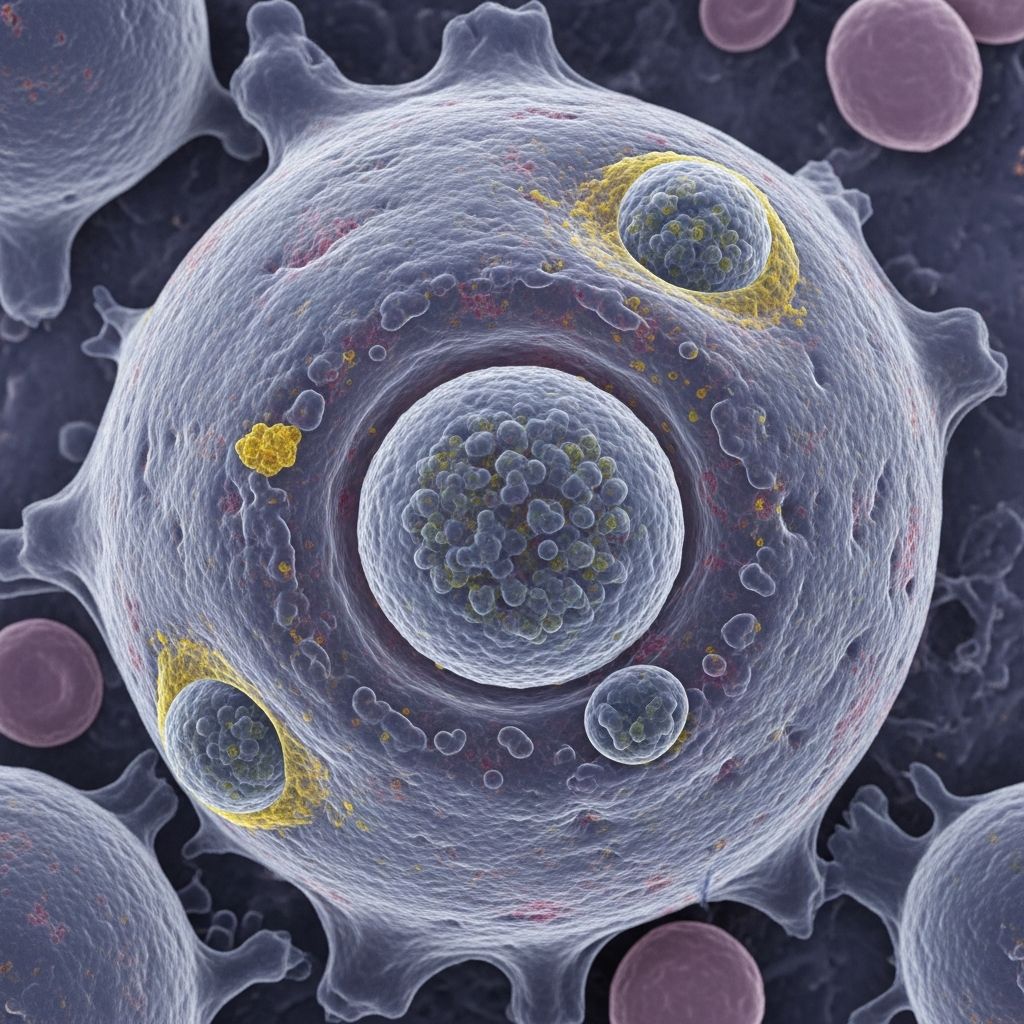
Cytomegalovirus (CMV), a member of the Herpesviridae family, causes rare but significant cutaneous infections primarily in immunocompromised individuals. These infections manifest histologically with characteristic changes in endothelial cells lining small vessels, serving as key diagnostic markers.
Introduction
Cytomegalovirus infection typically remains latent in healthy hosts but reactivates in those with weakened immunity, such as HIV/AIDS patients, transplant recipients, or individuals on immunosuppressive therapy. Cutaneous involvement is uncommon compared to visceral organs but can present as ulcers, particularly perianal or perioral, signaling potential systemic disease.
In dermatopathology, recognizing CMV is crucial because skin lesions may precede or indicate disseminated infection. Symptomatic skin eruptions occur in newborns with congenital CMV or immunocompromised adults, featuring ulcers due to vascular endothelial damage.
Clinical Features
Cutaneous CMV infections exhibit diverse presentations, with
ulcers
being the most common, especially in perianal, perioral, or genital areas. These result from CMV tropism for endothelial cells, leading to vessel destruction and tissue necrosis.- Ulcers: Predominantly perianal in AIDS patients; painful, non-healing despite standard care.
- Rashes: Morbilliform eruptions, maculopapular rashes, purpura, petechiae, vesicles, plaques, or nodules.
- Other: Bullae or erosions mimicking autoimmune bullous diseases like bullous pemphigoid (BP).
In congenital cases, petechiae, purpura, or jaundice may appear at birth. Immunosuppressed patients, including those with mixed connective tissue disease or on mycophenolate mofetil (MMF), risk reactivation, where skin ulcers can herald fulminant systemic involvement like hepatitis or encephalitis.
Histopathology
The hallmark of cutaneous CMV is
markedly enlarged endothelial cells
lining small dermal vessels. These cells are larger and more eosinophilic than normal endothelium, with alarge, densely eosinophilic intranuclear inclusion
—often termed ‘owl’s eye’ due to its appearance.Key Microscopic Features:
- Enlarged endothelial cells in small vessels (arrows in typical images).
- Intranuclear inclusion: Basophilic or eosinophilic, surrounded by a halo.
- Cytoplasmic inclusions: Eosinophilic, less prominent.
- Other involved cells: Fibroblasts, epithelial cells (rarer).
- Background: Vascular damage, ulceration, mixed inflammation; no bacteria/fungi usually.
Immunohistochemistry (IHC) confirms CMV with positive staining for viral antigens in inclusions. Polymerase chain reaction (PCR) on tissue or blood detects viral DNA, though blood PCR may be negative in isolated cutaneous cases.


Pathogenesis
CMV targets vascular endothelium, causing cytomegaly and inclusion formation that impairs vessel integrity, leading to ischemia and ulceration. In immunosuppressed hosts, T-cell dysfunction fails to control latent virus, enabling reactivation.
Drugs like MMF may exacerbate risk by altering cytokine profiles or inhibiting T/B-cell immunity, especially in elderly patients with barrier defects from conditions like BP. Skin lesions often reflect initial reactivation foci, preceding viremia.
Diagnosis
Diagnosis integrates clinical suspicion, histopathology, IHC, and molecular tests:
| Method | Description | Sensitivity/Specificity |
|---|---|---|
| Biopsy + H&E | Identifies ‘owl’s eye’ inclusions in endothelium. | High specificity; moderate sensitivity. |
| IHC | Anti-CMV antibodies stain inclusions. | Gold standard for confirmation. |
| PCR (tissue/blood) | Detects CMV DNA; blood may be negative. | High sensitivity; rules out HSV. |
| Serology | IgG positive (past exposure), IgM for acute. | Supports but not diagnostic alone. |
Differentiate from HSV, VZV (multinucleated cells), or bacterial ulcers via IHC/PCR. In bullous diseases, biopsy edges for CMV.
Related Stories



Differential Diagnosis
- Herpes viruses (HSV/ZV): Epidermal involvement, multinucleated keratinocytes.
- Bacterial/fungal ulcers: Organisms on special stains.
- Autoimmune bullous (BP, pemphigus): Subepidermal blisters, IgG/C3 on DIF; CMV superimposed possible.
- Pyoderma gangrenosum: Neutrophilic infiltrate without inclusions.
- Erythema nodosum/multiforme: Interface changes, no inclusions.
Treatment
Antivirals are mainstay: Intravenous
ganciclovir
(5 mg/kg twice daily) orvalganciclovir
orally for mild cases. Alternatives: foscarnet, cidofovir for resistance.Reduce immunosuppression if possible. In cases like the 88-year-old with BP+CMV, ganciclovir resolved recalcitrant perianal ulcers in 1-4 weeks despite negative blood PCR. Similarly, leg ulcers in connective tissue disease patient healed rapidly post-ganciclovir.
Monitor response clinically and virologically; duration 2-4 weeks or until viral clearance.
Prognosis
Excellent with prompt antiviral therapy and immunosuppression adjustment. Untreated, cutaneous CMV signals high mortality from systemic disease (e.g., retinitis, colitis). Early biopsy of non-healing ulcers in at-risk patients improves outcomes.
Frequently Asked Questions (FAQs)
What are the most common skin manifestations of CMV?
Perianal and perioral ulcers in immunocompromised patients, along with purpura, vesicles, and maculopapular rashes.
Who is at highest risk for cutaneous CMV?
Immunosuppressed individuals: HIV/AIDS, transplant recipients, elderly on MMF/steroids, congenital in newborns.
How is CMV diagnosed in skin biopsies?
H&E shows ‘owl’s eye’ intranuclear inclusions in enlarged endothelial cells; confirmed by IHC and PCR.
Is treatment always necessary for cutaneous CMV?
Yes in symptomatic/immunocompromised cases; ganciclovir resolves lesions rapidly.
Can CMV skin lesions mimic other diseases?
Yes, especially bullous pemphigoid or herpes infections; biopsy differentiates.
Conclusion
Cutaneous cytomegalovirus infection demands vigilance in immunocompromised patients, where ulcers signal endothelial pathology with diagnostic intranuclear inclusions. Timely histopathology, IHC, and antiviral therapy prevent systemic progression, underscoring dermatopathology’s role in management.
References
- Cytomegalovirus infection – Dermatology Advisor — Dermatology Advisor. 2023. https://www.dermatologyadvisor.com/home/decision-support-in-medicine/dermatology/cytomegalovirus-infection/
- Cutaneous Cytomegalovirus Infection Presenting As Recalcitrant… — PMC (NCBI). 2023-10-01. https://pmc.ncbi.nlm.nih.gov/articles/PMC10608396/
- Cutaneous Ulcer as Leading Symptom of Systemic Cytomegalovirus… — PMC (NCBI). 2015-03-01. https://pmc.ncbi.nlm.nih.gov/articles/PMC4345234/
- Viruses – Cytomegalovirus — Perri Dermatology. 2023. https://perridermatology.com/dr-perris-blog/viruses-cytomegalovirus/
- Cytomegalovirus infection pathology — DermNet NZ. 2023. https://dermnetnz.org/topics/cytomegalovirus-infection-pathology
- Cytomegalovirus (CMV) Infection: Causes & Symptoms — Cleveland Clinic. 2023-11-28. https://my.clevelandclinic.org/health/diseases/21166-cytomegalovirus
Similar Articles








Read full bio of medha deb