Cytophagic Histiocytic Panniculitis: A Clinical Guide
Rare inflammatory panniculitis with subcutaneous nodules, systemic symptoms, and potential life-threatening complications.
Cytophagic histiocytic panniculitis (CHP) is a rare and aggressive inflammatory disorder primarily affecting the subcutaneous adipose tissue, characterized by the proliferation of histiocytes that phagocytose other cells, leading to painful nodules and severe systemic symptoms.
What is cytophagic histiocytic panniculitis?
Cytophagic histiocytic panniculitis, also known as CHP, represents a distinctive form of
lobular panniculitis
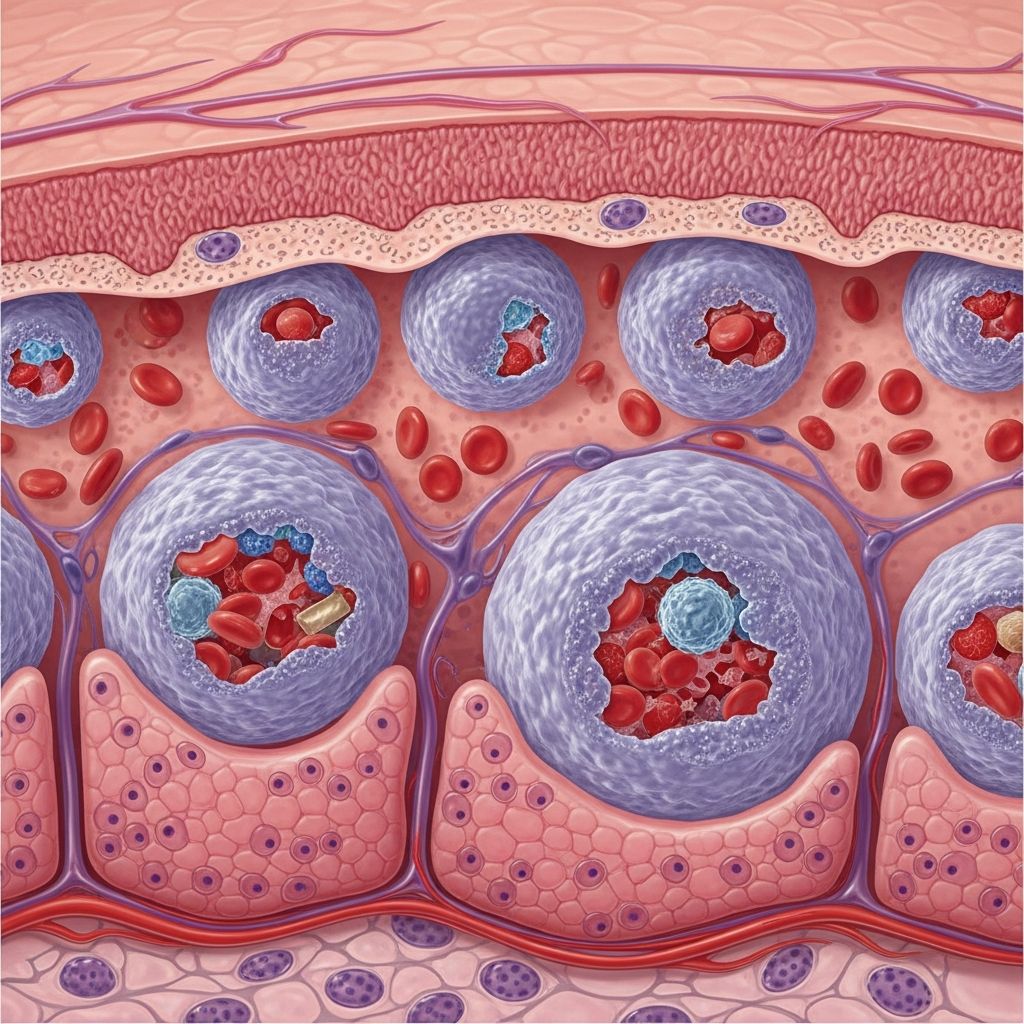
involving the subcutaneous fat layer beneath the skin. Panniculitis refers to inflammation of the subcutaneous adipose tissue, and CHP is marked by the presence of cytophagic histiocytes—macrophages that engulf (phagocytose) erythrocytes, leukocytes, and fat cells, often described as ‘bean bag cells’ due to their bloated appearance filled with engulfed material.This condition is not merely a localized skin issue; it frequently involves multisystem manifestations, mimicking hemophagocytic lymphohistiocytosis (HLH) or subcutaneous panniculitis-like T-cell lymphoma (SPTCL). First described in the 1980s, CHP has fewer than 100 reported cases, highlighting its rarity. It can present as a benign reactive process or progress to fatal outcomes due to widespread hemophagocytosis and coagulopathy.
Who gets cytophagic histiocytic panniculitis?
CHP affects individuals across all ages but shows a predilection for adults, with cases reported in children as young as 11 years old. There is no strong gender bias, though some series note a slight female predominance. It occurs sporadically without clear ethnic predisposition. Associations include underlying conditions such as autoimmune diseases (e.g., systemic lupus erythematosus), infections (though EBV is often excluded), and rarely malignancies. In pediatric cases, trauma may trigger lesions.
- Adults: Most common demographic, often with systemic involvement.
- Children: Rare, but documented with relapsing HLH.
- Immunocompromised: Higher risk of progression to HLH-like syndrome.
What causes cytophagic histiocytic panniculitis?
The exact etiology of CHP remains unknown, but it is postulated to involve an aberrant immune response leading to macrophage activation. Key triggers include:
- Immune dysregulation: Similar to macrophage activation syndrome (MAS), with elevated cytokines like TNF-α, IL-6, and IFN-γ from histiocytes and lymphocytes.
- Associated conditions: Connective tissue disorders (e.g., polyarthritis in 75% of cases), infections (excluded EBV in many), and rarely lymphomas.
- Idiopathic: Many cases lack identifiable triggers, suggesting a primary histiocytic disorder.
Histologically, the process features CD68+ macrophages and CD8+ T-lymphocytes expressing HLA-DR, indicative of activated immune cells driving cytophagocytosis.
What are the clinical features of cytophagic histiocytic panniculitis?
Patients typically present with recurrent, tender
subcutaneous nodules
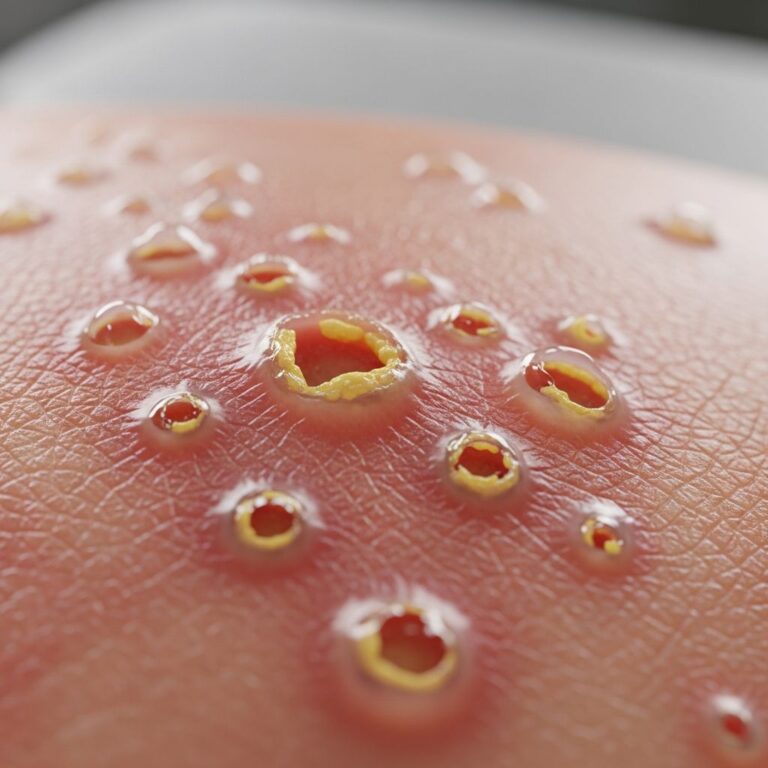
measuring 1-5 cm, often on the extremities (legs, thighs, arms), trunk, and face. These nodules may bruise (ecchymotic), ulcerate, or resolve with atrophy, leaving depressed scars.Systemic symptoms are hallmark and occur in most cases:
- Fever (up to 80% of patients).
- Polyarthritis or arthralgia (75%).
- Hepatosplenomegaly (splenomegaly in 33%).
- Lymphadenopathy (33%).
- Fatigue, malaise, weight loss, myalgia.
Severe cases progress to pancytopenia, hypertriglyceridemia, coagulopathy, and multiorgan failure. Death often results from hemorrhage in gastrointestinal, urinary, respiratory tracts, or skin.
Related Stories



| Symptom | Frequency | Source |
|---|---|---|
| Fever | 67-80% | |
| Polyarthritis | 75% | |
| Splenomegaly | 33% | |
| Pancytopenia | Variable | |
| Coagulopathy | Common in fatal cases |
How is cytophagic histiocytic panniculitis diagnosed?
Diagnosis requires a high index of suspicion, clinical correlation, and histopathological confirmation via deep skin biopsy (wedge excision preferred over punch).
Key diagnostic features:
- Histopathology: Lobular panniculitis with cytophagic histiocytes (bean bag cells) engulfing RBCs, WBCs, and adipocytes. Mixed infiltrate of lymphocytes (CD8+ predominant), macrophages (CD68+), with fat necrosis. No atypical lymphocytes in benign CHP.
- Laboratory: Anemia, thrombocytopenia, elevated ferritin, triglycerides, liver enzymes. Exclude HLH criteria (fever, cytopenias, hemophagocytosis).
- Imaging: Ultrasound or MRI for nodules; CT for systemic involvement.
- Differentials: SPTCL (atypical cells, Ki67 high), HLH (bone marrow hemophagocytosis), Weber-Christian disease.
Immunohistochemistry reveals IFN-γ in lymphocytes and TNF-α/IL-6 in macrophages, supporting MAS-like pathology.
What is the differential diagnosis for cytophagic histiocytic panniculitis?
CHP must be differentiated from mimics:
| Condition | Key Distinguishing Features |
|---|---|
| Subcutaneous panniculitis-like T-cell lymphoma (SPTCL) | Atypical CD8+ T-cells, high proliferation index, EBV negative. |
| Hemophagocytic lymphohistiocytosis (HLH) | Fulfills 5/8 HLH-2004 criteria, bone marrow involvement, no skin-limited disease. |
| Idiopathic nodular panniculitis | No cytophagocytosis, recurrent fever without systemic cytopenias. |
| Erythema nodosum | Septal panniculitis, no histiocyte phagocytosis. |
| Lupus panniculitis | Lymphoid follicles, mucin deposition, ANA positive. |
What is the treatment for cytophagic histiocytic panniculitis?
Treatment is challenging due to rarity and multisystem involvement. No standardized guidelines exist; management is individualized.
- Corticosteroids: Prednisone 1-2 mg/kg/day as first-line for inflammation and systemic symptoms.
- Immunosuppressants: Cyclosporine, methotrexate, or cyclophosphamide for steroid-refractory cases.
- HLH-directed therapy: Etoposide, dexamethasone (HLH-94 protocol) if MAS confirmed.
- Supportive: Blood products for cytopenias, antibiotics for secondary infections.
Benign CHP may remit spontaneously or with steroids; malignant-associated forms have poor prognosis.
What is the outcome for cytophagic histiocytic panniculitis?
Prognosis varies: Benign CHP has favorable outcomes with early treatment (remission in 50-70%), while systemic or lymphoma-associated cases carry high mortality (up to 80%) from hemorrhage or organ failure. Relapses are common, as seen in pediatric cases with HLH reactivation. Long-term follow-up with serial biopsies is essential to rule out SPTCL evolution.
Prevention
No known preventive measures exist due to unclear etiology. Prompt recognition and treatment of associated autoimmune or infectious triggers may mitigate severity.
Frequently Asked Questions (FAQs)
Is cytophagic histiocytic panniculitis cancerous?
CHP itself is not cancerous but can be associated with or mimic subcutaneous panniculitis-like T-cell lymphoma. Biopsy distinguishes benign from malignant forms.
Can CHP be cured?
Benign cases often respond to steroids with remission; severe cases require aggressive therapy and may relapse or prove fatal.
What does CHP look like on biopsy?
Lobular panniculitis with ‘bean bag’ histiocytes showing cytophagocytosis of blood cells and adipocytes, plus lymphocytic infiltrate.
Is CHP contagious?
No, CHP is not infectious or contagious; it is an immune-mediated disorder.
How common is CHP?
Extremely rare, with fewer than 100 cases reported worldwide.
References
- Cytophagic histiocytic panniculitis – DermNet — DermNet NZ. 2023. https://dermnetnz.org/topics/cytophagic-histiocytic-panniculitis
- Clinicopathological characteristics and outcome of cytophagic histiocytic panniculitis — Dove Press (CCID). 2021-10-18. https://www.dovepress.com/clinicopathological-characteristics-and-outcome-of-cytophagic-histiocy-peer-reviewed-fulltext-article-CCID
- Idiopathic Nodular Panniculitis — National Organization for Rare Disorders (rarediseases.org). 2023. https://rarediseases.org/rare-diseases/panniculitis-idiopathic-nodular/
- Cytophagic histiocytic panniculitis: is it a macrophage activation syndrome? — PMC (NCBI). 2011-10-27. https://pmc.ncbi.nlm.nih.gov/articles/PMC3194678/
- Cytophagic histiocytic panniculitis, hemophagocytic syndrome and lupus — PMC (NCBI). 2014-03-20. https://pmc.ncbi.nlm.nih.gov/articles/PMC3974103/
Similar Articles








Read full bio of Sneha Tete