D-Dimer Test: Guide To Accuracy, Results, And Next Steps
What is a D-dimer test? Learn about its purpose, procedure, results, risks, and role in detecting blood clots.
The
D-dimer test
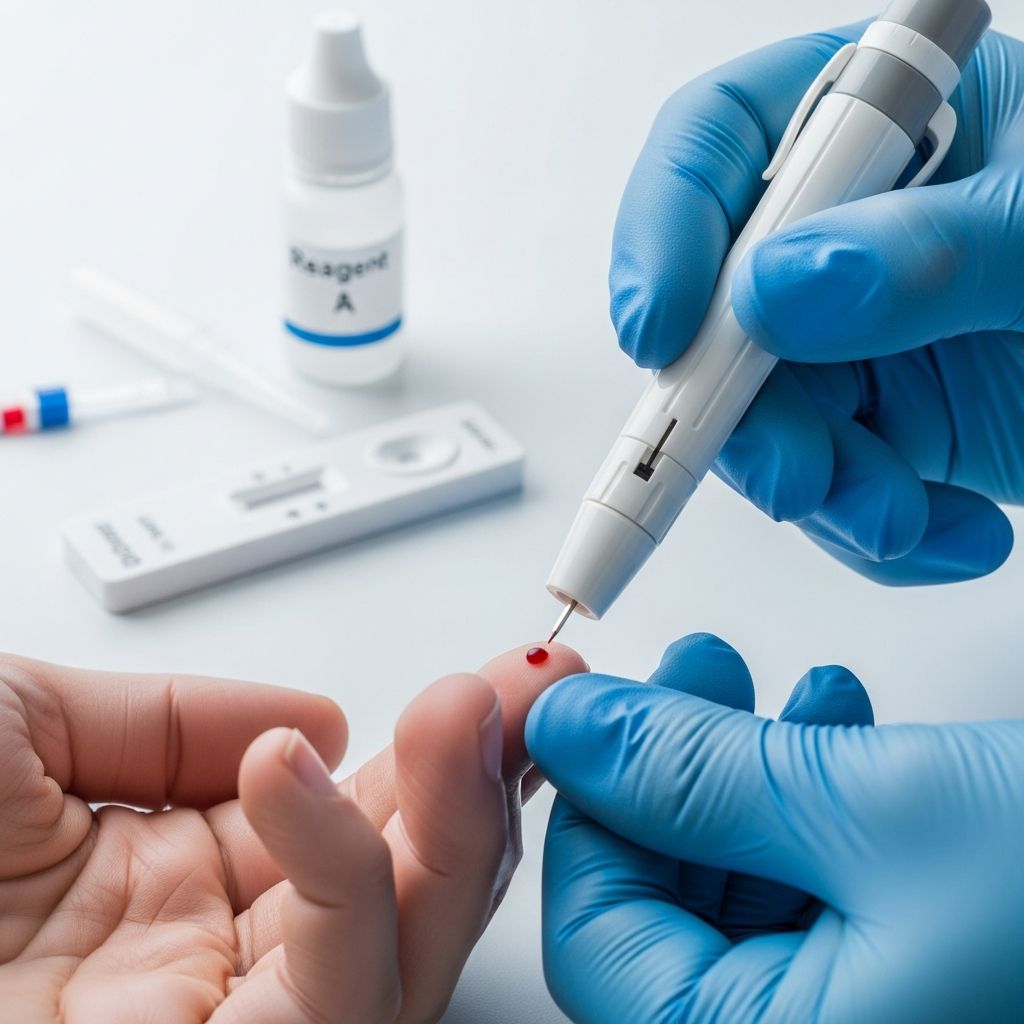
is a simple blood test that measures levels of D-dimer, a small protein fragment produced when a blood clot dissolves in the body. It is primarily used to help rule out serious blood clotting conditions such as deep vein thrombosis (DVT) and pulmonary embolism (PE), especially in low-risk patients. Elevated D-dimer levels indicate active fibrinolysis (clot breakdown), but normal levels can safely exclude clots when combined with clinical assessment tools like the Wells score.What Is a D-Dimer Test?
A D-dimer test detects fibrin degradation products, specifically D-dimer, formed during the fibrinolysis of cross-linked fibrin clots. D-dimer is a byproduct of the coagulation and breakdown process, present in blood after clots are degraded by plasmin. Modern assays use monoclonal antibodies, with enzyme-linked immunosorbent assay (ELISA) as the reference method, though point-of-care (POC) tests like Cardiac Reader® or Triage® provide rapid results in about 15 minutes using whole blood.
These tests show high sensitivity (91-100%) and negative predictive value (NPV >98%), making them excellent for ruling out clots, but specificities range from 39-74%, leading to false positives in conditions like infection, cancer, pregnancy, or surgery. Quantitative POC tests outperform qualitative ones, with no interference from common factors like heparin or bilirubin in assays like Vidas D-Dimer.
Purpose of the D-Dimer Test
The main purpose is to assess for thrombotic disorders by detecting ongoing coagulation and fibrinolysis. It helps diagnose or exclude:
- **Deep vein thrombosis (DVT)**: Clots in deep leg veins.
- **Pulmonary embolism (PE)**: Clots traveling to the lungs.
- **Disseminated intravascular coagulation (DIC)**: Widespread clotting and bleeding.
In primary care, combining D-dimer with clinical decision rules (e.g., Wells or primary care rule) rules out DVT in ~50% of suspected cases, avoiding unnecessary ultrasounds. For low-probability patients, negative D-dimer has a <1% missed clot rate over 3 months. Age-adjusted cutoffs improve specificity in older adults, rising from 14.7% to 35.2% in those over 80.
When Is a D-Dimer Test Ordered?
Clinicians order D-dimer when patients present with symptoms suggesting clots, such as leg swelling/pain (DVT) or sudden shortness of breath/chest pain (PE). It is not used alone but with pretest probability tools:
| Clinical Scenario | Typical Symptoms | Combined Use |
|---|---|---|
| Suspected DVT | Leg pain, swelling, redness | Wells score + D-dimer; negative rules out in low/moderate risk |
| Suspected PE | Dyspnea, chest pain, hemoptysis | Wells PE score + D-dimer; NPV >99% if low probability |
| DIC monitoring | Bleeding, organ failure | Supports diagnosis in sepsis/cancer |
Avoid in high-risk patients or those with known clots, pregnancy, or recent surgery, where levels are often elevated nonspecifically.
How Is a D-Dimer Test Performed?
The test requires a standard blood draw from a vein (venipuncture), typically from the arm. No special preparation is needed, though fasting may be advised if combined with other tests. Steps include:
Related Stories



- Blood collection into a citrate tube to prevent clotting.
- Lab analysis via ELISA (central lab, ~1 hour) or POC methods (15 min, fingerstick/whole blood possible).
- Results reported in ng/mL or μg/L FEU; common cutoff: 500 ng/mL.
POC tests like Clearview Simplify use fingerstick samples but may have interpretation challenges. Turnaround time reductions up to 79% with POC improve patient flow.
D-Dimer Test Results
Results are interpreted with clinical context:
- Normal/Low (<500 ng/mL): Clot unlikely (high NPV >98-99.7%), especially with low Wells score. No further imaging needed.
- Elevated (>500 ng/mL): Indicates fibrinolysis but nonspecific; prompts ultrasound/CT. PPV ~60%.
Age-adjusted: Cutoff = age x 10 ng/mL for >50 years, boosting specificity. False positives common in inflammation, malignancy, trauma.
| Result | Implication | Next Steps |
|---|---|---|
| <500 ng/mL + Low probability | DVT/PE ruled out (<1% risk) | Discharge/reassure |
| >500 ng/mL | Possible clot; investigate | Ultrasound, CT pulmonary angiogram |
| Age-adjusted negative | Improved rule-out in elderly | Monitor if moderate risk |
Accuracy of the D-Dimer Test
D-dimer excels at ruling out (sensitivity 91-100%, NPV >98%) but not confirming clots due to moderate specificity (39-74%). Meta-analyses confirm: In 14,000 patients, quantitative assays best; combined with Wells, >99.7% NPV for VTE. Primary care rule + POC D-dimer safely withholds imaging in 49%, with 1.4% subsequent VTE. Limitations: Lower sensitivity in elderly/high-risk; not for monitoring anticoagulation.
Risks and Limitations of the D-Dimer Test
Minimal risks: Bruising from venipuncture (<1%). Limitations include:
- False positives: 60-70% in hospitalized patients (infection, cancer, post-op).
- False negatives: Rare (<1%), but possible in small/old clots.
- Not diagnostic alone: Always pair with clinical scores/imaging.
- Interferences: Minimal in modern assays, but hemolysis/turbidity possible.
Cost-effective: Reduces ultrasounds by 50%, saving £30,000/QALY thresholds.
Follow-Up After a D-Dimer Test
Negative + low risk: Outpatient management, repeat if symptoms persist. Positive: Urgent imaging (Doppler US for DVT, CT for PE). Treatment if confirmed: Anticoagulants (heparin, DOACs). Monitor high-risk patients 3 months for VTE (1-2% event rate post-negative).
Frequently Asked Questions (FAQs)
What does a high D-dimer mean?
A high level suggests clot breakdown but is nonspecific; further tests needed to confirm DVT/PE.
Can D-dimer be used for COVID-19?
Elevated in severe cases due to coagulopathy, but not diagnostic alone.
Is D-dimer elevated in pregnancy?
Yes, physiologically; use caution, prefer imaging.
How accurate is D-dimer for PE?
High NPV (99.7%) with low Wells score; rules out safely.
Normal D-dimer range?
<500 ng/mL; age-adjusted for >50 years.
References
- The D-Dimer test in combination with a decision rule for ruling out … — PMC. 2012-04-27. https://pmc.ncbi.nlm.nih.gov/articles/PMC3338064/
- Widely Used Types and Clinical Applications of D-Dimer Assay — Oxford Academic. 2016-05-25. https://academic.oup.com/labmed/article/47/2/90/2937880
- D-Dimer Test – StatPearls — NCBI Bookshelf. 2023-10-01. https://www.ncbi.nlm.nih.gov/sites/books/n/statpearls/article-20242/
Similar Articles








Read full bio of Sneha Tete