Dacryocystorhinostomy: Tear Duct Surgery Guide
Complete guide to dacryocystorhinostomy surgery for blocked tear ducts and epiphora relief.
Understanding Dacryocystorhinostomy (DCR)
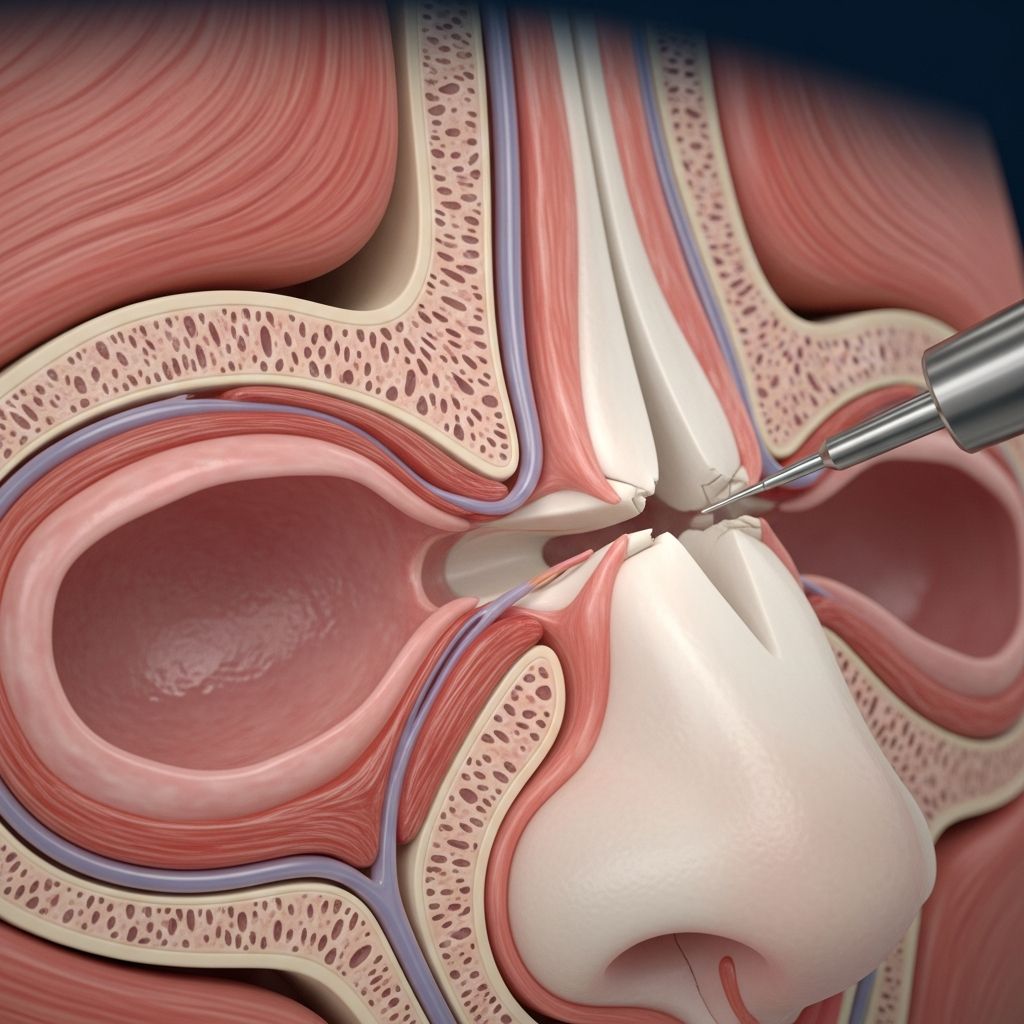
Dacryocystorhinostomy, commonly abbreviated as DCR and pronounced “DAK-re-oh-sis-to-RY-NOST-oh-me,” is a surgical procedure designed to treat blocked or obstructed tear ducts. This condition, known as nasolacrimal duct obstruction, can cause significant discomfort and vision problems for affected individuals. The primary goal of DCR surgery is to create a new pathway for tear drainage, bypassing the obstruction and allowing tears to flow naturally from the eye into the nasal cavity.
The procedure addresses a common issue where the nasolacrimal duct becomes completely or nearly completely obstructed, preventing normal tear drainage. When this occurs, tears accumulate in the eye and tear sac, leading to excessive tearing, eye irritation, and potential infection. DCR surgery restores proper tear circulation, significantly improving patient comfort and eye health.
Symptoms and Indications for DCR Surgery
Patients experiencing blocked tear ducts typically present with several characteristic symptoms that impact their quality of life. The most common indication for DCR surgery is persistent epiphora, which is the excessive flow of tears down the face. Additional symptoms that may warrant DCR surgery include:
- Chronic eye tearing and watery eyes
- Eye redness and irritation
- Discharge from the inner corner of the eye
- Recurrent eye infections or dacryocystitis
- Blurred vision caused by excessive tear film
- Discomfort and foreign body sensation
- Crusting around the eyelids
Before recommending DCR surgery, eye care professionals typically attempt less invasive treatments first. These preliminary interventions may include warm compresses applied to the tear sac region, gentle massage techniques to help mobilize blockages, and antibiotic medications if infection is present. Only when these conservative approaches fail to provide relief is DCR surgery considered.
DCR Surgical Approaches
Modern DCR surgery can be performed using two distinct surgical approaches, each with specific advantages and considerations. The choice between these methods depends on the patient’s anatomy, the surgeon’s expertise, and individual patient factors.
External DCR (Conventional Approach)
The external DCR approach is the traditional method that has been performed for many years. During this procedure, the surgeon makes a small incision along the lower eyelid crease to access the nasolacrimal sac region. This incision location is strategically chosen to minimize the appearance of scarring. The surgeon then removes a small piece of bone adjacent to the tear sac to create a new drainage opening. A soft, flexible silicone tube stent is placed temporarily to maintain the newly created duct opening while tissue heals. The external approach typically takes approximately 45 to 50 minutes for first-time procedures.
Endoscopic DCR (Endonasal Approach)
The endoscopic dacryocystorhinostomy represents a more modern, minimally invasive alternative to external DCR. This technique uses cutting-edge technology, including a nasal endoscope, allowing the surgeon to perform the procedure entirely through the nostrils without making any skin incisions. The endoscope provides excellent visualization of the internal nasal structures, enabling the surgeon to create an opening between the tear sac and nasal mucosa with precision. The endoscopic approach is generally faster, typically requiring about 30 minutes for first-time procedures, and offers benefits including reduced postoperative swelling and bruising. Like the external approach, a temporary silicone tube stent is placed to support healing.
Related Stories



Preoperative Preparation and Anesthesia
Proper preparation before DCR surgery is essential for optimal outcomes and patient safety. Patients should discuss their medical history, current medications, and any allergies with their surgical team. Specific preoperative instructions typically include fasting requirements before the procedure, as DCR surgery is performed under anesthesia.
At the beginning of the DCR surgical procedure, an intravenous (IV) line is inserted into a vein, usually in the arm or hand. This IV line allows the anesthesiologist to administer medications and fluids throughout the operation. The patient is then given medications to induce sleep before the surgery begins. DCR surgery can be performed under monitored sedation or general anesthesia, depending on the surgeon and patient’s preference. Local anesthesia is also used during the procedure to provide additional pain control and minimize bleeding. A typical anesthetic mixture consists of lidocaine and bupivacaine with epinephrine, which is infiltrated into the medial canthus area, lower lid incision site, and nasal mucosa.
Surgical Technique and Procedure Details
The DCR surgical procedure involves several carefully coordinated steps to successfully create a new tear drainage pathway. Understanding these steps provides insight into the complexity and precision required for successful outcomes.
Initial Incision and Exposure
The surgeon begins by marking a curvilinear skin incision at the level of the medial canthal tendon, extending approximately 10 to 12 millimeters into the thin skin of the lower lid. The face is prepped and draped in a sterile fashion, and a lubricated corneal protective lens is often placed on the eye surface to protect the cornea during surgery. The skin incision is made using either a 15-blade scalpel or monopolar cautery unit with a Colorado needle tip.
Bone Removal and Exposure
After the initial incision, the orbicularis oculi muscle fibers are carefully separated until the periosteum of the anterior lacrimal crest is identified. Dissection proceeds carefully lateral to the angular vessels to avoid bleeding complications. The periosteum along the anterior lacrimal crest is incised from the medial canthal tendon level and extended inferiorly. Using Freer elevators, the periosteum is carefully elevated anteriorly off the nasal bone. The periorbita and lacrimal sac are similarly elevated posterolaterally off the lacrimal sac fossa. The fossa is carefully perforated where the bone thins at the suture line between the frontal process of the maxilla and the lacrimal bone. The surgeon uses either Kerrison rongeurs or a high-speed drill to remove bone from the lacrimal fossa, extending inferiorly to the lacrimal duct at the inferior orbital rim and anteriorly past the anterior lacrimal crest. The final bony ostium should be approximately 8 millimeters in height to ensure adequate clearance.
Lacrimal Sac Preparation
A 0-0 Bowman probe is passed into the lacrimal sac to tent the sac medially, and Westcott scissors are used to open the lacrimal sac from the duct to the fundus, with relaxing incisions made at both ends. Any abnormal scarring overlying the common canaliculus opening, lacrimal sac stones, foreign bodies, or masses are removed if present. A corresponding incision is made in the nasal mucosa to create either anterior-only flaps or both anterior and posterior flaps, depending on the surgical preference.
Stent Placement and Closure
Silicone tubes are carefully passed into the canaliculi and through the newly created DCR ostium. The lacrimal sac flaps are meticulously anastomosed (surgically connected) to the nasal mucosal flaps. Following flap suturing to create the new drainage pathway, the orbicularis muscle and skin are closed in a layered fashion. If the medial canthal tendon was released during surgery, the anterior limb is resuspended. The silicone tubes are tied and left long in the nasal vestibule to facilitate office removal later.
Postoperative Care and Recovery
Proper postoperative care is crucial for successful healing and optimal surgical outcomes. Patients should follow their surgeon’s instructions carefully during the recovery period to minimize complications and promote proper tear duct formation.
Immediate Postoperative Instructions
Ice or cold compresses should be applied to the incision site for 48 hours while the patient is awake. This helps minimize swelling and bruising. The patient’s head should remain elevated at approximately a 45-degree angle at all times during the initial recovery period. Importantly, patients must avoid nose blowing for at least one week following surgery to decrease the risk of hemorrhage and compromise the newly created drainage pathway.
Stent Removal Timeline
The silicone tube stent is typically removed 4 to 8 weeks after surgery, though some surgeons may remove the tubes at a later date depending on healing progress. This removal is performed painlessly in the office setting. If nonabsorbable sutures were used for closure, skin sutures are removed one week postoperatively. Following the procedure, patients are usually prescribed eye drops for use in the eye and nasal spray for the nostril to optimize healing and prevent infection.
Activity Restrictions
Patients should avoid strenuous activities and heavy lifting during the initial recovery period. Most patients can return to light activities within a few days and normal activities within one to two weeks, though this timeline may vary based on individual healing and the surgical approach used.
Success Rates and Outcomes
DCR surgery has achieved remarkable success rates, making it one of the most effective procedures for treating nasolacrimal duct obstruction. The success of the procedure depends on several factors, including the surgical technique used, the patient’s age and overall health, and compliance with postoperative care instructions.
For external DCR surgery, the success rate ranges between 85% and 99%, with most studies reporting success rates above 90%. Endoscopic DCR surgery has similarly impressive success rates, ranging between 91% and 96%. These high success rates demonstrate the effectiveness of both surgical approaches in restoring normal tear drainage. DCR surgery restores proper tear fluid drainage, eliminating excess tear fluid in and around the eyes, making it easier to see and reducing the chance of infection.
Potential Risks and Complications
While DCR surgery is generally safe and effective, like all surgical procedures, it carries potential risks and complications that patients should understand before proceeding. Common postoperative complications may include temporary bleeding from the nose, mild swelling and bruising, discomfort at the incision site, and temporary nasal congestion. Most of these side effects resolve within one to two weeks as healing progresses.
Rare complications may include excessive bleeding requiring intervention, infection at the incision or inside the nose, incomplete tear duct opening requiring revision surgery, and temporary double vision or eye movement disturbances. Discussing these potential risks with the surgical team before the procedure allows patients to make informed decisions and understand what to expect during recovery.
Frequently Asked Questions About DCR Surgery
Q: How long does dacryocystorhinostomy surgery take?
A: External DCR typically takes 45 to 50 minutes for first-time procedures, while endoscopic DCR usually takes about 30 minutes. Follow-up surgeries are generally shorter than initial procedures for both approaches.
Q: Is DCR surgery performed as an outpatient procedure?
A: Yes, patients may typically be discharged home on the same day as the procedure. Most DCR surgeries are performed on an outpatient basis, allowing patients to recover at home.
Q: When can I return to normal activities after DCR surgery?
A: Most patients can return to light activities within a few days and normal activities within one to two weeks. However, strenuous activities and heavy lifting should be avoided during the initial recovery period.
Q: What is the success rate of DCR surgery?
A: External DCR has a success rate between 85% and 99%, while endoscopic DCR has a success rate between 91% and 96%, making both approaches highly effective for treating nasolacrimal duct obstruction.
Q: Will I have visible scarring after external DCR surgery?
A: The external DCR incision is strategically placed along the lower eyelid crease to minimize visible scarring. Most scars fade significantly over time and become barely noticeable.
Q: How long does the silicone tube stent remain in place?
A: The silicone tube is typically removed 4 to 8 weeks after surgery, though some surgeons may remove it at a later date depending on healing progress. Removal is a painless office procedure.
Q: What should I do if I experience excessive bleeding after DCR surgery?
A: Contact your surgeon immediately if you experience excessive bleeding from the eye or nose following surgery. While minor bleeding is normal, excessive bleeding requires professional evaluation.
Comparison of DCR Surgical Approaches
| Feature | External DCR | Endoscopic DCR |
|---|---|---|
| Incision Location | Lower eyelid crease | No external incision; through nostrils |
| Invasiveness | More invasive approach | Minimally invasive approach |
| Surgery Duration | 45–50 minutes (first-time) | ~30 minutes (first-time) |
| Success Rate | 85–99% | 91–96% |
| Postoperative Swelling | Moderate to significant | Minimal swelling |
| Scarring | Small, well-concealed scar possible | No visible scarring |
| Visualization | Direct visualization | Endoscopic visualization |
When to Consider DCR Surgery
DCR surgery should be considered when conservative treatments fail to resolve symptoms of nasolacrimal duct obstruction. Patients experiencing chronic epiphora, recurrent eye infections, or significant discomfort despite weeks of conservative management are candidates for surgical intervention. The decision to proceed with DCR surgery should be made collaboratively between the patient and their eye care professional, taking into account the impact of symptoms on quality of life, the patient’s overall health, and personal preferences regarding surgical approach.
References
- Dacryocystorhinostomy — EyeWiki, American Academy of Ophthalmology. 2025. https://eyewiki.org/Dacryocystorhinostomy
- Dacryocystorhinostomy (Tear Duct Surgery): What It Is & Risks — Cleveland Clinic. 2025. https://my.clevelandclinic.org/health/procedures/dacryocystorhinostomy-tear-duct-surgery
- Dacryocystorhinostomy — StatPearls, National Center for Biotechnology Information (NCBI). 2024. https://www.ncbi.nlm.nih.gov/books/NBK557851/
- Tear Duct Surgery — Stanford Medicine, Department of Otolaryngology. 2024. https://med.stanford.edu/drkossler/services/tear-duct-surgery.html
- Endoscopic Dacryocystorhinostomy: A Patient’s Guide — UC Davis Health, Department of Otolaryngology. 2024. https://health.ucdavis.edu/otolaryngology/
Similar Articles








Read full bio of Sneha Tete