Daily Protein Intake For Men: Complete Guide For Muscle, Health
Discover the optimal daily protein intake for men to support muscle growth, weight management, and overall health based on expert guidelines.
Men require approximately 0.36 to 1 gram of protein per pound of body weight daily, depending on age, activity level, and goals like muscle building or weight loss. This range ensures nitrogen balance, supports muscle repair, and promotes overall health, with higher intakes benefiting active individuals and older adults.
How Much Protein Do Men Need Per Day?
The baseline recommendation from the National Institutes of Health (NIH) is
0.36 grams of protein per pound of body weight
daily for adult men. For an average 180-pound man, this equates to about 65 grams, sufficient to prevent muscle loss in healthy, young adults but considered a minimum threshold.This figure stems from nitrogen balance studies on active 25-year-old men, measuring protein to maintain equilibrium without deficiency. However, experts like Donald Layman emphasize it’s an “absolute minimum,” not optimal for muscle gain, recovery, or aging populations.
For comprehensive benefits, aim for
0.6 to 1 gram per pound
. This supports 95% of protein’s advantages, including muscle synthesis and satiety, without excess. Layne Norton notes intakes beyond 1.3-1.5 grams per pound yield marginal gains for non-elite athletes.| Goal | Protein (g/lb body weight) | Example (180 lb man) |
|---|---|---|
| Minimum (RDA/NIH) | 0.36 | 65g |
| Sedentary maintenance | 0.6-0.8 | 108-144g |
| Muscle building/Active | 0.8-1.0 | 144-180g |
| Aging (anti-sarcopenia) | 1.0+ | 180g+ |
Factors Affecting Protein Needs for Men
Protein requirements vary by several key factors:
- Age: Men over 60 need higher intakes (up to 1g/lb) to combat sarcopenia, age-related muscle loss.
- Activity Level: Weight training or endurance sports increase needs to replenish energy stores and repair tissue.
- Body Composition Goals: Muscle gain favors 1g/lb; weight loss uses protein for satiety and lean mass preservation.
- Diet Type: Plant-based eaters require 30-40% more due to lower bioavailability.
Using target body weight simplifies calculations over lean mass, especially for weight loss.
Best Protein Sources for Men
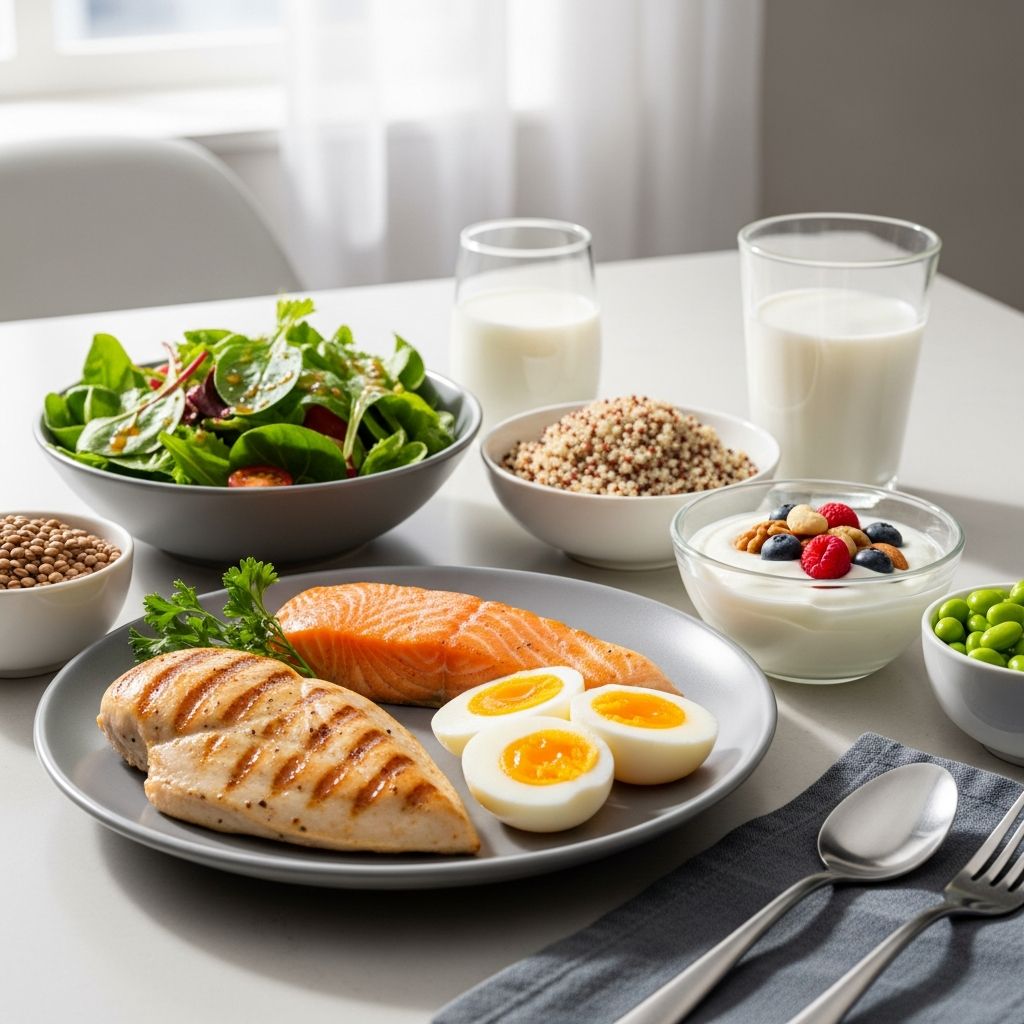
Prioritize nutrient-dense sources. Animal proteins like lean meats, eggs, and dairy provide complete amino acids and meet 65% of vitamin/mineral needs with 40% of calories.
- Animal-Based: Chicken breast (53g/6oz), salmon (34g/6oz), eggs (6g each), Greek yogurt (20g/cup).
- Plant-Based: Lentils (18g/cup), quinoa (8g/cup), tofu (10g/½ cup), pea protein isolates.
- Supplements: Whey or plant powders for convenience, but whole foods preferred.
High-protein diets are safe; no evidence links them to kidney harm in healthy men.
Protein Timing and Distribution
Spread intake across 3-5 meals (20-40g per meal) to maximize muscle protein synthesis. Post-workout windows enhance recovery, but total daily intake matters most.
Common Myths About Protein Intake
- Myth: More is always better. Beyond 1g/lb, benefits plateau for most men.
- Myth: Plant protein is inferior. Combine sources (e.g., rice + beans) for completeness; adjust quantity upward.
- Myth: Excess harms kidneys. Unsupported in healthy individuals.
Sample Daily Meal Plans for Men
180 lb Active Man (150g target):
- Breakfast: 4 eggs + spinach (25g)
- Lunch: Grilled chicken salad (40g)
- Snack: Greek yogurt + nuts (25g)
- Dinner: Salmon + quinoa (40g)
- Post-workout shake (20g)
Plant-Based (195g adjusted):
- Breakfast: Tofu scramble + lentils (30g)
- Lunch: Chickpea curry (45g)
- Snack: Edamame + pea protein shake (35g)
- Dinner: Tempeh stir-fry + rice (50g)
- Evening: Seitan (35g)
Signs of Inadequate Protein Intake
Related Stories



- Muscle loss or weakness
- Fatigue, slow recovery
- Hair thinning, brittle nails
- Frequent illness
Frequently Asked Questions (FAQs)
What is the minimum daily protein intake for men?
The NIH RDA is 0.36g per pound (e.g., 65g for 180lb man), but optimal is higher.
How much protein for muscle gain?
0.8-1g per pound, paired with resistance training.
Do older men need more protein?
Yes, up to 1g/lb to prevent sarcopenia.
Is too much protein bad?
No evidence of harm in healthy men; supports nutrient density.
How to calculate personal needs?
Body weight (lbs) × grams per pound target. Use apps or trackers.
References
- Finally, a Definitive Answer for How Much Protein You Need Daily — Men’s Health. 2024. https://www.menshealth.com/nutrition/a69701914/how-much-protein-do-you-need-daily/
- Dietary Reference Intakes for Energy, Carbohydrate, Fiber, Fat, Fatty Acids, Cholesterol, Protein, and Amino Acids — National Academies Press (NIH reference). 2005 (authoritative standard). https://nap.nationalacademies.org/catalog/10490/dietary-reference-intakes-for-energy-carbohydrate-fiber-fat-fatty-acids-cholesterol-protein-and-amino-acids
- Protein Consumption and the Elderly: What Is the Optimal Level of Intake? — PubMed (NCBI). 2016. https://pubmed.ncbi.nlm.nih.gov/26817506/
- International Society of Sports Nutrition Position Stand: protein and exercise — Journal of the International Society of Sports Nutrition. 2017. https://doi.org/10.1186/s12970-017-0177-8
- Evidence-based recommendations for optimal dietary protein intake in older people — WHO-supported review via PubMed. 2020. https://pubmed.ncbi.nlm.nih.gov/32445461/
Similar Articles








Read full bio of Sneha Tete