Dandelion: Complete Guide To Uses, Benefits, And Side Effects
Explore the medicinal uses, dermatological effects, and botanical details of dandelion, a common plant with potential health benefits and risks.

Taraxacum officinale
Dandelion (Taraxacum officinale) is a perennial herbaceous plant belonging to the Asteraceae family, commonly found in temperate regions worldwide. Often viewed as a persistent weed in lawns and gardens, it has a rich history in traditional medicine and herbal remedies. This article examines its
botanical characteristics
,traditional and medicinal uses
,dermatological implications
, andpharmacological properties
based on scientific evidence.What is dandelion?
Dandelion is easily identified by its distinctive morphology. It features a basal rosette of bright green leaves that are spatulate to lanceolate, deeply and irregularly toothed, growing up to 25 cm in length. The plant produces naked flower stalks rising straight from the center of the leaf rosette, each bearing a single flower head approximately 5 cm wide composed of bright yellow ray flowers.
The flower heads emerge from roundish green buds nestled in the leaf center and develop seeds attached to tiny parachute-like tufts that disperse via wind. Both leaves and stalks exude a milky latex sap when injured, which can trigger
contact dermatitis
in latex-sensitive individuals. Dandelions thrive in disturbed soils, grasslands, and urban areas, reproducing asexually through apomixis, allowing widespread propagation without pollination.Plant description
The dandelion plant exhibits a taproot system with a deep, thick root that stores nutrients, enabling survival through harsh conditions. Leaves form a dense rosette at ground level, lacking a central stem, which distinguishes it from similar composites. Stems are hollow, leafless, and topped by composite flower heads containing numerous florets.
- Leaves: Lance-shaped, jagged edges (“lion’s tooth” from French dent de lion), 5-25 cm long, arranged in basal rosette.
- Flowers: Bright yellow, ligulate florets opening in sunlight and closing at night or in poor weather.
- Fruits: Achene seeds with pappus (white feathery structure) for wind dispersal.
- Roots: Brown exterior, white interior, rich in inulin and bitter principles.
The plant’s latex content varies by part, with higher concentrations in stems and roots, contributing to its irritant potential.
Traditional uses
Historically, dandelion has been employed across cultures for its purported therapeutic effects. In Europe, Asia, and North America, it served as a food source, diuretic, and digestive tonic.
- Culinary: Young leaves in salads for bitterness; roots roasted as coffee substitute; flowers in wines and teas.
- Medicinal: Leaf and root infusions as diuretics; decoctions for constipation, kidney/gallstones (though unproven); poultices for fractures.
- Other: Latex sap applied to warts; whole plant for detoxification in traditional Chinese medicine.
In folk remedies, it was called “piss-a-bed” due to diuretic properties. Native Americans used it for stomach issues, while Europeans valued it for liver support.
Medicinal uses
Dandelion’s medicinal applications stem from its bioactive compounds. Modern interest focuses on evidence-based benefits, though many claims lack robust human trials.
Diuretic and digestive aid
Leaves act as a natural diuretic, increasing urine output due to high potassium content, potentially aiding edema and hypertension. Root decoctions treat constipation via mild laxative effects.
Related Stories



Antioxidant and anti-inflammatory
Rich in
polyphenols
,beta-carotene
, andflavonoids
, dandelion neutralizes free radicals, reducing oxidative stress. Test-tube and animal studies show reduced inflammation markers. Phenolic acids like caffeic and chicoric acid contribute to these effects.Liver protection
Root extracts protect against liver damage in animal models by reducing fat accumulation and oxidative stress. A 2021 rat study demonstrated prevention of induced liver failure.
Anticancer potential
In vitro studies indicate root extracts inhibit cancer cell growth in breast, liver, colon, prostate, and stomach lines via apoptosis induction. Rat studies suppressed breast cancer spread, but human data is absent.
Skin health
Extracts promote collagen production, hydration, and UV protection in lab models. May reduce acne inflammation, though latex can irritate sensitive skin.
Other benefits
Antimicrobial against bacteria/fungi; immune-boosting; blood sugar regulation in preliminary research.
Dermatological aspects
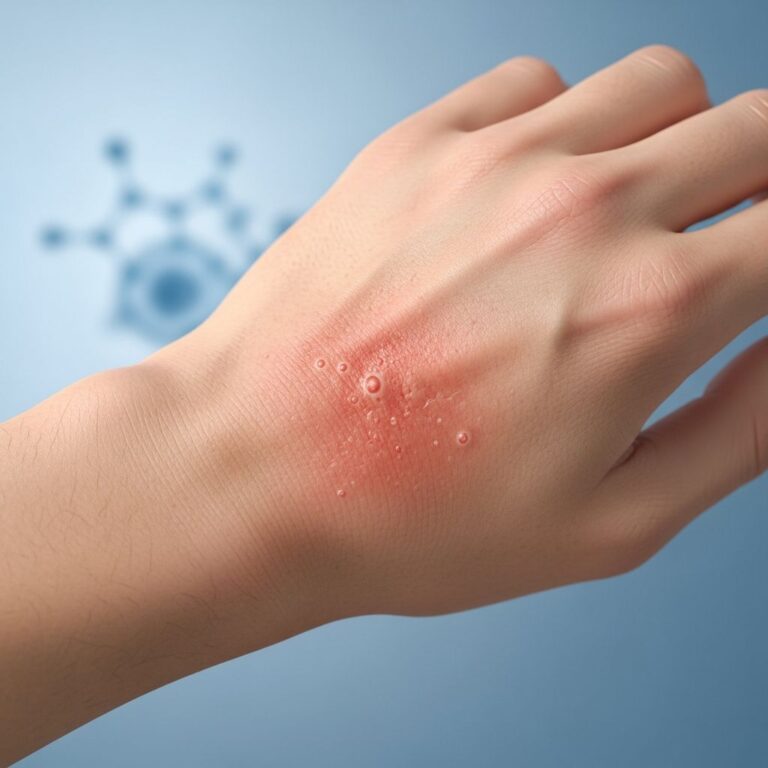
As a member of the Asteraceae family, dandelion is implicated in
compositae mix dermatitis
andphytodermatitis
. Latex causes irritant or allergic contact dermatitis, especially in atopics.Symptoms include linear vesicles, erythema, and pruritus on exposed skin, mimicking wild feverfew reactions. Patch testing with plant extracts is recommended for chronic dermatitis in children.
| Plant Part | Potential Effect | Mechanism |
|---|---|---|
| Latex sap | Irritant dermatitis | Direct toxicity |
| Leaves/stems | Allergic contact | Sesquiterpene lactones |
| Extracts | Therapeutic | Anti-inflammatory compounds |
Avoid handling if latex-allergic; cross-reactivity with other Asteraceae possible.
Pharmacology
Dandelion’s effects arise from diverse phytochemicals.
- Sesquiterpenoids: Germacranolides like taraxinic acid (anti-inflammatory).
- Phenolics: Caffeic acid, chlorogenic acid (antioxidants).
- Flavonoids: Luteolin, quercetin (anti-cancer, antiviral).
- Polysaccharides: Inulin (prebiotic).
- Sterols/Triterpenoids: Anti-rheumatic.
These confer antibacterial, antiviral, choleretic, and antirheumatic properties.
Adverse effects
Generally safe, but risks include:
- Allergic reactions: Oral allergy syndrome in pollen-sensitive; dermatitis.
- GI upset: Stomach pain, diarrhea at high doses.
- Interactions: Diuretics (hypokalemia); lithium (toxicity).
- Contraindications: Gallbladder disease, pregnancy (uterine stimulant).
Consult professionals before use.
Differential diagnosis
Resembles sow thistle, hawkweed, but distinguished by naked stalks and toothed basal leaves. Dermatitis differentials: Other compositae, rubber.
Management
For dermatitis: Topical corticosteroids, avoidance. Medicinally: Standardized extracts/teas; dosages per guidelines.
Prevention
Wear gloves handling plants; use herbicides for weed control in spring/fall.
Frequently Asked Questions
Is dandelion safe to eat?
Yes, leaves, roots, and flowers are edible and nutritious, providing vitamins A, C, K, and potassium. Start small to check tolerance.
Can dandelion cause skin rashes?
Yes, the latex may cause irritant or allergic contact dermatitis, especially in sensitive individuals.
Does dandelion help with weight loss?
Diuretic effects may reduce water weight temporarily, but no strong evidence for fat loss.
Is dandelion good for the liver?
Animal studies suggest protective effects, but human trials are needed.
How do you use dandelion root for tea?
Roast dried roots, steep 1 tsp in hot water for 10 minutes.
Related topics
References
- Dandelion – DermNet — DermNet NZ. 2023. https://dermnetnz.org/topics/dandelion
- Dandelion (Taraxacum Genus): A Review of Chemical Constituents — PMC (NIH). 2023-07-01. https://pmc.ncbi.nlm.nih.gov/articles/PMC10343869/
- Dandelion: Health Benefits and Side Effects — Healthline. 2023. https://www.healthline.com/nutrition/dandelion-benefits
- Diverse biological activities of dandelion — Oxford Academic (Nutrition Reviews). 2012-09-01. https://academic.oup.com/nutritionreviews/article/70/9/534/1835513
- Dandelion – Uses, Side Effects, and More — WebMD. 2023. https://www.webmd.com/vitamins/ai/ingredientmono-706/dandelion
- Dandelion: An Important Allergen in Atopic Children — Sage Journals. 2014. https://journals.sagepub.com/doi/10.1097/DER.0000000000000262
Similar Articles








Read full bio of Sneha Tete