Dapagliflozin Tablets: Uses, Dosage & Side-Effect Guide
Comprehensive guide to Forxiga (dapagliflozin) for type 2 diabetes, heart failure, and chronic kidney disease management.
About dapagliflozin tablets
Dapagliflozin, marketed as Forxiga, is a prescription medication belonging to the class of sodium-glucose co-transporter 2 (SGLT2) inhibitors. It is primarily used to manage
type 2 diabetes
,chronic heart failure
, andchronic kidney disease (CKD)
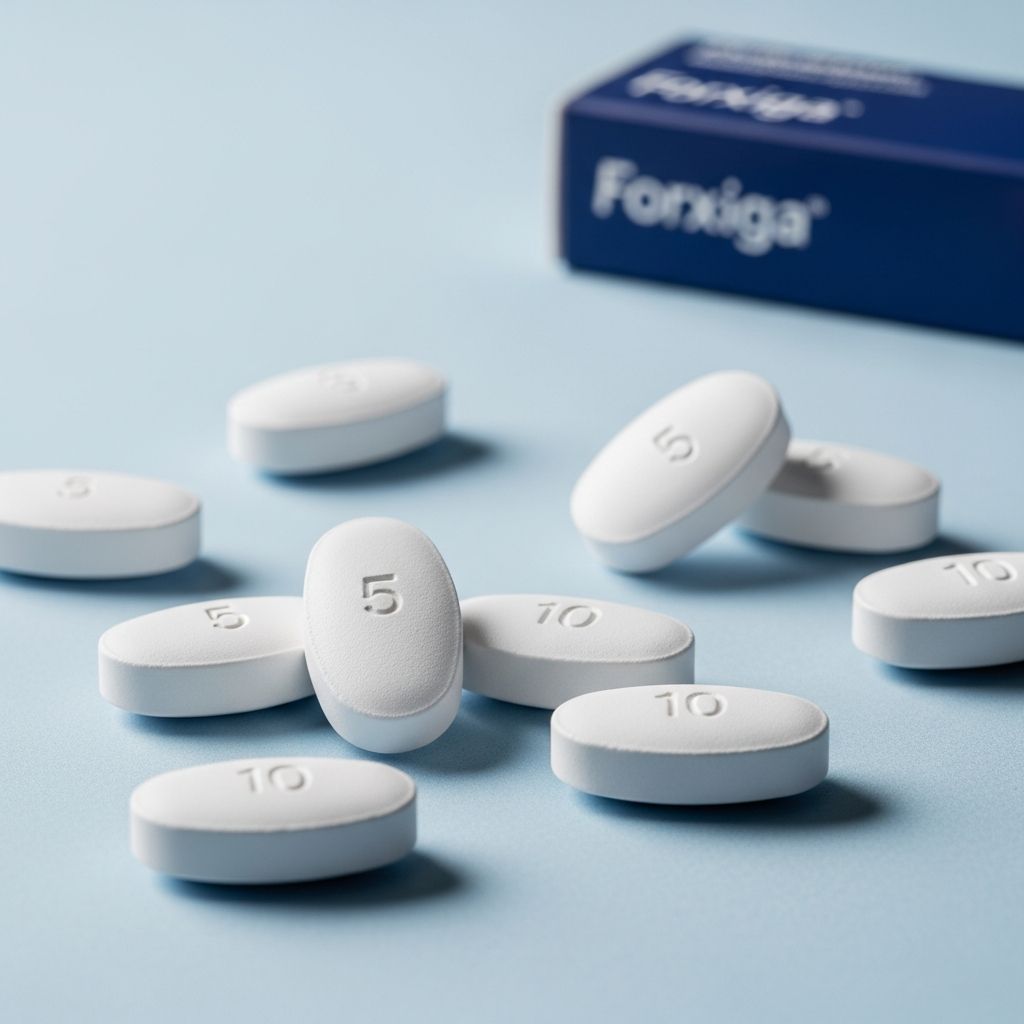
in adults and certain pediatric patients. By blocking SGLT2 in the kidneys, dapagliflozin promotes glucose excretion in urine, lowering blood sugar levels while also reducing blood volume to ease heart and kidney workload.Forxiga is available as 5 mg and 10 mg film-coated tablets, taken once daily with or without food. It is indicated as an adjunct to diet and exercise for insufficiently controlled type 2 diabetes, and independently for heart failure and CKD to reduce risks of hospitalization, progression, and death.
About dapagliflozin tablets
Dapagliflozin works by inhibiting SGLT2, a protein responsible for reabsorbing glucose in the kidneys. In people with type 2 diabetes, excess glucose circulates in the blood; dapagliflozin forces the kidneys to excrete this glucose via urine, effectively lowering
HbA1c
levels. Clinical studies show it reduces HbA1c by 0.54–0.68% when added to other therapies and 0.66% as monotherapy compared to placebo.Beyond glycemic control, it supports cardiovascular and renal health by promoting natriuresis (salt excretion) and diuresis (water excretion), decreasing blood volume and cardiac preload. This mechanism benefits patients regardless of diabetes status. Forxiga is approved by the European Medicines Agency (EMA) for adults and children aged 10+, and by the FDA for similar indications, including reducing sustained eGFR decline and end-stage kidney disease.
Before taking dapagliflozin tablets
Consult your doctor before starting Forxiga, especially if you have kidney impairment (eGFR <45 mL/min/1.73 m²), as efficacy diminishes and risks increase. It is contraindicated in severe renal impairment (eGFR <25 mL/min/1.73 m²), dialysis patients, or those with hypersensitivity to dapagliflozin.
Inform your healthcare provider of conditions like low blood pressure, dehydration history, liver problems, or upcoming surgery, as dapagliflozin can exacerbate volume depletion. It is not for type 1 diabetes or diabetic ketoacidosis patients due to DKA risk. Pregnancy and breastfeeding require caution; avoid during second/third trimesters and nursing.
Who might be prescribed dapagliflozin tablets
- Adults and children ≥10 years with inadequately controlled type 2 diabetes (as monotherapy if metformin-intolerant or add-on therapy).
- Adults with chronic heart failure (with reduced or preserved ejection fraction) to reduce CV death and hospitalization risk.
- Adults with CKD at risk of progression to reduce eGFR decline, ESKD, CV death, and heart failure hospitalization.
Who should not take dapagliflozin tablets
- Patients with eGFR <25 mL/min/1.73 m² or on dialysis.
- Those with severe hepatic impairment.
- Individuals prone to DKA or with active ketoacidosis.
- Breastfeeding women.
Using dapagliflozin tablets with other medicines
Dapagliflozin interacts with diuretics (increased dehydration risk), insulin/secretagogues (hypoglycemia risk—dose adjustment needed), and drugs affecting kidney function (monitor eGFR). Avoid with strong UGT1A9 inhibitors like ritonavir. It may alter efficacy of digoxin or lithium.
Pregnancy and fertility while using dapagliflozin tablets
Avoid in pregnancy due to potential fetal kidney harm; switch to insulin if needed. Limited fertility data, but animal studies show no adverse effects.
Related Stories



How to take dapagliflozin tablets
Take one 10 mg tablet daily (type 2 diabetes/CKD) or 10 mg (heart failure) orally, anytime, with/without food. Swallow whole. For type 2 diabetes in children ≥10, same 10 mg dose. If eGFR drops below thresholds, reassess continuation.
How much to take
| Indication | Dose |
|---|---|
| Type 2 Diabetes (adults/children ≥10) | 10 mg once daily |
| Heart Failure | 10 mg once daily |
| CKD | 10 mg once daily (may continue if eGFR 15–25 post-decline) |
Initiate at 5 mg if needed for tolerability, but standard is 10 mg.
If you forget to take it
Take the missed dose if remembered same day; skip if next dose due. Never double.
If you take too much
Overdose may cause dehydration, hypotension, or DKA. Seek immediate medical help.
Common questions about dapagliflozin tablets
When will I feel better?
Blood sugar improvements noticeable in weeks; full HbA1c effects in 3–6 months. Heart/kidney benefits accrue over time.
Will I gain or lose weight?
Typically 2–3 kg weight loss due to calorie loss in urine.
Cautions while using dapagliflozin tablets
Monitor for dehydration, hypotension, especially in elderly or diuretic users. Increased UTI/genital infection risk—maintain hygiene. Rare but serious: DKA (even with normal glucose), necrotizing fasciitis, lower limb amputation, bone fractures, Fournier’s gangrene.
Dehydration and low blood pressure
Symptoms: dizziness, dry mouth. Drink fluids, but consult if on diuretics.
Low blood sugar
Rare alone; risk with insulin/sulfonylureas. Symptoms: sweating, shakiness.
Yeast infections
More common in uncircumcised males, women. Treat promptly.
Serious allergic reaction
Rash, swelling—seek emergency care.
Possible side effects of dapagliflozin tablets
Common (>1/10): genital infections, back pain, increased urination.
Common (1/100–1/10): urinary infections, thirst, dizziness.
Uncommon: volume depletion, dysuria.
Rare: DKA, hypoglycemia.
| Side Effect | Frequency | Action |
|---|---|---|
| Genital mycotic infections | Common | Hygiene, antifungals |
| UTIs | Common | Monitor, antibiotics if needed |
| DKA | Rare | Stop drug, emergency care |
| Volume depletion | Uncommon | Hydrate, dose adjust |
How to cope with side effects of dapagliflozin tablets
- Genital thrush: Keep dry/clean, OTC creams.
- Thirst/increased urination: Drink water, limit caffeine/alcohol.
- Back pain: Heat/rest, consult if persistent.
- Dizziness: Rise slowly, hydrate.
Pregnancy and breastfeeding while using dapagliflozin tablets
Not recommended in pregnancy (risk of fetal renal impairment). Discontinue before conception. Avoid breastfeeding.
Other medicines, food and dapagliflozin tablets
No major food interactions. Caution with BP meds, diuretics. Regular monitoring advised.
Frequently asked questions (FAQs)
Is dapagliflozin safe for children?
Yes, approved for type 2 diabetes in children ≥10 years at 10 mg daily.
Does dapagliflozin cause weight loss?
Yes, average 2–3 kg loss from caloric excretion.
Can dapagliflozin be used in type 1 diabetes?
No, contraindicated due to DKA risk.
How does dapagliflozin affect kidneys?
Protects against progression in CKD; initial eGFR dip common but reversible.
What if I get a urinary tract infection?
Drink fluids, see doctor for antibiotics if symptoms persist.
References
- Forxiga | European Medicines Agency (EMA) — EMA. 2023. https://www.ema.europa.eu/en/medicines/human/EPAR/forxiga
- FARXIGA (dapagliflozin) tablets, for oral use — U.S. Food and Drug Administration (FDA). 2023-05-01. https://www.accessdata.fda.gov/drugsatfda_docs/label/2023/202293s026lbl.pdf
- Dapagliflozin (Farxiga): Uses & Side Effects — Cleveland Clinic. 2023. https://my.clevelandclinic.org/health/drugs/19382-dapagliflozin-tablets
- Dapagliflozin: MedlinePlus Drug Information — MedlinePlus (National Library of Medicine). 2023. https://medlineplus.gov/druginfo/meds/a614015.html
- What to Know About Dapagliflozin (Farxiga) — Banner Health. 2023. https://www.bannerhealth.com/healthcareblog/teach-me/what-to-know-about-dapagliflozin-farxiga
Similar Articles








Read full bio of Sneha Tete