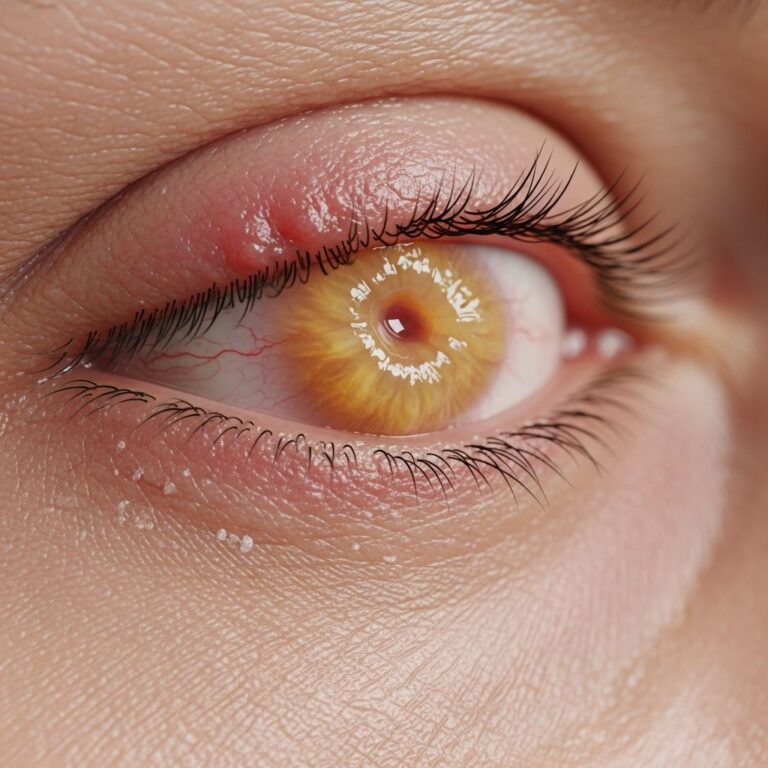
Darier-Roussy Subcutaneous Sarcoidosis: Diagnosis & Treatment
Exploring the rare subcutaneous nodules of sarcoidosis: clinical features, diagnosis, and effective management strategies for better patient outcomes.
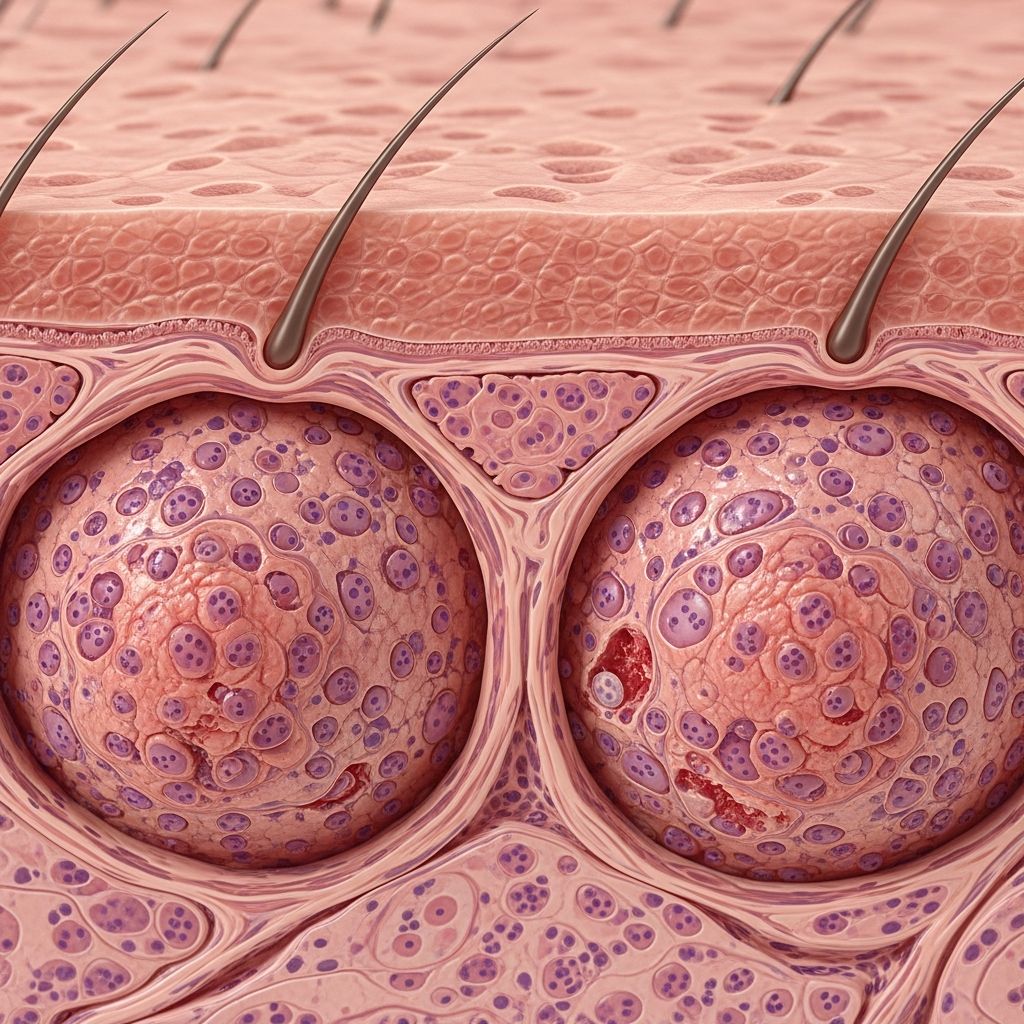
Darier-Roussy subcutaneous sarcoidosis, also known as Darier-Roussy disease, is a rare cutaneous manifestation of sarcoidosis characterized by the development of firm, painless or mildly tender subcutaneous nodules primarily on the extremities.
What is Darier-Roussy subcutaneous sarcoidosis?
Subcutaneous sarcoidosis represents 1-6% of sarcoidosis cases, involving non-caseating granulomas in the subcutaneous fat without overlying skin changes. First described in 1904 by French dermatologist Ferdinand-Jean Darier and pathologist Gustave Roussy, it was initially thought to be isolated skin disease but often associates with systemic sarcoidosis, particularly pulmonary involvement.
Sarcoidosis itself is a multisystem granulomatous disorder of unknown etiology, with prevalence of 10-20 per 100,000, affecting lungs, lymph nodes, skin, eyes, and other organs. Cutaneous involvement occurs in 25-30% of cases, but subcutaneous nodules are uncommon, occurring in 1.4-12.1% depending on studies.
Who gets Darier-Roussy subcutaneous sarcoidosis?
This condition typically affects adults aged 25-55, with no strong gender predilection, though sarcoidosis overall is more common in women and individuals of African descent. It may present in patients with known pulmonary sarcoidosis or as the initial sign.
- Common in patients with chronic sarcoidosis.
- Associated with hilar lymphadenopathy and lung involvement.
- Rare in children; most cases reported in middle-aged adults.
What causes Darier-Roussy subcutaneous sarcoidosis?
The exact cause remains unknown, like sarcoidosis generally. Hypothesized triggers include genetic susceptibility combined with environmental factors such as infections, organic antigens, or inorganic dusts. Immunopathogenesis involves T-cell mediated inflammation leading to epithelioid granuloma formation without caseation or identifiable organisms.
What are the clinical features of Darier-Roussy subcutaneous sarcoidosis?
Nodules are typically 0.5-2 cm, firm, mobile, skin-colored or violaceous, and located on the upper and lower extremities, trunk, or face. They are usually asymptomatic but can be mildly tender or pruritic.
- Multiple discrete nodules, occasionally coalescing.
- No overlying epidermal changes (distinguishing from plaques).
- May mimic lipomas, cysts, or panniculitis clinically.
Systemic symptoms are often absent, but fatigue, dyspnea, or chest pain may occur if pulmonary sarcoidosis coexists. Imaging like FDG-PET/CT can reveal extensive involvement beyond skin, including lymph nodes, bones, and lungs, despite mild symptoms.
Diagnosis of Darier-Roussy subcutaneous sarcoidosis
Diagnosis requires clinicopathologic correlation: characteristic nodules plus biopsy showing naked non-caseating granulomas in subcutaneous tissue.
Histology
Biopsies reveal lobular panniculitis with epithelioid histiocytes, multinucleated giant cells, and lymphocytes, sparing the dermis and epidermis. No necrosis, asteroid bodies, or Schaumann bodies are required for diagnosis, though they may appear.
Investigations
- Serum ACE levels: elevated in 60% but nonspecific.
- CXR or CT chest: for pulmonary/hilar involvement.
- PET/CT: assesses disease extent.
- Exclude infections (e.g., AFB, fungi) and foreign bodies.
| Differential Diagnosis | Key Features | Distinguishing Test |
|---|---|---|
| Panniculitis (e.g., erythema nodosum) | Tender, acute; septal involvement | Biopsy shows septal panniculitis |
| Lipoma | Soft, fatty; asymptomatic | Imaging/biopsy shows adipose tissue |
| Metastases | Hard, fixed; known malignancy | Imaging, cytology |
| Infections (mycobacterial) | Fever, systemic; caseation | Culture, PCR |
Related Stories



Treatment of Darier-Roussy subcutaneous sarcoidosis
Treatment is indicated for symptomatic or progressive disease. Prognosis is excellent, with frequent spontaneous remission.
- First-line: Topical/intralesional corticosteroids (e.g., clobetasol).
- Systemic: Oral prednisolone (weaning course, 0.5-1 mg/kg).
- Alternatives: Hydroxychloroquine 200-400 mg/day; excellent response, minimal toxicity.
- Refractory: Methotrexate, minocycline, or TNF inhibitors.
In one case, hydroxychloroquine led to nodule resolution in 3 months with FDG-PET improvement. Another used prednisolone with topical steroids for rapid improvement.
What is the outcome for Darier-Roussy subcutaneous sarcoidosis?
Most cases resolve spontaneously or with minimal therapy within 6-12 months, with low risk of scarring or systemic progression. Even extensive PET-avid disease responds well to simple treatments like antimalarials. Recurrence is rare after remission.
Frequently Asked Questions
Is Darier-Roussy sarcoidosis painful?
Usually painless or mildly tender; distinguishes from inflammatory panniculitides.
Does subcutaneous sarcoidosis always mean systemic disease?
Often associated but can be isolated; screen with chest imaging.
How is biopsy performed?
Deep punch or incisional biopsy to include subcutaneous fat.
Can it resolve without treatment?
Yes, many cases self-resolve; treat if symptomatic.
What if hydroxychloroquine fails?
Escalate to steroids or methotrexate; monitor liver/eyes.
Related Topics
- Sarcoidosis
- Cutaneous sarcoidosis
- Granulomatous dermatitis
- Panniculitis
References
- CPC06 Darier–Roussy disease (subcutaneous sarcoidosis): a rare … — British Journal of Dermatology, Oxford Academic. 2025. https://academic.oup.com/bjd/article/193/Supplement_1/ljaf085.006/8161863
- Subcutaneous sarcoidosis (Darier–Roussy sarcoidosis) with … — PMC / NIH. 2022-04-10. https://pmc.ncbi.nlm.nih.gov/articles/PMC8995833/
- Subcutaneous Sarcoidosis Diagnosed in a 55-Year-Old Female — Practical Dermatology. 2024. https://practicaldermatology.com/youngmd-connect/resident-resource-center/subcutaneous-sarcoidosis-diagnosed-in-a-55-year-old-female/22084/
- Subcutaneous sarcoidosis (Darier–Roussy … — Wiley Online Library. 2022-10-04. https://onlinelibrary.wiley.com/doi/abs/10.1002/rcr2.949
- A case report and review of the literature — PubMed. 2022. https://pubmed.ncbi.nlm.nih.gov/35433008/
Similar Articles








Read full bio of medha deb