Dasatinib Tablets: Essential Guide For Patients And Caregivers
Comprehensive guide to dasatinib (Sprycel, Uxil) for treating chronic myeloid leukaemia in adults and children.
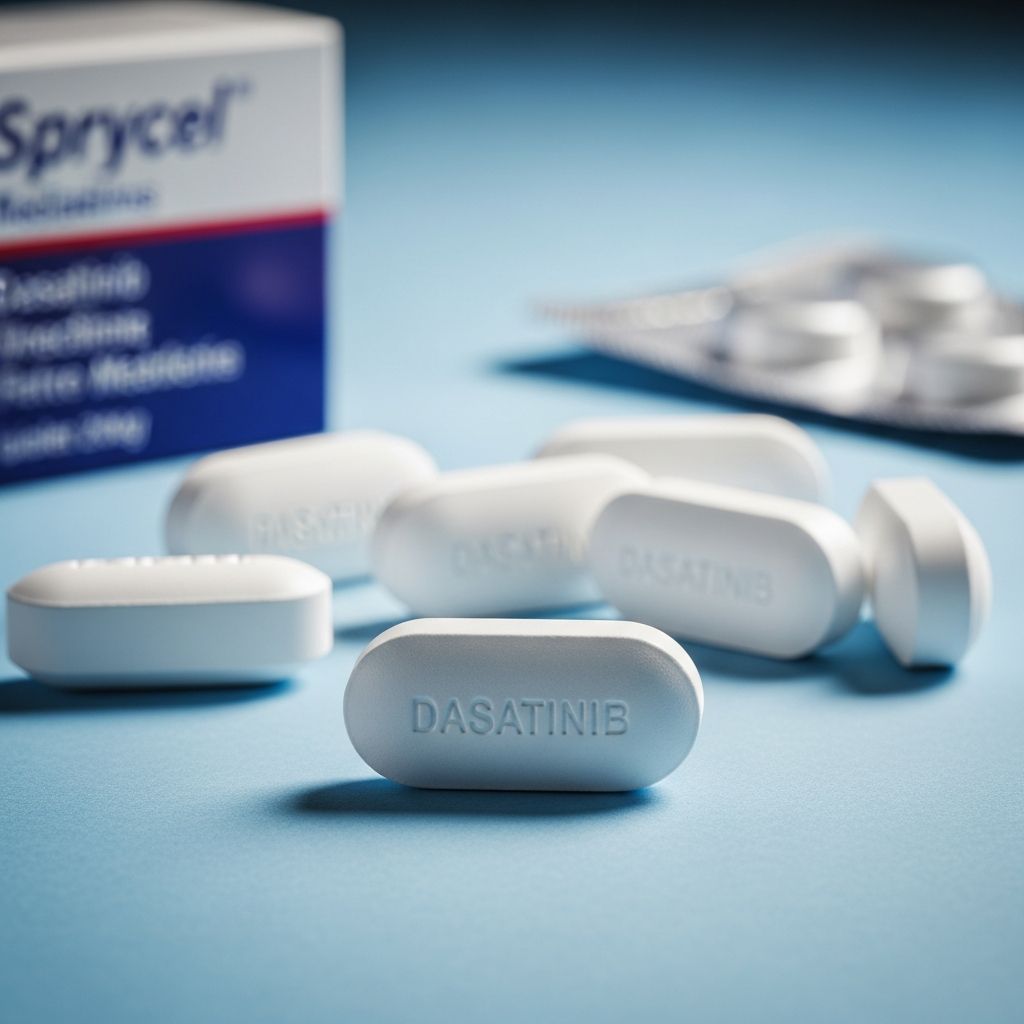
Dasatinib is a targeted therapy medication classified as a tyrosine kinase inhibitor, primarily used to treat certain types of leukaemia, including chronic myeloid leukaemia (CML) in adults and children aged 1 year and older.
About dasatinib
Dasatinib, marketed under brand names such as Sprycel® and Uxil®, belongs to a class of medicines known as tyrosine kinase inhibitors. These drugs work by blocking specific enzymes called tyrosine kinases, which are involved in the growth and division of cancer cells, particularly in Philadelphia chromosome-positive (Ph+) chronic myeloid leukaemia (CML) and acute lymphoblastic leukaemia (ALL).[10]
| Type of medicine | A tyrosine kinase inhibitor chemotherapy medicine |
|---|---|
| Used for | Treatment of leukaemia in adults and children |
| Also called | Sprycel®; Uxil® |
| Available as | Tablets and oral liquid medicine |
Philadelphia chromosome-positive CML is a cancer of the white blood cells where an abnormal chromosome leads to uncontrolled production of immature blood cells. Dasatinib targets the BCR-ABL tyrosine kinase protein produced by this chromosome, slowing cancer progression. It is approved for newly diagnosed chronic phase CML, accelerated or blast phase CML, and Ph+ ALL in adults, with specific dosing for children based on body weight.
Before taking dasatinib
Prior to starting dasatinib, your doctor must be informed of your full medical history to ensure safety, as it can interact with certain conditions and medications.
- Infections: Inform if you have an active infection or feel unwell, as dasatinib suppresses the immune system, increasing infection risk.
- Heart conditions: Disclose any heart problems, irregular rhythms (like QT prolongation), or pulmonary hypertension history, as dasatinib may cause cardiovascular toxicity or fluid retention around the heart.
- Liver issues: Report liver function problems or past hepatitis B, due to reactivation risk requiring monitoring.
- Pregnancy or breastfeeding: Dasatinib is not recommended during pregnancy (category D) due to fetal harm potential; effective contraception is advised. It passes into breast milk, so breastfeeding should be avoided.
- Other medications: List all drugs, including over-the-counter, herbal remedies (e.g., St John’s wort), and antacids, as they can affect dasatinib absorption or efficacy.
- Allergies: Note any prior allergic reactions to medicines.
Blood tests, including liver function, heart monitoring (ECG), and complete blood counts, are routine before and during treatment.
How to take dasatinib
Dasatinib is prescribed by a leukaemia specialist. Always follow the patient information leaflet and doctor’s instructions precisely.
Dosage guidelines:
| Condition | Adult Dose | Children (≥1 year) |
|---|---|---|
| Chronic phase CML (newly diagnosed) | 100 mg once daily (morning or evening) | Body weight-based; e.g., ≥45 kg: 100 mg daily |
| Accelerated/blast phase CML or Ph+ ALL | 140 mg once daily | Determined by doctor/body weight |
Take tablets whole with water, with or without food, at the same time daily. Do not crush, chew, or break them. For oral suspension, follow preparation instructions. If switching to liquid form (e.g., Phyrago®), shake well.
Missed dose: Take as soon as remembered unless it’s nearly time for the next dose. Never double up.
Dose adjustments may occur for side effects like low blood counts or fluid retention.
Getting the most from your treatment
To maximize benefits and minimize risks:
- Regular monitoring: Attend all appointments for blood tests, weight checks (fluid retention), ECGs, and lung function if cough or breathlessness occurs.
- Infection prevention: Dasatinib causes myelosuppression (low white cells), so avoid crowds, wash hands, and report fever, sore throat, or chills immediately.
- Fluid intake: Drink 8-10 glasses of water daily to prevent dehydration.
- Bleeding watch: Report unusual bruising, bleeding gums, blood in urine/stools, or severe headache.
- Lifestyle: No grapefruit; limit alcohol. Maintain a balanced diet.
Related Stories



Treatment is long-term; do not stop without medical advice, as leukaemia may return.
Common dasatinib side-effects
Side effects are common but often manageable. Contact your doctor for severe symptoms.
| Common dasatinib side-effects | What can I do if I experience this? |
|---|---|
| Headache, aches and pains | Ask your doctor or pharmacist to recommend a suitable painkiller |
| Feeling sleepy or dizzy, blurred vision | Do not drive and do not use tools or machines until this has passed |
| Feeling sick (nausea) or being sick (vomiting), abdominal discomfort, indigestion | Stick to simple foods – eat small, frequent meals |
| Diarrhoea or constipation | Drink plenty of water; eat high-fibre foods for constipation |
| Bleeding, dry cough, high temperature (fever) | Let your doctor know about this straightaway |
| Lack of appetite, ringing in ears, mood changes, sleep problems, taste changes, tingling/numbness, dry eyes, flushing, weight changes | If any become troublesome, speak with your doctor for advice |
| Changes to blood tests, heart disorders, high blood pressure, slower bone growth (children) | Your doctor will regularly check for these |
Serious risks: Pleural effusion (lung fluid: shortness of breath, cough), pulmonary arterial hypertension (confirmed by FDA warning), QT prolongation, severe myelosuppression, or hepatitis B reactivation. Seek emergency care for chest pain, severe swelling, or stroke signs.
How to store dasatinib
- Keep out of reach of children.
- Store tablets in a cool, dry place away from heat and light.
- Refrigerate oral liquid; discard after expiry.
- Return unused medicine to pharmacy for disposal.
Frequently Asked Questions (FAQs)
Q: What is dasatinib used for?
A: Dasatinib treats Ph+ CML in chronic, accelerated, or blast phases and Ph+ ALL in adults and children.
Q: Can I take dasatinib with food?
A: Yes, with or without food, but avoid grapefruit and certain antacids.
Q: What if I miss a dose?
A: Take it as soon as possible unless near next dose; do not double.
Q: Does dasatinib cause weight gain?
A: Possible due to fluid retention; report sudden gain or swelling.
Q: Is dasatinib safe in pregnancy?
A: No; use contraception. Consult doctor if pregnant or breastfeeding.
Q: How long is dasatinib treatment?
A: Often long-term until remission or intolerance; follow doctor’s plan.
References
- Dasatinib tablets – Sprycel — Patient.info. 2023. https://patient.info/medicine/dasatinib-sprycel-uxil
- Dasatinib (oral route) — Mayo Clinic. 2024-10-01. https://www.mayoclinic.org/drugs-supplements/dasatinib-oral-route/description/drg-20070797
- Dasatinib (Sprycel®) — OncoLink. 2024. https://www.oncolink.org/cancer-treatment/oncolink-rx/dasatinib-sprycel-R
- SPRYCEL® (dasatinib) Safety Profile — Bristol Myers Squibb. 2024. https://www.sprycel-hcp.com/safety-newly-diagnosed
- Sprycel (dasatinib) Information — U.S. Food and Drug Administration (FDA). 2023-11-15. https://www.fda.gov/drugs/postmarket-drug-safety-information-patients-and-providers/sprycel-dasatinib-information
- SPRYCEL Prescribing Information — Bristol Myers Squibb. 2024-06-01. https://packageinserts.bms.com/ppi/ppi_sprycel.pdf
Similar Articles








Read full bio of Sneha Tete