Hyperglycaemia: 5 Essential Steps To Control High Blood Sugar
Essential guide for managing high blood sugar in type 1 diabetes: symptoms, treatment steps, and prevention strategies for better control.
Hyperglycaemia, or high blood sugar, is a common challenge for people with
type 1 diabetes
. It occurs when blood glucose levels rise above target ranges, often due to insufficient insulin, illness, or dietary factors. Prompt recognition and management are crucial to prevent complications like diabetic ketoacidosis (DKA). This guide outlines symptoms, treatment protocols, ketone testing, and prevention strategies based on established clinical recommendations.What is hyperglycaemia?
Hyperglycaemia refers to elevated blood glucose levels, typically above 11 mmol/L (200 mg/dL) fasting or 14 mmol/L (250 mg/dL) post-meal in type 1 diabetes. In type 1 diabetes, the body lacks insulin production due to autoimmune destruction of pancreatic beta cells, making insulin therapy essential. Without adequate insulin, glucose cannot enter cells, leading to buildup in the blood. Mild hyperglycaemia may cause few symptoms, but severe cases trigger osmotic diuresis, dehydration, and ketone production.
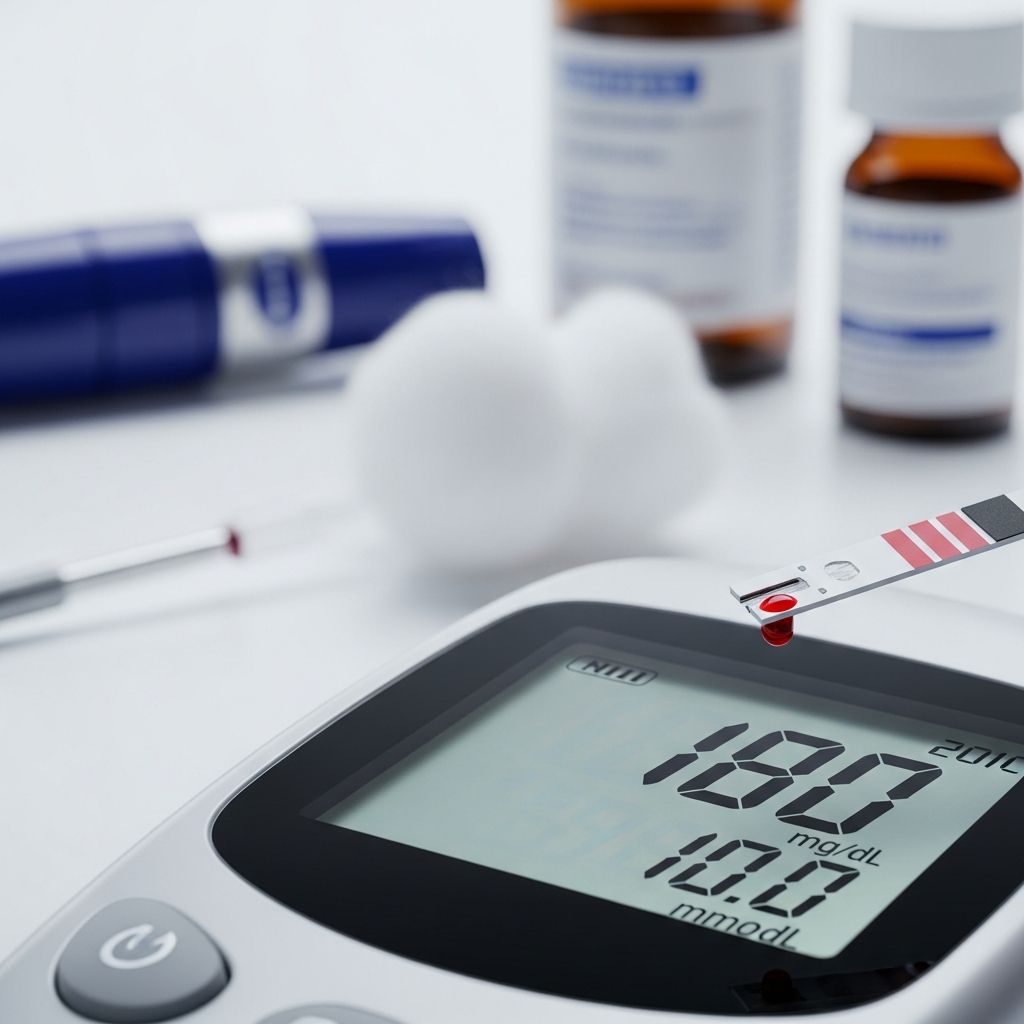
Common thresholds for action include blood sugar above 180 mg/dL (10 mmol/L), with urgent checks needed above 240 mg/dL (13.3 mmol/L). Factors like stress, infection, or missed insulin doses exacerbate it. Regular monitoring via fingerstick or continuous glucose monitoring (CGM) helps detect rises early.
Symptoms of hyperglycaemia
Early symptoms of high blood sugar develop gradually and can be subtle. Key signs include:
- Increased thirst (polydipsia) and frequent urination (polyuria) due to glycosuria.
- Fatigue, weakness, and blurred vision from dehydration and osmotic effects.
- Headaches, dry mouth, and nausea.
- Weight loss despite normal eating, as the body breaks down fat and muscle.
More severe hyperglycaemia, especially with ketones, signals potential DKA:
- Fruity breath odour, vomiting, abdominal pain.
- Confusion, rapid breathing, and extreme lethargy.
Symptoms may fluctuate with glucose levels. If blood sugar exceeds 250 mg/dL (13.9 mmol/L) with ketones, seek immediate care. People with type 1 diabetes are at higher DKA risk due to absolute insulin deficiency.
Why does hyperglycaemia occur?
Several factors contribute to high blood sugar in type 1 diabetes:
- Insufficient insulin: Missed doses, pump occlusion, or incorrect dosing.
- Illness or infection: Stress hormones raise glucose counterregulatory hormones like cortisol.
- Dietary issues: Excess carbohydrates, high-fat meals delaying insulin action.
- Physical factors: Dehydration, medications like steroids, or hormonal changes.
- Inactivity: Lack of exercise reduces glucose uptake.
CGM users may notice trends from sensor issues or algorithm adjustments in automated insulin delivery systems. Illness often doubles insulin needs—always follow sick-day rules.
Hyperglycaemia treatment flow chart
Use this step-by-step approach for blood glucose consistently above target (e.g., >14 mmol/L or 250 mg/dL) 3-4 hours post-insulin/meal:
| Step | Action | Notes |
|---|---|---|
| 1. Confirm reading | Retest blood glucose; check CGM if available | Rule out errors |
| 2. Check ketones | Test blood/urine for ketones if >240 mg/dL (13.3 mmol/L) | Blood preferred for accuracy |
| 3. Mild high (no/large ketones absent) | Correction insulin dose per plan; hydrate with water | Rest; recheck in 1-2 hours |
| 4. Ketones present (trace/small) | Extra rapid insulin; carbs + insulin if needed; contact team | Monitor hourly |
| 5. Moderate/large ketones or unwell | Emergency: insulin + fluids; seek medical help | Call ambulance if DKA symptoms |
Related Stories



Personalized plans from diabetes teams guide dosing. Never ignore persistent highs.
Treatment of hyperglycaemia
The cornerstone is
insulin administration
alongside hydration and monitoring.- Correction bolus: Rapid-acting insulin based on insulin sensitivity factor (ISF). Example: If ISF=3 mmol/L/unit, reduce 6 mmol/L with 2 units.
- Hydration: Drink 200-300ml water hourly to combat dehydration; avoid sugary drinks.
- Activity: Light exercise if no ketones; avoid if ketones present to prevent DKA worsening.
- Recheck: Every 1-2 hours until <10 mmol/L (180 mg/dL).
For pump users, check site/ tubing for issues; suspend if needed. Automated systems may auto-correct. If highs persist >4 hours or symptoms worsen, contact healthcare provider.
Hyperglycaemic crises
Severe hyperglycaemia can lead to
diabetic ketoacidosis (DKA)
orhyperosmolar hyperglycaemic state (HHS)
, though HHS is rarer in type 1. DKA features acidosis from ketones, with blood glucose >250 mg/dL, pH <7.3, bicarbonate <18 mmol/L.DKA symptoms: Nausea, vomiting, abdominal pain, fruity breath, Kussmaul breathing, altered mental state. Risk highest in undiagnosed type 1 or insulin omission.
Treatment requires hospital IV insulin, fluids, electrolytes. Mortality <1% with prompt care. Prevention: Ketone test strips at home for highs >13.9 mmol/L.
Should I continue my usual insulin regimen?
Yes—do not skip basal insulin during hyperglycaemia, as it prevents ketosis. Continue boluses for meals/carbs. Adjust corrections per plan, but basal omission risks DKA. Pumps provide steady basal; multiple daily injections mimic this. Consult team for persistent issues.
Prevention of hyperglycaemia
Achieve HbA1c <7% reduces risks; monitor plasma glucose, HbA1c, fructosamine. Strategies:
- Consistent insulin via basal-bolus or pumps/CGM.
- Carb counting, balanced meals.
- Regular exercise (150 min/week moderate).
- Sick-day rules: Frequent checks, ketone tests, extra insulin.
- Education on factors like dawn phenomenon.
Hybrid closed-loop systems lower HbA1c and hypoglycaemia.
When to get help
- Blood sugar >20 mmol/L (360 mg/dL) persisting.
- Moderate/large ketones.
- DKA symptoms: Vomiting >1x unable to retain food/fluids, confusion.
- Pump failure symptoms.
Call diabetes team or emergency services. Untreated DKA life-threatening.
Frequently Asked Questions
Can hyperglycaemia cause long-term damage?
Yes, chronic highs damage nerves, vessels, kidneys, eyes (vascular complications). Acute DKA risks coma/death.
How often should I check ketones?
If blood sugar >13.3 mmol/L (240 mg/dL), unwell, or per plan.
Does exercise help high blood sugar?
If no ketones and explained by carbs—yes; otherwise, no.
What if I’m vomiting with high sugar?
Emergency—seek care for IV treatment.
Can diet alone fix hyperglycaemia?
No, insulin primary in type 1; diet supports.
References
- High Blood Sugar (Hyperglycemia): Symptoms and Treatment — Breakthrough T1D. 2023. https://www.breakthrought1d.org/t1d-basics/symptoms/high-blood-sugar/
- Type 1 Diabetes Mellitus — Merck Manual Professional Edition. Updated 2025. https://www.merckmanuals.com/professional/endocrine-and-metabolic-disorders/diabetes-mellitus-and-hypoglycemia/type-1-diabetes-mellitus
- Hyperglycemia (High Blood Sugar): Symptoms & Treatment — Cleveland Clinic. Updated 2024. https://my.clevelandclinic.org/health/diseases/9815-hyperglycemia-high-blood-sugar
- If Your Blood Glucose is Too High or Too Low — Lahey Hospital & Medical Center. 2019-03-01. https://www.lahey.org/news-stories/all-news-stories/stories/2019/03/if-your-blood-glucose-is-too-high-or-too-low
- Hyperglycemia and How to Treat It — Beyond Type 1. 2023. https://beyondtype1.org/hyperglycemia-and-how-to-treat-it/
- Type 1 diabetes: Learn More – Hyperglycemia and hypoglycemia — NCBI Bookshelf. 2023. https://www.ncbi.nlm.nih.gov/books/NBK279340/
Similar Articles








Read full bio of medha deb