Undefined Deep Brain Stimulation: 3 Targets, Benefits
Explore how deep brain stimulation revolutionizes Parkinson's management by targeting motor symptoms with precise electrical therapy.
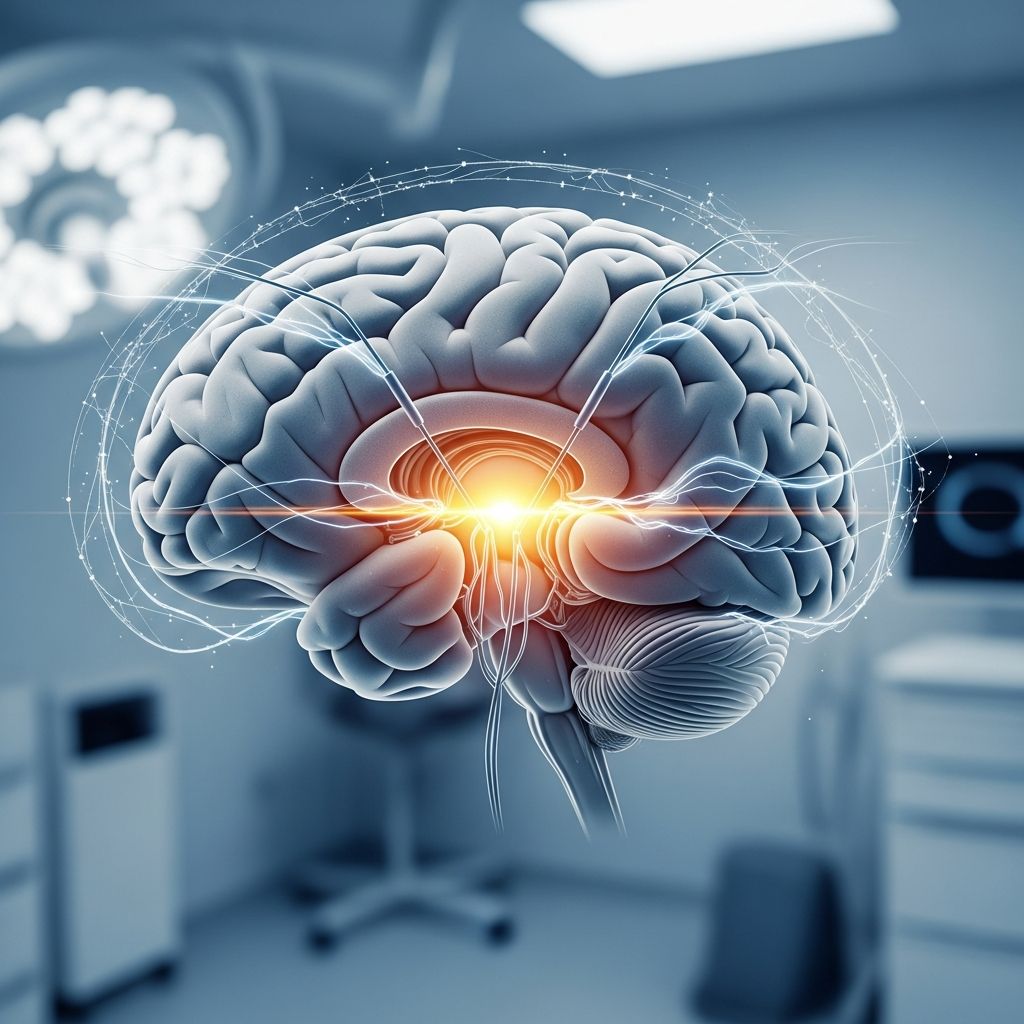
Deep brain stimulation (DBS) represents a transformative surgical intervention for individuals with advanced Parkinson’s disease, particularly when medications fail to adequately manage motor symptoms or provoke intolerable side effects. This procedure involves implanting electrodes in precise brain regions to deliver controlled electrical impulses, effectively modulating disrupted neural circuits responsible for movement disorders.
Understanding Parkinson’s and the Need for Advanced Interventions
Parkinson’s disease progressively impairs the brain’s dopamine-producing cells in the substantia nigra, disrupting communication across basal ganglia networks and leading to hallmark symptoms like tremor, bradykinesia, rigidity, and levodopa-induced dyskinesias. As the condition advances, oral therapies often result in ‘on-off’ fluctuations, diminishing quality of life. DBS emerges as a targeted neuromodulation strategy, proven safe and effective for eligible patients, enabling symptom stabilization and medication reduction.
The therapy does not halt disease progression but excels in symptom control, with studies showing sustained benefits for years post-implantation when paired with multidisciplinary care.
The Mechanics of DBS: How It Restores Neural Harmony
At its core, DBS functions like a neural pacemaker. Thin leads with multiple contacts are surgically placed in key subcortical structures, connected via extension wires to a pulse generator implanted under the clavicle. The generator emits programmable electrical pulses that interrupt pathological oscillations, particularly excessive beta-band activity linked to motor impairment in Parkinson’s.
Though the precise mechanisms remain under investigation, DBS normalizes synchronized firing in thalamocortical loops, smoothing aberrant signals without destroying tissue—unlike older lesioning techniques. This reversibility allows adjustments or removal if needed.
- Pulse Delivery: Adjustable parameters include voltage, frequency (typically 130 Hz), pulse width, and contact selection for optimal targeting.
- Brain Reset: Pulses desynchronize overactive neurons, akin to defibrillating cardiac arrhythmias.
- Medication Synergy: Often permits 50% dopamine agonist reduction, mitigating side effects.
Strategic Brain Targets in DBS Therapy
Selection of stimulation sites hinges on predominant symptoms and patient profile. The U.S. Food and Drug Administration approves three primary targets, each offering distinct advantages.
| Target | Primary Benefits | Ideal Candidates |
|---|---|---|
| Subthalamic Nucleus (STN) | Tremor, bradykinesia, rigidity, dyskinesia; broad efficacy with medication sparing | Advanced PD with fluctuations; most common choice |
| Globus Pallidus Internus (GPi) | Dyskinesia suppression, rigidity; stable long-term effects | Prominent dyskinesias or psychiatric concerns |
| Ventral Intermediate Nucleus (VIM) of Thalamus | Medication-refractory tremor | Tremor-dominant PD |
STN-DBS stands out for its versatility, allowing comprehensive motor improvement even in later stages.
The DBS Implantation Process: From Evaluation to Activation
Candidacy assessment is rigorous, involving neurologist-led evaluations of symptom severity (via UPDRS scales), cognitive screening (e.g., MoCA), neuroimaging (MRI/CT), and levodopa challenge tests. Ideal candidates exhibit good ‘on’ response to medications, minimal cognitive decline, and realistic expectations.
Related Stories



- Preoperative Planning: High-resolution imaging merges with stereotactic frames for millimeter precision.
- Lead Placement: Performed under local/general anesthesia; microelectrode recording or intraoperative testing confirms positioning. Asleep DBS using MRI guidance minimizes awake discomfort.
- Generator Implantation: Staged 1-2 weeks later under general anesthesia.
- Programming Phase: Outpatient sessions over weeks fine-tune settings; initial battery life spans 3-15 years rechargeable/non-rechargeable.
Full effects manifest over months as parameters optimize.
Proven Outcomes: What Patients Can Expect
Clinical trials affirm DBS superiority over medical management alone for advanced PD. Meta-analyses report 40-60% motor score improvements, with tremor reduction up to 80%, and dyskinesia amelioration exceeding 60%. Quality-of-life metrics, including mobility and emotional well-being, rise significantly, alongside reduced healthcare utilization.
- Long-term data: Benefits persist 5-10 years, though axial symptoms may emerge.
- Medication adjustments: Average 50% levodopa dose cut, easing side effects.
Navigating Risks and Surgical Considerations
DBS carries inherent risks, with major hemorrhage <1%, infection 2-5%, and hardware issues 5-10% over time. Neuropsychological changes affect 10-20%, including apathy or impulse control, though rarer in GPi targets.
Contraindications include coagulopathy, untreated psychiatric illness, or advanced dementia. Lifelong follow-up is mandatory for reprogramming amid disease evolution.
Emerging Frontiers: Adaptive DBS and Beyond
Conventional DBS delivers constant stimulation, inefficient for fluctuating symptoms. Adaptive DBS (aDBS) senses real-time beta oscillations via implantable sensors, dynamically titrating pulses—only activating when needed. FDA-approved following pivotal trials, aDBS enhances precision, extends battery life, and better normalizes rhythms.
Future directions include directional leads for focal stimulation, smartphone apps for patient-controlled adjustments, and closed-loop systems integrating wearables or AI.
Manufacturer Innovations in DBS Technology
Leading firms offer FDA-cleared systems:
- Medtronic: Reclaim Dual Threshold with sensing capabilities.
- Boston Scientific: Vercise Genus, directional programming for side-effect avoidance.
- Abbott: Infinity, cartilage-penetrating leads for MRI compatibility.
Patient Perspectives: Real-Life Transformations
Accounts like Detroit executive Frank Jonna’s highlight asleep DBS efficacy: post-procedure tremor resolution restored arm function and posture, slashing medication needs via MRI-guided precision. Such narratives underscore regained independence.
Is DBS Right for You? Consultation Essentials
Discuss with a movement disorder specialist if experiencing refractory symptoms despite optimized pharmacotherapy. Multidisciplinary teams at centers of excellence guide decisions.
Frequently Asked Questions (FAQs)
What is the success rate of DBS for Parkinson’s?
Over 70% of patients achieve significant motor improvement, with best outcomes in tremor and dyskinesia.
Is DBS reversible?
Yes, the system can be deactivated or removed, preserving brain tissue.
How long does recovery take?
Hospital stay is 1-2 days per stage; programming spans 4-6 weeks.
Does DBS cure Parkinson’s?
No, it manages symptoms; disease progression continues.
Who manufactures DBS devices?
Abbott, Boston Scientific, Medtronic provide approved systems.
What are the costs and insurance coverage?
Varies; Medicare covers for qualified PD patients.
References
- Deep brain stimulation for Parkinson’s disease — PubMed/NCBI. 2022-07-07. https://pubmed.ncbi.nlm.nih.gov/35798568/
- Deep Brain Stimulation (DBS) – Parkinson’s Foundation — Parkinson’s Foundation. Accessed 2026. https://www.parkinson.org/living-with-parkinsons/treatment/surgical-treatment-options/deep-brain-stimulation
- Revolutionizing Parkinson’s Treatment with Asleep Deep Brain Stimulation — Henry Ford Health (YouTube). 2024-10-25. https://www.youtube.com/watch?v=8lXzgIGM59w
- The research behind adaptive deep brain stimulation for Parkinson’s — Stanford Medicine. 2025-02. https://med.stanford.edu/news/all-news/2025/02/deep-adaptive-brain-stimulation-parkinsons.html
- Deep Brain Stimulation (DBS) for Parkinson’s Disease — Stanford Health Care. 2023-10-24. https://stanfordhealthcare.org/stanford-health-care-now/videos/deep-brain-stimulation-dbs-for-parkinsons-disease-essential-tremor-epilepsy.html
- Deep Brain Stimulation | Parkinson’s Disease — Michael J. Fox Foundation. Accessed 2026. https://www.michaeljfox.org/deep-brain-stimulation
- Deep Brain Stimulation (DBS): What It Is, Purpose & Procedure — Cleveland Clinic. Accessed 2026. https://my.clevelandclinic.org/health/treatments/21088-deep-brain-stimulation
Similar Articles








Read full bio of medha deb