Deep Brain Stimulation For Parkinson’s: Benefits And Risks
Explore how deep brain stimulation revolutionizes Parkinson's management, reducing tremors and enhancing daily life for advanced patients.
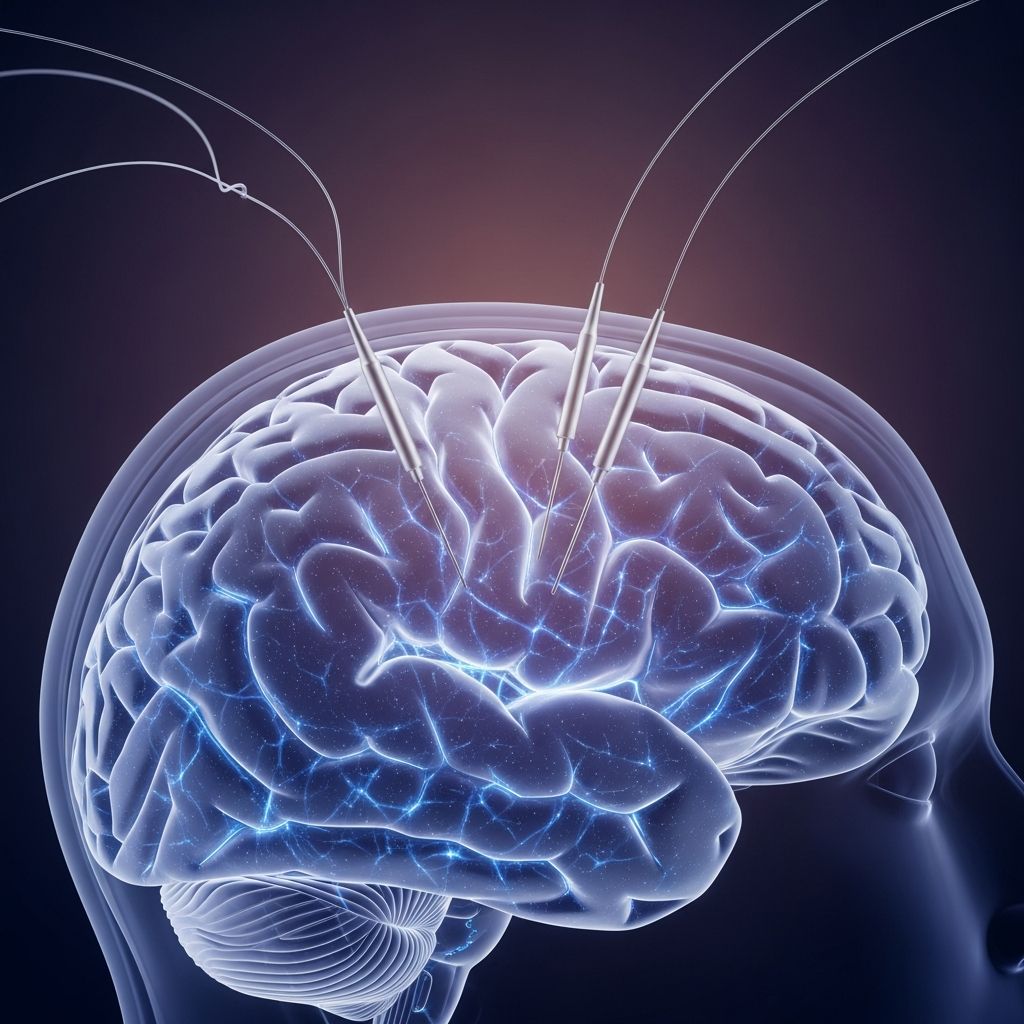
Deep brain stimulation (DBS) serves as a transformative neurosurgical intervention for individuals with advanced Parkinson’s disease, particularly when oral medications no longer adequately manage motor fluctuations, tremors, or medication-induced side effects like dyskinesias. By implanting electrodes into precise brain regions, DBS modulates disrupted neural circuits, restoring smoother movement patterns and often allowing reduced reliance on dopaminergic drugs.
Understanding the Need for Advanced Interventions in Parkinson’s
Parkinson’s disease progressively impairs motor functions through the loss of dopamine-producing neurons in the substantia nigra, leading to hallmark symptoms such as bradykinesia, rigidity, postural instability, and resting tremors. While levodopa and other pharmaceuticals provide initial relief, long-term use often results in ‘wearing off’ effects, unpredictable ‘on-off’ cycles, and involuntary movements. For eligible patients—typically those with at least four years of disease duration, good levodopa responsiveness, and no significant cognitive decline—DBS emerges as a targeted therapy that addresses these challenges without halting disease progression.
Eligibility hinges on comprehensive evaluations, including neurological assessments, imaging, and psychological screenings to ensure candidates can tolerate surgery and postoperative programming. Younger patients with predominant motor issues tend to benefit most, as DBS excels at symptom suppression rather than neuroprotection.
Core Mechanism: Regulating Brain’s Electrical Rhythms
At its essence, DBS functions like a neural pacemaker, delivering controlled electrical pulses to overactive or synchronized neural oscillations—particularly beta waves—that correlate with Parkinson’s akinesia and rigidity. These abnormal rhythms disrupt basal ganglia-thalamo-cortical loops essential for voluntary movement. Electrodes interrupt erratic firing, normalizing signal propagation and alleviating symptoms.
Though the precise mechanisms remain under investigation, evidence suggests DBS enhances GABAergic inhibition, modulates neurotransmitter release, and desynchronizes pathological oscillations without destroying tissue, unlike older lesioning procedures. This reversibility underscores its safety profile.
Strategic Brain Targets for Optimal Symptom Control
- Subthalamic Nucleus (STN): The most common site, effective against tremors, bradykinesia, rigidity, and dyskinesias; enables substantial medication reductions even in late-stage disease.
- Globus Pallidus Internus (GPi): Prioritizes dyskinesia and rigidity relief, with robust axial symptom improvement.
- Ventral Intermediate Nucleus (VIM) of Thalamus: Ideal for isolated, medication-refractory tremors.
Target selection depends on symptom dominance, with STN favored for comprehensive motor benefits. Advanced imaging and microelectrode recordings during surgery refine placement accuracy.
Step-by-Step Surgical Journey
DBS implantation unfolds in stages, often spanning days to weeks. Preoperative planning involves high-resolution MRI and CT fusion for trajectory mapping, followed by stereotactic frame fixation or frameless neuronavigation.
In the OR, under local anesthesia for awake procedures (enabling real-time symptom testing), electrodes are advanced into targets via burr holes. Intraoperative testing confirms efficacy via patient feedback on tremor cessation or rigidity easing. The procedure then shifts to general anesthesia for chest incision, where leads connect to an infraclavicular pulse generator.
Recent innovations like ‘asleep DBS’ employ intraoperative MRI for precise, frameless placement without wakefulness risks, as demonstrated in cases yielding rapid tremor resolution and mobility gains. Postoperative programming—fine-tuning voltage, frequency, and pulse width—spans weeks, optimizing therapeutic windows.
Related Stories



Proven Benefits and Real-World Impact
| Symptom | Improvement Rate | Key Notes |
|---|---|---|
| Tremors | 70-90% | Most responsive; sustained over years. |
| Rigidity/Bradykinesia | 40-60% | Medication-sparing effects prominent. |
| Dyskinesias | 50-80% | Reduced by 50-75% via dose cuts. |
| Motor Fluctuations | 40-70% | Smoother ‘on’ time. |
Long-term data affirm DBS’s durability: five-year follow-ups show persistent motor score improvements on UPDRS scales, with 50% medication reductions. Patients report enhanced quality of life, from independent dressing to social re-engagement, exemplified by one recipient dancing at family events post-procedure. DBS also mitigates non-motor burdens indirectly via better sleep and mood stabilization.
Risks, Complications, and Mitigation Strategies
While DBS boasts a low serious adverse event rate (<5%), potential issues include infection (1-3%), hemorrhage (<1%), hardware migration, and transient speech/swallowing worsening from overstimulation. Cognitive effects are minimal in screened candidates, though apathy or impulse control may arise.
Battery replacement every 3-5 years (rechargeable models extend to 15 years) requires minor surgery. Regular follow-ups mitigate risks through parameter adjustments. Contraindications encompass severe dementia, coagulopathies, or unrealistic expectations.
Next-Frontier Innovations: Adaptive and Closed-Loop DBS
Conventional DBS delivers constant stimulation, risking side effects or suboptimal therapy during asymptomatic periods. Adaptive DBS (aDBS) revolutionizes this by sensing real-time local field potentials—beta burst biomarkers—and dynamically scaling output.
FDA-approved in 2025 following pivotal trials, aDBS at STN suppresses oscillations only as needed, slashing energy use by 50%, extending battery life, and enhancing precision. Early adopters note superior dyskinesia control and fewer adjustments. Future iterations may integrate wearables or AI for multi-symptom targeting.
Patient Preparation and Lifestyle Integration
Candidates undergo multidisciplinary counseling on realistic outcomes: DBS excels for levodopa-responsive symptoms but falters against postural instability or non-motor issues like constipation. Preoperative rehab optimizes strength and balance.
Post-DBS, patients master handheld controllers for on/off toggling during activities like MRI scans. Speech therapy aids stimulation-induced dysarthria, while exercise sustains gains. Caregiver education proves invaluable for troubleshooting.
Who Qualifies and When to Consider DBS
- Levodopa-responsive Parkinson’s with disabling fluctuations/dyskinesias.
- Age under 70, mild cognitive impairment.
- No MRI contraindications or untreated psychiatric illness.
- UPDRS Part III improvement >30% post-levodopa challenge.
Consult movement disorder specialists early; trials confirm DBS outperforms best medical therapy at five years.
Frequently Asked Questions
Is DBS a cure for Parkinson’s?
No, DBS manages symptoms without slowing progression, akin to a regulator for faulty circuits.
How long does recovery take?
Hospital stay: 1-2 days; full programming: 2-6 weeks; symptom optimization: months.
Can DBS treat non-motor symptoms?
Indirectly yes (e.g., sleep, pain), but not primary targets like depression or cognition.
What are asleep vs. awake DBS differences?
Asleep uses imaging for comfort; awake allows symptom testing—both yield high accuracy.
Does insurance cover DBS?
Often yes for Medicare/Medicaid in approved cases; verify with providers.
Future Horizons in Neuromodulation
Ongoing trials probe focused ultrasound augmentation, gene therapy hybrids, and multi-target DBS for atypical parkinsonism. Portable, minimally invasive devices loom, democratizing access. For millions, DBS heralds renewed autonomy amid Parkinson’s inexorable march.
References
- Deep brain stimulation for Parkinson’s disease — PubMed/NCBI. 2022-07-06. https://pubmed.ncbi.nlm.nih.gov/35798568/
- Revolutionizing Parkinson’s Treatment with Asleep Deep Brain Stimulation — Henry Ford Health (YouTube). 2024-10-25. https://www.youtube.com/watch?v=8lXzgIGM59w
- The research behind adaptive deep brain stimulation for Parkinson’s — Stanford Medicine. 2025-02. https://med.stanford.edu/news/all-news/2025/02/deep-adaptive-brain-stimulation-parkinsons.html
- Deep Brain Stimulation (DBS) for Parkinson’s Disease, Essential Tremor, and Epilepsy — Stanford Health Care. 2023-10-24. https://stanfordhealthcare.org/stanford-health-care-now/videos/deep-brain-stimulation-dbs-for-parkinsons-disease-essential-tremor-epilepsy.html
- Deep Brain Stimulation — Michael J. Fox Foundation. Recent update. https://www.michaeljfox.org/deep-brain-stimulation
- Deep brain stimulation — Mayo Clinic. Recent. https://www.mayoclinic.org/tests-procedures/deep-brain-stimulation/about/pac-20384562
- Deep Brain Stimulation (DBS): What It Is, Purpose & Procedure — Cleveland Clinic. Recent. https://my.clevelandclinic.org/health/treatments/21088-deep-brain-stimulation
Similar Articles








Read full bio of Sneha Tete