Deep Skin Disorders: Complete Guide To Diagnosis And Treatment
Comprehensive guide to deep skin disorders involving granulomatous inflammation and deeper dermal pathology.
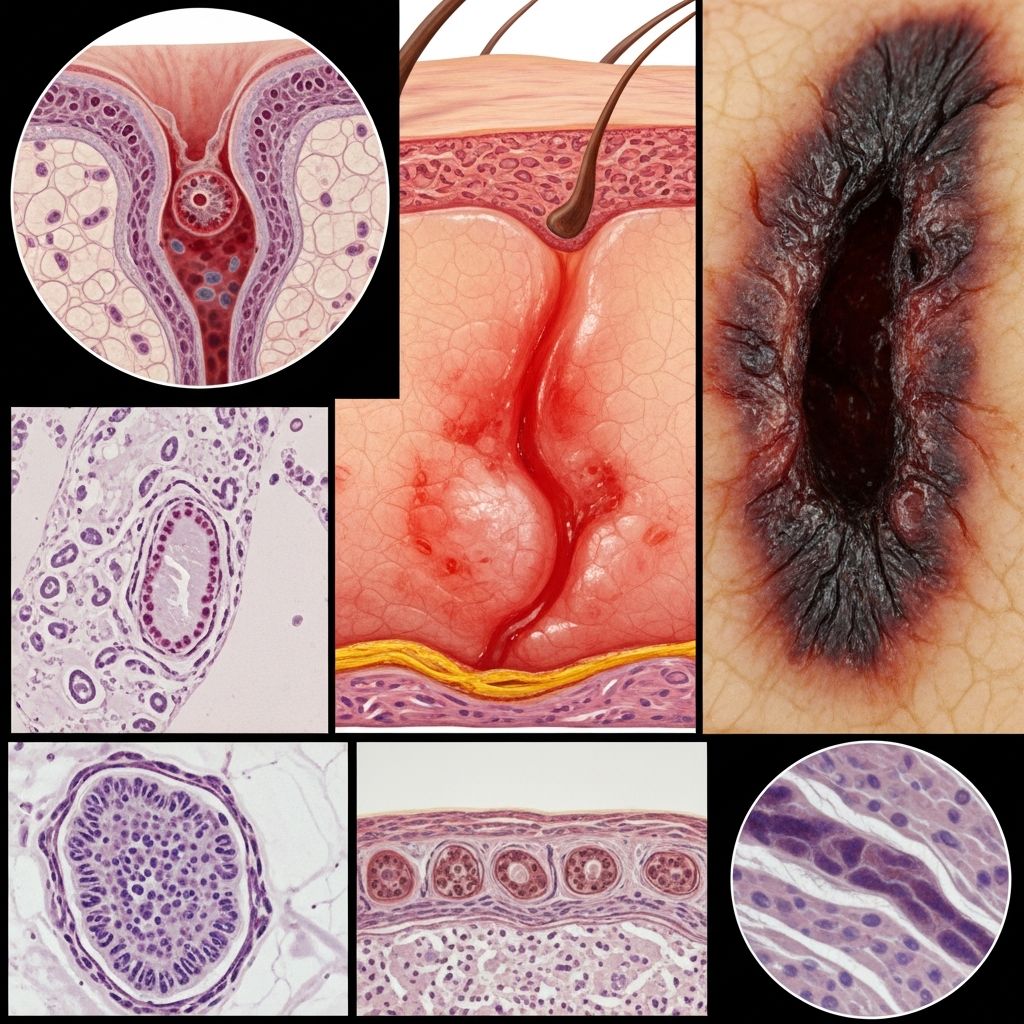
Deep skin disorders are dermatological conditions that primarily affect the deeper layers of the skin, including the dermis and subcutaneous tissue. These disorders often present with granulomatous inflammation, nodules, plaques, or ulcerative lesions, distinguishing them from superficial epidermal conditions. They can be infectious, autoimmune, reactive, or neoplastic in origin, requiring histopathological confirmation for accurate diagnosis. Common features include firm dermal nodules, indurated plaques, and systemic associations in some cases. Early recognition is crucial as many respond to specific therapies like antibiotics or immunosuppressants.
What are deep skin disorders?
Deep skin disorders involve pathology in the reticular dermis, subcutis, or adnexal structures, often manifesting as subcutaneous nodules, deep-seated plaques, or erosions. Unlike superficial disorders like eczema or acne, these penetrate beyond the papillary dermis. Granulomatous reactions—aggregates of macrophages, lymphocytes, and multinucleated giant cells—are hallmark histological findings in many, triggered by persistent antigens such as mycobacteria or foreign bodies. Prevalence varies; infectious causes like leprosy affect millions globally, while rare entities like granuloma faciale are localized. Risk factors include immunosuppression, travel to endemic areas, and occupational exposures.
Who gets deep skin disorders?
These conditions affect all ages and skin types but show demographic patterns. Immunocompromised individuals (e.g., HIV, transplant patients) are prone to atypical mycobacterial infections and deep fungal disorders. Leprosy predominantly impacts residents of endemic regions like India and Brazil. Children may present with rapidly involuting granuloma annulare, while adults develop chronic forms like granuloma faciale on sun-exposed areas. Genetic predispositions influence ichthyosis-like scaling in some granulomatous dermatoses, and darker skin tones may alter lesion pigmentation, appearing violaceous or hyperpigmented. Occupational risks include pyogenic granulomas in trauma-prone workers.
- Immunosuppressed patients: High risk for opportunistic infections.
- Endemic area residents: Leprosy, cutaneous TB.
- Children and young adults: Granuloma annulare.
- Middle-aged males: Granuloma faciale, often on face.
Clinical features
Presentations vary by disorder but share dermal/subcutaneous involvement. Nodules are firm, non-tender, and mobile; plaques are indurated with overlying scale or atrophy. Ulcerative forms like pyoderma gangrenosum erode deeply with undermined edges. Systemic symptoms (fever, weight loss) suggest disseminated disease, as in leprosy or TB. Skin of color shows hyperpigmented or hypopigmented macules rather than erythema.
| Disorder | Key Clinical Features |
|---|---|
| Granuloma annulare | Annular plaques with central clearing on hands/dorsum. |
| Leprosy | Hypopigmented anesthetic patches, nodules, leonine facies. |
| Pyogenic granuloma | Vascular nodule, friable, bleeds easily post-trauma. |
| Cutaneous TB | Lupus vulgaris: Apple-jelly nodules; scrofuloderma: ulcerated plaques. |
Potential complications
Untreated deep disorders lead to scarring, contractures, and functional impairment. Leprosy causes nerve damage and deformities; chronic granulomatous reactions fibrose, causing atrophy or ulceration. Secondary bacterial superinfection complicates ulcers, while malignancy risk rises in persistent lesions (e.g., cutaneous lymphoma mimic). Systemic spread in immunosuppressed patients can be fatal.
Diagnosis
Diagnosis combines clinical suspicion, histopathology, microbiology, and imaging. Punch biopsy reveals granulomas (caseating in TB, non-caseating in sarcoid-like reactions). Special stains (Ziehl-Neelsen for mycobacteria), PCR, and cultures confirm infections. Dermoscopy aids: vascular patterns in pyogenic granuloma, white streaks in granuloma annulare. Serology (e.g., anti-MBP in leprosy) and slit-skin smears support endemic diseases. Differential includes vasculitis, deep fungal infections, and metastases.
Related Stories



What is the treatment for deep skin disorders?
Treatment targets etiology: antimicrobials for infections, intralesional steroids for granuloma annulare, excision for pyogenic granuloma. Multidrug therapy (rifampicin, dapsone, clofazimine) cures leprosy. Refractory cases use methotrexate, hydroxychloroquine, or biologics like anti-TNF agents. Supportive care includes wound management and physiotherapy.
Atypical mycobacterial infection
Atypical (nontuberculous) mycobacteria (e.g., M. marinum, M. chelonae) cause sporotrichoid nodules post-trauma or water exposure. Lesions are verrucous or ulcerative along lymphatics. Diagnosis via culture; treat with prolonged clarithromycin-rifampicin.
Cutaneous tuberculosis
Skin TB manifests as lupus vulgaris (chronic plaques), scrofuloderma (ulcers over nodes), or tuberculous chancre. Histology shows caseating granulomas. Standard anti-TB therapy (isoniazid, rifampicin, pyrazinamide, ethambutol) for 6 months.
Granuloma faciale
Benign chronic disorder with red-brown plaques on face, histology showing leukocytoclastic vasculitis and dermal eosinophils. Treat with topical tacrolimus or cryotherapy.
Granuloma annulare
Self-limiting annular lesions; localized form resolves spontaneously, generalized needs steroids or phototherapy.
Granulomatous dermatitis
Interstitial granulomatous dermatitis presents as linear cords or plaques, associated with arthritis/drugs. Biopsy confirmatory; observe or use antimalarials.
Leprosy
Mycobacterium leprae infection with spectrum from tuberculoid (few lesions, high immunity) to lepromatous (disseminated nodules, poor immunity). WHO multidrug therapy essential.
Pyogenic granuloma
Reactive vascular proliferation post-injury; rapid-growing red papule. Curettage and cautery curative.
Frequently Asked Questions
Are deep skin disorders contagious?
Some like leprosy and cutaneous TB are, via prolonged close contact; others like granuloma annulare are not.
Can deep skin disorders be cured?
Yes, infectious types respond to antibiotics; reactive forms often self-resolve or remit with treatment.
How long do deep skin nodules last?
Weeks to years; early intervention prevents chronicity.
Do deep disorders affect internal organs?
Yes, e.g., leprosy nerves, TB lungs; monitor systemically.
References
- Skin Disorders: Pictures, Causes, Symptoms, and Treatment — Healthline. 2023-10-15. https://www.healthline.com/health/skin-disorders
- Common Skin Conditions & Symptoms — Dermatology & Cutaneous Surgery Institute. 2024-05-23. https://www.mydcsi.com/2024/05/23/common-skin-conditions/
- Pictures of 15 Uncommon Skin Conditions — WebMD. 2024-01-10. http://www.webmd.com/skin-problems-and-treatments/ss/slideshow-uncommon-skin-conditions
- Dermatology – Types of skin diseases — Apollo Hospitals. 2023-11-20. https://www.apollohospitals.com/health-library/dermatology-types-of-skin-diseases
- Skin Diseases: Types of, Symptoms, Treatment & Prevention — Cleveland Clinic. 2024-06-05. https://my.clevelandclinic.org/health/diseases/21573-skin-diseases
- Deep skin disorders — DermNet NZ. 2025-03-12. https://dermnetnz.org/topics/deep-skin-disorders
Similar Articles








Read full bio of Sneha Tete