Defibrillators: 4 Types, Uses, And What Patients Should Know
Understanding defibrillators: Life-saving devices that restore normal heart rhythm.
Understanding Defibrillators: A Comprehensive Guide
A defibrillator is a medical device that uses electrical therapy to treat dangerous heart rhythms and restore normal cardiac function. When your heart’s lower chambers experience a life-threatening arrhythmia, a defibrillator delivers an electrical shock that interrupts the abnormal rhythm and allows your heart to return to its normal beating pattern. This technology has saved countless lives and represents one of the most important advances in cardiovascular medicine.
Heart failure affects an estimated 6.2 million Americans, with many experiencing debilitating symptoms including breathlessness, fatigue, confusion, and swelling in the legs. While medications can help slow disease progression and manage symptoms, their effectiveness often wanes over time. Defibrillators provide an additional layer of protection, particularly for patients at risk of sudden cardiac death from dangerous arrhythmias.
How Defibrillators Work
Defibrillators operate on a straightforward principle: they monitor your heart’s electrical activity and intervene when dangerous rhythms are detected. The device sends an electrical shock to the heart, essentially resetting its electrical system and allowing the heart’s natural pacemaker to restore a normal rhythm. This process is called defibrillation.
When a defibrillator detects a life-threatening arrhythmia, it rapidly charges and delivers the shock. Your first responder or healthcare provider will continue CPR for approximately two minutes after the initial shock. They will then check for a pulse and assess whether your heart rhythm has returned to normal. If defibrillation wasn’t successful on the first attempt, additional CPR and electrical shocks may be administered. In many cases, medications such as epinephrine or amiodarone are also given to help correct the abnormal rhythm.
Types of Defibrillators
There are several types of defibrillators available, each designed for different clinical situations and patient needs:
External Defibrillators
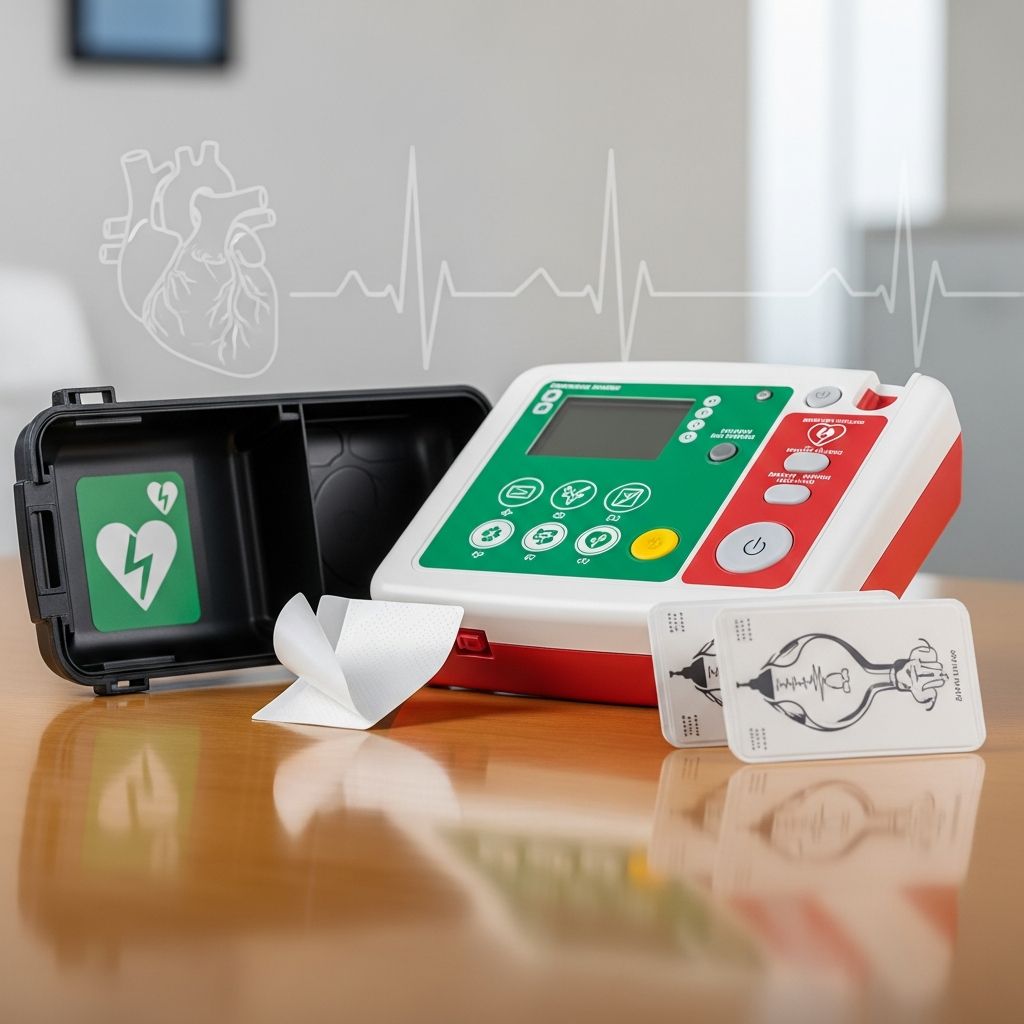
External defibrillators, also known as automated external defibrillators (AEDs), are portable devices used in emergency situations outside of medical facilities. These devices are found in public spaces, workplaces, and emergency vehicles. AEDs are user-friendly, providing audio and visual guidance to help bystanders deliver life-saving therapy before professional medical help arrives.
Implantable Cardioverter Defibrillators (ICDs)
An implantable cardioverter defibrillator (ICD) is a sophisticated device implanted under the skin, typically near the collarbone. This permanent device continuously monitors your heart rhythm and is programmed to deliver therapy automatically when dangerous rhythms are detected. ICDs help treat sudden cardiac arrest by sending a shock to your heart when it develops a life-threatening rhythm.
Many modern ICDs include pacemaker functionality, allowing them to deliver both pacing and defibrillation therapy. This combination approach addresses multiple cardiac issues with a single device. Advanced ICDs may also include features for tracking heart rate variability, detecting atrial fibrillation, and providing remote monitoring capabilities.
Extravascular Implantable Cardioverter-Defibrillators (EV-ICD)
A newer advancement in defibrillator technology is the extravascular implantable cardioverter-defibrillator (EV-ICD). This innovative device differs from traditional ICDs by being placed on top of the heart under the breastbone, rather than inside blood vessels. This placement offers several advantages, including reduced complications, simplified future care, and the ability to deliver gentle pacing without shocks for certain arrhythmias. The EV-ICD represents an important step forward in reducing risks associated with arrhythmias and may present fewer long-term complications compared to traditional devices.
Related Stories



Wearable Cardioverter Defibrillators (WCD)
For patients who need temporary defibrillation therapy or who may not yet be candidates for implantable devices, wearable cardioverter defibrillators (WCD) offer a non-invasive alternative. These vest-like devices can be worn under clothing and provide continuous monitoring and therapy delivery similar to implantable devices, but without surgical implantation.
When Defibrillators Are Used
Defibrillators are indicated for several cardiac conditions and scenarios:
Sudden Cardiac Arrest
External defibrillators are critical in emergency response to sudden cardiac arrest. When someone experiences sudden cardiac arrest, time is critical. Immediate CPR and defibrillation within the first few minutes significantly improve survival rates. First responders and trained bystanders use AEDs to restore normal heart rhythm until advanced cardiac life support can be provided.
Ventricular Fibrillation
Ventricular fibrillation, the most dangerous heart rhythm, requires immediate defibrillation. In this condition, the heart’s lower chambers quiver chaotically and cannot pump blood effectively. Defibrillation is the only effective treatment for ventricular fibrillation.
Ventricular Tachycardia
Ventricular tachycardia occurs when the heart’s lower chambers beat too rapidly. While some forms can be treated with medications or pacing, dangerous forms of ventricular tachycardia may require defibrillation. Patients with recurrent ventricular tachycardia are often candidates for implantable defibrillators.
Heart Failure with Reduced Ejection Fraction
Patients with heart failure and significantly reduced ejection fraction are at increased risk of sudden cardiac death from dangerous arrhythmias. These patients often benefit from ICD implantation, either as a preventive measure (primary prevention) or after surviving a dangerous arrhythmia (secondary prevention).
Post-Heart Attack
Patients who have suffered a heart attack and have reduced heart function may be candidates for ICD therapy to prevent sudden cardiac death.
Advanced Defibrillator Technologies
Recent innovations in defibrillator technology are expanding treatment options for heart failure and arrhythmia patients. Cleveland Clinic has been at the forefront of these developments, performing groundbreaking procedures using combined cardiac therapies.
Combined Cardiac Therapies
A significant advancement involves combining cardiac contractility modulation with implantable cardioverter defibrillator technology in a single device. Cardiac contractility modulation works to improve the contraction of the heart, while the ICD component treats life-threatening arrhythmias that cause sudden cardiac death. This combined approach, being evaluated in the INTEGRA-D clinical study, requires just one procedure to deliver two important therapies and prevent sudden cardiac death. The rechargeable technology offers a potential battery life of up to 20 years, significantly reducing the need for replacement procedures.
Remote Monitoring
Modern defibrillators often include remote monitoring capabilities that allow healthcare providers to track device function and patient heart rhythms without requiring frequent in-office visits. This technology improves patient safety and allows for early detection of potential problems.
ICD Implantation Procedure
Implanting an ICD is a minimally invasive surgical procedure that typically takes one to three hours. The device is usually placed under the skin near the collarbone. Thin wires called leads are threaded through blood vessels to the heart, where they sense heart rhythms and deliver therapy as needed. Most patients can return home the same day or after an overnight hospital stay.
Living with a Defibrillator
Patients with implanted defibrillators can live full, active lives with proper management and follow-up care. Regular device checks ensure proper function and battery status. Most patients experience excellent quality of life improvement, particularly those who have previously experienced life-threatening arrhythmias.
Activity Restrictions
While most activities are permitted, patients should avoid high-impact contact sports and exposure to strong magnetic fields. Healthcare providers will provide specific guidance based on individual circumstances.
Device Maintenance
Regular follow-up appointments allow healthcare providers to check battery status and ensure the device is functioning properly. Battery life typically ranges from five to seven years for standard ICDs, though newer rechargeable models can last significantly longer.
Potential Complications and Considerations
While defibrillators are generally safe and well-tolerated, some potential complications include infection at the implant site, lead dislodgement, and device malfunction. Regular monitoring and appropriate patient education help minimize these risks. In some cases, lead extraction may be necessary, which requires specialized expertise.
The Future of Defibrillator Technology
The field of defibrillator technology continues to advance rapidly. Extravascular implantable cardioverter-defibrillators represent a significant step forward, reducing complications and simplifying long-term care. Combined device therapy approaches offer new hope for heart failure patients who previously had limited treatment options. Continued research and clinical innovation promise even better outcomes for patients with life-threatening arrhythmias.
Frequently Asked Questions
Q: What is the difference between a pacemaker and an ICD?
A: While both are implanted cardiac devices, they serve different functions. Pacemakers primarily treat slow heart rates by sending electrical impulses to make the heart beat. ICDs monitor for dangerous rhythms and deliver shocks when needed, though many modern ICDs include pacemaker functionality for patients who need both therapies.
Q: How long does an ICD battery last?
A: Standard ICD batteries typically last five to seven years. However, newer rechargeable models can last up to 20 years, significantly reducing the need for replacement procedures.
Q: Can I use a cell phone with an ICD?
A: Yes, modern ICDs are shielded against electromagnetic interference from cell phones. However, you should keep cell phones at least six inches away from your device and avoid placing them directly over your ICD.
Q: Will an ICD prevent me from flying?
A: No, you can fly with an ICD. Airport security screening is generally safe, though you should inform security personnel about your device and may need to show your device identification card.
Q: What should I do if my defibrillator delivers a shock?
A: Seek medical attention immediately after receiving a shock, even if you feel well. A shock indicates your device detected a dangerous rhythm, and your healthcare provider needs to evaluate what caused it.
Q: How often do I need to see my cardiologist?
A: Typically, patients with implanted defibrillators need follow-up appointments every three to six months initially, then annually after the device is stable. Your cardiologist will determine the appropriate schedule based on your specific situation.
References
- Cleveland Clinic Performs World’s First Implant of Combined Heart Failure Therapies — Cleveland Clinic Newsroom. 2023-05-18. https://newsroom.clevelandclinic.org/2023/05/18/cleveland-clinic-performs-worlds-first-implant-of-combined-heart-failure-therapies
- Cleveland Clinic London Introduces a New Option for Patients to Treat Abnormal Heart Rhythms — Cleveland Clinic Newsroom. 2025-11-11. https://newsroom.clevelandclinic.org/2025/11/11/cleveland-clinic-london-introduces-a-new-option-for-patients-to-treat-abnormal-heart-rhythms
- Implantable Cardioverter Defibrillators (ICDs) — Cleveland Clinic. https://my.clevelandclinic.org/health/treatments/17123-implantable-cardioverter-defibrillator-icd
- Pacemaker and Defibrillator Combination Therapy for Recurrent Ventricular Tachycardia — Cleveland Clinic Journal of Medicine, Vol. 57, No. 4. 1990. https://www.ccjm.org/content/ccjom/57/4/330.full.pdf
- Centers for Disease Control and Prevention – Heart Failure Statistics — CDC. https://www.cdc.gov/heartdisease/heart_failure.htm
Similar Articles








Read full bio of Sneha Tete