Defining Eczema Flares: Consensus Insights
Explore the evolving consensus on what constitutes an eczema flare, blending patient experiences with clinical metrics for better management.
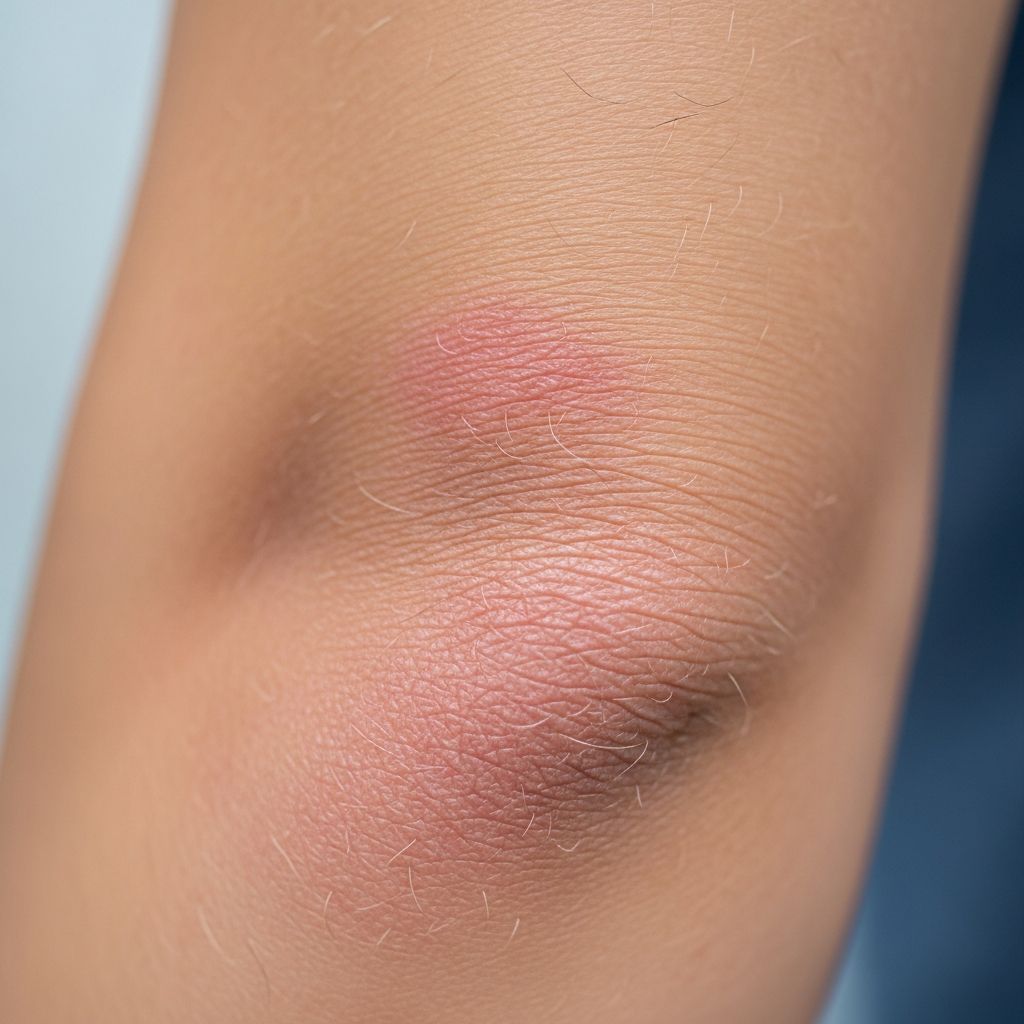
Atopic dermatitis, commonly known as eczema, features unpredictable episodes of intensified symptoms that patients describe as flares. These periods disrupt daily life and demand prompt intervention, yet a unified definition remains elusive, complicating both clinical practice and research.
The Nature of Eczema and Its Unpredictable Episodes
Eczema manifests as a persistent skin disorder with inflamed, pruritic patches that wax and wane over time. Flares represent acute escalations in redness, itching, and skin barrier disruption, often triggered by environmental factors, stress, or immune dysregulation. Unlike steady-state mild symptoms, flares involve a noticeable shift that patients perceive as a loss of control.
Clinically, these episodes correlate with heightened inflammatory markers and visible deteriorations like oozing or crusting. Patients frequently report that flares extend beyond skin changes, affecting sleep, mood, and social interactions. This multifaceted impact underscores the need for definitions that capture both objective signs and subjective burdens.
Historical Challenges in Standardizing Flare Definitions
Early research on eczema lacked uniformity in describing flares, leading to varied interpretations across studies. Some trials relied on arbitrary thresholds from scoring systems like the Eczema Area and Severity Index (EASI), such as a 25% worsening from baseline, while others focused on the need for escalated therapy.
Guidelines from bodies like the American Academy of Dermatology have termed flares as “periods of acute worsening” without precise metrics, highlighting a gap between clinical observation and measurable criteria. European task forces similarly describe them as “clinically significant worsening requiring intervention,” emphasizing practicality over rigidity.
- Arbitrary cutoffs on severity scales (e.g., SCORAD increase).
- Composite assessments by investigators, including treatment needs.
- Behavioral indicators, such as seeking urgent care.
This inconsistency hampers comparative research and personalized care, as what constitutes a flare for one patient may differ vastly from another based on their baseline control.
Patient Voices: Core Elements of a Flare Experience
Recent efforts prioritize patient input, revealing that flares are not solely skin-centric. Surveys and consensus panels identify key constructs: deviation from personal baseline, emotional distress, physical eruptions, obsessive focus on symptoms, the itch-scratch cycle, and diminished quality of life.
Patients emphasize interruptions to daily routines, such as disrupted work or sleep, as hallmark features. One study ranked acute symptom worsening, physical health changes impacting activities, and new eruptions as top definers. This contrasts with traditional models focused only on intensity spikes.
| Patient-Reported Flare Components | Description |
|---|---|
| Baseline Deviation | Shift from usual skin state |
| Mental/Emotional Impact | Anxiety, frustration from symptoms |
| Skin Changes | Increased redness, dryness, oozing |
| Attention Demand | Constant need to address itching |
| Itch-Scratch Cycle | Worsening loop of irritation |
| Life Disruption | Altered routines, social withdrawal |
Incorporating these elements fosters shared understanding between patients and providers, enhancing communication during visits.
Clinical Tools for Measuring and Identifying Flares
Validated instruments provide objectivity. The Investigator’s Global Assessment (IGA) scores flares at levels ≥2, indicating mild erythema or induration. EASI changes, like a 6-7 point rise or 50% loss of prior response, serve as thresholds in trials.
Patient-Oriented SCORAD (PO-SCORAD) integrates itch intensity, allowing home monitoring. Itch, often an early harbinger, merits inclusion; worsening pruritus can signal impending visible flares, enabling preemptive action.
Related Stories



- IGA: Static score ≥2 for mild-moderate activity.
- EASI: Percent worsening or absolute increases.
- PO-SCORAD: Combines objective signs with patient-reported itch/sleep loss.
- Peak Pruritus NRS: ≥4-point scale for itch severity.
These tools balance sensitivity for research with real-world applicability, adjusting thresholds by baseline severity—milder cases need smaller changes to qualify as flares.
Consensus-Building Efforts and Emerging Standards
Multistakeholder initiatives, including patient advocacy groups and dermatology societies, are forging consensus. A patient-centered definition might read: “A flare is an acute worsening of eczema signs and symptoms from the patient’s baseline, disrupting daily life and necessitating enhanced treatment.” This encapsulates both measurable changes and lived impacts.
In trials, well-controlled weeks (WCW)—periods with minimal symptoms and limited rescue use—contrast flares, aiding long-term control assessments. Standardization promotes comparable outcomes across studies.
Strategies for Preventing and Managing Flares
Proactive management mitigates flare frequency. Daily emollients strengthen the skin barrier, while trigger avoidance (e.g., irritants, allergens) reduces precipitants. Topical corticosteroids or calcineurin inhibitors offer rapid control during early signs.
Biologics like dupilumab target underlying inflammation for sustained remission. Patient education on recognizing prodromal itch empowers self-escalation, potentially truncating episodes. Digital diaries tracking PO-SCORAD facilitate timely clinician input.
- Establish personal baseline via regular scoring.
- Monitor itch as an early warning.
- Use step-up therapies judiciously.
- Incorporate lifestyle adjustments.
Impact of Flares on Quality of Life and Healthcare
Flares erode well-being, amplifying anxiety and isolation. Economically, they drive increased visits, prescriptions, and absenteeism. Standardized definitions could streamline resource allocation and trial designs targeting flare reduction.
Children face developmental hurdles from disrupted sleep and play, while adults contend with productivity losses. Holistic definitions addressing these ripple effects guide comprehensive care plans.
Future Directions in Flare Research and Definition Refinement
Ongoing studies validate patient-derived frameworks against clinical endpoints. Biomarker integration, like elevated TARC levels during flares, may add precision. Remote monitoring via apps promises real-time data for dynamic definitions.
Global harmonization across guidelines will enhance trial generalizability. Emphasizing itch and patient reports could shift paradigms toward preventive, personalized dermatology.
Frequently Asked Questions (FAQs)
What triggers an eczema flare?
Common triggers include allergens, stress, infections, weather changes, and irritants like soaps. Individual sensitivities vary widely.
How long does a typical flare last?
Duration ranges from days to weeks, depending on intervention speed and severity. Early treatment shortens episodes.
Can flares be completely prevented?
Not always, but consistent skincare, trigger management, and maintenance therapies significantly reduce frequency and intensity.
Is itch always present in a flare?
Itch is a cardinal symptom and often precedes visible changes, making it a key monitoring target.
How do doctors diagnose a flare?
Using tools like EASI, IGA, or patient reports, combined with history of worsening from baseline.
References
- Defining “Flares” in Atopic Dermatitis: A Narrative Review — PMC/NCBI. 2024. https://pmc.ncbi.nlm.nih.gov/articles/PMC12615545/
- Defining “Flares” in Atopic Dermatitis: A Narrative Review — PubMed. 2024. https://pubmed.ncbi.nlm.nih.gov/40890502/
- Towards a patient-centred definition for atopic dermatitis flare — British Journal of Dermatology/Oxford Academic. 2024. https://academic.oup.com/bjd/article/191/1/82/7591627
- What is meant by ‘flare’ in atopic dermatitis? — University of Nottingham. Accessed 2026. https://www.nottingham.ac.uk/research/groups/cebd/resources/flare-atopic-dermatitis.aspx
- Consensus on a Patient-Centered Definition of Atopic Dermatitis Flare — JAMA Dermatology. 2024. https://jamanetwork.com/journals/jamadermatology/fullarticle/2823478
- Atopic dermatitis (eczema) – Symptoms and causes — Mayo Clinic. 2023. https://www.mayoclinic.org/diseases-conditions/atopic-dermatitis-eczema/symptoms-causes/syc-20353273
- Atopic Dermatitis: Symptoms, Causes & Treatment — Cleveland Clinic. 2023. https://my.clevelandclinic.org/health/diseases/24299-atopic-dermatitis
Similar Articles








Read full bio of medha deb