Degenerative Disc Disease: Causes, Symptoms, and Treatment Options
Understanding degenerative disc disease: comprehensive guide to symptoms, causes, and effective treatment strategies.
Understanding Degenerative Disc Disease
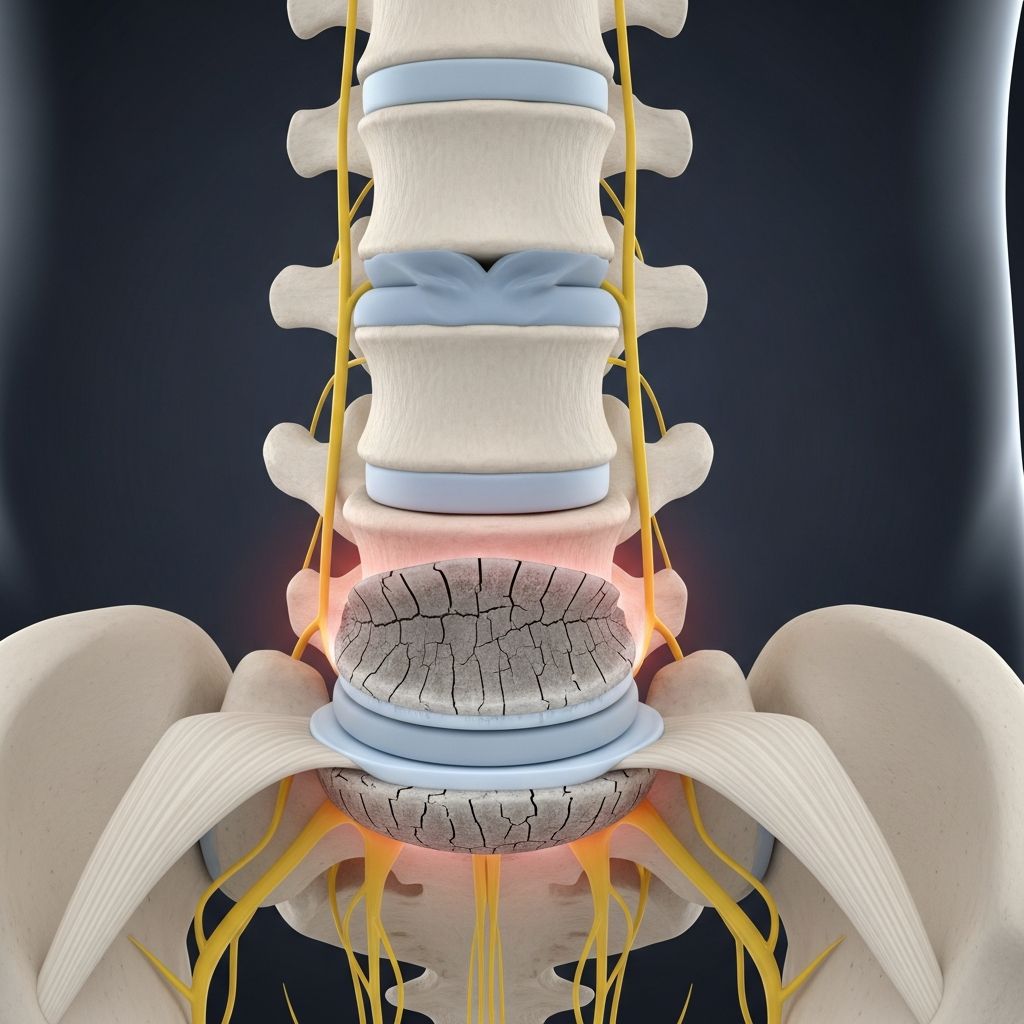
Degenerative disc disease (DDD) is a condition in which the spinal discs gradually lose their structural integrity and function over time. Despite its name, degenerative disc disease is not technically a disease but rather a natural part of the aging process that affects the intervertebral discs in the spine. These discs act as shock absorbers between the vertebrae, providing cushioning and allowing flexibility of the spine. As we age, these discs can lose water content, become less flexible, and develop tears or cracks in their outer structure. This degenerative process can lead to pain, weakness, numbness, and limited mobility in the neck, back, and other areas of the body depending on the location of the affected disc.
What Causes Degenerative Disc Disease?
Degenerative disc disease develops due to a combination of factors that accelerate the natural aging process of the spinal discs. Understanding these causes can help individuals take preventive measures and make informed decisions about their spinal health.
Primary Risk Factors
The most common causes and risk factors of degenerative disc disease include:
– Age: The natural aging process is the primary factor, as discs lose water content and elasticity over time- Physical strain: Repetitive movements, heavy lifting, and poor posture place excessive stress on the spine- Genetics: A family history of disc disease increases your susceptibility- Inadequate nutrition: Poor diet lacking essential nutrients affects disc health- Smoking: Smoking accelerates disc aging and makes discs more prone to degeneration- Obesity: Excess weight places additional stress on spinal discs- Occupation: Jobs requiring heavy labor or prolonged sitting increase risk- Trauma or injury: Previous spine injuries can initiate the degenerative process
Symptoms of Degenerative Disc Disease
The symptoms of degenerative disc disease vary significantly depending on the location of the affected discs and the extent of degeneration. Some individuals may experience no symptoms at all, while others may suffer from debilitating pain and dysfunction.
Common Symptoms
The pain associated with DDD can range from mild to severely disabling and may include:
– Sharp or constant pain in the back or neck- Stiffness and reduced range of motion- Muscle weakness in the affected area- Tingling or numbness sensation- Pain that radiates to other body parts, such as buttocks, thighs, arms, or hands
Cervical Degenerative Disc Disease
Cervical degenerative disc disease affects the spinal discs in the neck region, from C3 to C7. Symptoms typically include:
– Neck pain and stiffness- Shoulder and arm pain- Tingling and numbness in one or both arms- Weakness in the arms or hands- Headaches that originate from the neck
Lumbar Degenerative Disc Disease
Lumbar disc degeneration occurs in the lower back and commonly causes pain in the lower back region. When nerves become compressed, pain may radiate to the buttocks and thighs, a condition sometimes referred to as sciatica. About 80% of acute radiculopathy cases can be successfully managed with conservative treatment.
Stages of Degenerative Disc Disease
Related Stories



Degenerative disc disease progresses through distinct stages, each characterized by specific structural changes in the spine.
| Stage | Characteristics | Symptoms |
|---|---|---|
| Stage 1: Dysfunction | Discs begin to degenerate; minor structural changes occur | Mild to moderate pain may develop |
| Stage 2: Dehydration | Spinal discs lose water content and flexibility; height decreases | Increased pain and stiffness |
| Stage 3: Stabilization | Body develops bone spurs (osteophytes) to stabilize the spine | Variable pain; may improve or worsen |
| Stage 4: Advanced Degeneration | Severe structural damage; significant loss of disc height | Chronic pain; potential nerve compression |
As the vertebrae have less padding between them, the spine becomes less stable. To compensate, the body builds osteophytes, or bone spurs, small bony projections that develop along the edge of bones. These projections can press against the spinal cord or spinal nerve roots and undermine nerve function.
Diagnosis of Degenerative Disc Disease
Diagnosing degenerative disc disease typically involves a combination of clinical evaluation and imaging studies. Your healthcare provider will review your medical history, perform a physical examination, and may order imaging tests such as X-rays, MRI scans, or CT scans to visualize the extent of disc degeneration and identify any nerve compression. These diagnostic tools help determine the severity of the condition and guide treatment planning.
Treatment Options for Degenerative Disc Disease
While there is no cure for degenerative disc disease, medical treatment effectively targets the symptoms of the disease in an attempt to reduce pain and dysfunction. The best treatment for degenerative disc disease is the one that works for you, and spine specialists typically take a phased approach that escalates if one phase is unsuccessful.
Conservative (Nonsurgical) Treatments
In most cases, the first best treatments for degenerative disc disease are conservative measures. About 80% of degenerative disc disease cases can successfully be treated with conservative treatment. These include:
– Selective rest and activity modification to reduce stress on the spine- Low-impact exercise to maintain strength and flexibility- Non-opioid pain medications, such as aspirin and ibuprofen, to ease pain and lessen swelling- Physical and occupational therapy with specific movements to strengthen neck and back muscles and improve flexibility- Weight loss to reduce stress on the spine- Smoking cessation to prevent further acceleration of disc degeneration- Heat and/or ice therapy to reduce pain and inflammation- Supplements such as fish oil, which are high in omega-3 fatty acids
Intermediate (Non-Surgical Interventional) Treatments
If conservative measures fail to provide relief, the next best treatments for degenerative disc disease are non-surgical interventions:
–
Steroid injections and facet joint injections:
Injecting the joints next to the damaged disc with steroids and local anesthetic can provide effective pain relief-Epidural injections:
Steroid or pain medication injected in the epidural space around the spinal cord-Manual manipulation and chiropractic care:
May help alleviate symptoms in some patients-Massage therapy:
Can provide temporary pain relief and muscle relaxation-Facet rhizotomy:
A radiofrequency procedure that deadens nerves around the facet joint, preventing pain signals from reaching the brain; pain relief may last for more than a year-Intradiscal electrothermal annuloplasty (IDET):
A procedure involving insertion of a catheter into the disc and heating it to reduce pain-Radiofrequency neurotomy:
Uses radio waves to heat and destroy nerve tissues in the spineSurgical Treatments
If non-surgical interventions fail to provide relief, surgical intervention may be considered. Surgery for degenerative disc disease can be nearly curative in reducing or eliminating symptoms at affected spinal levels. However, patients predisposed to degenerative disc disease tend to have disease in multiple spinal discs over time, which may necessitate multiple spine surgeries. Surgery is typically considered only when:
– Patients have not responded to nonoperative measures- An identified structural abnormality can be effectively corrected- Disc changes have resulted in spinal cord compression- Patients experience chronic severe pain
The two main surgical interventions for degenerative disc disease are:
–
Spinal fusion:
Removes the damaged disc and fuses the adjacent vertebrae together, stabilizing the spine-Artificial disc replacement:
Removes the diseased disc and replaces it with a disc made of metal or metal and plastic, preserving a degree of spinal mobility that spinal fusion cannotAdditional surgical procedures may include:
–
Diskectomy:
Removal of part of the degenerated disc to relieve pressure on nerves-Foraminotomy, laminotomy, and laminectomy:
Removal of portions of bone to reach the problem disc and relieve nerve pressurePrognosis and Long-Term Outlook
The structural changes involved in degenerative disc disease will not improve on their own, but it is possible for symptoms to improve over time with appropriate treatment. The condition is a natural part of aging, and while progression cannot be stopped without disc replacement or spinal fusion, symptoms can be effectively managed with conservative approaches in the majority of cases. Most individuals with degenerative disc disease can maintain good quality of life through proper symptom management and lifestyle modifications.
Frequently Asked Questions About Degenerative Disc Disease
Q: Is degenerative disc disease a serious condition?
A: Degenerative disc disease varies in severity. While it is a natural part of aging, the pain and symptoms it causes can range from mild to disabling. However, most cases can be effectively managed with conservative treatment.
Q: Can degenerative disc disease be cured?
A: There is no cure for degenerative disc disease, but symptoms can be effectively managed through conservative treatment, interventions, and in some cases, surgery. Surgical options like artificial disc replacement or spinal fusion can significantly reduce or eliminate symptoms.
Q: Will degenerative disc disease get worse without treatment?
A: The structural changes in degenerative disc disease will progress over time, but symptoms may not necessarily worsen. With proper treatment and management, many people experience symptom relief despite ongoing structural degeneration.
Q: How can I prevent degenerative disc disease?
A: While you cannot completely prevent age-related disc degeneration, you can reduce risk by maintaining a healthy weight, avoiding smoking, practicing good posture, staying physically active, eating a nutritious diet, and protecting your spine from injury.
Q: What percentage of people with degenerative disc disease need surgery?
A: The majority of people with degenerative disc disease do not require surgery. Approximately 80% of cases, including acute cases with nerve involvement, can be successfully managed with conservative treatment approaches.
Q: When should I see a specialist for degenerative disc disease?
A: You should consult a spine specialist if you experience persistent pain, numbness, weakness, or if conservative treatments have not provided relief after several weeks or months of treatment.
References
- Degenerative Disc Disease: Causes, Symptoms, and Treatments — Advanced Diagnostic and Robotics Spine (ADRS). 2024. https://www.adrspine.com/conditions/degenerative-disc-disease
- Degenerative Disk Disease: Symptoms, Causes, Diagnosis, Treatment — WebMD. 2024. https://www.webmd.com/back-pain/degenerative-disk-disease-overview
- Degenerative Disc Disease Diagnosis & Treatment — Columbia University Neurosurgery. 2024. https://www.neurosurgery.columbia.edu/patient-care/conditions/degenerative-disc-disease
- Degenerative Disc Disease: Can You Stop Its Progression? — Hospital for Special Surgery (HSS). 2024. https://www.hss.edu/health-library/conditions-and-treatments/list/degenerative-disc-disease
- Degenerative Disc Disease: Causes and Treatment — Medical News Today. 2024. https://www.medicalnewstoday.com/articles/266630
- Pain Relief for Worn Spinal Disks — Mayo Clinic Health System. 2024. https://www.mayoclinichealthsystem.org/hometown-health/speaking-of-health/pain-relief-for-worn-spinal-disks
- Degenerative Disk Disease: What It Is, Symptoms & Treatment — Cleveland Clinic. 2024. https://my.clevelandclinic.org/health/diseases/16912-degenerative-disk-disease
Similar Articles








Read full bio of Sneha Tete