What Causes Déjà Vu? 4 Leading Theories Explained
Unravel the science behind that eerie feeling of familiarity—explore theories, triggers, and when to seek help for déjà vu.
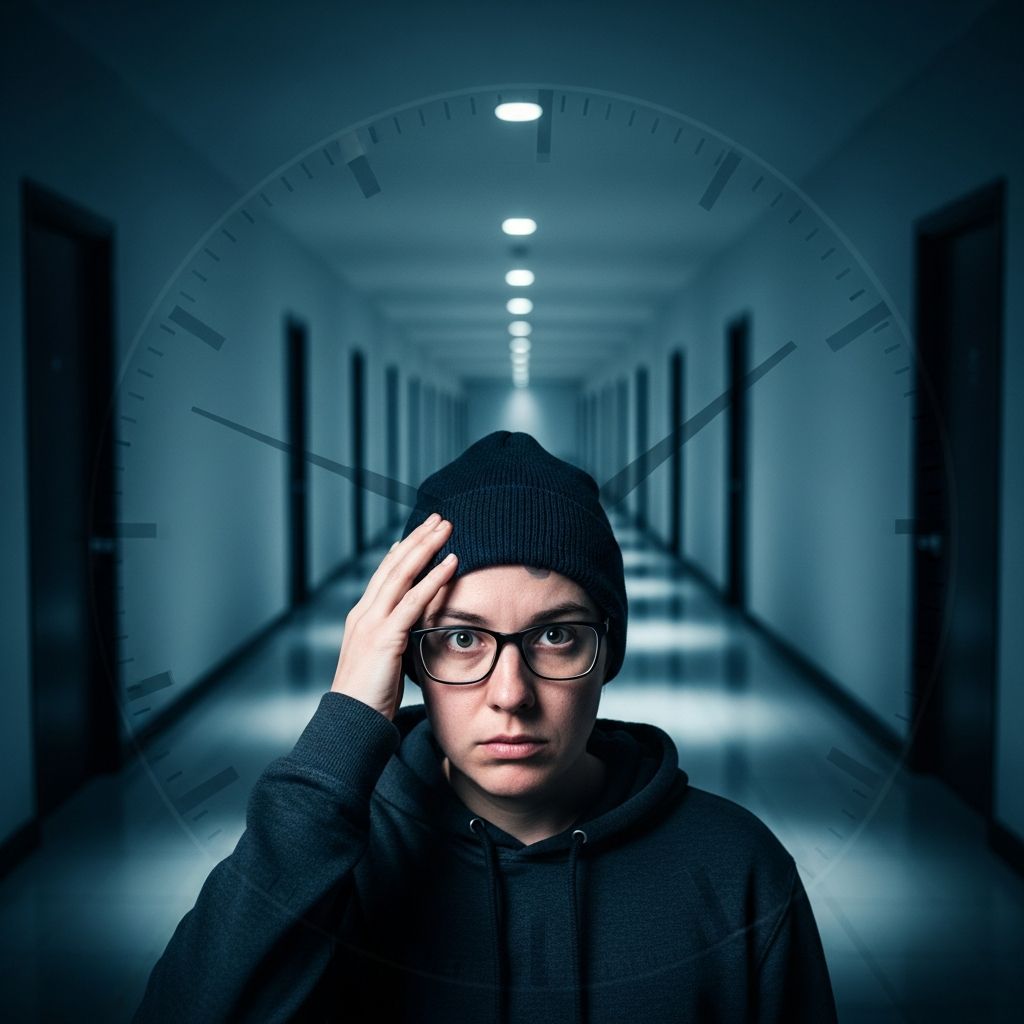
Déjà vu, the French term meaning “already seen,” describes that bizarre sensation where a current moment feels eerily familiar, as if you’ve lived it before. Up to two-thirds of people experience it at least once in their lifetime, often fleetingly and without warning. While harmless in most cases, understanding its causes reveals fascinating insights into brain function, memory processing, and neurology.
Researchers struggle to study déjà vu because it strikes unpredictably and resolves quickly, leaving many theories rooted in memory and perception. This article explores the primary explanations, from everyday memory mix-ups to rare medical links, helping you decode this common yet mysterious phenomenon.
What Is Déjà Vu?
Déjà vu isn’t a memory or dream—it’s a feeling of familiarity for something truly new. You might enter a room and swear you’ve been there, or hear a conversation that rings like an old echo. Lasting seconds to a minute, it often sparks a brief premonition of what’s next.
Unlike true recollection, no specific past event surfaces; instead, the brain signals “this happened before” erroneously. Surveys show 60-70% lifetime prevalence, peaking in young adults aged 15-25, declining with age. It’s universal across cultures, suggesting a fundamental brain mechanism.
How Common Is Déjà Vu?
Déjà vu is remarkably prevalent:
- Approximately two-thirds of people report at least one episode.
- Younger individuals (teens to 20s) experience it most frequently, up to 70%.
- Frequency drops after age 35, possibly due to stable memory networks.
- 10-20% report monthly occurrences; daily is rare and warrants checking.
These stats come from self-reports, as lab replication is challenging—no clear trigger exists. Women and men report similar rates, though stress amplifies it in both.
Leading Theories on What Causes Déjà Vu
Experts converge on memory-related explanations, with no single cause proven. Here’s a breakdown of the most supported theories, drawn from psychological and neurological research.
Split Perception (or Partial Perception)
This theory posits déjà vu arises when you perceive something twice in quick succession, but the first glimpse is incomplete or distracted.
Your brain forms a subconscious memory from that brief, peripheral view—like glancing at a landscape from a car window. Moments later, fully attending to the same scene triggers familiarity without conscious recall of the first exposure. It feels like a repeat because the brain treats it as novel input matching a hidden prior trace.
Evidence: Lab studies show people feel déjà vu for scenes resembling briefly seen ones they can’t remember.
Memory Recall and Implicit Memory Mismatch
Psychology professor Anne Cleary’s research highlights implicit memory—familiarity without source recall. A current scene resembles a forgotten past one (e.g., similar room layouts from childhood), evoking “I’ve been here” sans details.
If you recalled the original, déjà vu wouldn’t occur; the gap creates the illusion. Cleary’s 2018 study linked this to premonitions, as spatial similarities predict “knowing what’s next”. Brain imaging supports temporal lobe activation, key for scene recognition.
- Gist familiarity: Brain matches overall “feel” (e.g., building interior vibe) not exact details.
- Applies to jamais vu (familiar things feeling new) inversely.
Related Stories



Minor Brain Circuit Malfunctions or Glitches
Déjà vu may stem from temporary neural hiccups, like crossed wires between present-moment processing and memory retrieval.
Normally, rhinal cortex handles familiarity, hippocampus recollection. A glitch activates both simultaneously, tagging now as past. Short-term memories might bypass to long-term storage erroneously, mimicking recall.
Similar to mini-seizures in temporal lobe epilepsy (TLE), but benign in healthy brains. Fatigue disrupts this balance, increasing glitches.
Dual Processing or Consciousness Theories
The brain juggles encoding (new info) and retrieval (old info) separately. If uncoupled—say, from tiredness—they overlap, mistaking input for memory.
Dual consciousness: External perception (sights/sounds) blends with internal reverie, especially when distracted. Stress or exhaustion heightens this.
What Triggers Déjà Vu?
Beyond core mechanisms, situational factors boost likelihood:
| Trigger | Description | Why It Happens |
|---|---|---|
| Fatigue & Stress | Sleep deprivation, anxiety | Impairs memory circuits, mimics glitches |
| Dopamine Surges | Caffeine, excitement | Alters temporal lobe signaling |
| Similar Environments | Familiar layouts/scenes | Activates implicit memory |
| Travel/Novelty | New places blending old | Split perception likely |
| Age (15-25) | Youthful brain plasticity | Volatile memory formation |
Texas A&M’s Michelle Hook notes memory storage variances explain why some experience it more.
Is Déjà Vu a Sign of Something Serious?
Rarely. Occasional déjà vu signals a healthy, active memory system. But frequent or intense episodes may flag issues:
- Temporal Lobe Epilepsy (TLE): Déjà vu precedes 60% of seizures; often with auras like smells, emotions.
- Migraines: Prodrome symptom in some.
- Neurological Disorders: Alzheimer’s, strokes affecting hippocampus.
- Drug Side Effects: Anticholinergics, cannabis.
Seek medical advice if:
- Déjà vu >1x/month.
- Accompanied by twitching, hallucinations, blackouts.
- Intense distress or “déjà vécu” (reliving life events).
PMC research distinguishes healthy déjà vu (mismatch detection) from TLE’s pathological version.
Related Phenomena
- Jamais Vu: Familiar things feel alien (e.g., your name looks wrong after repetition).
- Presque Vu: Tip-of-tongue for non-words.
- Déjà Vécu: Chronic, immersive reliving; linked to disorders.
Frequently Asked Questions (FAQs)
What causes déjà vu most often?
Memory mismatches, like implicit familiarity from similar unremembered scenes, per Cleary’s research.
Does déjà vu mean good memory?
Yes—it’s a sign of robust familiarity detection without recall.
Can stress cause déjà vu?
Absolutely; it disrupts processing, increasing glitches.
Is déjà vu linked to past lives?
No scientific evidence; explained by brain mechanisms.
When should I see a doctor for déjà vu?
If frequent (>monthly), with seizures, or distress—rule out epilepsy.
Key Takeaways
• Déjà vu stems from memory-perception interplay, not mysticism.
• Common in youth; triggered by fatigue, similarity.
• Benign usually, but monitor frequency/symptoms.
• Ongoing research illuminates brain’s predictive powers.
References
- What Causes Déjà Vu? — Healthline. 2023-05-15. https://www.healthline.com/health/mental-health/what-causes-deja-vu
- What Causes Déjà Vu? — Texas A&M University. 2016-04-13. https://stories.tamu.edu/news/2016/04/13/what-causes-deja-vu/
- Déjà vu experiences in healthy subjects are unrelated to laboratory… — PMC (NCBI). 2013-11-20. https://pmc.ncbi.nlm.nih.gov/articles/PMC3842028/
- The science and mystery behind déjà vu — Baylor Scott & White Health. 2023-01-10. https://www.bswhealth.com/blog/the-science-and-mystery-behind-deja-vu
- Have You Experienced Déjà Vu? Causes and When to See a Doctor — WebMD. 2024-02-28. https://www.webmd.com/mental-health/what-is-deja-vu
Similar Articles








Read full bio of Sneha Tete