Delgocitinib Breakthrough for Hand Eczema Relief
Explore how LEO Pharma's delgocitinib offers new hope for chronic hand eczema patients with promising Phase 3 results.
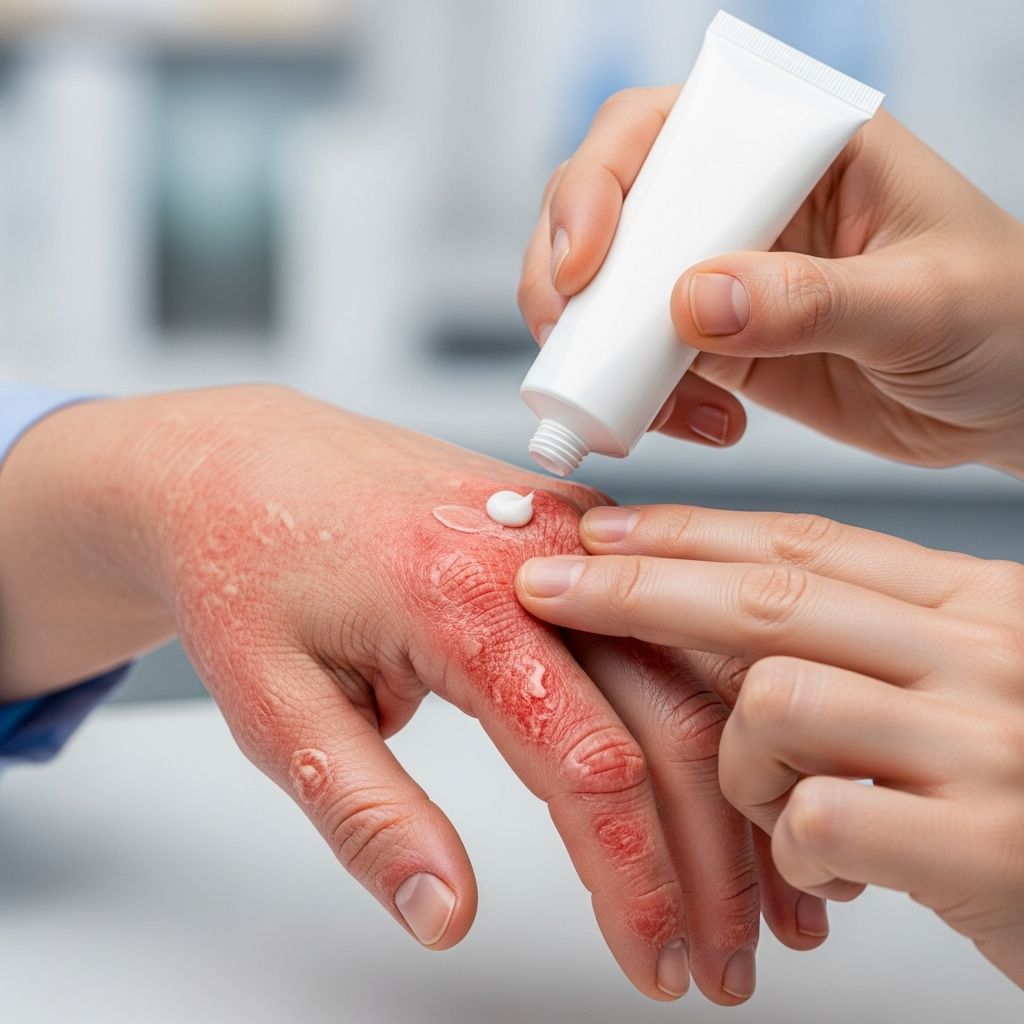
Chronic hand eczema affects millions worldwide, causing persistent itching, cracking, and pain that disrupt daily life. A major advancement comes from LEO Pharma’s delgocitinib cream, a topical Janus kinase (JAK) inhibitor showing strong efficacy in Phase 3 trials for patients unresponsive to potent topical steroids.
Understanding Chronic Hand Eczema
Hand eczema, also known as hand dermatitis, manifests as inflamed, dry, and scaly skin primarily on the hands. It often stems from irritants, allergens, or genetic factors, leading to a disrupted skin barrier. Unlike mild cases manageable with moisturizers, chronic forms resist standard treatments, impacting work and personal activities.
Symptoms include redness, vesicles, fissures, and hyperkeratosis, worsening with exposure to water, soaps, or chemicals. The condition cycles through flares, reducing quality of life and causing sleep disturbances or anxiety.
Current Treatment Challenges
Treatment typically starts with skin protection and emollients to restore the barrier. High-potency topical corticosteroids like clobetasol or betamethasone are first-line, applied daily for 2-4 weeks, followed by maintenance.
- Topical Corticosteroids: Effective initially but risk skin thinning with prolonged use.
- Calcineurin Inhibitors: Tacrolimus or pimecrolimus for maintenance, showing comparable results to steroids in small studies.
- Emollients and Avoidance: Essential foundation, preventing exacerbations from irritants.
For refractory cases, phototherapy like PUVA or narrowband UVB provides relief but requires frequent clinic visits. Systemic options include alitretinoin (approved in some regions), cyclosporine, methotrexate, or short oral steroid courses, each with significant side effects like immunosuppression or organ toxicity.
| Treatment Type | Examples | Pros | Cons |
|---|---|---|---|
| Topical | Clobetasol, Tacrolimus | Non-invasive, targeted | Skin atrophy, resistance |
| Phototherapy | PUVA, UVB | Effective for moderate cases | Time-consuming, burn risk |
| Systemic | Alitretinoin, Cyclosporine | Handles severe flares | Systemic side effects |
Introducing Delgocitinib: A Topical JAK Inhibitor
Delgocitinib cream targets JAK enzymes, key in inflammatory pathways driving eczema. As a topical therapy, it minimizes systemic exposure, addressing steroid limitations. Already approved in Japan for atopic dermatitis, LEO Pharma is pursuing approval for chronic hand eczema in Europe and Canada.
Phase 3 trials (DELIVER-1 and DELIVER-2) enrolled over 1,000 adults with moderate-to-severe hand eczema failing potent steroids. Patients applied 20 mg/g cream twice daily for 16 weeks.
Key Phase 3 Trial Results
Primary endpoint: Physician Global Assessment (PGA) of “clear” or “almost clear” hands plus Hand Eczema Severity Index (HECSI) reduction ≥75% at week 16.
- DELIVER-1: 32% delgocitinib vs. 12% vehicle (p<0.0001).
- DELIVER-2: 38% vs. 10% (p<0.0001).
Secondary outcomes showed rapid improvement from week 1, with sustained benefits. Patient-reported itch and pain scores dropped significantly. Safety profile was favorable, with mostly mild local reactions like application-site irritation.
These results position delgocitinib as a potential first topical therapy specifically for chronic hand eczema, filling a gap where no targeted options exist beyond steroids.
How Delgocitinib Works
JAK inhibitors block cytokine signaling (IL-4, IL-13, IL-31) fueling eczema inflammation. Topical application ensures action stays on the skin, reducing risks like infections or malignancies seen in oral JAKs.
Related Stories



Compared to PDE4 inhibitors like crisaborole or calcineurin inhibitors, delgocitinib offers broader JAK1/JAK2/JAK3/TYK2 inhibition, tackling multiple pathways.
Comparing Delgocitinib to Existing Options
Unlike systemic retinoids or immunosuppressants, delgocitinib avoids monitoring for liver or blood issues. It outperforms vehicle and rivals phototherapy convenience without hardware needs.
| Treatment | Efficacy (Response Rate) | Safety Profile | Approval Status for Hand Eczema |
|---|---|---|---|
| Delgocitinib | 32-38% clear/almost clear | Mild local AEs | Pending EU/Canada |
| Alitretinoin | ~40-50% in trials | Mucocutaneous dryness | Approved some regions |
| Topical Steroids | Variable, ~50% short-term | Atrophy risk | First-line |
| PUVA | Superior to UVB | Photosensitivity | Off-label |
Implications for Patients and Clinicians
For patients, delgocitinib promises steroid-free control, preserving hand function for jobs involving manual work. Clinicians gain a tool for second-line therapy before escalating to systemics, aligning with guidelines favoring topical escalation.
Regulatory filings are planned, with potential market entry soon, transforming management algorithms.
Future Directions in Hand Eczema Care
Ongoing research explores combination therapies, like delgocitinib with emollients, or other topicals like ruxolitinib cream. Long-term extension studies will assess durability beyond 16 weeks.
Emerging JAKs like upadacitinib show hand eczema benefits in atopic dermatitis trials, hinting at broader applications. Patient education on triggers remains crucial alongside pharmacotherapy.
Frequently Asked Questions (FAQs)
What is chronic hand eczema?
A persistent inflammatory skin condition on hands resistant to initial treatments, causing cracks, itch, and pain.
How does delgocitinib differ from steroids?
It targets inflammation via JAK inhibition without steroid side effects like thinning skin.
Who qualifies for delgocitinib?
Adults with moderate-to-severe cases failing potent topical steroids.
Are there side effects?
Primarily mild, like redness at application site; systemic absorption is low.
When will it be available?
Pending approvals in target markets post-Phase 3 success.
Patient Stories and Real-World Impact
While trial data is robust, real-world use in Japan for atopic dermatitis reports high satisfaction. Imagine a mechanic or nurse regaining dexterity without constant flares—delgocitinib edges closer to that reality.
Holistic management includes cotton gloves, fragrance-free products, and stress reduction, amplifying drug effects.
References
- Management of Chronic Hand Eczema — Actas Dermo-Sifiliográficas. 2015. https://www.actasdermo.org/en-management-chronic-hand-eczema-articulo-S1578219015001675
- A Review of Existing and New Treatments for the Management of Hand Eczema — PMC. 2023-10-26. https://pmc.ncbi.nlm.nih.gov/articles/PMC10617006/
- Hand Eczema — National Eczema Society. N/A. https://eczema.org/information-and-advice/types-of-eczema/hand-eczema/
- Treating Eczema on Hands and Fingers — GoodRx. N/A. https://www.goodrx.com/conditions/eczema/hand-eczema
- Hand Eczema: Causes, Symptoms and Treatment Options — National Eczema Association. N/A. https://nationaleczema.org/types-of-eczema/hand-eczema/
Similar Articles








Read full bio of medha deb