Demodex: Mites, Causes & Dermatological Treatments
Understanding Demodex mites: causes, symptoms, diagnosis, and effective treatment options.
Demodex: Understanding Skin Mites and Demodicosis
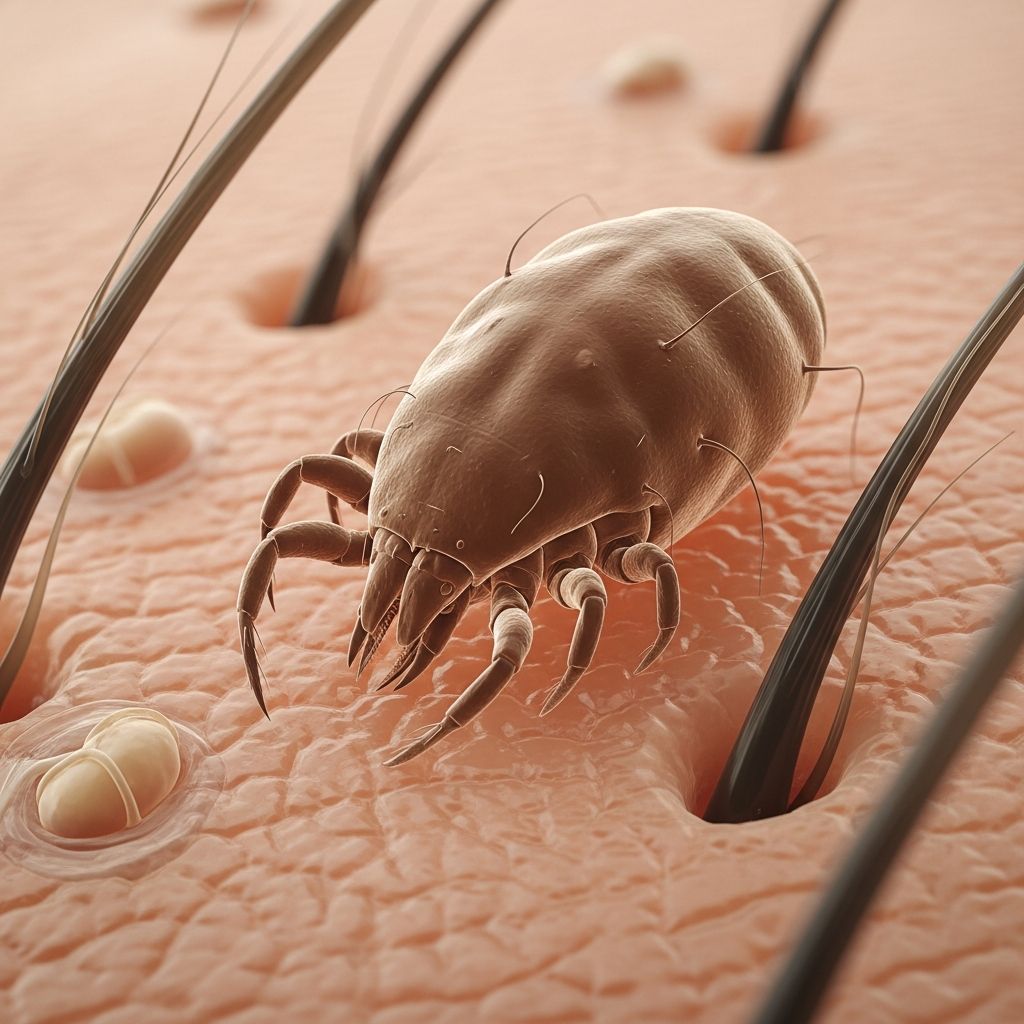
Demodex mites are microscopic parasites that naturally inhabit the skin of humans, residing primarily in hair follicles and sebaceous glands. These organisms are present on the skin of almost every person and are typically harmless, requiring no treatment in most cases. However, when Demodex populations proliferate excessively due to immune system weakness or other underlying conditions, they can cause a condition known as demodicosis, characterized by itching, irritation, and various dermatological manifestations.
What Are Demodex Mites?
Demodex mites are tiny, eight-legged parasites measuring approximately 0.3 to 0.4 millimeters in length. Two primary species affect humans: Demodex folliculorum and Demodex brevis. These mites naturally colonize human skin, with prevalence increasing significantly with age; up to 80-90% of people over age 70 carry substantial populations. The mites feed on sebum and skin cells, living harmlessly in the pilosebaceous units of most individuals without triggering any adverse effects.
Causes and Risk Factors for Demodex Proliferation
While Demodex mites are ubiquitous, several factors can promote their excessive multiplication and pathogenic effects:
- Weakened Immune System: Individuals with compromised immunity due to HIV/AIDS, chemotherapy, or immunosuppressive medications following organ transplants face increased risk for demodicosis
- Poor Facial Hygiene: Failure to wash the face adequately allows accumulation of lipids and dead skin cells, providing nutritional support for mite proliferation
- Excessive Use of Oily Products: Overuse of oily or creamy preparations supplies mites with excess lipid nourishment, promoting rapid reproduction
- Rosacea and Skin Conditions: Individuals with rosacea, fair skin complexion, and other dermatological conditions demonstrate increased susceptibility
- Dietary Factors: Consumption of spicy foods and alcohol may increase infestation risk
- Stress and Sleep Disruption: Psychological stress and poor sleep quality can impact immune function, contributing to mite overgrowth
Symptoms of Demodex Mite Infection
Demodex Folliculorum Symptoms
Demodex folliculorum infection, also known as pityriasis folliculorum or spinulate demodicosis, presents with characteristic dermatological signs:
- Rough, sandpaper-like skin texture due to follicular scaling
- Persistent itching, particularly in areas of high mite concentration
- Redness and rashes resembling mild inflammatory reactions
- Scaly, flaky, or itchy skin with noticeable texture changes
- Skin sensitivity and burning sensations
- Inflamed papules and pustules resembling acne or whiteheads
- Facial irritation and discomfort
Demodex Blepharitis Symptoms
When Demodex mites colonize the eyelid margins, they cause a condition called Demodex blepharitis with distinct ocular manifestations:
- Itchy eyelids, particularly after waking
- Red, swollen, or irritated eyelid margins
- Gritty, burning, or foreign body sensation in the eyes
- Cylindrical, waxy debris and crusting at the base of eyelashes (cylindrical dandruff)
- Watery eyes or excessive tearing
- Loss, thinning, or misdirection of eyelashes
- Light sensitivity and photophobia
- Eye fatigue, especially during prolonged screen use
These symptoms often fluctuate and may worsen after sleep or during stressful periods. The mites produce inflammatory excreta containing proinflammatory digestive enzymes that irritate the lid margin and disrupt the tear film.
Hair and Scalp Involvement
Demodex mites are commonly found in hair follicles, affecting both the scalp and eyelashes. Symptoms associated with hair involvement include dandruff development and eyelash discomfort. Some individuals report a crawling sensation on the lashes and lids, attributed to mite movement on or beneath the skin surface.
Demodex and Associated Dermatological Conditions
Rosacea
Research has identified increased numbers of Demodex mites in individuals with rosacea, a chronic skin condition characterized by facial redness and visible blood vessels. The relationship between Demodex and rosacea remains complex; experts debate whether excessive mite populations trigger rosacea development or whether rosacea predisposes individuals to mite overgrowth.
Related Stories



The proposed mechanism involves mites living in hair follicles and sebaceous glands, feeding on sebum and skin cells. Their presence triggers an inflammatory immune response, worsening rosacea symptoms including persistent redness, swelling, and visible blood vessel appearance. Additionally, mite waste accumulation further irritates skin, intensifying inflammation. Signs of rosacea associated with Demodex include lasting redness, thickened skin, blushing or flushing episodes, eye irritation, bumps and pimples, visible blood vessels, swelling, dryness, and stinging or burning sensations.
Blepharitis
Demodex blepharitis represents eyelid inflammation caused by excessive mite colonization. The mites produce cylindrical dandruff-like structures called collarettes, which serve as significant inflammation sources and disrupt both eyelash integrity and lid margin function. Beyond mechanical damage from physical contact and obstruction, mites trigger inflammatory responses through their waste products.
Diagnosis of Demodicosis
Diagnosing Demodex-related conditions typically involves clinical evaluation combined with microscopic examination. Skin scrapings stained with chlorazol black E under microscopy reveal transparent mites with characteristic eight segmented legs. Some heavily colonized areas may contain as many as 13 mites per visual field. A definitive diagnosis often requires specialist evaluation, particularly since Demodex symptoms overlap with various skin conditions.
Treatment Options for Demodex-Related Conditions
Topical Treatments
The most commonly used treatment for demodicosis involves topical application of acaricides—pesticides specifically designed to kill ticks and mites. Established treatment options include:
- Metronidazole: The most frequently prescribed medication for demodicosis, available as creams and lotions
- Sulfur Products: Effective acaricidal agents with proven efficacy against Demodex populations
- Selenium Sulfide: Another sulfur-based treatment option for topical application
- Benzyl Benzoate: An established scabicide and acaricide for mite control
- Crotamiton: A topical acaricide showing complete resolution of demodicosis when applied appropriately
- Permethrin: A synthetic pyrethroid pesticide effective against various mite species
- Lindane: A scabicide demonstrating complete resolution of demodicosis on treatment
- Ivermectin: An antiparasitic agent used topically or systemically for resistant cases
- Salicylic Acid: A keratolytic agent helping remove follicular debris and dead skin cells
- Clarifying Lotions: Topical treatments containing tea tree oil or benzoyl peroxide effectively reduce Demodex populations
Specialized Eye Treatments
For mites specifically affecting eyelids, healthcare providers may prescribe lotilaner (Xdemvy), an FDA-approved topical eye drop applied twice daily for six weeks that directly targets and kills eyelid-colonizing mites.
Advanced Treatment Modalities
Beyond topical medications, additional treatment approaches include pulsed dye laser treatments, which can reduce inflammation and improve symptoms in resistant demodicosis cases.
Management and Prevention Strategies
While complete elimination of Demodex mites proves impossible, several evidence-based strategies help prevent excessive proliferation:
- Maintain Proper Facial Hygiene: Regular face washing removes excess oil and dead skin cells that constitute the mites’ primary food source
- Avoid Oil-Based Products: Eliminate oil-based cleansers, greasy makeup, heavy lotions, and oil-based sunscreens that provide additional lipid nourishment
- Cosmetic Modifications: Avoid makeup for at least one week during active treatment and discard all old makeup products
- Regular Exfoliation: Exfoliate the face once or twice weekly to remove accumulated dead skin cells and trapped sebum
- Eyelid Hygiene: For blepharitis prevention, maintain careful eyelid cleansing with warm compresses and gentle scrubbing
- Environmental Control: Keep pets away from sleeping surfaces to minimize mite exposure
- Dietary Considerations: Reduce consumption of spicy foods and alcohol, which may trigger mite proliferation
- Stress Management: Address psychological stress through relaxation techniques, as stress can compromise immune function
Pathophysiology of Demodex-Related Inflammation
The inflammatory cascade triggered by Demodex involves complex immunological mechanisms. Histopathological examination reveals dermal infiltrates of lymphocytes, eosinophils, and granulomas predominantly composed of CD4+ T helper lymphocytes distributed around Demodex bodies. This suggests hypersensitivity reactions against the mites themselves contribute significantly to symptom development. The mites’ waste products, containing proinflammatory digestive enzymes, cause direct chemical irritation of skin and ocular tissues.
Prognosis and Long-Term Outlook
The prognosis for demodicosis depends largely on underlying causative factors. Individuals with temporary immune suppression typically experience resolution following treatment. However, patients with chronic immunodeficiency conditions may experience recurrent demodicosis requiring ongoing management. Treatment response generally proves favorable when appropriate acaricides are applied, with complete resolution documented in most cases.
Frequently Asked Questions
Q: Does everyone have Demodex mites?
A: Yes, Demodex mites inhabit the skin of nearly all people. Prevalence increases substantially with age, with 80-90% of individuals over 70 carrying significant mite populations. Most people experience no symptoms or problems from these naturally occurring mites.
Q: Can Demodex mites be completely eliminated from skin?
A: No, complete removal of Demodex mites is impossible through washing or scrubbing alone. However, regular cleansing and hygiene practices can help maintain mite populations within normal, asymptomatic ranges.
Q: What conditions increase the risk of demodicosis?
A: Risk factors include weakened immune systems from conditions like HIV/AIDS or chemotherapy, poor facial hygiene, excessive use of oily or creamy skincare products, rosacea, fair skin complexion, stress, and consumption of spicy foods and alcohol.
Q: How long does treatment for demodicosis typically take?
A: Treatment duration varies depending on the severity and underlying cause. Topical acaricide treatments usually require several weeks of consistent application. For example, prescription eye drops for Demodex blepharitis are typically applied twice daily for six weeks.
Q: Can Demodex mites cause permanent eyelash damage?
A: Untreated Demodex blepharitis can cause eyelash loss, thinning, or misdirection. However, early recognition and appropriate treatment with acaricides can prevent permanent damage and restore eyelash health.
Q: Is Demodex-related rosacea contagious?
A: No, Demodex-related rosacea is not contagious. While Demodex mites naturally occur on human skin, rosacea itself results from individual immune responses and cannot be transmitted from one person to another.
References
- Demodex Mites Guide Singapore – Causes, Symptoms & Treatments — SL Clinic Singapore. Accessed 2026. https://slclinic.com.sg/demodex-mites/
- What Are Demodex Mites? — WebMD. https://www.webmd.com/skin-problems-and-treatments/what-are-demodex-mites
- Demodex, demodicosis – DermNet — DermNet New Zealand. https://dermnetnz.org/topics/demodex
- Demodex Blepharitis: A Complete Guide to Eyelid Mites — Paterson Eye Doctor. https://patersoneyedoctor.com/article/demodex-blepharitis-a-complete-guide-to-eyelid-mites/
- Human Demodex Mite: The Versatile Mite of Dermatological and Allergic Disorders — National Center for Biotechnology Information (NIH). https://pmc.ncbi.nlm.nih.gov/articles/PMC3884930/
- Demodicidosis: Clinical Presentation and Microscopic Evaluation — Consultant360. https://www.consultant360.com/content/demodicidosis
- Demodex (Face Mites): Folliculorum, Brevis & Treatment — Cleveland Clinic. https://my.clevelandclinic.org/health/diseases/22775-demodex-face-mites
Similar Articles








Read full bio of medha deb