Demodex Mites: 7 Signs, Diagnosis, And Effective Treatments
Discover how tiny Demodex mites trigger eyelid issues and learn effective strategies for relief and prevention.
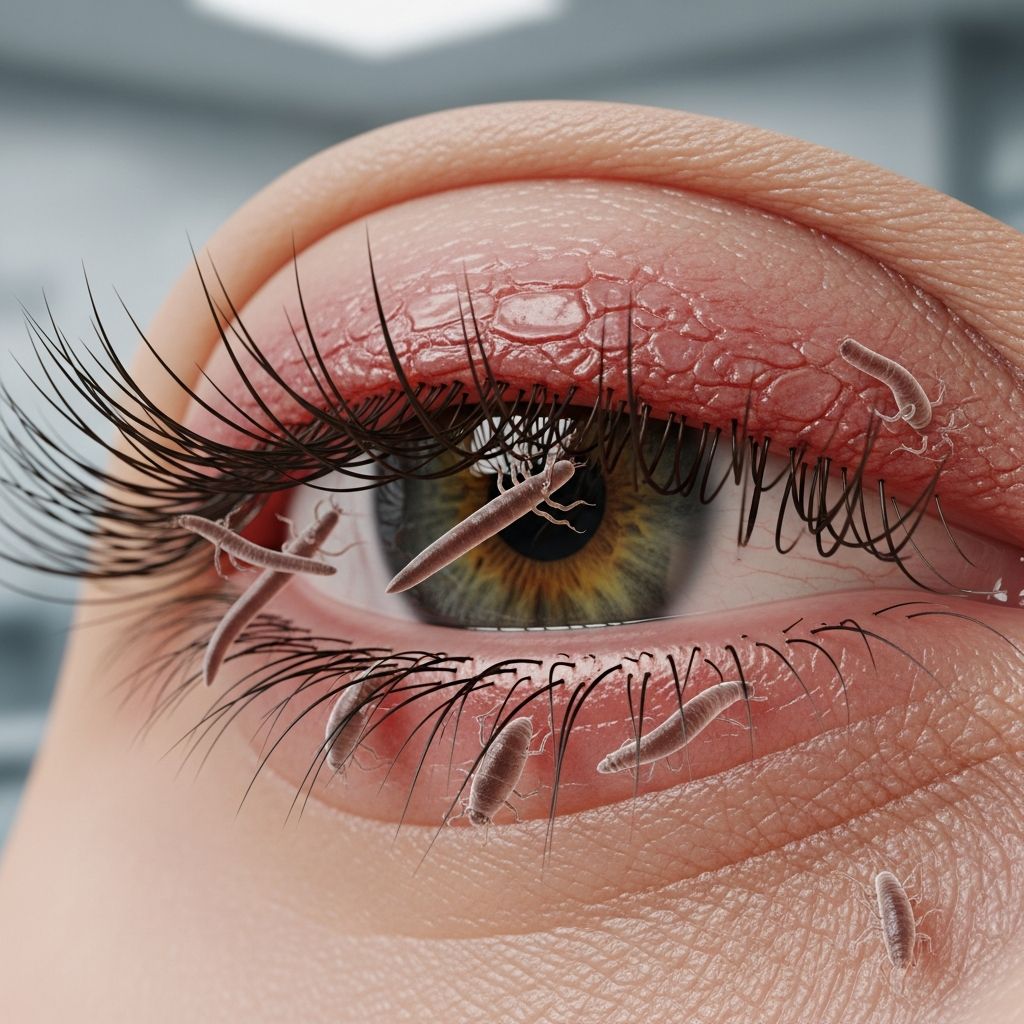
Tiny parasites known as Demodex mites commonly inhabit human hair follicles and sebaceous glands, particularly around the eyes. When their populations surge, they can provoke significant eyelid inflammation, leading to discomfort and vision disturbances.
The Hidden World of Demodex Mites
Demodex folliculorum and Demodex brevis represent the two primary species affecting humans. These elongated, worm-like organisms measure about 0.3 to 0.4 millimeters, rendering them invisible to the naked eye. They thrive in oily environments, feeding on skin cells, oils, and dead tissue while residing in eyelash follicles and meibomian glands along the eyelid margins.
Most individuals carry these mites asymptomatically, with prevalence rising to over 80% in older adults. Their life cycle spans roughly two weeks: adults mate on the skin surface at night, females burrow into follicles to lay eggs, and larvae mature into adults. This nocturnal activity explains why symptoms often intensify in the morning.
How Demodex Triggers Eyelid Problems
An overabundance of mites disrupts eyelid function through multiple pathways. They mechanically block sebaceous ducts, impeding oil flow and causing gland dysfunction. Mite exoskeletons and waste products provoke immune responses, sparking inflammation. Additionally, their feeding damages follicle linings, misdirecting lashes and promoting collarettes—cylindrical debris at lash bases.
Risk factors amplifying mite proliferation include advanced age, weakened immunity, poor hygiene, and conditions like rosacea or seborrheic dermatitis. Skin-to-skin contact facilitates transmission, though direct infestation from others remains rare.
Recognizing Signs of Mite Overgrowth
Demodex-related eyelid inflammation, or blepharitis, presents with persistent symptoms that resist standard care. Key indicators include:
- Intense itching or burning along the lid margins, worsening at night or upon waking
- Redness and swelling of the eyelids
- Cylindrical dandruff-like scales clinging to lash roots
- Crusty debris or collarettes at eyelash bases
- Foreign body sensation or grittiness
- Excessive tearing, dryness, or light sensitivity
- Lash loss, misdirected growth, or styes/chalazia in advanced cases
These overlap with other eye issues, necessitating professional evaluation for accurate identification.
Diagnosis: Confirming Demodex Involvement
Clinicians diagnose Demodex blepharitis via slit-lamp examination, spotting collarettes or sleeve-like deposits. Epilation—plucking 4-5 lashes—followed by microscopic analysis reveals mites if more than one per two lashes indicates infestation. In vivo confocal microscopy offers non-invasive visualization.
Patient history of recurrent symptoms despite hygiene or antibiotic treatments heightens suspicion. Differentiating from bacterial blepharitis or allergies ensures targeted therapy.
Core Treatment Strategies
Managing Demodex requires reducing mite numbers, clearing debris, and curbing inflammation. A multifaceted approach yields best results.
Daily Eyelid Hygiene Routines
Consistent cleansing forms the foundation. Warm compresses (10-15 minutes daily) soften debris, followed by gentle scrubbing with diluted baby shampoo or commercial lid wipes. Hypochlorous acid sprays provide antimicrobial action without irritation.
Targeted Antiparasitic Therapies
Tea tree oil (TTO), with terpinen-4-ol, eradicates mites effectively. Use 5-50% formulations in wipes, foams, or lid cleansers, avoiding pure oil to prevent irritation. Cliradex or similar products deliver safe concentrations.
Related Stories



FDA-approved lotilaner ophthalmic solution (XDEMVY) kills mites by inhibiting their nervous system, applied topically twice daily for six weeks.
Advanced In-Office Procedures
| Procedure | Description | Benefits |
|---|---|---|
| BlephEx | High-speed micro-sponge with TTO debrides lids | Rapid debris removal, biofilm disruption |
| Intense Pulsed Light (IPL) | Light pulses target vessels and mites | Reduces inflammation, improves gland function |
| Microblepharoexfoliation | Mechanical exfoliation of lid margins | Thorough mite elimination |
Prescription Medications
Topical ivermectin cream paralyzes mites, while metronidazole gels combat inflammation. Oral ivermectin suits severe cases. Steroid drops provide short-term relief but risk dependency.
Prevention: Keeping Mites in Check
Avoid reinfestation through nightly lid cleansing, replacing makeup/eye products frequently, and laundering pillowcases weekly in hot water. Manage underlying rosacea or dry eye to deter overgrowth. Regular eye exams catch issues early.
Potential Complications if Untreated
Chronic infestation damages meibomian glands, worsening dry eye syndrome. Persistent inflammation fosters styes, chalazia, corneal abrasions, and vision-threatening issues like keratitis. Early intervention preserves eyelid health.
FAQs
Are Demodex mites contagious?
Direct transmission occurs via close contact, but healthy individuals rarely develop symptoms from exposure.
Can I treat Demodex at home?
Yes, with TTO-based products and hygiene, but consult an eye specialist for confirmation and guidance.
How long does treatment take?
Improvement appears in weeks, but full eradication may require months of consistent care.
Do Demodex mites cause hair loss?
They contribute to lash loss via follicle damage, though research on scalp hair remains inconclusive.
Is tea tree oil safe for eyes?
Diluted forms are; undiluted can irritate. Patch test and professional advice recommended.
References
- Demodex Blepharitis: Causes, Symptoms, and Treatment — Flei.com. 2023. https://flei.com/demodex-blepharitis-causes-symptoms-and-treatment/
- Understanding Demodex Mites — Poudre Valley Eye Care. 2024. https://www.poudrevalleyeyecare.com/blog/understanding-demodex-mites/
- Demodex Infestation — EyeWiki (American Academy of Ophthalmology). 2025-02-15. https://eyewiki.org/Demodex_Infestation
- Treating Demodex — Dry Eye Treatment Center. 2024. https://dryeyespecialist.com/treating-demodex/
- Face Mites: What Are They and How Do You Get Rid of Them? — Curology. 2023-11-01. https://curology.com/blog/face-mites-what-are-they-and-how-do-you-get-rid-of-them/
- Demodicosis in Different Age Groups and Alternative Treatment — PMC (NCBI). 2023-03-01. https://pmc.ncbi.nlm.nih.gov/articles/PMC9961532/
Similar Articles








Read full bio of Sneha Tete