Dental Bridges: 4 Types, Benefits, And Care
Restore your smile with dental bridges: explore types, benefits, and treatment options.
What Are Dental Bridges?
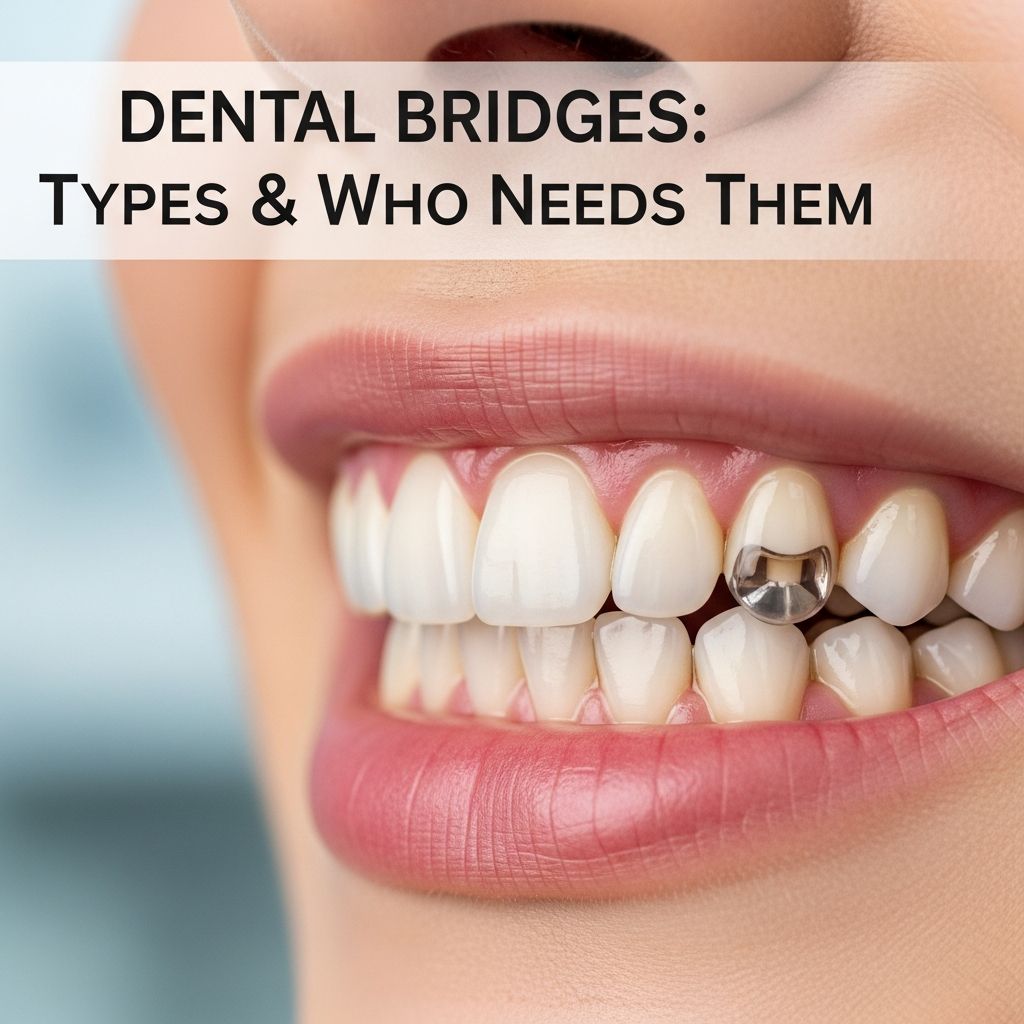
A dental bridge is a fixed dental restoration that replaces one or more missing teeth by spanning the gap left behind. The bridge consists of artificial teeth called pontics, which are anchored to adjacent natural teeth or dental implants. These supporting teeth or implants are referred to as abutment teeth. Dental bridges work by literally bridging the space where teeth are missing, restoring your ability to chew properly, speak clearly, and maintain a confident smile. Unlike removable dentures, bridges are permanently fixed in place and provide a more natural-feeling solution for tooth replacement.
When teeth are missing, the remaining teeth can shift out of position, leading to bite problems and increased risk of decay or gum disease. A dental bridge helps prevent these complications by maintaining proper tooth alignment and filling the gap that would otherwise allow adjacent teeth to migrate. This makes bridges not just a cosmetic solution but also an important preventive measure for your overall oral health.
Types of Dental Bridges
Several types of dental bridges are available, each with distinct characteristics and placement methods. Understanding the differences can help you and your dentist determine which option best suits your needs.
Traditional Fixed Bridges
Traditional fixed bridges are the most common type of dental bridge. In this design, crowns are placed on the abutment teeth on either side of the gap, and a pontic (artificial tooth) is fused between them. The entire bridge is then cemented into place permanently. Traditional bridges work best when you have healthy natural teeth on both sides of the missing tooth or teeth. This type requires the abutment teeth to be prepared, which involves removing some enamel to accommodate the crown. Traditional bridges typically last between five to fifteen years or longer with proper care.
Cantilever Bridges
Cantilever bridges are supported by an abutment tooth on only one side of the missing tooth. This design is used when there is only one adjacent tooth available to support the bridge. While cantilever bridges can be effective in certain situations, they place more stress on the single supporting tooth, which is why they are typically used for replacing a single front tooth and not recommended for back teeth where chewing forces are greater.
Maryland Bridges
Maryland bridges, also called resin-bonded bridges, use a different attachment method than traditional bridges. Instead of crowns on the abutment teeth, this type uses a metal or ceramic framework with wings that are bonded to the backs of the adjacent teeth using a tooth-colored resin. Maryland bridges are less invasive because they require minimal preparation of the abutment teeth, preserving more of the tooth structure. However, they are generally less durable than traditional bridges and are typically recommended for replacing front teeth.
Implant-Supported Bridges
For patients with missing teeth and adequate jawbone density, implant-supported bridges offer an excellent long-term solution. These bridges are anchored to dental implants rather than natural teeth. Each implant acts as an artificial tooth root, and the bridge is attached to these implants. Implant-supported bridges provide superior stability and durability, often lasting twenty years or longer. However, this option requires a surgical procedure and a longer treatment timeline, as the implants must integrate with the jawbone through a process called osseointegration, which typically takes three to six months.
Who Is a Candidate for a Dental Bridge?
Not everyone with missing teeth is an ideal candidate for a dental bridge. Several factors determine whether a bridge is the right choice for you.
Related Stories



Ideal Candidates
You may be a good candidate for a dental bridge if you have one or more missing teeth and healthy natural teeth on either side of the gap (for traditional or cantilever bridges), or adequate bone density (for implant-supported bridges). The abutment teeth must be strong enough to support the bridge, and your gums should be healthy and free of periodontal disease. Additionally, you should have realistic expectations about the appearance and function of the bridge and be committed to proper oral hygiene and maintenance.
Factors Your Dentist Will Consider
During your consultation, your dentist will evaluate your overall oral health, the number and location of missing teeth, the health of potential abutment teeth, your bite alignment, and your jawbone structure. They will also review your medical and dental history, discuss any concerns or anxieties you may have, and conduct a visual exam. X-rays or impressions may be taken to help determine the best treatment approach. Your dentist might recommend a bridge, dental implants, dentures, or other restorative options based on your individual situation.
The Dental Bridge Placement Process
Understanding what to expect during the placement process can help you prepare mentally and physically for your treatment.
Initial Consultation
Your journey toward a new smile begins with a thorough evaluation. If you are a new patient, you may schedule a comprehensive dental exam, or the consultation can be incorporated into a routine cleaning appointment if that timing works better for you. During this appointment, your dentist will review your medical and dental history, discuss any concerns about missing teeth or other dental issues, conduct a visual examination, and possibly take X-rays or impressions. This is an opportunity to ask questions and understand your options fully.
Tooth Preparation and Impressions
Once you and your dentist have decided that a bridge is the best approach, the preparation phase begins. Local anesthesia will be applied to numb the area around the abutment teeth, ensuring your comfort throughout the procedure. Your dentist will then carefully shape the abutment teeth by removing a thin layer of enamel and possibly some underlying tooth material to create space for the crowns or attachments that will hold the bridge in place. If an abutment tooth has significant decay or an older restoration, your dentist may recommend composite filling treatment or a dental crown placement first to ensure the tooth can serve as a stable support.
After the teeth are prepared, your dentist will take precise impressions of your mouth. These impressions are sent to a dental laboratory where your custom bridge will be fabricated to match your natural teeth perfectly in color, shape, and size. While the permanent bridge is being created, your dentist will typically fit a temporary restoration to protect the prepared teeth and maintain your bite alignment.
Bridge Fabrication
At the laboratory, skilled technicians use your impressions to create a bridge that matches your natural teeth. The pontic (false tooth) is shaped and colored to blend seamlessly with your adjacent teeth. The abutment portions of the bridge are designed to fit precisely over your prepared teeth. This customization process ensures that your final bridge will not only function properly but also look completely natural.
Fitting and Final Placement
Once your custom bridge is ready, you will return for your final appointment. Your dentist will remove the temporary restoration and thoroughly clean and inspect the supporting teeth. The permanent bridge will then be placed to check alignment, comfort, and bite. Your dentist may make minor adjustments to ensure proper bite and aesthetics. Once you and your dentist are satisfied with the fit and appearance, the bridge will be permanently cemented or attached into place. You can immediately notice an improvement in both your appearance and your ability to speak and chew.
Special Considerations for Implant-Supported Bridges
Implant-supported bridges follow a different timeline than traditional bridges because they require a surgical component. During the first appointment, a dentist, periodontist, or oral surgeon will assess your jawbone and prepare the implant sites. After the implant placement surgery, your implants will need to heal and fuse to your jawbone through a process called osseointegration. This process typically takes three to six months on average, though it could take longer depending on your individual situation and bone quality. Once osseointegration is complete, your dentist will attach the bridge to the implants during a final appointment.
Benefits of Dental Bridges
Dental bridges offer numerous advantages for patients with missing teeth:
- Restored Chewing Function: Bridges enable you to eat a wide variety of foods comfortably and efficiently, restoring normal eating habits that may have been compromised by missing teeth.
- Improved Speech: Missing teeth can affect pronunciation and speech clarity. A bridge restores your ability to speak naturally and confidently.
- Enhanced Appearance: Bridges fill gaps in your smile, dramatically improving your facial appearance and boosting your self-confidence.
- Maintained Facial Structure: Missing teeth can cause your face to sag or appear aged. A bridge helps maintain your facial structure and prevents premature aging.
- Prevention of Tooth Shifting: By filling the gap, bridges prevent adjacent teeth from shifting into the empty space, which could lead to bite problems and additional dental issues.
- Protection of Remaining Teeth: By maintaining proper tooth alignment and bite, bridges help protect your remaining natural teeth from excessive wear and damage.
- Cost-Effective Solution: Compared to some other tooth replacement options, dental bridges are often more affordable, especially if you have healthy abutment teeth.
- Non-Surgical Option: Traditional and Maryland bridges do not require surgery, making them suitable for patients who prefer non-invasive treatment.
Caring for Your Dental Bridge
Proper maintenance is essential for ensuring your bridge lasts as long as possible and remains in optimal condition.
Daily Oral Hygiene
Brush Thoroughly and Gently: Use a soft-bristled toothbrush and fluoride toothpaste to brush at least twice daily. Angle the brush to reach areas at the margin of your gumline and around the entire bridge. Gentle brushing helps avoid damaging the bridge while effectively removing plaque.
Floss Daily: Plaque can accumulate beneath the pontic (false tooth) and around the abutment teeth. Slide floss or use a floss threader under the pontic to remove trapped food and debris effectively. Keeping the gumline clean under the false tooth is essential to prevent bacterial growth and decay.
Use Antibacterial Rinses: Rinsing with an antiseptic mouthwash can reduce the accumulation of plaque-causing bacteria. Pay special attention to areas around your abutment teeth.
Professional Care and Regular Check-ups
Schedule regular dental check-ups every six months, or as recommended by your dentist. Professional cleanings and examinations allow your dentist to monitor your bridge’s condition, detect early signs of decay or misalignment, and perform any necessary adjustments. Your dentist might recommend periodontal maintenance cleaning or fluoride treatment services if appropriate for your situation.
Lifestyle Considerations
Avoid Smoking: Smoking can stain the bridge and cause discoloration over time, affecting its appearance.
Be Mindful of Hard Foods: Avoid chewing on hard objects like ice, hard candy, or non-food items, as these can damage your bridge.
Address Discomfort Promptly: If you experience persistent pain, sensitivity, or discomfort, consult your dentist. Symptoms like swelling, tenderness, or increased sensitivity could indicate a need for adjustment or further intervention.
Common Issues and Solutions
| Issue | Possible Cause | Solution |
|---|---|---|
| Chewing Difficulty | Inaccurate bite alignment | Minor adjustment by the dentist |
| Sensitivity to Hot/Cold | Exposed tooth surfaces or gum recession | Sensitivity treatments, potential refitting if needed |
| Bridge Discomfort | Improper fit or bite issues | Professional adjustment or replacement |
| Visible Decay Under Bridge | Inadequate oral hygiene or plaque buildup | Professional cleaning, improved hygiene, possible replacement |
| Bridge Loosening | Cement deterioration or tooth decay | Replacement of cement or entire bridge if necessary |
How Long Do Dental Bridges Last?
A typical dental bridge is expected to last anywhere from five to fifteen years, or potentially longer with diligent oral care. The lifespan of your bridge depends on several factors, including the type of bridge, the quality of your oral hygiene, your dietary habits, and regular professional care. Implant-supported bridges often last longer, sometimes twenty years or more. The health of your abutment teeth also plays a crucial role in determining how long your bridge will last. If decay develops in an abutment tooth, the entire bridge may need to be replaced.
Comparing Bridge Options: Which Is Right for You?
| Bridge Type | Durability | Cost | Invasiveness | Best For |
|---|---|---|---|---|
| Traditional Fixed | 5-15 years | Moderate | Requires tooth preparation | Replacing multiple teeth with healthy adjacent teeth |
| Cantilever | 5-15 years | Moderate | Single-sided tooth preparation | Single front teeth when only one abutment is available |
| Maryland (Resin-Bonded) | 3-10 years | Lower | Minimal tooth preparation | Front teeth with minimal tooth structure removal |
| Implant-Supported | 20+ years | Higher | Requires surgery | Long-term solution with adequate bone density |
Frequently Asked Questions About Dental Bridges
Q: Does getting a dental bridge hurt?
A: The bridge placement procedure is performed under local anesthesia, so you should not feel pain during the tooth preparation and placement. You may experience some sensitivity or mild discomfort after the procedure, which typically subsides within a few days. Over-the-counter pain relief medication can help manage any post-procedure soreness.
Q: Can I eat normally with a dental bridge?
A: Yes, once your bridge is fully adjusted and cemented, you can eat most foods normally. However, you should avoid very hard, sticky, or extremely chewy foods that could damage the bridge. Be cautious with foods like hard candy, nuts, or sticky caramel. It may take a few days to adjust to chewing with your bridge, but normal eating should resume quickly.
Q: How do I clean under a dental bridge?
A: Cleaning under the bridge is crucial for preventing decay and maintaining oral health. Use a floss threader or specialized interdental cleaning tools to slide floss or other cleaning devices under the pontic. Water flossers can also be effective at removing debris from hard-to-reach areas. Your dentist can demonstrate the best technique for your specific bridge design.
Q: Will my dental bridge look natural?
A: Modern dental bridges are designed to match your natural teeth in color, shape, and size. Skilled laboratory technicians craft each bridge using your specific impressions, ensuring a seamless blend with your adjacent teeth. Most people cannot tell the difference between a well-made bridge and a natural tooth.
Q: What are the alternatives to a dental bridge?
A: Alternatives to dental bridges include dental implants, which provide superior longevity but require surgery and more treatment time, and removable partial dentures, which are less expensive but may be less comfortable and require daily removal and cleaning. Your dentist can help you weigh the pros and cons of each option based on your specific situation.
Q: Can a dental bridge be whitened?
A: The artificial tooth in your bridge cannot be whitened like natural teeth. If you desire teeth whitening, it’s best to whiten your natural teeth before having your bridge fabricated so the bridge can be matched to your whitened teeth. If your natural teeth become discolored over time, your dentist may recommend replacing the bridge to maintain a consistent color.
Q: Is a dental bridge covered by insurance?
A: Many dental insurance plans cover a portion of the cost of dental bridges, typically fifty to sixty percent. Coverage varies depending on your specific plan and whether the bridge is considered a necessary restorative procedure or an elective cosmetic procedure. Contact your insurance provider to understand your coverage before proceeding with treatment.
Why Choose a Dental Bridge?
Dental bridges offer a proven, effective solution for replacing missing teeth. With proper care and maintenance, your bridge can provide years of improved function and appearance. The advantages of restored chewing ability, improved speech, and enhanced confidence make bridges an excellent choice for many patients. Whether you choose a traditional fixed bridge, Maryland bridge, or implant-supported bridge, you’re taking an important step toward restoring your oral health and your smile.
If you’re considering a dental bridge, consult with your dentist to determine which type is best suited for your unique needs and circumstances. Your dentist can provide personalized recommendations based on your oral health status, the number and location of missing teeth, and your long-term goals for your smile.
References
- Dental Bridges: Types & Who Needs Them — Cleveland Clinic. 2024. https://my.clevelandclinic.org/health/treatments/10921-dental-bridges
- What To Expect During Your Dental Bridge Placement Journey — Carolina Complete Dentistry. 2024. https://nccompletedentistry.com/dental-bridge-placement/
- Dental Bridge Placement: A Smart Choice for Your Teeth — Tidelands Dental. 2024. https://tidelandsdental.com/blog/dental-bridge-placement/
- Restorative Dentistry: What It Is, Types & Procedures — Cleveland Clinic. 2024. https://my.clevelandclinic.org/health/treatments/10924-dental-restorations
- Dental Implants: Surgery, Purpose & Benefits — Cleveland Clinic. 2024. https://my.clevelandclinic.org/health/treatments/10903-dental-implants
- A Guide To A Dental Bridge For Replacing Missing Teeth — Robinsons Dental. 2024. https://robinsonsdental.co.uk/a-guide-to-dental-bridge-for-missing-teeth/
Similar Articles








Read full bio of Sneha Tete