Dental Crowns: Types, Procedure, And Aftercare Guide
Complete guide to dental crowns: types, procedures, recovery, and long-term care.
Dental Crowns: Types, Procedure & Care
A dental crown is a custom-made restoration that fits over your entire tooth, covering it completely from the gum line upward. Dentists use crowns to treat severely decayed, broken, chipped, or worn-down teeth. Crowns serve both functional and aesthetic purposes, restoring your ability to bite and chew properly while improving the appearance of your smile. Whether you have a tooth damaged by decay, injury, or previous dental work, a crown can protect and strengthen it for years to come.
Why You Might Need a Dental Crown
Dental crowns are recommended for several reasons. Sometimes a crown is placed over a tooth that has had a root canal, or one that has had a large filling, to help keep the tooth strong for biting and chewing. If a tooth is severely decayed, cracked, or broken, a crown can restore its function and prevent further damage. Additionally, crowns may be used after cosmetic procedures to improve the appearance of discolored or misshapen teeth. Your dentist will evaluate whether a crown is the most effective option for your specific situation during an initial consultation.
Types of Dental Crowns
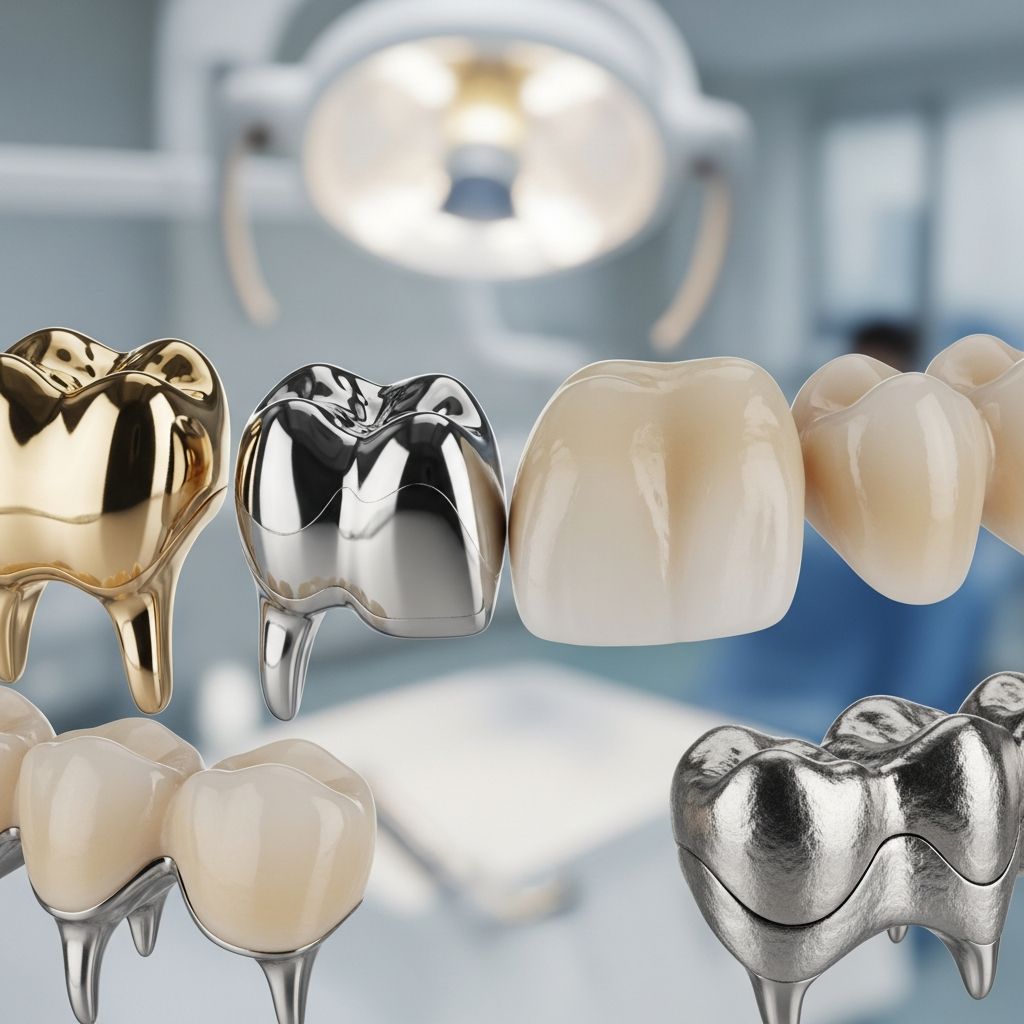
Different crown materials offer varying levels of durability, aesthetics, and cost. Understanding your options helps you make an informed decision with your dentist.
Porcelain Crowns
Porcelain crowns are popular for front teeth because they closely match the natural color and translucency of your teeth. Your dentist will determine the exact shade of porcelain to match your surrounding teeth, ensuring a seamless appearance. Porcelain crowns are highly aesthetic but may be more prone to chipping than metal alternatives.
Porcelain Fused to Metal Crowns
These crowns combine the strength of metal with the natural appearance of porcelain. The metal base provides durability while the porcelain exterior delivers an attractive, tooth-like appearance. This type is often used for both front and back teeth due to its balance of strength and aesthetics.
Metal Crowns
Metal crowns, typically made from gold or other alloys, offer exceptional durability and longevity. They rarely chip or break and require minimal tooth removal during preparation. However, their metallic appearance makes them less suitable for highly visible teeth, though they remain an excellent choice for back molars.
Resin Crowns
Resin crowns are commonly used as temporary restorations while your permanent crown is being fabricated. Made from a plastic-type material, temporary crowns typically last three to five years and protect your prepared tooth between appointments. Your dentist will ask you to refrain from chewing gum or sticky substances while your temporary crown is in place.
How Long Dental Crowns Last
With proper care, dental crowns typically last between five and fifteen years. The lifespan depends on the material used, your oral hygiene habits, and how well you care for the crown. Regular brushing, flossing, and dental checkups can extend the life of your restoration significantly.
Related Stories



The Dental Crown Procedure
Placing a permanent dental crown typically requires two dental office visits, though some new technology allows crowns to be produced in one day using CAD/CAM technology. Understanding each step helps you know what to expect.
First Visit: Tooth Preparation and Impression
During your first appointment, your dentist will begin by numbing the tooth and surrounding gum tissue with local anesthesia to ensure your comfort throughout the procedure. Once the area is numb, your dentist will carefully shape the biting surface and sides of the tooth to allow space for the new crown to be placed properly. If the tooth is very decayed or otherwise too small to hold the crown, your dentist may “build up” the tooth using additional dental material to provide adequate support for the restoration.
After the tooth is shaped to the correct size and contour, your dentist will take an impression of the prepared tooth. An impression of your jaw and possibly the opposite jaw may also be taken to help create the proper bite relationship and ensure your crown fits seamlessly with your existing teeth. This impression is sent to a dental laboratory where technicians will fabricate your custom crown based on precise specifications.
At the conclusion of this first visit, your dentist will place a temporary crown over the prepared tooth. This temporary restoration protects your tooth and maintains proper spacing until your permanent crown is ready. Your dentist will provide specific instructions about caring for your temporary crown, including avoiding sticky foods and hard substances that could dislodge it.
Second Visit: Crown Placement and Adjustment
After the dental laboratory completes your custom crown and sends it back to your dentist’s office, you’ll return for your second appointment. During this visit, your dentist will remove the temporary crown and clean the tooth surface thoroughly. Your dentist will then test the fit of your new permanent crown, checking that it aligns properly with your bite and doesn’t interfere with adjacent teeth or your gums.
If the crown fits correctly and the color matches your natural teeth, your dentist will numb the tooth and surrounding gums once more and cement the crown in place using strong, biocompatible dental cement. The dentist will then evaluate your teeth carefully to ensure the crowned tooth fits properly with the bite of your other teeth, making any necessary adjustments to achieve optimal comfort and function.
After the new crown has been placed, you may need additional dental visits to make minor adjustments so the crown fits comfortably and functions properly with your natural bite.
Same-Day Crown Technology
Modern advances in dental technology have made same-day crowns possible for many patients. Digital imaging, on-site milling, and speed-firing techniques allow dentists to scan, design, and fabricate the final crown in a single appointment. When same-day treatment is appropriate for your situation, you can have your crown completed without waiting for laboratory fabrication. However, not all cases are suitable for same-day crowns, and your dentist will determine whether this option works for your specific needs.
Recovery and Aftercare
Following crown placement, most patients can return to their regular activities quickly. However, some mild adjustments in your routine during the initial recovery period can help ensure optimal healing and comfort.
Managing Sensitivity and Discomfort
It’s normal to experience some sensitivity or mild discomfort after crown placement, especially to temperature extremes. This sensitivity typically subsides within a few days as your mouth adapts to the newly placed crown. Over-the-counter pain relievers can help manage any mild discomfort. Your dental crown shouldn’t cause significant pain or discomfort that interferes with sleep or normal activities. If sensitivity or pain persists beyond a few days, contact your dentist for evaluation and additional support.
Dietary Considerations
During the first few days after crown placement, avoid hard or sticky foods that could damage the restoration or dislodge it. Stick to soft foods and avoid chewing on hard objects, ice, or sticky candies. Once you’ve adjusted to your crown and any initial sensitivity has resolved, you can gradually return to your normal diet.
Long-Term Crown Maintenance
Proper care helps extend the life of your dental crown and maintains your overall oral health. Your dentist will provide detailed aftercare instructions tailored to your situation.
Oral Hygiene Practices
Practice careful brushing at least twice daily using a soft-bristled toothbrush and fluoride toothpaste. Brush gently around all surfaces of the crown, including where it meets your gum line. Floss daily to remove food debris and plaque between teeth and around the crown. Proper flossing around crowned teeth prevents decay and gum disease.
Avoiding Harmful Habits
Avoid chewing on hard objects such as ice, hard candy, or nuts, which can damage your crown. If you grind your teeth at night, ask your dentist about a night guard to protect your crown and natural teeth. Don’t use your teeth as tools to open packages or bottles, as this can damage both your crown and natural teeth.
Regular Dental Visits
Schedule regular dental checkups and cleanings as recommended by your dentist. Professional cleanings and examinations help ensure your crown remains in good condition and that no problems are developing underneath or around it.
Signs You Should Contact Your Dentist
If you have a dental crown, you should call your dentist if you notice any of the following issues:
- Significant pain or discomfort in the crowned tooth, especially when biting down
- A crown that feels loose or has become dislodged
- Visible cracks, chips, or damage to the crown
- Dark lines appearing at the edge of the crown near the gum line
- Sensitivity that doesn’t improve after a few days or worsens over time
- Swelling or tenderness in the gums around the crowned tooth
- An unnatural bite or feeling that your crowned tooth hits first when you bite
Frequently Asked Questions
Q: How long does the dental crown procedure take?
A: The initial tooth preparation visit typically takes 60 to 90 minutes. The second visit for crown placement usually takes 30 to 60 minutes. If you opt for same-day crowns, the entire process can be completed in a single appointment lasting two to three hours, depending on the complexity of your case.
Q: Will getting a crown be painful?
A: The procedure itself should not be painful because your dentist administers local anesthesia before beginning. However, you may feel pressure and vibration from the dental tools. If you do feel any pain during the procedure, let your dentist know immediately so they can provide additional anesthesia to keep you comfortable.
Q: How much does a dental crown cost?
A: The cost varies depending on the crown material, your location, and your dental insurance coverage. Porcelain and porcelain fused to metal crowns typically cost more than metal crowns. Many dental insurance plans cover a portion of crown costs, so check with your insurance provider about your specific coverage.
Q: Can a crown be placed on a tooth with a root canal?
A: Yes, crowns are frequently placed over teeth that have undergone root canal treatment. In fact, a crown is often recommended after root canal therapy to protect the tooth and restore its strength for normal biting and chewing.
Q: How do I know if I need a crown?
A: Your dentist will recommend a crown if you have a severely decayed, cracked, broken, or worn-down tooth that cannot be adequately restored with a filling. They may also recommend a crown for cosmetic reasons to improve the appearance of discolored or misshapen teeth. Your dentist will discuss whether a crown is the best option for your situation during a consultation.
Q: Can a crown fall off?
A: While rare, a crown can occasionally become loose or dislodged. This may happen due to the cement weakening over time, damage to the underlying tooth, or physical trauma. If your crown becomes loose or falls off, contact your dentist immediately. Do not delay, as leaving the tooth unprotected can lead to further damage or decay.
Q: Can I eat normally with a crown?
A: Yes, once you’ve adjusted to your crown and any initial sensitivity has resolved, you can eat normally. However, it’s wise to avoid extremely hard foods and sticky substances that could damage the crown. Use common sense and chew carefully on the side of your mouth opposite the crowned tooth initially, then gradually return to normal eating patterns.
References
- Understanding Dental Crown Treatments — MetLife. https://www.metlife.com/oralfitnesslibrary/dental-treatments/understanding-dental-crown-treatments/
- Dental Crowns: Types, Procedure & Care — Cleveland Clinic. https://my.clevelandclinic.org/health/treatments/10923-dental-crowns
- Restorative Dentistry: What It Is, Types & Procedures — Cleveland Clinic. https://my.clevelandclinic.org/health/treatments/10924-dental-restorations
- Oral Hygiene: Best Practices & Instructions for Good Routine — Cleveland Clinic. https://my.clevelandclinic.org/health/treatments/16914-oral-hygiene
- What To Expect During Your Dental Crown Placement Journey — Carolina Complete Dentistry. https://nccompletedentistry.com/dental-crown-placement/
Similar Articles








Read full bio of Sneha Tete