Dentigerous Cyst: Causes, Symptoms, and Treatment
Understanding dentigerous cysts: Learn about symptoms, diagnosis, and effective treatment options.
What Is a Dentigerous Cyst?
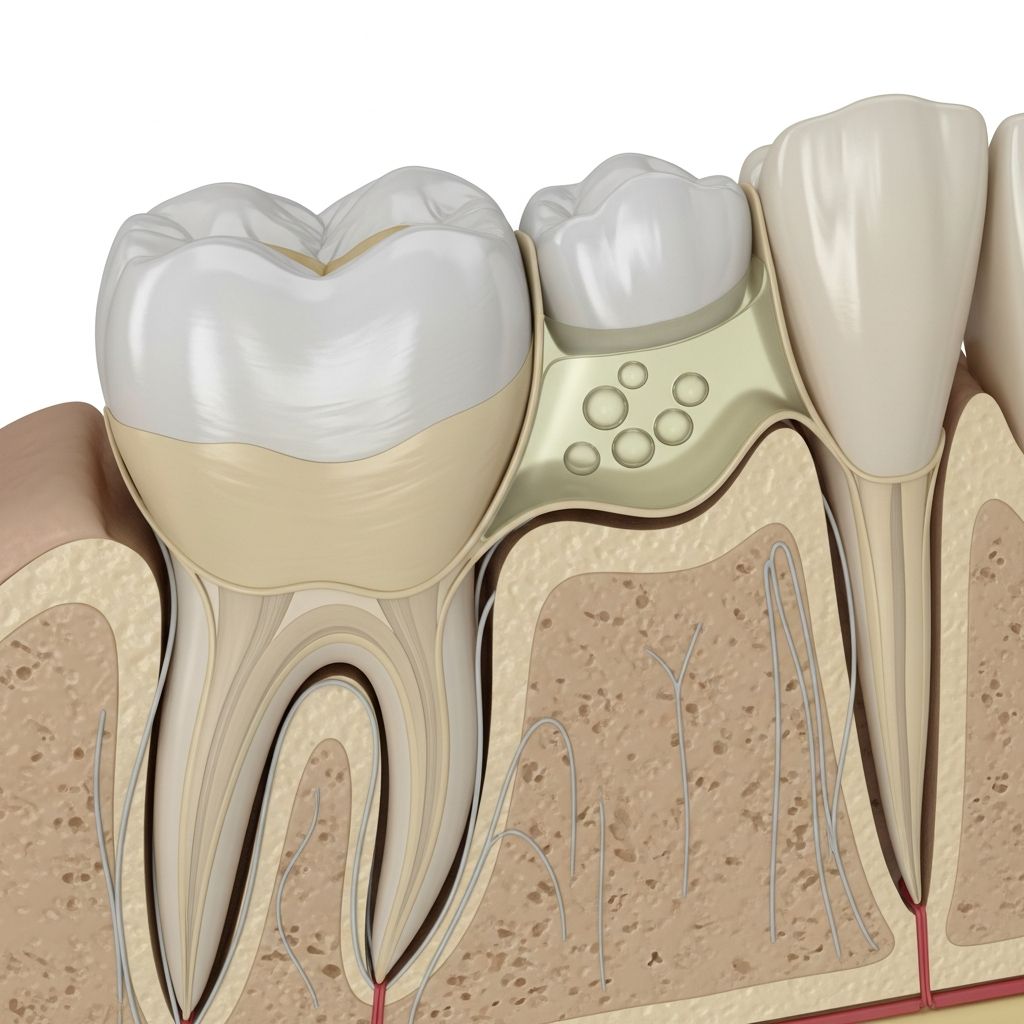
A dentigerous cyst, also known as a follicular cyst, is a benign, slow-growing odontogenic cyst characterized by a fluid-filled sac that forms around the crown of an unerupted or impacted tooth in the jawbone. These developmental cysts are among the most common odontogenic lesions affecting the oral cavity. The cyst typically originates from cells and tissues involved in normal tooth formation, expanding outward from the neck of the tooth where the crown meets the root. While dentigerous cysts are benign in nature, they require professional evaluation and treatment to prevent potential complications.
Who Gets Dentigerous Cysts?
Dentigerous cysts can develop in people of any age, but they most commonly appear in individuals between 10 and 30 years old. The condition shows no significant gender predilection and can affect anyone regardless of background or lifestyle. Young patients with unerupted or impacted teeth are at higher risk, particularly those in their teens, twenties, and thirties. The vast majority of dentigerous cysts occur as single lesions affecting only one side of the jaw. Bilateral or multiple dentigerous cysts are exceptionally rare but have been documented in patients with certain genetic syndromes such as basal cell nevus syndrome, mucopolysaccharidosis, and cleidocranial dysplasia.
Where Do Dentigerous Cysts Form?
The most common location for dentigerous cysts is over impacted wisdom teeth. Approximately 74% of dentigerous cysts develop over lower (mandibular) wisdom teeth, while about 26% occur over upper (maxillary) wisdom teeth. Dentigerous cysts can also form around other unerupted teeth, including canines and premolars, though wisdom teeth are by far the most frequently affected. The specific anatomical location of the cyst influences treatment decisions, as different areas of the jawbone have varying blood supply, bone density, and proximity to vital structures.
What Causes Dentigerous Cysts?
The exact cause of dentigerous cysts remains unknown, but researchers have identified two primary theories explaining their development. The intrafollicular theory suggests that dentigerous cysts result from fluid accumulation between the outer and inner surfaces of the epithelial lining surrounding the tooth follicle. This fluid buildup creates pressure that gradually expands the cyst.
Dentigerous cysts can be classified as either inflammatory or noninflammatory based on their etiology. The inflammatory type develops due to inflammation in a nonvital deciduous tooth, while the noninflammatory type occurs as a result of pressure exerted by an erupting tooth on an impacted follicle. Understanding the underlying cause helps dentists and oral surgeons determine the most appropriate treatment approach for each patient.
Dentigerous Cyst Symptoms
Many patients with dentigerous cysts experience no symptoms, especially when the cysts are small. The cyst may be discovered incidentally during routine dental examinations or when X-rays are taken for other reasons. However, larger dentigerous cysts can produce noticeable symptoms that prompt patients to seek dental care. Common symptoms include:
- Facial swelling or asymmetry affecting the jaw area
- Pain or discomfort in the affected region
- Difficulty with eating or chewing
- Tooth displacement or malocclusion
- Numbness or tingling in the lower lip or chin
- Prickling sensations in the affected area
- Burning sensations in the gums or jaw
If a dentigerous cyst becomes infected, additional symptoms may develop, including localized pain, swelling, and drainage. Infected cysts require prompt professional intervention to prevent serious complications.
Related Stories



How Are Dentigerous Cysts Diagnosed?
Diagnosis of dentigerous cysts typically begins with imaging studies. A small dark spot may appear on routine dental X-rays, prompting further investigation. To confirm the diagnosis and rule out other conditions, dentists may order advanced imaging studies:
- Panoramic X-rays: These show the entire dental arch, upper jawbone, and lower jawbone in a single image, providing an overview of all teeth and surrounding structures
- CT (Computed Tomography) scans: These use multiple X-ray images to create detailed three-dimensional reconstructions of the jawbone and teeth, allowing precise assessment of cyst size and extent
- MRI (Magnetic Resonance Imaging) scans: These use strong magnetic fields to produce detailed images of soft tissues and bone, useful for evaluating complex cases
Radiographically, dentigerous cysts are suspected when the follicular space surrounding an unerupted tooth measures larger than 5 mm. On imaging, the cyst typically presents as a well-defined unilocular radiolucency with a sclerotic or corticated border, surrounding the crown of the impacted tooth. Histopathological examination of tissue samples can definitively confirm the diagnosis and rule out malignancy.
Dentigerous Cyst Treatment Options
Treatment decisions for dentigerous cysts depend on several clinical factors, including cyst size, location, patient age, the specific tooth involved, root health, and follow-up capabilities. Two primary surgical approaches are available:
Enucleation
Enucleation is a radical surgical method that completely removes the entire cystic capsule along with the associated unerupted tooth. This procedure is typically recommended for smaller cysts or when preservation of the affected tooth is not possible. Enucleation offers the advantage of complete removal in a single procedure, eliminating the need for multiple surgeries. However, enucleation of large cysts is controversial because larger cystic cavities may lack adequate blood clot organization and bone formation is uncertain. Despite these concerns, various studies have demonstrated predictable spontaneous bone regeneration in young patients after enucleation of large cysts. In most cases involving young patients, bone grafting is unnecessary.
Marsupialization
Marsupialization is an alternative procedure typically reserved for large dentigerous cysts. This approach involves creating an opening in the cyst to promote drainage and gradual shrinkage over time. The procedure allows the cyst to reduce in size, which may preserve bone and potentially allow the impacted tooth to erupt naturally. Marsupialization requires multiple follow-up visits and longer treatment duration but may result in better bone healing in certain cases.
Additional Treatment Considerations
Depending on individual circumstances, additional procedures and supportive treatments may be recommended:
- Root canal therapy: May be necessary if the affected tooth is vital and can be preserved
- Tooth extraction: Removal of the impacted tooth may be recommended if preservation is not feasible
- Dental implants: Can replace missing teeth following cyst treatment
- Reconstructive surgery: May restore the jawbone and surrounding structures after large cyst removal
- Speech and swallowing therapy: Supportive care to maintain quality of life during recovery
- Nutritional support: Consultation with a nutritionist for optimal healing
Complications of Untreated Dentigerous Cysts
While dentigerous cysts are benign, leaving them untreated can lead to serious complications. Potential complications include:
- Tooth loss: The cyst may cause damage leading to loss of the affected or adjacent teeth
- Infections: Untreated cysts can become infected, leading to periodontal disease or periapical infections
- Jaw fractures: Large cysts can weaken the jawbone, increasing fracture risk
- Noncancerous tumors: Secondary odontogenic tumors may develop in association with dentigerous cysts
- Malignant transformation: Very rarely, dentigerous cysts can progress to malignant lesions, though this is exceptionally uncommon
- Bone loss: Significant bone resorption may occur with advanced disease
Even small cysts warrant treatment to prevent these potential complications. With appropriate professional intervention, these outcomes are readily preventable.
When to Contact Your Dentist
You should contact your dentist if you experience any of the following:
- Persistent jaw pain or swelling
- Difficulty chewing or speaking
- Numbness or tingling in the lower lip or chin
- Visible facial asymmetry or swelling
- Tooth displacement or changes in your bite
- Symptoms of infection, including pain, burning, prickling, or numbness
- Any abnormal findings discovered during routine dental examinations
Seek immediate dental care if you develop signs of infection, as infected cysts require urgent professional treatment.
Prevention and Follow-Up
While dentigerous cysts cannot always be prevented, maintaining excellent oral hygiene and attending regular dental check-ups can help identify cysts early before complications develop. Early detection through routine X-rays significantly improves treatment outcomes and reduces the risk of complications. After treatment, lifelong follow-up appointments with your dentist are essential. Regular monitoring allows your dentist to detect any new cysts early and assess the healing process following surgical intervention. Your dental professional may recommend periodic imaging studies to ensure complete healing and rule out recurrence.
Frequently Asked Questions
What is the most common site for a dentigerous cyst?
The most common site for a dentigerous cyst is over an impacted lower wisdom tooth. In fact, approximately 74% of dentigerous cysts form over the mandibular wisdom teeth, while only about 26% occur over upper wisdom teeth.
Can a dentigerous cyst turn cancerous?
Very rarely, a dentigerous cyst can undergo malignant transformation if left untreated for extended periods. However, true malignant transformation is exceptionally uncommon. Fats and cellular material may accumulate inside advanced cysts, and odontogenic tumors associated with dentigerous cysts are rare and closely linked to genetic syndromes. Most dentigerous cysts remain benign throughout their course.
How long does recovery take after dentigerous cyst treatment?
Recovery time varies depending on the size and complexity of the cyst and the specific treatment method used. Simple extractions may take one to two weeks for initial healing, while larger surgical procedures may require several weeks for complete bone healing. Young patients generally heal more rapidly than older individuals.
Will the cyst return after treatment?
With appropriate surgical treatment and follow-up, recurrence rates are low. However, lifelong monitoring is recommended to detect any new cysts early. Maintaining excellent oral hygiene and attending regular dental check-ups reduce the risk of recurrence.
What is the difference between enucleation and marsupialization?
Enucleation involves complete surgical removal of the cyst in a single procedure, while marsupialization creates an opening to allow gradual drainage and shrinkage over time. The choice between these approaches depends on cyst size, location, and individual patient factors.
References
- Dentigerous cyst: enucleation or marsupialization? (a case report) — National Center for Biotechnology Information, U.S. National Library of Medicine. 2022-11-15. https://pmc.ncbi.nlm.nih.gov/articles/PMC8654877/
- Dentigerous Cysts: Causes, Symptoms, and Treatment — WebMD, LLC. 2024. https://www.webmd.com/oral-health/what-are-dentigerous-cysts
Similar Articles








Read full bio of Sneha Tete