Depigmentation Therapy For Vitiligo: Expert Guide
Explore depigmentation therapy as a viable option for extensive vitiligo, including methods, efficacy, risks, and patient considerations.
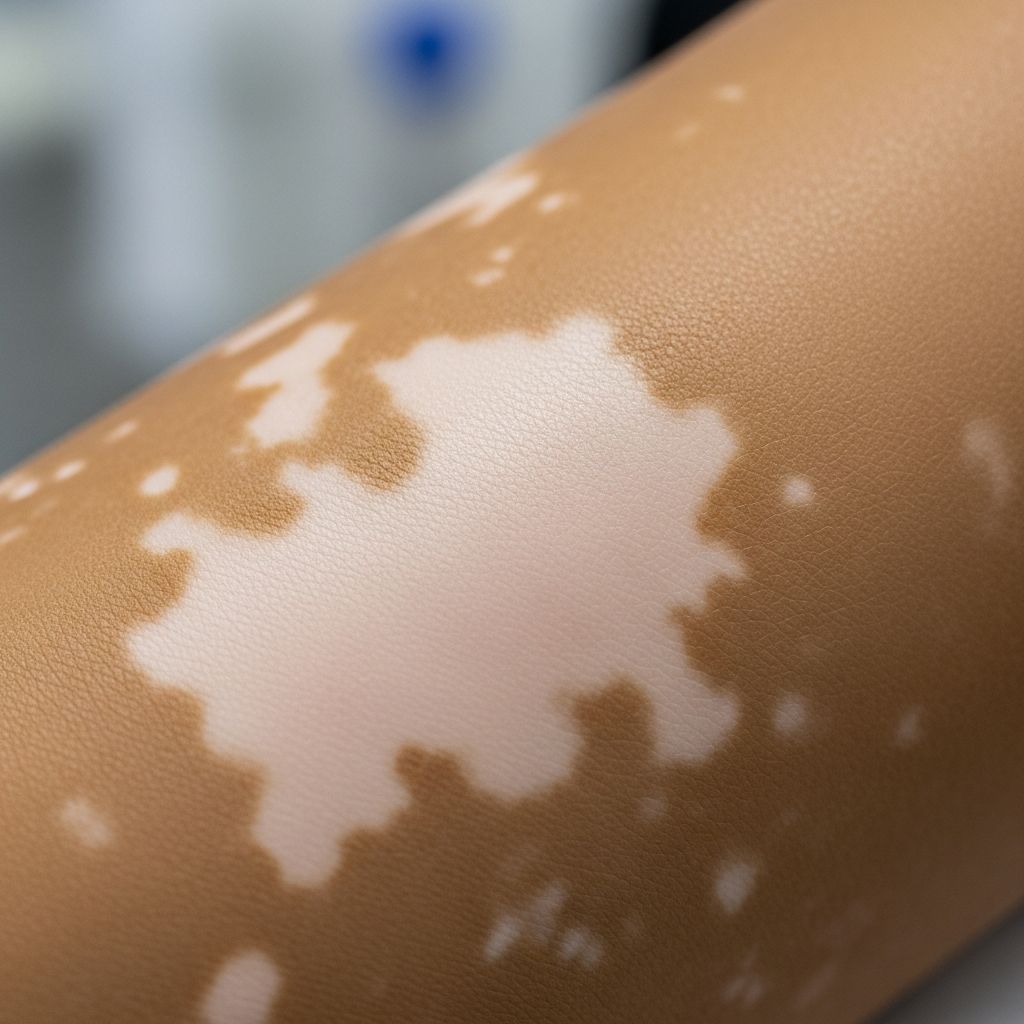
Vitiligo is a chronic skin condition characterized by the loss of melanocytes, leading to white patches on the skin. For patients with extensive vitiligo affecting more than 50% of their body surface area, depigmentation therapy provides an effective strategy to achieve a uniform skin tone by lightening the remaining pigmented areas. This approach is particularly suitable when repigmentation treatments have failed or are impractical.
What is Depigmentation Therapy?
Depigmentation therapy involves the deliberate destruction of remaining melanocytes in pigmented skin to match the depigmented areas caused by vitiligo. It transforms the skin’s appearance from patchy to evenly light, improving cosmetic uniformity. This treatment is irreversible, committing patients to a lifelong pale complexion.
Unlike repigmentation therapies such as topical corticosteroids, calcineurin inhibitors, or phototherapy—which aim to restore melanin production—depigmentation accepts the loss of pigment and focuses on equalization. It is reserved for severe, widespread non-segmental vitiligo where other options are ineffective.
Indications for Depigmentation Therapy
Depigmentation is indicated primarily for:
- Patients with vitiligo covering more than 50% of body surface area, where repigmentation would be challenging and uneven.
- Individuals who have trialed repigmentation methods like narrowband UVB phototherapy, topical ruxolitinib, or tacrolimus without success.
- Those experiencing significant psychosocial distress from visible contrast between pigmented and depigmented skin.
- Cases of progressive, extensive non-segmental vitiligo unresponsive to stabilizing treatments.
It is not suitable for segmental vitiligo, which is localized, or for patients preferring to retain natural skin tone. Counseling is essential to ensure informed consent regarding permanence.
Agents Used in Depigmentation
Several topical agents are employed, with monobenzone being the gold standard due to its potent, irreversible effects.
Monobenzone (Benoquin)
Monobenzone, a derivative of hydroquinone, induces permanent depigmentation by destroying melanocytes and inhibiting melanin synthesis. Applied as a 20% cream twice daily, it typically requires 1-10 months for full effect, with visible lightening starting in 4-6 weeks. Once achieved, maintenance applications may be needed on sun-exposed areas.
Hydroquinone
Lower concentrations (2-4%) serve as an initial step or adjunct, providing reversible lightening. It reduces melanin production but does not destroy melanocytes, making it less permanent than monobenzone. Often used for 3-6 months before transitioning if needed.
Other Agents
- 4-Methoxyphenol: Similar to monobenzone, used in some formulations for targeted depigmentation.
- Cryotherapy or Lasers: Adjunctive for resistant areas, freezing or ablating pigmented spots.
Comparison of Common Depigmentation Agents Agent Concentration Onset Permanence Common Use Monobenzone 20% 1-10 months Permanent Primary agent Hydroquinone 2-4% 1-3 months Reversible Initial/adjunct 4-Methoxyphenol 10-20% 2-6 months Semi-permanent Alternative Procedure and Application Guidelines
Treatment begins with a thorough dermatological assessment, including body surface area calculation using tools like the rule of nines. Patients receive detailed instructions:
- Apply a thin layer of the agent to pigmented areas only, avoiding depigmented patches, eyes, mucous membranes, and genitals.
- Use twice daily after cleansing, rubbing gently until absorbed.
- Continue until uniform depigmentation or up to 10 months; reassess progress every 1-2 months.
- Combine with broad-spectrum sunscreen (SPF 50+), protective clothing, and sun avoidance to prevent tanning of treated areas.
Patch testing is recommended to check for irritation. Progress is monitored via photographs under standardized lighting.
Efficacy and Outcomes
Monobenzone achieves complete depigmentation in 75-95% of treated areas within 6-12 months. Patient satisfaction is high in extensive cases, with improved quality of life scores due to reduced contrast. However, results are unpredictable on acral areas (hands/feet) or stable vitiligo.
Long-term follow-up shows sustained uniformity, though new vitiligo patches may require spot treatment. Unlike repigmentation therapies like ruxolitinib (30% achieving 75% facial improvement in TRuE-V trials), depigmentation offers reliable uniformity for severe cases.
Side Effects and Risks
While effective, depigmentation carries notable risks:
- Common: Mild irritation, redness, itching, dryness (10-20% of users).
- Skin Issues: Hypersensitivity dermatitis, incomplete depigmentation leading to ‘ink-spot’ hypopigmentation.
- Long-term: Increased UV sensitivity, higher skin cancer risk (monitor annually), ocular melanosis (rare).
- Systemic: Rare absorption-related issues like exogenous ochronosis with prolonged hydroquinone use.
Contraindications include pregnancy, breastfeeding, active skin infections, and history of keloids.
Precautions and Patient Counseling
Comprehensive counseling covers:
- Irreversibility: No repigmentation possible post-treatment.
- Lifestyle Changes: Strict photoprotection mandatory lifelong; use makeup or camouflage initially.
- Social Impact: Pale skin may alter appearance dramatically, affecting self-image and interactions.
- Follow-up: Regular dermatology visits for monitoring.
Alternatives to Depigmentation
For less extensive vitiligo (<50% BSA):
- Repigmentation: Narrowband UVB (most effective, 2-3x/week), topical ruxolitinib (FDA-approved for ≥12 years), tacrolimus.
- Camouflage: Self-tanners, medical makeup.
- Surgical: Melanocyte-keratinocyte transplants for stable segmental vitiligo.
- Systemic: Mini-pulse steroids for progressive disease.
Frequently Asked Questions (FAQs)
Q: Is depigmentation therapy painful?
A: No, it is generally painless, though mild stinging or burning may occur with initial applications. Severe reactions are uncommon.
Q: How long until I see results?
A: Lightening begins in 4-6 weeks, with full uniformity in 1-10 months depending on the agent and area.
Q: Can depigmentation be reversed?
A: No, monobenzone effects are permanent. Hydroquinone changes may partially reverse upon discontinuation.
Q: Who is not a candidate for this therapy?
A: Pregnant/breastfeeding individuals, those with <50% BSA involvement, or preferring repigmentation options.
Q: Does insurance cover depigmentation creams?
A: Coverage varies; monobenzone may be covered for extensive vitiligo after failing other treatments. Check with providers.
Patient Experiences and Case Studies
Many patients report life-changing improvements in self-esteem after achieving uniform tone. For instance, in clinical reviews, individuals with 60-80% BSA vitiligo noted reduced social anxiety post-treatment, despite sun protection challenges. Case studies highlight success on trunk and limbs but slower progress on extremities.
Combining with psychological support enhances outcomes, as the shift to pale skin requires adjustment.
References
- Treatment Options for Vitiligo — U.S. Pharmacist. 2023. https://www.uspharmacist.com/article/treatment-options-for-vitiligo
- Vitiligo – Diagnosis & treatment — Mayo Clinic. 2024-01-15. https://www.mayoclinic.org/diseases-conditions/vitiligo/diagnosis-treatment/drc-20355916
- Vitiligo Treatments at UMass Chan Medical School — UMass Medical School (.edu). 2024. https://www.umassmed.edu/vitiligo/vitiligo-treatment/
- Vitiligo: Current Therapies and Future Treatments — PMC (NIH). 2024-01-10. https://pmc.ncbi.nlm.nih.gov/articles/PMC10824325/
- Vitiligo Treatment Options: Is Ruxolitinib Cream Effective? — Dermatology Seattle. 2024. https://dermatologyseattle.com/vitiligo-treatment-ruxolitinib/
- Treatment advances in Vitiligo: An Updated Review — Dermatology Practical & Conceptual Journal (.org). 2023-12-01. https://dpcj.org/index.php/dpc/article/view/4600
Similar Articles








Read full bio of Sneha Tete